








Senneh Wool Rug
These senneh wool rug pieces are woven Persian floor coverings prized for intricate traditional design and durable construction.
Senneh Wool Rug
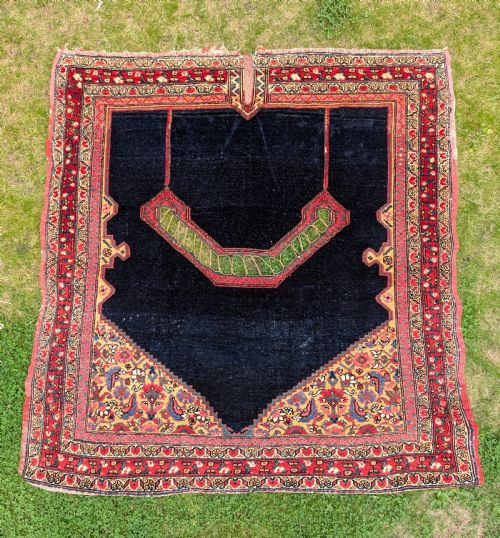
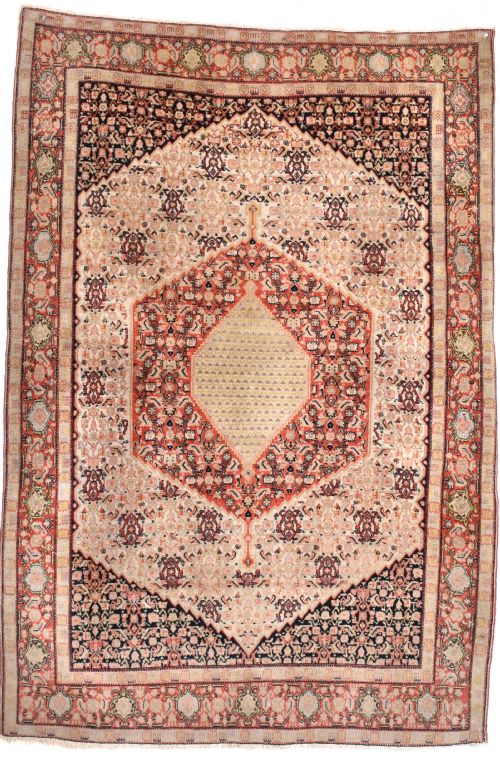
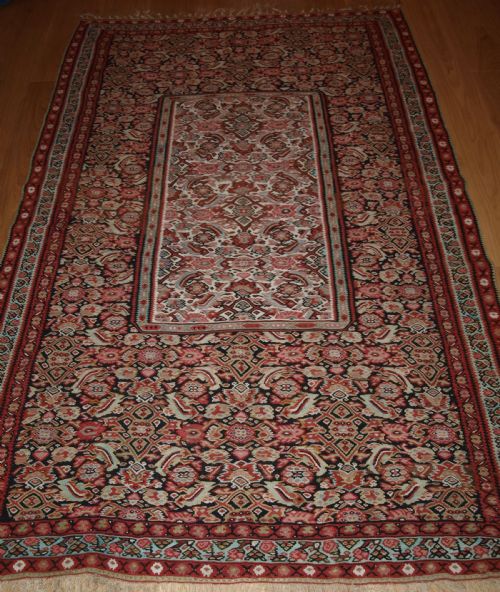
A senneh wool rug represents a distinct tradition of Persian weaving originating from western regions. Buyers searching for a senneh wool rug encounter various formats including area rugs, runners, kelims, and saddle covers dating from the nineteenth and early twentieth centuries.
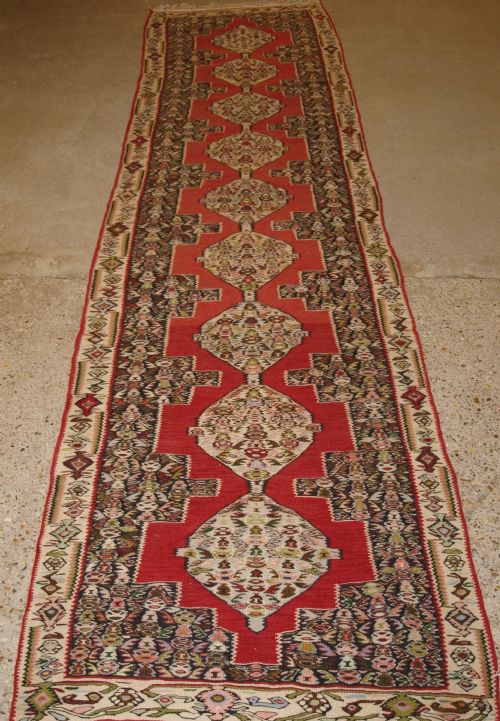
The pieces appearing on this page span several decades from the late Victorian period up to the nineteen-thirties. Traditional formats range from classic ivory ground rugs to narrow kilim runners featuring linked medallion patterns.
What varies in quality
The refinement of the drawing and the complexity of the medallion or traditional design determine the visual standing of an individual piece. Finer examples display precise geometry and balanced borders.
Material preparation also separates standard examples from exceptional ones. The use of hand-spun wool and tightly packed foundation threads contributes to longevity and structural integrity.
Senneh Wool Rug Retail Price Guide 2026
Typical asking prices for senneh wool rug among the pieces listed under this phrase on Sellingantiques today, from the lower quarter to the upper quarter. They describe what is for sale here now, not the wider market.
Listings feature items dated across the nineteenth and early twentieth centuries, incorporating both pile rugs and flatwoven kelims.
The Senneh Wool Rug Glossary
- Kilim
- A flatwoven carpet or rug produced without a pile. These pieces rely on interlocking the warp and weft threads to create geometric patterns.
- Kelleh
- A large rectangular carpet format traditionally used in Persian interiors. It is longer than a standard area rug but broader than a runner.
- Warp
- The vertical threads stretched upon a loom before weaving begins. They form the structural backbone of any woven textile.
- Weft
- The horizontal threads passed across and through the warp to build the fabric. They secure the knots or flatweave design in place.
Senneh Wool Rug: Frequently Asked Questions
How are these rugs cleaned?
Professional specialist cleaning is essential for antique wool textiles. Traditional hand-woven pieces require gentle handling to preserve natural dyes and delicate fibres.
Immersion washing should only be performed by experts familiar with antique Persian carpets. Domestic cleaning methods risk damaging the historical structure.
Where were they made?
These textiles originate from western Persia, specifically associated with the town of Senneh and surrounding Kurdish districts. The region has a long-established history of distinctive textile production.
Local workshops and tribal weavers developed specific knotting techniques and design repertoires that define the provenance of these pieces.
Can I use a runner in a hallway?
Runner formats suit narrow spaces such as hallways, corridors, and landings. Their elongated dimensions fit transitional areas while adding warmth to wooden floors.
Appropriate underlays help keep flatwoven runners secure on smooth flooring surfaces. This prevents sliding and reduces friction against the base.
What does kelim mean?
A kelim is a tapestry-woven textile made without a pile. Instead of knotting yarn onto warp threads, the weaver passes coloured weft threads back and forth.
This technique produces a lightweight, reversible fabric with distinct geometric motifs. Such pieces function well as decorative wall hangings or floor coverings.