


Semi Circular Wall Table
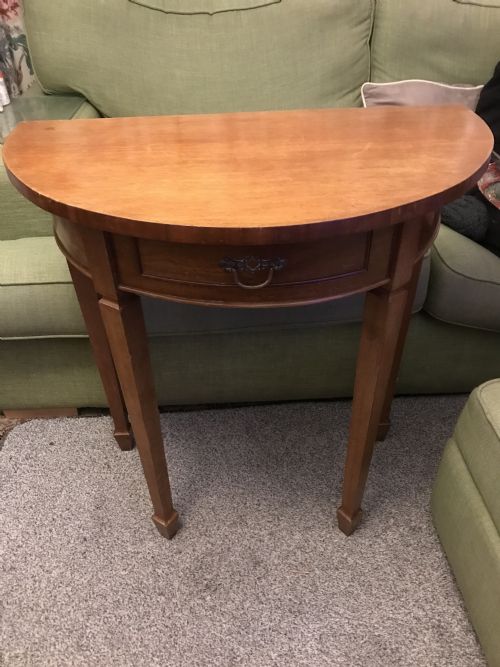
A semi circular wall table offers a neat half-round profile designed to hug the wall in hallways and principal rooms.
Semi Circular Wall Table
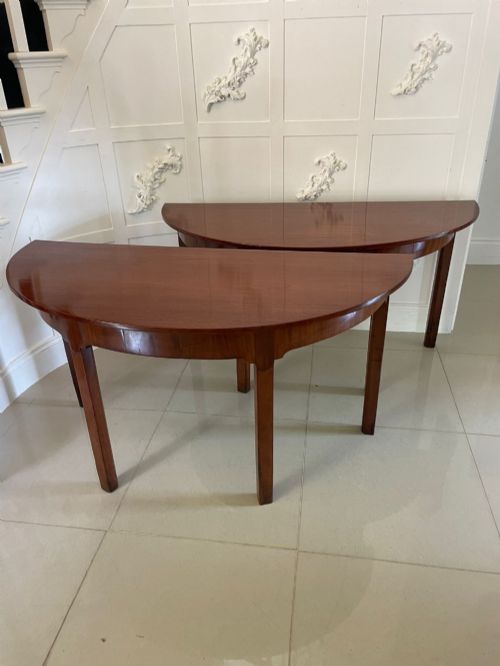
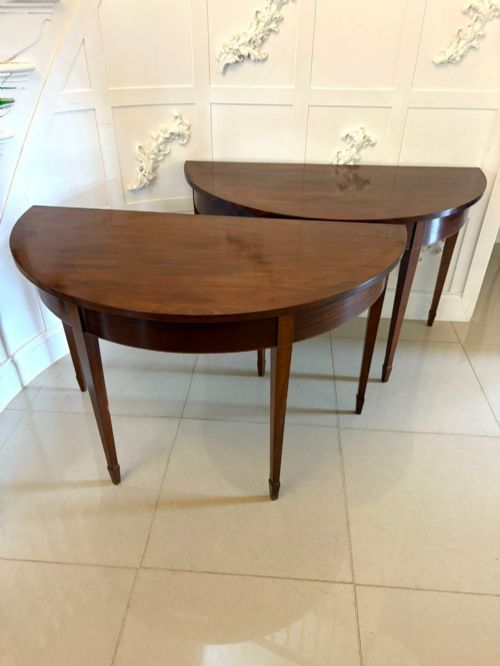
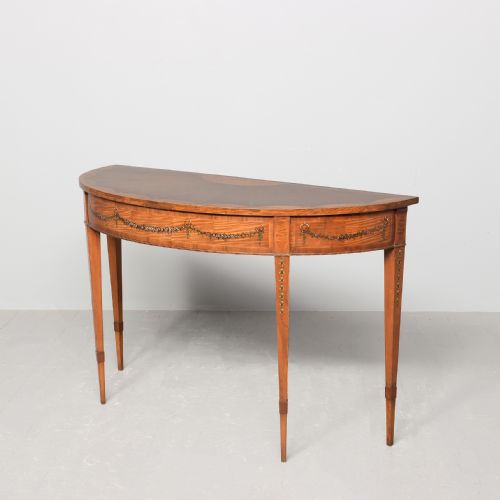
A semi circular wall table appears frequently as a console or side table, taking the half-round demi-lune shape that fits snugly against domestic walls. The listings show these pieces stretching from the 18th century through the Victorian era and into the 1920s and 1930s.
Makers fashioned these console and side tables in Georgian, Regency, and Victorian styles, alongside later 20th-century interpretations. Examples originate from English, Italian, Swedish, Dutch, and Chinese workshops.
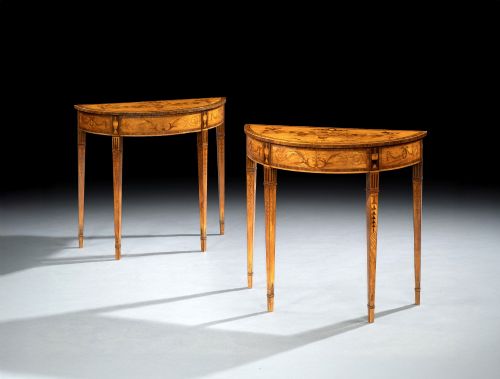
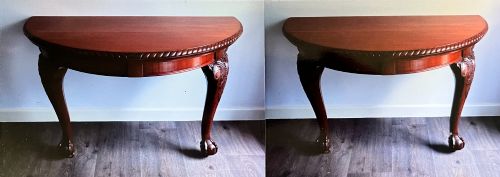
The buyer meets pairs of console tables alongside single items equipped with drawers, spade feet, and pie crust edges. Walnut, mahogany, satinwood, and maple woods dominate the selection.
Standards of Execution
The refinement of the timber selection dictates the visual success of the piece, particularly where figured mahogany or matched satinwood is employed. Superior examples display intricate marquetry inlay executed with precision, whereas simpler pieces rely on plain painted wood.
The integrity of the supporting legs and the crispness of carved details such as spade feet or pie crust edges separate standard production from finer work. Regional variations, from English Georgian workshops to Italian or Chinese origins, introduce distinct methods of joinery and surface finish.
Semi Circular Wall Table Retail Price Guide 2026
Typical asking prices for semi circular wall table among the pieces listed under this phrase on Sellingantiques today, from the lower quarter to the upper quarter. They describe what is for sale here now, not the wider market.
Some tables arrive in matched pairs, perfect for those who believe that if one half-moon is good, two must be lunacy.
The Semi Circular Wall Table Glossary
- Demi-lune
- A half-moon shape used to describe furniture designed with a flat back and a curved front. This profile characterises the majority of the console tables found in this category.
- Console table
- A table fixed to a wall or standing against it, often supported by front legs with the rear secured or balanced. These pieces serve functional and decorative roles in hallways and reception rooms.
- Marquetry inlay
- The art of applying pieces of veneer to a structure to form decorative patterns and pictures. Craftsmen utilise contrasting woods to achieve pictorial effects on table tops.
- Pie crust
- A raised, carved decorative rim around the edge of a table top, shaped to resemble pastry edges. This detail appears on select Regency-period tables.
- Spade foot
- A rectangular foot that tapers slightly toward the base, resembling the blade of a spade. This foot style frequently terminates the legs of Edwardian and Georgian tables.
Semi Circular Wall Table: Frequently Asked Questions
Where should I place a semi circular wall table?
These tables suit narrow hallways, entrance passages, and reception rooms where a deep rectangular table would block movement.
Because the flat back sits flush against the vertical surface, the half-round footprint maximises floor space while providing a display surface.
How do I identify a Georgian semi circular wall table?
Georgian pieces typically exhibit solid mahogany or satinwood construction, often enhanced by marquetry inlay or painted decoration.
Look for period characteristics such as tapered legs, spade feet, and balanced proportions dating from the 18th century.
Can I use a console table as a desk?
Certain semi circular wall tables feature pull-out drawers that accommodate basic writing materials and small accessories.
However, the shallow depth and curved front mean they are primarily designed for display rather than extended writing tasks.
What is the difference between a side table and a console table?
In historical terms, console tables often relied on wall brackets or front legs for support, whereas side tables stood independently on four legs.
In modern usage, the terms frequently overlap when describing half-round wall furniture.
How do I care for antique wood surfaces?
Maintain polished mahogany and walnut surfaces by dusting regularly with a soft, dry cloth to prevent particulate build-up.
Avoid placing timber furniture near direct heat sources or in fluctuating humidity to protect the underlying veneers and joinery.