

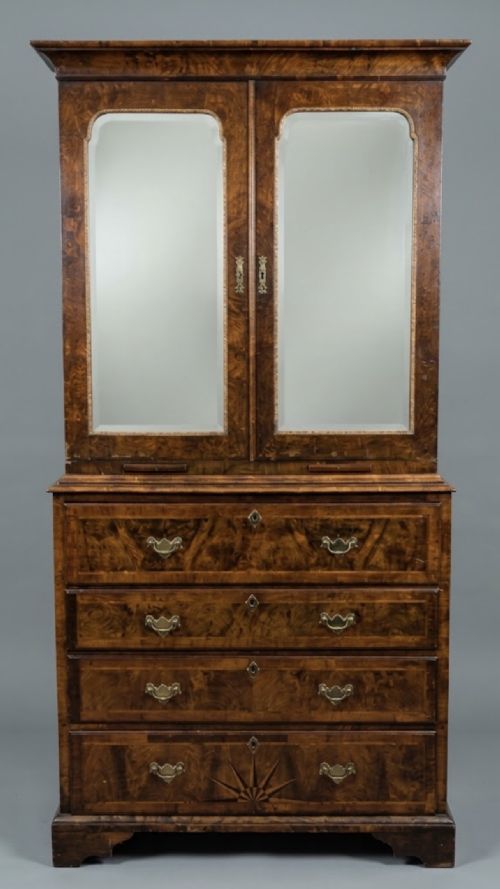
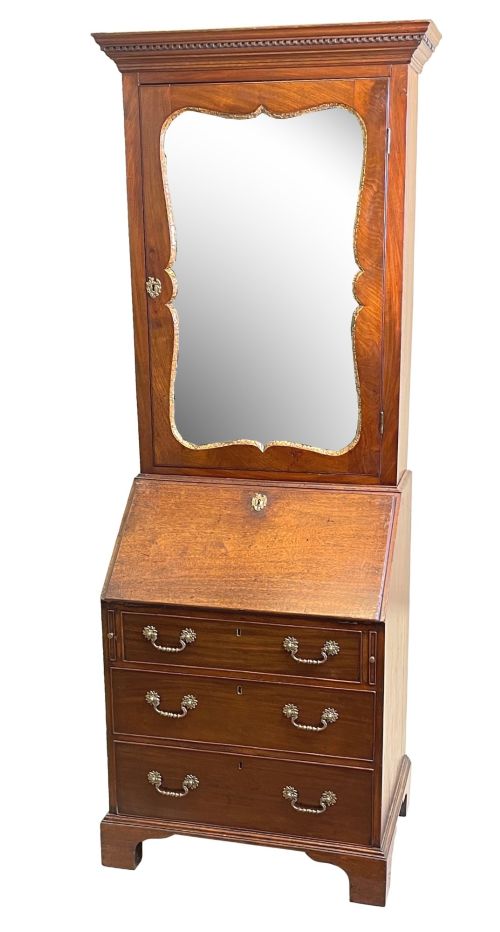
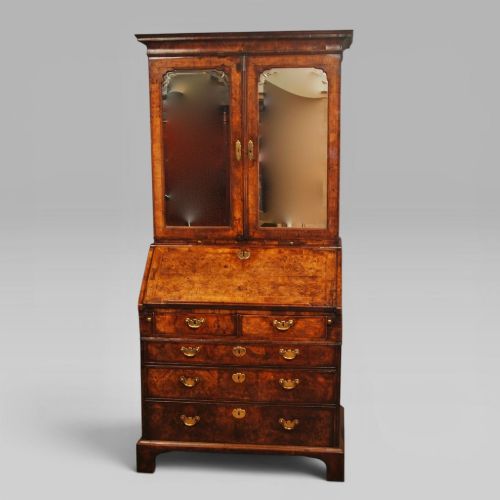
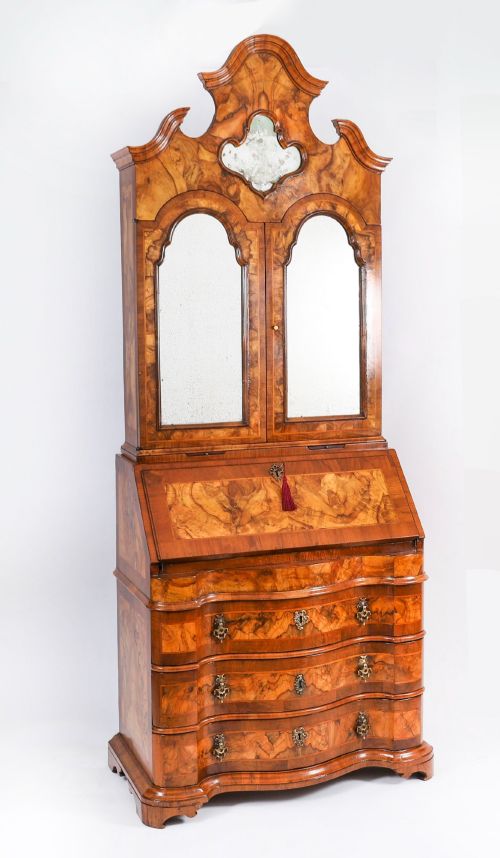

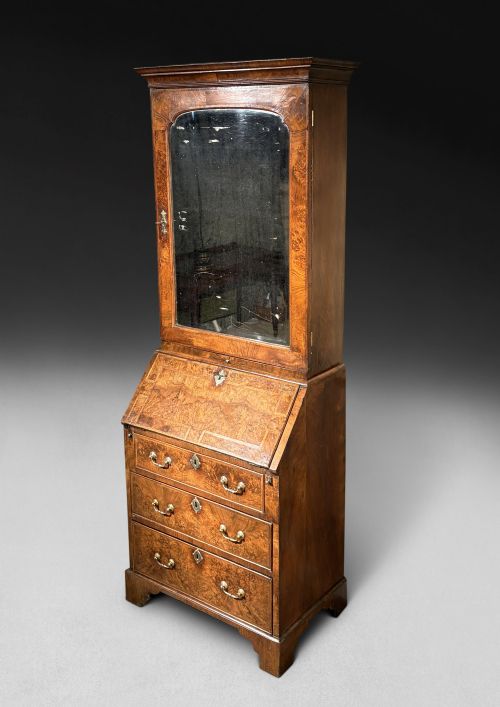


Secretary Desk Mirrored
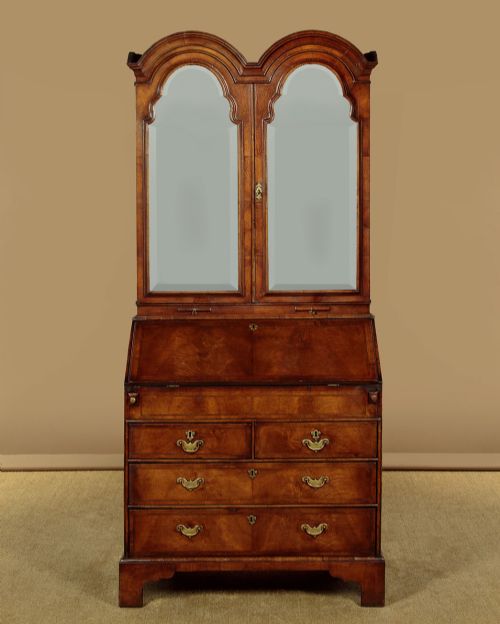
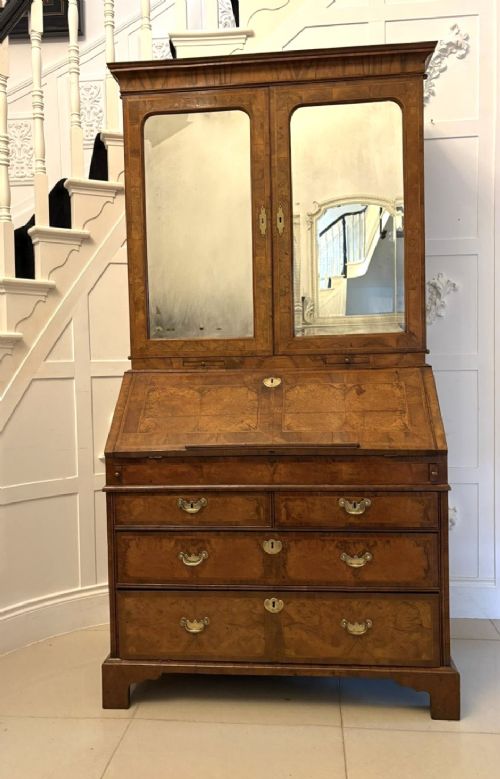
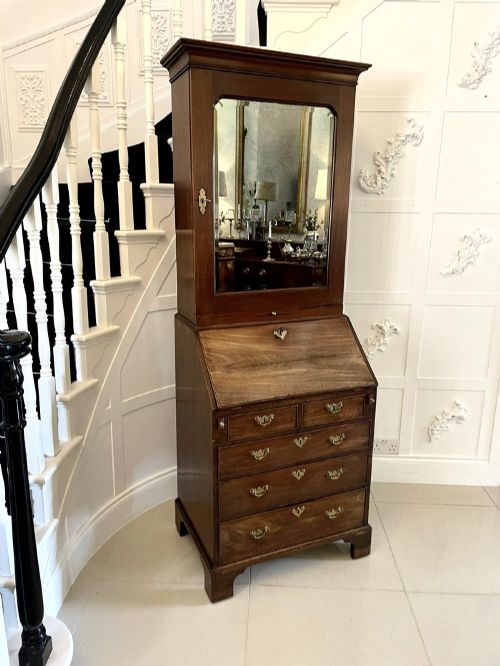
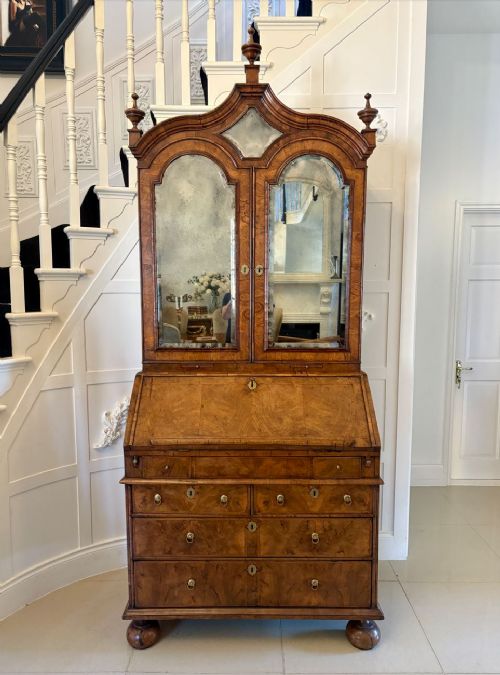
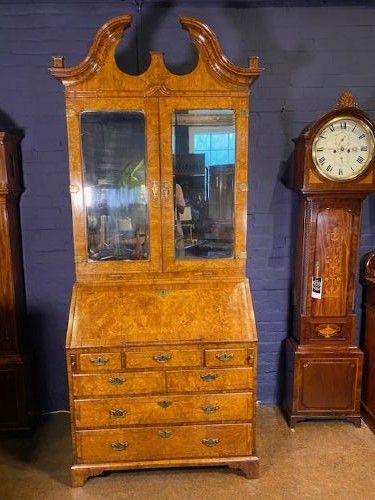
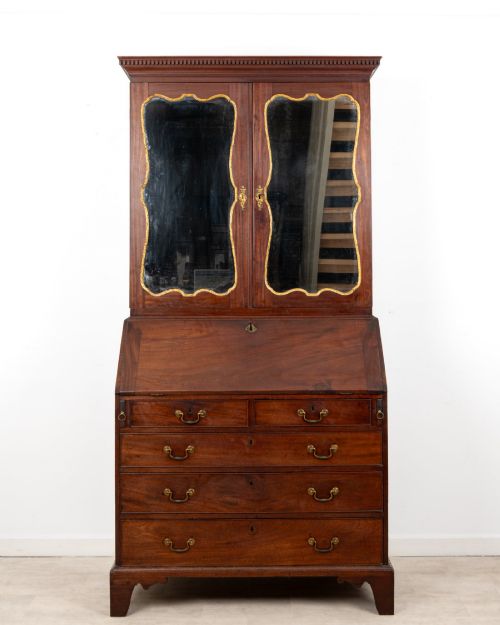
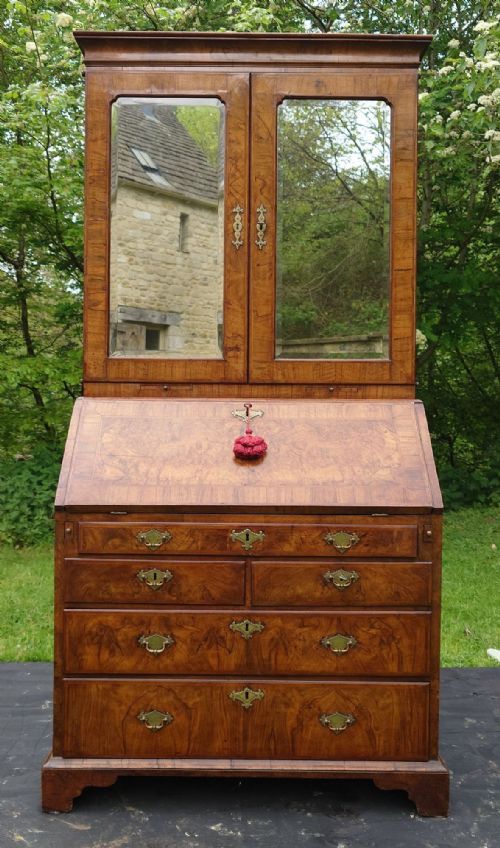
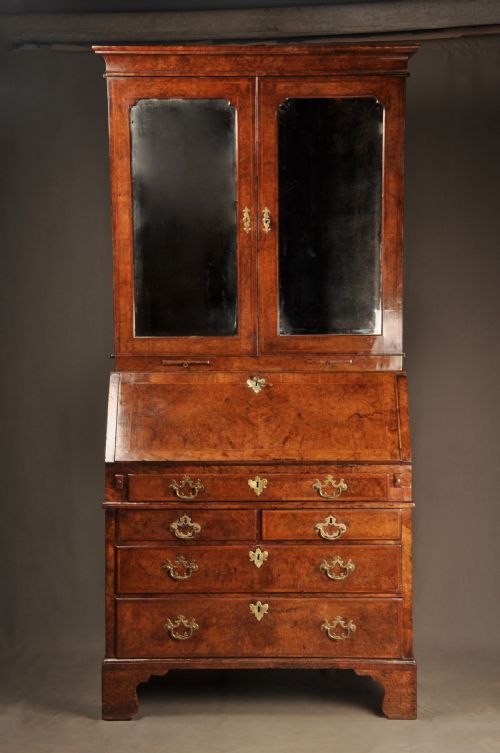
Secretary desk mirrored items combine a fitted writing drop-front with upper shelving concealed behind glass panels, offering practical storage alongside reflective light.
Secretary Desk Mirrored
A secretary desk mirrored combines a lower writing fall-front with an upper bookcase section closed by glass or mirror panels. When you search for secretary desk mirrored, you encounter substantial writing cabinets dating from the seventeenth, eighteenth, and nineteenth centuries.
The prevailing examples on this page span the William and Mary, Queen Anne, Georgian, and Victorian eras. These pieces typically manifest as bureau bookcases, bureau cabinets, and secretaire cabinets constructed in walnut, mahogany, and rosewood.
Early forms from the seventeen hundreds frequently exhibit double-dome tops and figured burr walnut veneers. Later nineteenth-century interpretations adapt these proportions into compact bureau de dame and ladies writing cabinets.
Materials and Construction
Cabinetmakers constructed these writing furniture pieces using solid timbers like oak and mahogany for internal framing and drawer carcasses. Highly figured decorative veneers including burr walnut and rosewood were then applied to primary exterior surfaces.
Makers integrated brass hardware such as escutcheons, hinges, and pull handles to secure and operate the fall-fronts and doors. Upper doors incorporated bevelled or flat mirror glass panels, often held within wooden framing to reflect ambient room light.
Secretary Desk Mirrored Retail Price Guide 2026
Typical asking prices for secretary desk mirrored among the pieces listed under this phrase on Sellingantiques today, from the lower quarter to the upper quarter. They describe what is for sale here now, not the wider market.
Many early walnut examples conceal secret sliding compartments behind their pigeonholes, designed for hiding private papers from visiting guests.
Design and Execution
The standard of a secretary desk mirrored rests upon the choice of timber veneers and the intricacy of the internal pigeonholes and small drawers. Fine examples display carefully matched burr walnut or figured mahogany grains across the fall-front and drawer facades.
Structural refinement is evident in the proportion of the mouldings, the integration of original mirror glass panels, and the retention of period brass hardware. Superior pieces maintain harmonious proportions between the lower writing desk and the upper glazed bookcase.
The Secretary Desk Mirrored Glossary
- Bureau bookcase
- A dual-purpose article of furniture featuring a sloping writing flap above drawers, surmounted by an enclosed shelving unit. This form provides both hidden desk space and display shelving.
- Fall-front
- A hinged writing flap that pulls down to reveal a fitted interior of small drawers and pigeonholes. It serves as a horizontal writing surface when open.
- Burr walnut
- Timber harvested from walnut tree growths that produce swirling, highly decorative grain patterns. Cabinetmakers sliced these burls into thin veneers for elite cabinet fronts.
- Secretaire cabinet
- An enclosed cabinet containing a dedicated writing drawer or pull-out writing slide. It functions similarly to a bureau but often retains the appearance of a standard chest or cupboard.
- Double-dome
- An upper bookcase roofline shaped into two parallel rounded arches. This architectural feature characterises sophisticated pieces from the early eighteenth century.
Secretary Desk Mirrored: Frequently Asked Questions
What is a secretary desk mirrored?
A secretary desk mirrored is a tall piece of case furniture that merges a drop-front writing desk with an upper shelving cabinet enclosed by reflective glass doors. These dual-purpose items served historically for correspondence and the tidy storage of bound volumes.
The lower section typically opens to disclose a fitted interior of small compartments and secret drawers. Above, the mirrored doors conceal adjustable shelves while brightening the surrounding interior space.
How do I date a walnut bureau bookcase?
Dating relies on observing structural shifts, timber choices, and hardware styles across different reigns. Pieces from the seventeen hundreds frequently display rich burr walnut veneers, featherbanding, and candle slides beneath the upper doors.
Later Victorian interpretations often utilise darker mahogany or burr-walnut with heavier proportions and machine-cut dovetails. Examining the secondary timbers inside the drawer carcasses further clarifies the period of manufacture.
Were the mirror panels original?
Original mirror glass in early eighteenth-century pieces often exhibits subtle imperfections, slight oxidation, and bevelled edges following historical glass-making techniques. These panels were hand-silvered and fitted directly into the wooden door frames.
Replacements typically appear clearer and lack the characteristic distortion of antique plate glass. Inspecting the rear of the doors reveals how the glass is secured within the rebate.
How do I place one in a modern room?
These tall pieces require adequate wall clearance and anchor well in studies, drawing rooms, or spacious hallways. The reflective glass panels naturally bounce light around smaller spaces while keeping reading material neatly concealed.
Pairing the darker walnut or mahogany tones with neutral walls lets the figured grain patterns stand out. The internal desk surface remains functional for occasional laptop use or traditional letter writing.