




Secretaire Campaign Desk
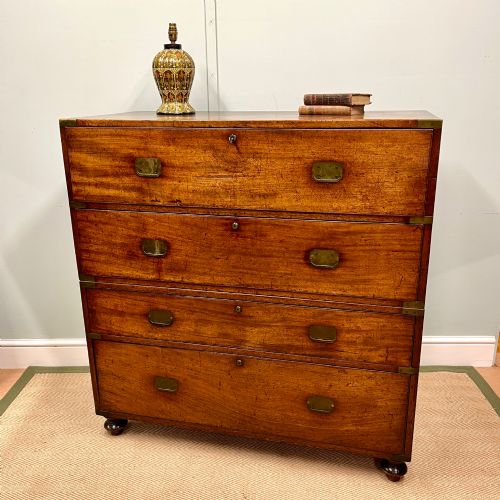
A secretaire campaign desk combines portable officer's furniture with a fitted writing drawer, built for travel across the British Empire.
Secretaire Campaign Desk
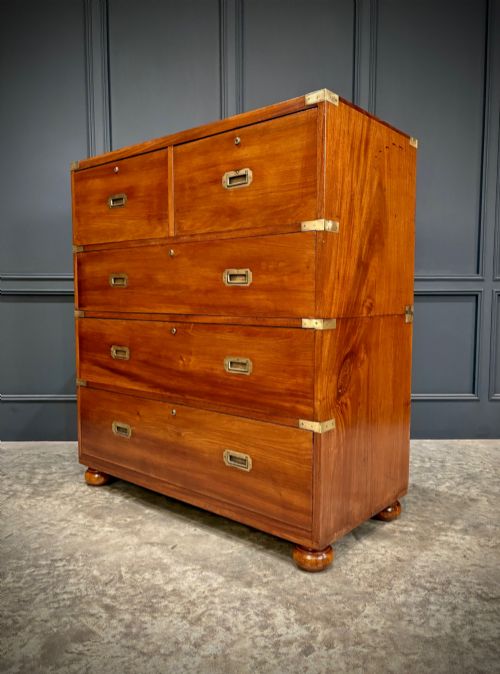
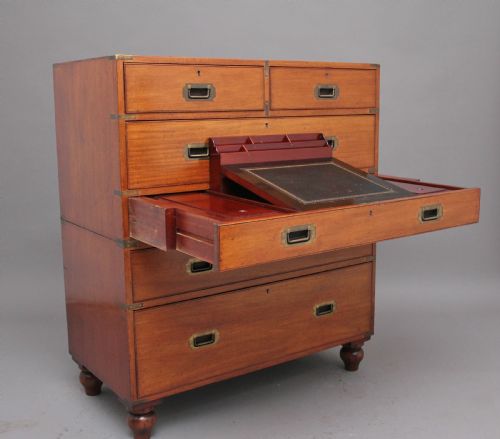
A secretaire campaign desk typically takes the form of a two-part chest of drawers housing a drop-front writing compartment. The pieces on this page span the nineteenth century, including Victorian examples alongside British Colonial and Anglo-Indian variants.
Most items appear in mahogany, camphor wood, or teak, reflecting the durable timbers chosen for colonial service. Buyers frequently encounter sectional cabinets designed to separate cleanly for transport on ships and wagons.
The form merges standard domestic storage with fold-down desk space, offering pigeonholes and small drawers inside the central drop-front section. These robust travel desks served military officers and administrators on distant postings.
Materials and Construction
Workshops utilised dense timbers such as mahogany, teak, camphor wood, and rosewood to withstand tropical humidity and rough transit. Cabinets often split into two distinct stacked boxes secured by side brackets and locking pins.
Corner plates, flush inset drawer pulls, and strapwork in brass reinforce the structural joints while protecting vulnerable edges from impact. Hand-cut dovetail joints secure the drawers, and secondary timbers like ebony occasionally appear in decorative inlay.
Secretaire Campaign Desk Retail Price Guide 2026
Typical asking prices for secretaire campaign desk among the pieces listed under this phrase on Sellingantiques today, from the lower quarter to the upper quarter. They describe what is for sale here now, not the wider market.
One listed teak campaign secretaire preserves the inscribed name Captain Fairbrother, tying the cabinet directly to its former military owner.
Evaluating Construction and Finish
Quality rests in the precision of the brass hardware and the tightness of the sectional joins between the stacked carcases. Superior pieces maintain smooth operation in the drop-front hinges and internal pigeonhole assembly despite decades of climatic shifts.
The choice of primary timber influences the standing of a piece, with richly figured mahogany and aromatic camphor wood sitting alongside dense colonial teak. Original inset handles and uncompromised internal drawer layouts distinguish better examples from heavily altered stock.
The Secretaire Campaign Desk Glossary
- Campaign chest
- A sectional piece of furniture built in two or more stacking parts for ease of transport during military movements. These items feature recessed brass handles to prevent snagging.
- Secretaire
- A desk or chest incorporating a hinged writing flap that pulls down to reveal internal compartments and small stationery drawers. The fold-away writing surface locks shut when not in use.
- Two-part chest
- A cabinet constructed as two distinct modular boxes placed one upon the other. This modular build facilitates lifting and carriage.
- Flush handle
- A metal pull let into the face of a drawer so it sits level with the wood. This design avoids protruding parts that might catch during travel.
- Pigeonhole
- A small compartment within a desk interior used for sorting letters and papers. These sections sit behind the main drop-front writing flap.
Secretaire Campaign Desk: Frequently Asked Questions
What is a secretaire campaign desk?
A secretaire campaign desk is a modular chest built in sections with a drop-front writing drawer for travel.
Officers and administrators used these versatile cabinets during nineteenth-century postings across the British Empire.
How do you use a campaign desk today?
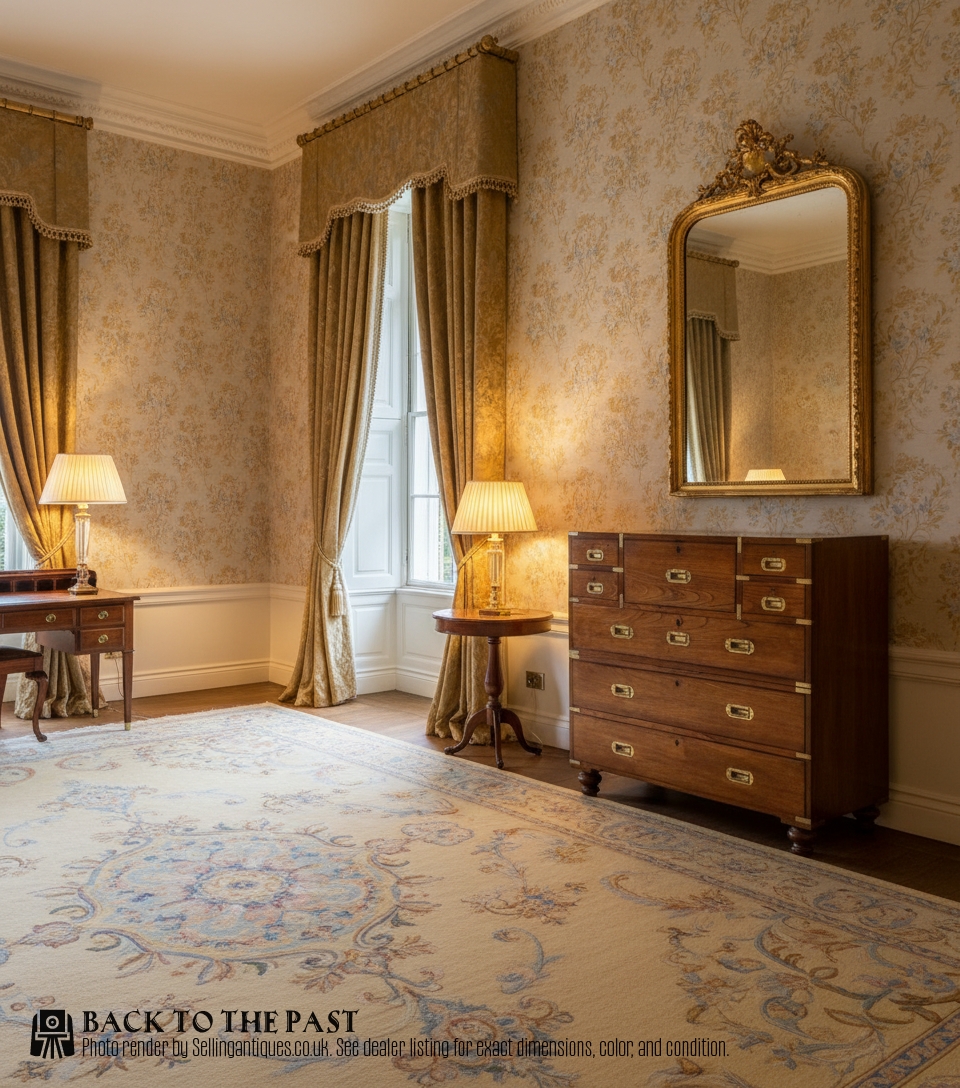
These pieces function well as compact bedroom storage units or practical hallway writing stations.
The fold-down writing surface provides a dedicated writing area that closes away to conceal paperwork.
Why are some made of camphor wood?
Camphor wood repels insects and resists moisture, making it ideal for storage in tropical climates.
Cabinetmakers utilised this fragrant timber extensively for colonial campaign furniture destined for overseas service.
How can you tell Victorian pieces apart?
Victorian examples display characteristic nineteenth-century timber choices such as mahogany, teak, and rosewood alongside brass corner mounts.
Construction details like hand-cut dovetails and sectional carcases help date specific pieces within the period.