
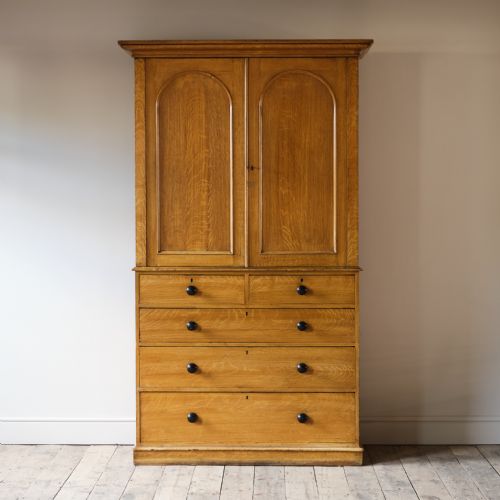
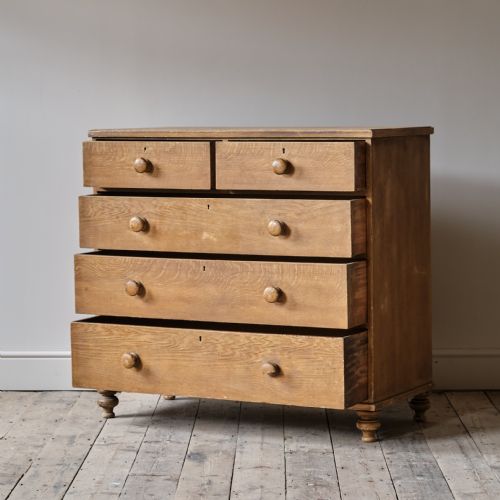
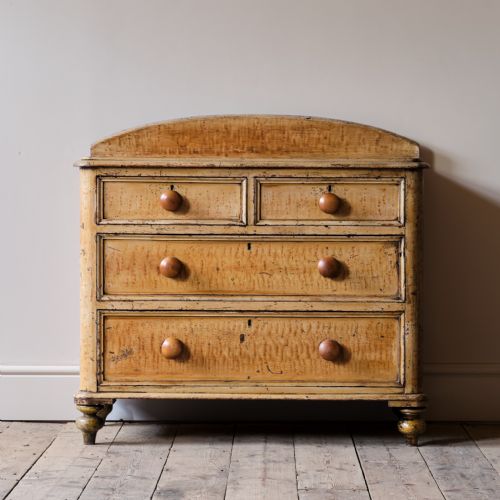
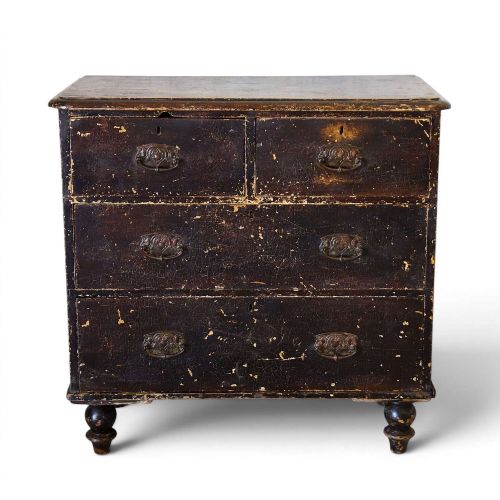


Scumble Paint Tallboy
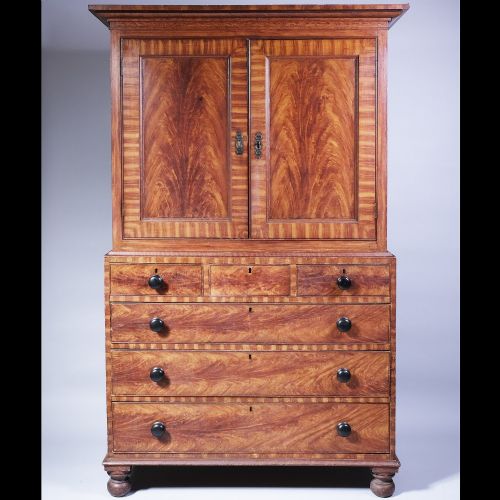
A scumble paint tallboy offers deep storage and a tactile finish, bringing nineteenth-century country character straight into a modern bedroom.
Scumble Paint Tallboy
A scumble paint tallboy represents taller forms of storage furniture, primarily chests of drawers and linen presses built from timber during the nineteenth century. These pieces stand out through their applied surface decoration rather than standard polished wood finishes.
Most examples found here date from the Victorian era and the broader nineteenth century, reflecting country house and folk art traditions. The dominant materials are pine and timber, coated in original scumbled paint finishes that mimic grain.
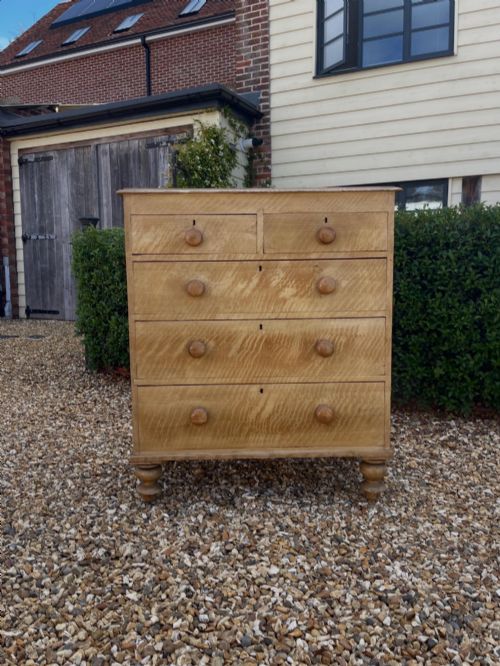
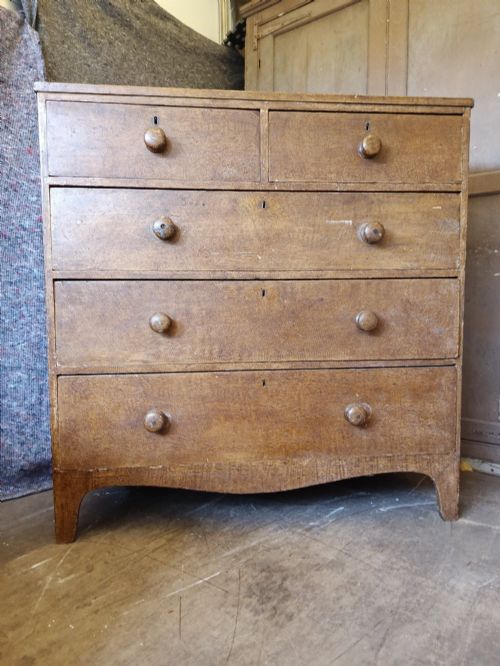
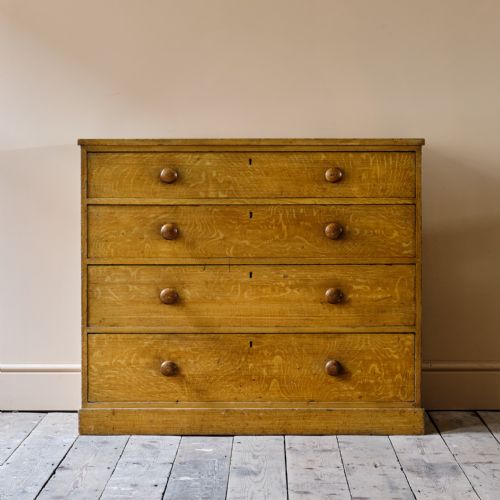
Buyers encounter regional variations such as large Scottish chests and Wellington chests alongside standard chests of drawers. The form prioritises vertical capacity, offering multiple stacked drawers for domestic storage.
How they were made
Carpenters constructed these pieces primarily from solid pine and timber, building sturdy carcases designed to withstand heavy domestic use. Drawers feature traditional joinery to handle the weight of linens and clothing.
The defining decorative technique involves scumble painting, where a translucent glaze is manipulated over a lighter base coat using combs, brushes or rags to simulate richer timber grain. Iron and brass hardware, including ceramic elements, complete the functional assembly.
Listings span the nineteenth century, including specific Victorian, Regency, and nineteen-hundred periods, focusing primarily on painted pine furniture forms.
What varies in quality
The survival and integrity of the original scumble glaze dictate the visual appeal and historical interest of a piece. Surfaces retaining their uncompromised nineteenth-century texture command greater appreciation than heavily overpainted examples.
Proportion and scale separate standard regional pieces from grander country house furniture. Finer items exhibit balanced drawer arrangements and crisp architectural details that elevate humble pine into decorative folk art.
The Scumble Paint Tallboy Glossary
- Scumble
- A translucent glaze applied over a base coat and manipulated to create decorative patterns or simulated wood grain. This technique defines the surface character of these nineteenth-century pieces.
- Tallboy
- A traditional tall chest of drawers, often comprising a double chest configuration or an upper section resting on a lower base. It provides substantial vertical storage.
- Linen Press
- A large piece of case furniture featuring upper cupboards for storing textiles above a bank of drawers. These items often showcase the same painted pine construction as the chests.
- Wellington Chest
- A tall, narrow chest of drawers secured by a single hinged locking stile on the right edge. This form appears in country house inventories with original painted surfaces.
- Folk Art
- Objects created by self-taught or provincial makers working outside mainstream academic traditions. Painted country furniture often falls into this decorative category.
Scumble Paint Tallboy: Frequently Asked Questions
What is scumble paint?
Scumble paint is a decorative glaze manipulated over a base coat to create textured patterns that often mimic richer timbers like oak or walnut. Painters use combs and rags while the top layer remains wet.
On nineteenth-century furniture, this finish protected softwoods while adding visual depth and rustic character to domestic interiors.
How do I clean a painted pine chest?
Maintenance requires only a soft, dry cloth to remove dust from the surface. Avoid liquid cleaners and modern detergents that can soften or strip historical glazes.
Keeping the piece away from direct sunlight and damp environments preserves the stability of both the timber and the original paint layer.
Are these pieces made of solid wood?
The listings consist almost entirely of solid pine and timber construction. Carpenters built these carcases to endure heavy daily use in nineteenth-century households.
Solid construction accounts for the substantial weight of these chests and helps explain why the original joints and painted surfaces survive today.
How can I tell a Victorian piece?
Victorian chests display specific construction traits, such as hand-cut dovetails in the drawer construction and traditional hardware like brass or ceramic pulls. The timber shows the characteristic wear of nineteenth-century domestic life.
Stylistic markers range from plain country utility to the decorative flourishes associated with regional workshops and folk art traditions.
Where were these chests used originally?
Housekeepers and servants utilised these tall chests and linen presses in country houses, farmhouses and town residences for storing linens and clothing. Their tall format maximised storage space without occupying a large floor footprint.
Today, buyers place them in bedrooms and hallways where vertical storage and rustic character are equally valued.