


Brown Scumble Paint Chest
A brown scumble paint chest is a practical storage piece finished with a translucent decorative glaze, valued for its rich texture and rustic character.
Brown Scumble Paint Chest
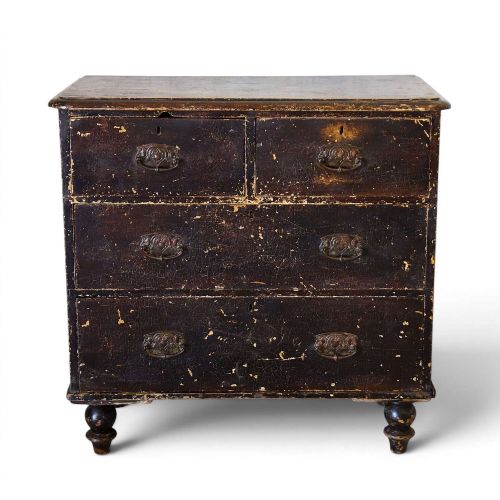
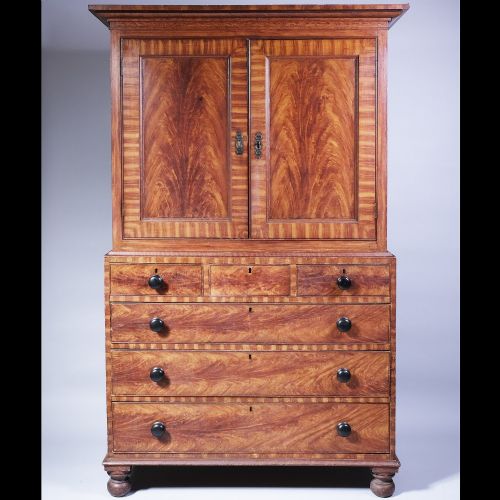
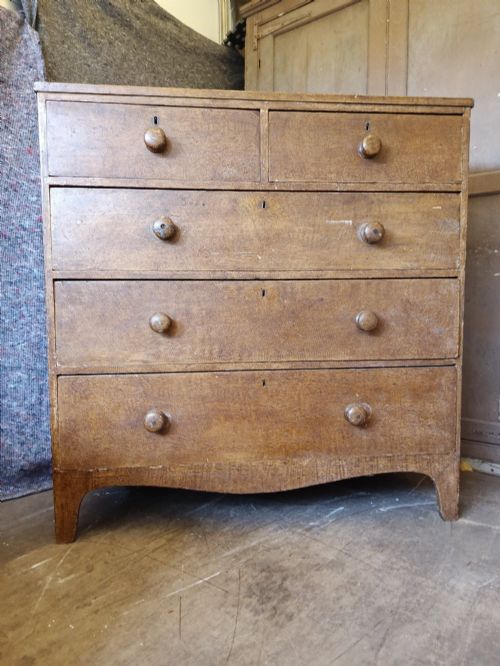
A brown scumble paint chest is primarily a pine storage unit finished with a decorative translucent glaze designed to imitate the grain of richer hardwoods. Buyers exploring this page will encounter various forms, including chests of drawers, blanket boxes, storage trunks, mule chests, and housekeepers cupboards.
The pieces originating on this page span the Regency period, the nineteenth century, the Victorian era, and around nineteen hundred. Regional examples include large Scottish pieces alongside English workshops, showing how utilitarian furniture received decorative treatment across different decades.
Most items combine straightforward functional construction with surface artistry, ranging from rustic farmhouse blanket boxes to more deliberate Art Nouveau expressions. The common thread is the surviving scumbled surface, which gives each wooden carcass its distinctive mottled appearance.
How they were made
Makers constructed the primary carcass and drawers using pine, selecting softwoods that accepted both structural joints and surface coatings easily. Hardware such as brass and iron appeared on handles, escutcheons, and hinges.
The defining technique involved applying a translucent tinted oil or varnish glaze over a lighter base coat, then manipulating the wet medium with combs, feathers, or rags. This process created simulated wood grains, mottling, and tortoiseshell effects before a protective topcoat was applied.
Listings feature pine and wood forms spanning the Regency, Victorian, and Art Nouveau periods, finished with original scumbled paint.
What varies in quality
The skill of the decorator determines the visual success of the surface, distinguishing careful grain simulation from hurried or muddy application. Master craftsmen achieved depth and movement in the translucent layers, whereas simpler execution appears flat or uniform.
The integrity of the underlying woodwork and the retention of original surface treatments dictate the desirability of each piece. Surviving brass or ceramic hardware and sound structural joinery elevate examples beyond those with heavily altered components.
The Brown Scumble Paint Chest Glossary
- Scumble
- A translucent or semi-opaque layer of pigmented paint or glaze applied over a lighter base colour. It remains workable long enough to be patterned with tools before drying.
- Pine
- A softwood commonly utilised for nineteenth-century utilitarian furniture carcasses. It provides a stable, light canvas for decorative paint finishes.
- Mule chest
- A storage box fitted with one or more drawers in the base beneath the main compartment. This form bridges the gap between traditional trunks and chests of drawers.
- Housekeeper cupboard
- A large storage furniture form designed for linens and provisions. These tall pieces often feature multiple doors and internal shelving.
- Art Nouveau
- A decorative style emerging around nineteen hundred characterised by organic lines and flowing motifs. Pieces from this era incorporate these stylistic cues into traditional forms.
Brown Scumble Paint Chest: Frequently Asked Questions
What is a scumble paint finish?
A scumble paint finish involves applying a translucent glaze over a pale base coat to create decorative patterns and simulated wood grains. Craftsmen manipulated the wet top layer using specialised tools to achieve mottled or figured effects.
This technique transformed inexpensive softwoods into richer surfaces resembling oak or mahogany. The resulting finish provides the distinctive aesthetic found on nineteenth-century country furniture.
How do I date a painted pine chest?
Dating relies on examining construction methods, hardware types, and stylistic indicators present in the woodwork. Regency pieces display different proportions compared to later Victorian or nineteen-hundred examples.
The presence of specific decorative details, such as Art Nouveau motifs or vernacular farmhouse styling, helps narrow the period of origin. Comparing drawer construction and timber thickness further clarifies the age.
Where were these chests used?
These storage pieces served utilitarian roles in bedrooms, landings, and domestic offices across British homes. Housekeepers cupboards and mule chests held household linens, garments, and dry goods.
Their robust pine construction made them suitable for daily domestic service in both country houses and provincial dwellings. The decorative scumble finish ensured they looked presentable in secondary living spaces.
Are scumble finishes original?
Determining originality involves looking at wear patterns, accumulation of dirt within the glaze layers, and compatibility with the underlying timber. Genuine nineteenth-century surfaces show natural softening and mellowing over decades of use.
Restoration or later overpainting alters the tactile quality of the piece. Examining the interface between the paint and the wood reveals whether the finish has endured from its period of manufacture.