
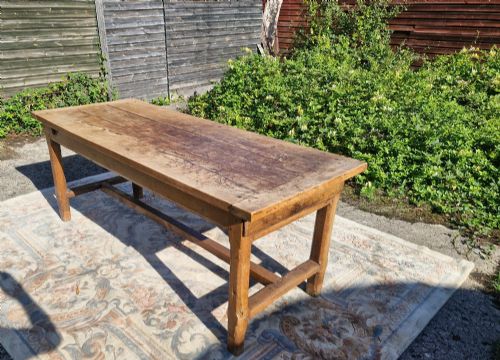
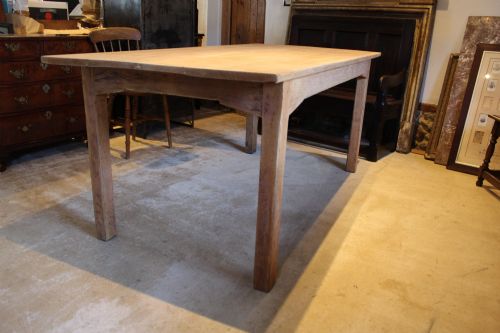
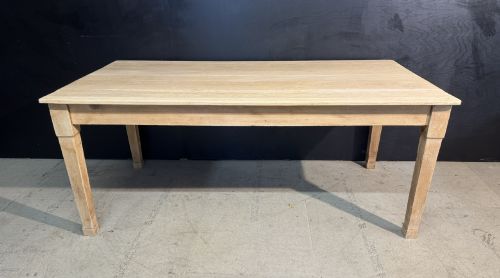
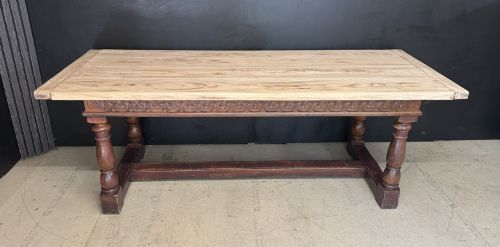
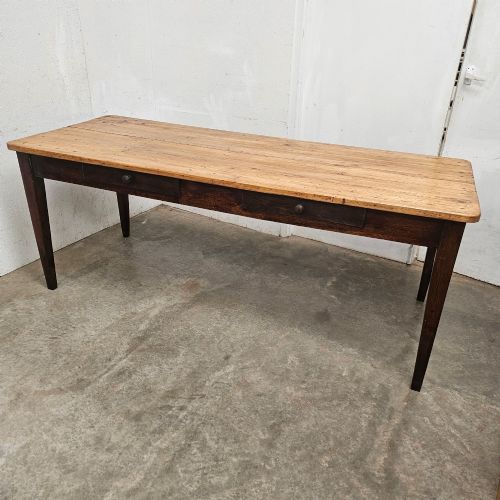
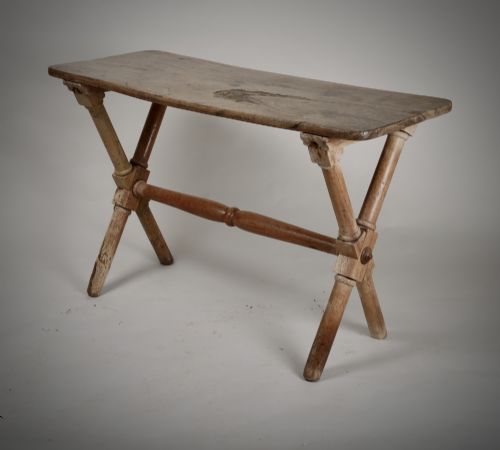
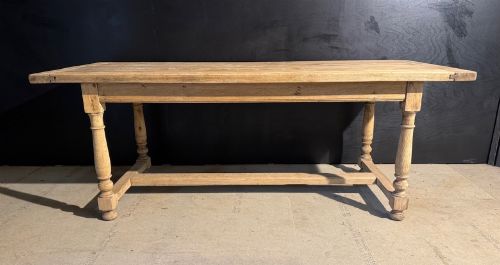


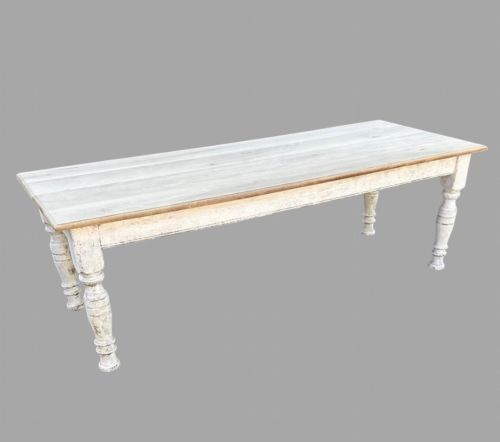
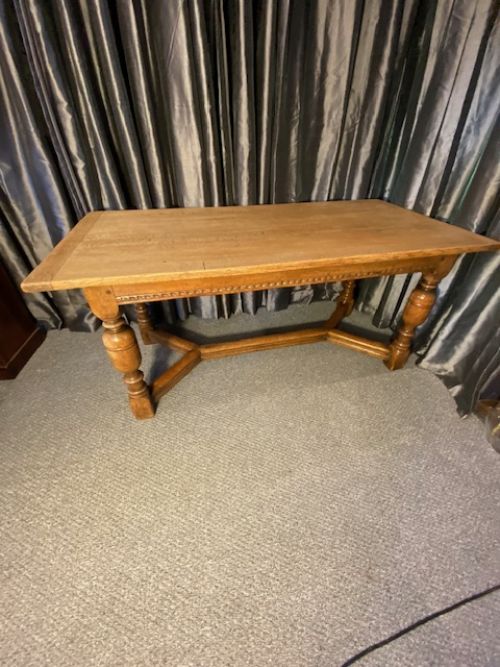
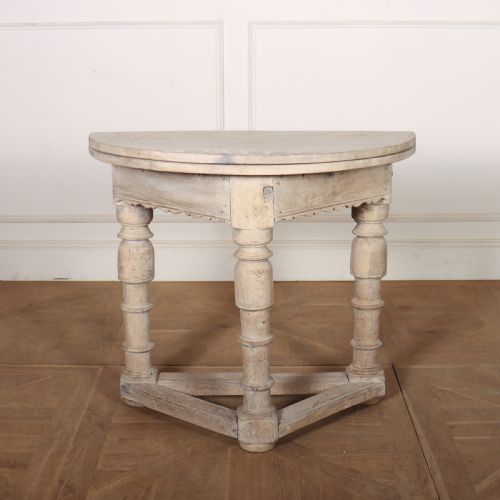
Scrubbed Oak Table
A scrubbed oak table brings daily utility and honest country character to a kitchen or dining room.
How they were made
These pieces rely primarily on solid oak, often paired with pine, sycamore or elm in structural or secondary parts.
Construction methods focus on functional durability, utilising heavy timber framing, trestles and turned legs to support daily use.
What varies in quality
Quality rests in the proportion of the timber, the integrity of the joints and the depth of patina developed across the scrubbed surface through generations of use.
Tables built from solid oak with balanced proportions and honest regional forms sit at a different level from lighter or more utilitarian occasional pieces.
Listings feature items from the eighteenth, nineteenth and early twentieth centuries, constructed in solid oak, pine, sycamore and elm.
The Scrubbed Oak Table Glossary
- Scrubbed oak
- Timber that has been thoroughly washed and scrubbed to reveal the pale, clean grain beneath years of grease and wax. This process leaves a matte, light finish typical of working kitchen furniture.
- Refectory table
- A long dining table traditionally used in communal dining halls. These pieces offer substantial length and sturdy leg supports linked by stretchers.
- Trestle table
- A table comprising two or more supports carrying a horizontal top. This design allows for maximum legroom along the length of the surface.
- Cricket table
- A small, lightweight three-legged table of vernacular English origin. The three legs ensure stability on uneven flagstone floors.
- Patina
- The surface sheen and colour acquired by wood over long periods through handling, cleaning and exposure to light. A desirable patina shows genuine age rather than artificial distress.
Scrubbed Oak Table: Frequently Asked Questions
How do I clean a scrubbed oak table?
Use a damp cloth with mild soap for routine cleaning, avoiding harsh chemical strippers that damage the pale wood.
Allow the timber to dry naturally to maintain the matte texture characteristic of scrubbed surfaces.
Can I use a scrubbed oak table daily?
These pieces were built for heavy kitchen and farmhouse work, making them well suited to daily dining.
Using placemats helps protect the historic timber from excessive moisture and heat marks.
What is the difference between a refectory table and a farmhouse table?
Refectory tables emphasise long, narrow proportions with structural stretchers running close to the floor.
Farmhouse tables often incorporate drawers or thicker legs suited to general kitchen preparation tasks.