



Scottish Mahogany Table
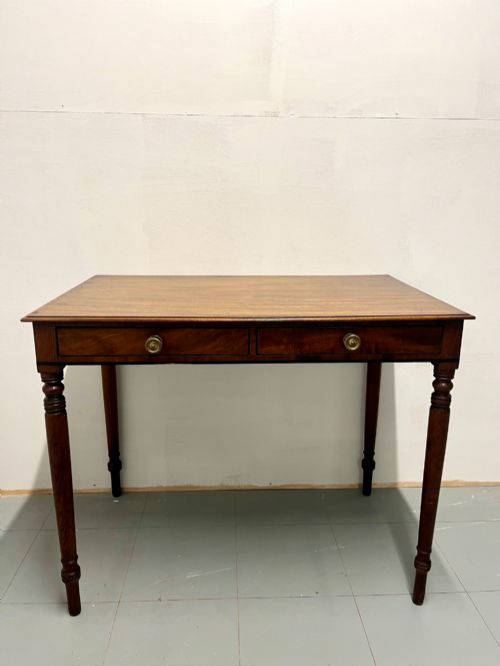
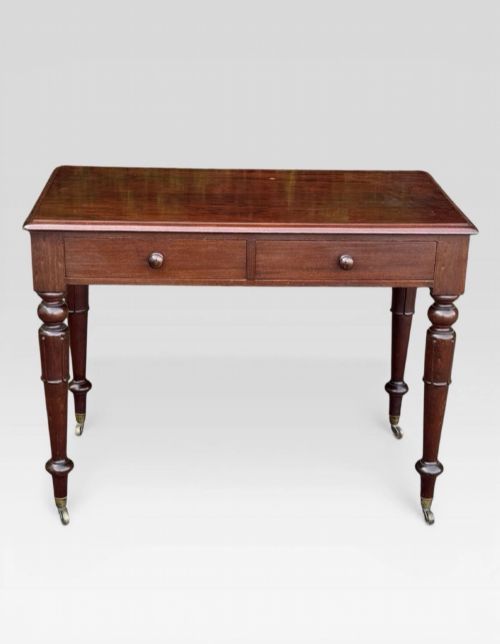
A Scottish mahogany table brings substantial timber, regional cabinet-making quirks, and sturdy proportions into a room.
Scottish Mahogany Table
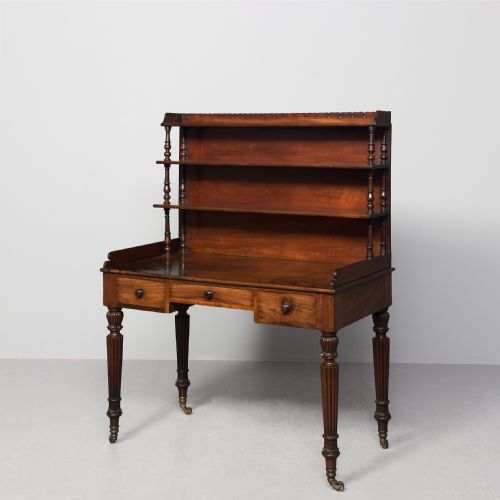
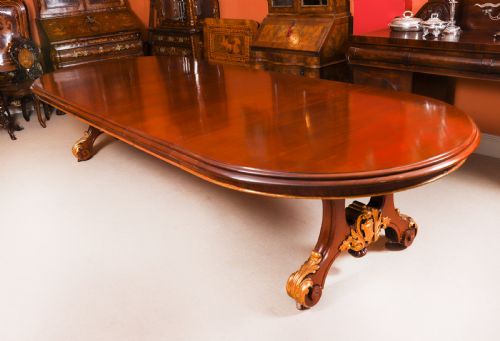
A Scottish mahogany table encompasses a range of domestic timber furniture, from compact occasional and card tables to large twin-pedestal dining formats. Dining and side tables dominate the selection, often bearing the characteristic weight and robust joinery of northern workshops.
Examples stretch across the Georgian, Regency, and Victorian periods, alongside later twentieth-century output from established Edinburgh firms. These surfaces served practical functions in Scottish country houses and town residences, designed for dining, writing, or serving.
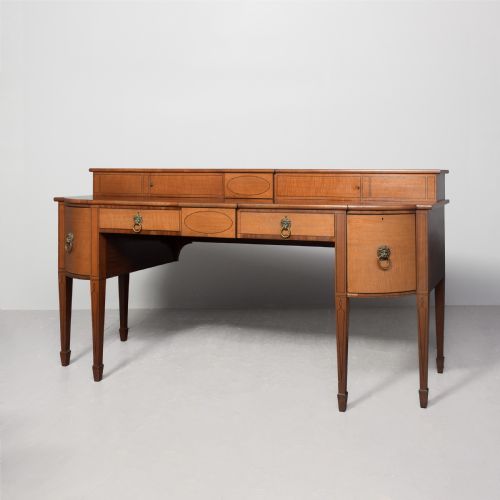
The regional design vocabulary often includes bold timber selection, stage-back galleries on sideboards, and distinct pedestal formations. Buyers meet everything from simple spider-leg side tables to elaborate crossbanded sofa tables.
How they were made
Cabinet-makers relied heavily on solid mahogany and flame mahogany veneers, frequently accented with contrasting boxwood inlay or rosewood crossbanding to frame the timber grain. Secondary woods provided structural support beneath the polished display surfaces.
Turned pedestals, brass fittings, and glass elements appear regularly across the surviving pieces, showing precise joinery and traditional hand-carving. Surface finishes were built up using traditional polishing methods to highlight the rich figures of the wood.
Materials range from solid mahogany and flame veneers to brass mounts, glass components, and delicate boxwood inlay.
What varies in quality
Quality rests on the choice of timber figure, the precision of the cabinet-making, and the integrity of the structural frame. Finer examples display carefully matched flame mahogany veneers and crisp, restrained carving rather than heavy embellishment.
James Mein of Kelso·Wylie and Lochead Glasgow·Bruce and Burns Edinburgh·John Taylor Edinburgh·Whytock and Reid of Edinburgh·William Trotter of Edinburgh·Morison of Ayr·Alexander Peter·Justice of Dundee
The Scottish Mahogany Table Glossary
- Flame mahogany
- A veneer cut from timber where the branch meets the trunk, producing a distinctive flickering flame pattern. This decorative figuring was prized for table tops and drawer fronts.
- Crossbanding
- A narrow strip of veneer laid across the grain of the main surface to form a contrasting border. It frames the central panel on many high-grade table tops.
- Card table
- A folding table designed for playing games, featuring a hinged top that opens to reveal a baize-lined surface. These often include internal well compartments for counters.
- Snap top
- A table mechanism allowing the top to tilt into a vertical position when not in use. This clever design saved floor space in smaller rooms.
- Stage-back
- A raised rear tier or shelf on a sideboard or serving table used to display plate. It adds vertical presence to large dining room furniture.
Scottish Mahogany Table: Frequently Asked Questions
How do I identify a Scottish table?
Scottish tables often feature distinct regional proportions, robust secondary timbers, and specific cabinet-making traits originating from Edinburgh or Glasgow workshops.
Look for documentation, local maker signatures, or characteristic details like stage-backs and specific boxwood stringing.
What rooms suit a sofa table?
Sofa tables work well behind seating or as compact freestanding writing desks in sitting rooms.
Their drop leaves allow them to adjust in size depending on the available floor space.
Are pedestal dining tables stable?
Pedestal formats rely on heavy central pillars and splayed legs to distribute weight evenly across the floor.
Well-constructed examples from the Georgian and Regency eras remain balanced even when fully extended with leaves.
How do I care for mahogany?
Protect the polished surface from direct sunlight and excessive moisture to prevent the wood from fading or warping.
Regular dusting with a soft, dry cloth preserves the natural lustre of the timber.