


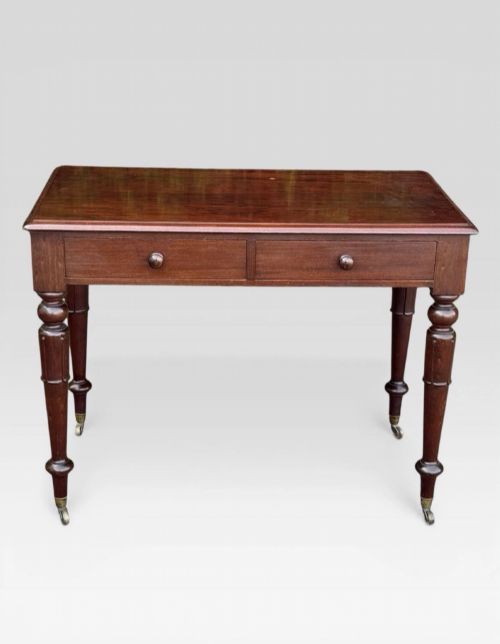
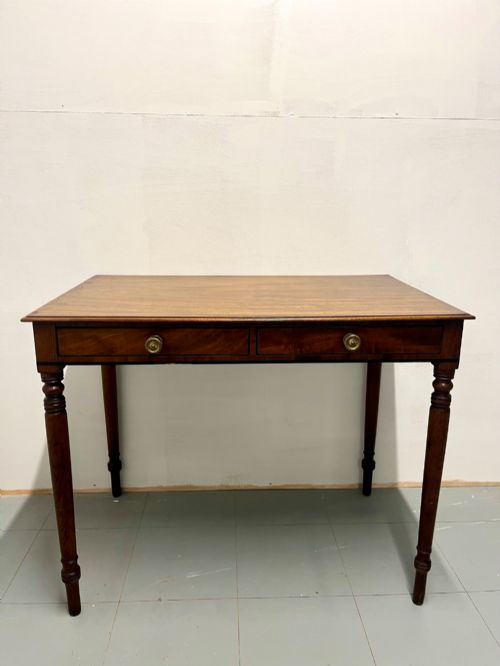
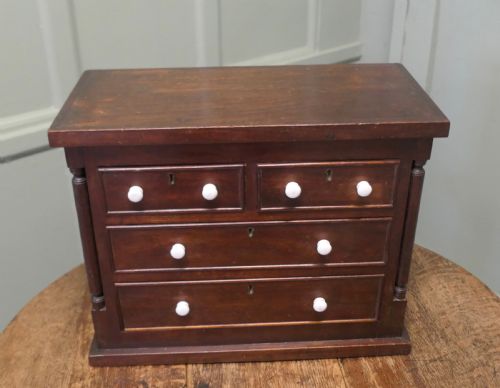


Scottish Mahogany Drawers
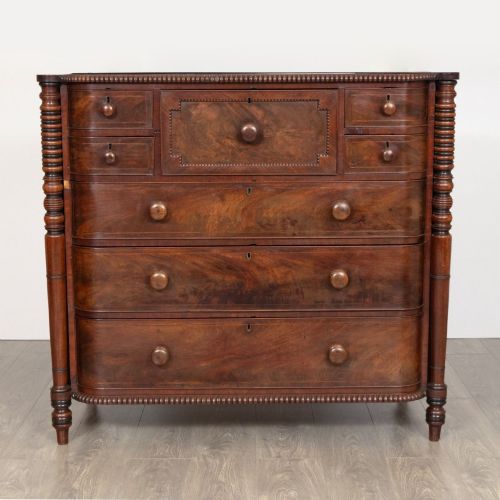
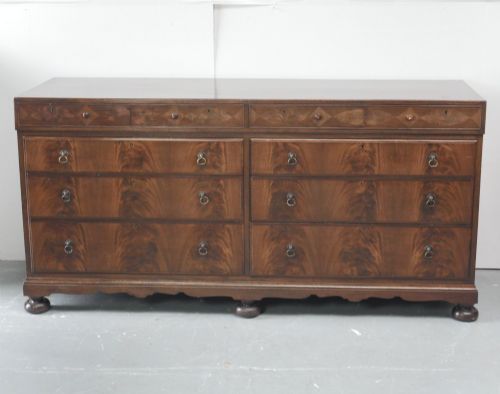
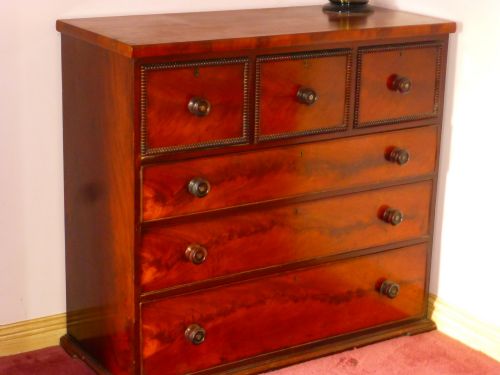
Scottish mahogany drawers bring substantial presence and rich timber figures into a room.
Scottish Mahogany Drawers
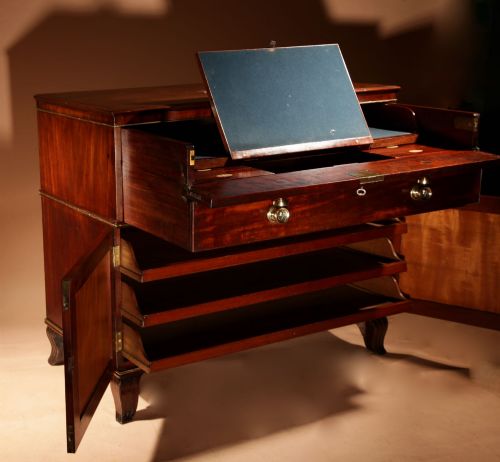
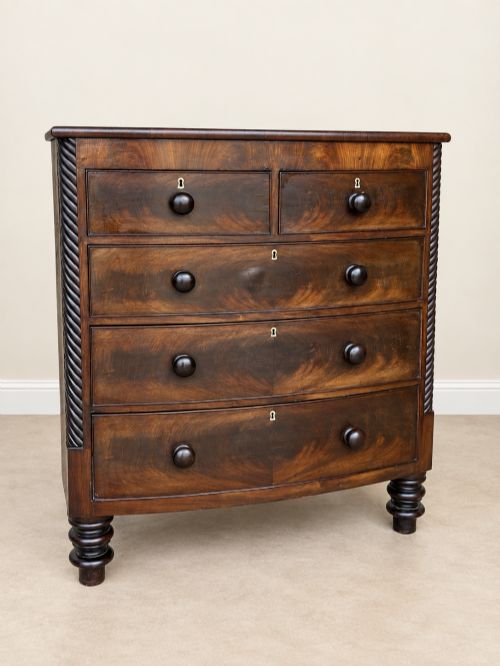
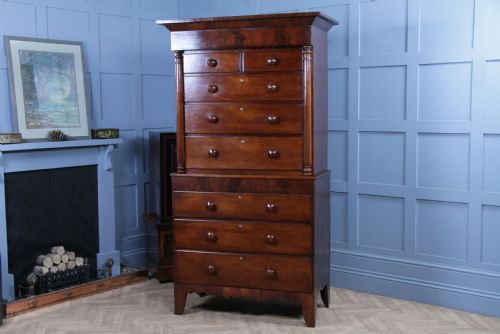
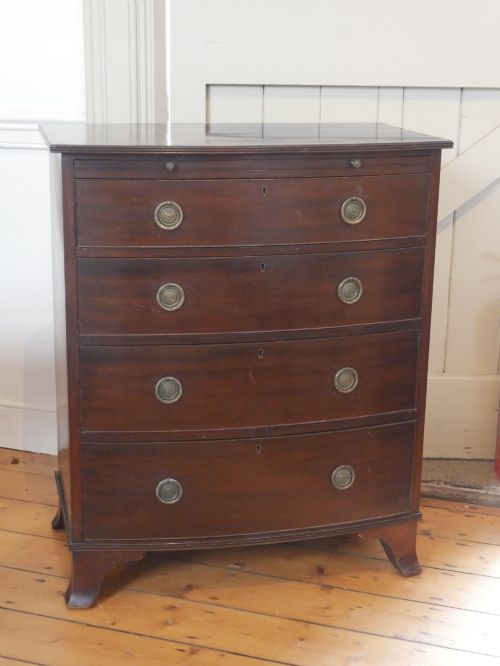
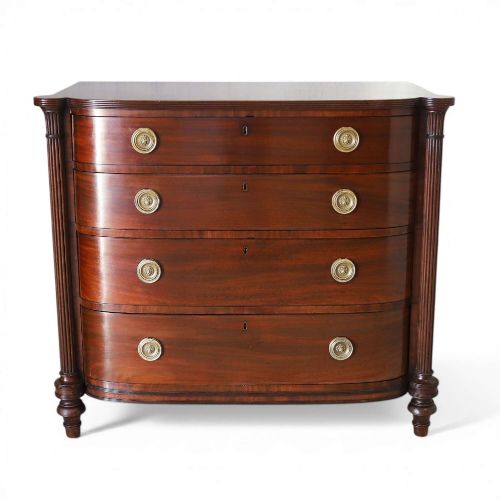
When you search for scottish mahogany drawers, you meet large case pieces from the Georgian, Regency, and Victorian periods. These range from bowfront chests and tall chests to apprentice pieces and miniature chests.
Makers such as Whytock & Reid, J A Mein Edinburgh Cabinet Maker, and R H & J Simpson represent the workshop origins found here. The forms span chests of drawers, library secretaires, desks, and collector chests.
The regional character often shows in the proportions and timber choice, particularly flame mahogany veneer over oak or pine carcases. Buyers encounter grand proportions alongside neat apprentice versions.
Construction and Timber
Cabinet makers utilised solid mahogany and flame mahogany veneer applied to secondary woods like oak and pine. Brass hardware provides functional detailing across the periods.
Veneers were matched to create striking grain patterns on drawer fronts, supported by traditional joinery methods suited to heavy case construction.
Scottish Mahogany Drawers Retail Price Guide 2026
Typical asking prices for scottish mahogany drawers among the pieces listed under this phrase on Sellingantiques today, from the lower quarter to the upper quarter. They describe what is for sale here now, not the wider market.
Listings feature mahogany alongside brass, flame mahogany veneer, oak, pine, wood veneer, and leather across multiple periods.
Quality and Construction
The standard of timber selection and veneer matching defines the visual impact of each piece. Superior examples display carefully chosen flame mahogany figures that align across multiple drawers.
Internal construction, including secondary woods like oak for drawer linings and the integrity of the original brass fittings, distinguishes finer workshop production from standard output.
Whytock & Reid·J A Mein Edinburgh Cabinet Maker·R H & J Simpson
The Scottish Mahogany Drawers Glossary
- Flame mahogany veneer
- A decorative wood slicing that produces a fiery, swirling pattern across furniture surfaces. It is applied over a stable secondary wood carcase.
- Apprentice chest
- A smaller scale piece created to demonstrate a woodworker's proficiency to a guild or master. These miniature versions replicate full size chests in detail.
- Bowfront
- A convex curved front contour popular in Georgian and Regency furniture design. This shape softens the corners of heavy case pieces.
- Serpentine front
- A furniture front featuring a central convex curve flanked by two concave curves. This undulating outline requires advanced woodworking skill.
- Crossbanded
- A border technique where thin strips of veneer are laid perpendicular to the grain of the main surface. This frames the drawer fronts or tabletops.
Scottish Mahogany Drawers: Frequently Asked Questions
What is a scotch chest?
A scotch chest typically refers to a heavy, traditional chest of drawers originating from Scotland, often featuring distinct top drawer arrangements and bold mahogany veneers.
These pieces frequently display regional cabinet making traits that separate them from English equivalents of the same eras.
How do I date a mahogany chest?
Dating relies on examining construction techniques, secondary woods such as oak or pine linings, drawer dovetailing, and the overall style indicators from Georgian to Victorian periods.
Hardware styles and veneer applications also offer clear chronological clues for each piece.
What are apprentice chests used for?
Apprentice chests were created by woodworkers to demonstrate mastery of their craft rather than for domestic storage. Their small scale allowed makers to showcase detailed joinery.
Collectors prize them today as finely detailed miniature examples of full size furniture forms.
How do I care for flame mahogany?
Flame mahogany surfaces require protection from direct sunlight and extreme humidity fluctuations to prevent veneer cracking or fading. Regular dusting with a soft cloth maintains the finish.
Applying appropriate wax occasionally nourishes the timber and preserves the depth of the grain.