


Scottish Loch Landscape Artwork
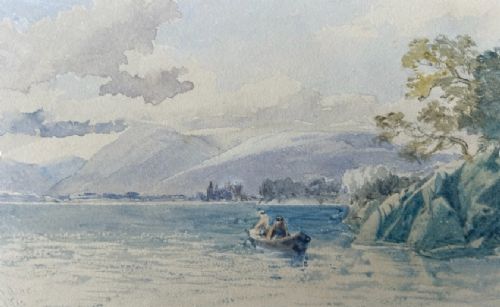
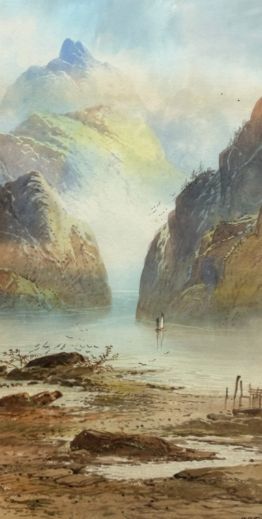
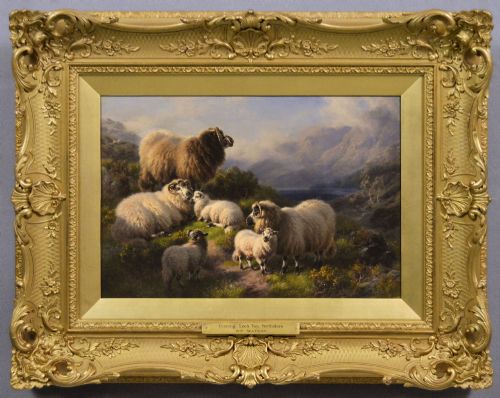
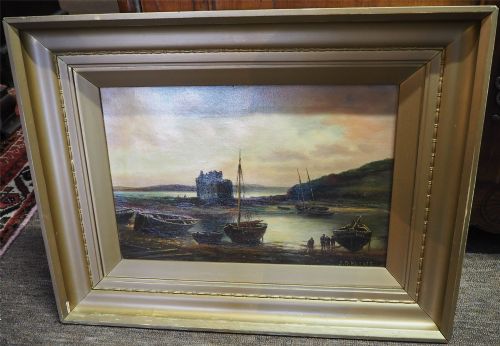
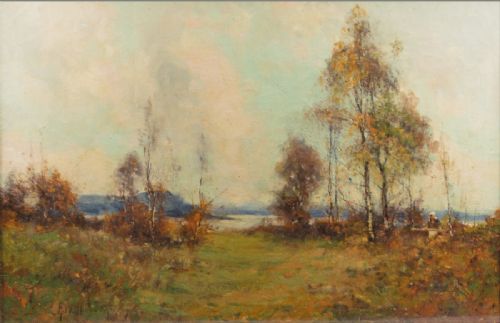
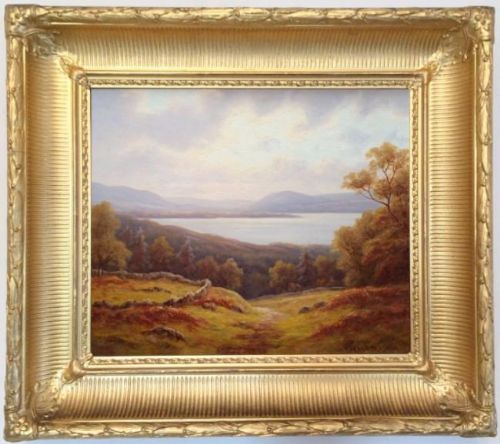
These pieces of scottish loch landscape artwork capture atmospheric highland water and mountain scenery through oil paint and watercolour.
Scottish Loch Landscape Artwork
A scottish loch landscape artwork portrays bodies of water set among mountainous terrain, often featuring Highland cattle, sheep, or historic castles along the shore. These works capture the distinct light and dramatic weather of northern topography across expansive vistas.
The pieces on this page span the Victorian period into the mid twentieth century, reflecting shifts in regional painting traditions. You will encounter detailed watercolours alongside substantial oil paintings on canvas.
Many compositions focus on named bodies of water such as Loch Lomond, Loch Tay, and Loch Awe. The subjects range from bright morning mist to quiet moonlight scenes.
Materials and methods
Artists painted primarily with oil paint on canvas or applied watercolour pigments to paper, framed in wood and gilt surrounds. Gouache also appears in works on paper from the early twentieth century.
Surviving canvases show traditional priming and layering techniques typical of nineteenth and early twentieth century studio practice. Pigments are handled with varying thickness to render the texture of water, rock, and sky.
Several highland cattle make repeated appearances by the lochside, apparently unfazed by changing nineteenth century art movements.
Judging quality in landscape painting
Quality rests upon the artist's command of light, atmospheric depth, and the handling of pigment to convey weather and distance. Stronger examples balance the minute details of cattle or ruined masonry with a naturalistic rendering of water and mountain atmosphere.
The treatment of the canvas or paper surface and the integrity of the original framing contribute to the overall presentation. Finer works demonstrate a confident brushwork that brings movement to the water and texture to the hills.
Thomas Miles Richardson Jnr·William Henry Earp·William Watson Jnr·Alexander Wellwood Rattray·Everett Watson Mellor·Henry Robinson Hall·Henry Hillier Parker·Frank Hider·James Bell Anderson·Stanley Orchart·William Miller Frazer·Daniel Sherrin·Alfred de Breanski Snr·AJ Thornton·George Cole·Gustave De Breanski·George Melvin Rennie·E. M. Seaton
The Scottish Loch Landscape Artwork Glossary
- Gouache
- An opaque watercolour paint that dries to a matte finish. It allows artists to build solid areas of colour and bright highlights on paper.
- Monogram
- A motif made by overlapping or combining two or more letters to form a single symbol. Artists frequently used these to sign works.
- Gilt
- A thin layer of gold leaf applied to wood frames. It provides a decorative metallic finish that enhances the framed artwork.
- Highland School
- A nineteenth century painting tradition focused on Scottish mountains, lochs, and rural life. Practitioners emphasised romantic scenery and native wildlife.
- Victorian
- Relating to the reign of Queen Victoria, spanning the nineteenth century. This period produced the majority of the detailed landscape paintings seen here.
Scottish Loch Landscape Artwork: Frequently Asked Questions
What periods do these paintings date from?
The works originate largely from the Victorian era and the nineteenth century, extending into the mid twentieth century. Artists worked within established regional movements like the Highland School.
Dates on listings indicate either the specific year of execution or the broader stylistic period of the piece.
How were these watercolours and oils framed?
Many pieces retain their original wooden frames, often accented with gilt mouldings that reflect nineteenth century framing styles. These surrounds were chosen to complement the tones of the landscape.
Frames provide structural support and protect the edges of the canvas or paper from environmental wear.
Where do the scenes usually take place?
The compositions depict recognised Scottish lochs and mountainous regions such as Loch Ness, Loch Tay, and the surrounding Highlands. Artists travelled to specific rural locations to sketch natural topography and local livestock.
Titles often record the exact body of water or castle depicted within the landscape view.
How do I care for antique paintings?
Keep works out of direct sunlight to prevent the fading of watercolour pigments and oil paints. Stable indoor humidity levels protect both the canvas support and the wooden frame.
Dust frames gently and avoid applying liquid cleaners directly to the painted surface.