



Scottish Impressionist Landscape Painting
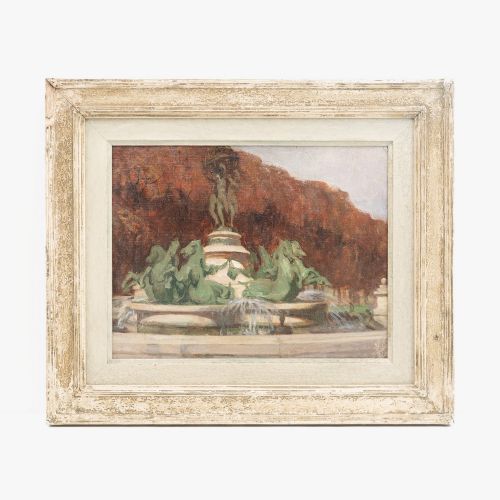
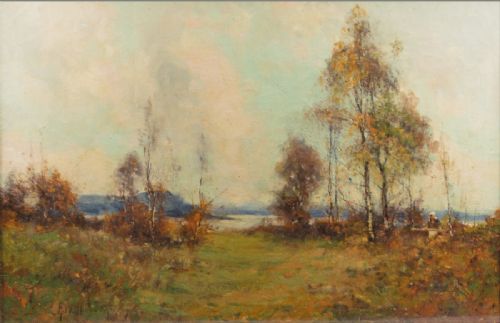
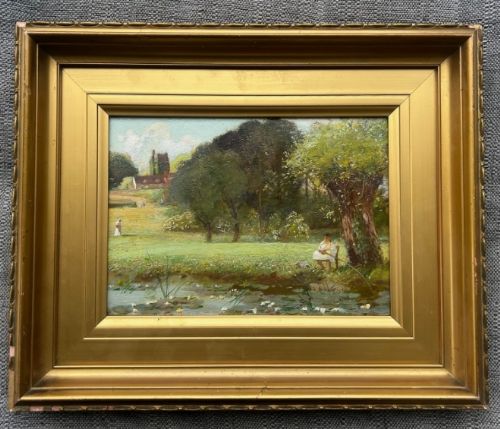
These scottish impressionist landscape painting works capture open skies and shifting coastal light through vigorous brushwork.
Scottish Impressionist Landscape Painting
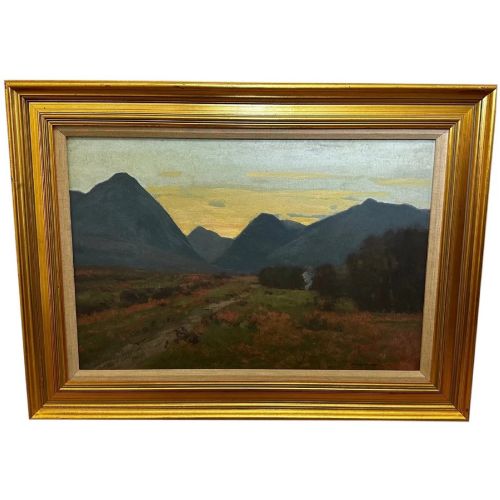
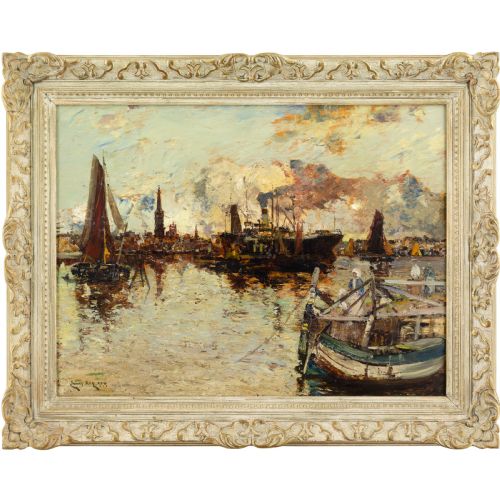
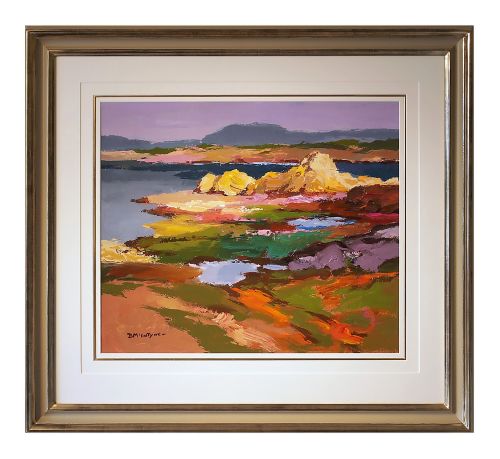
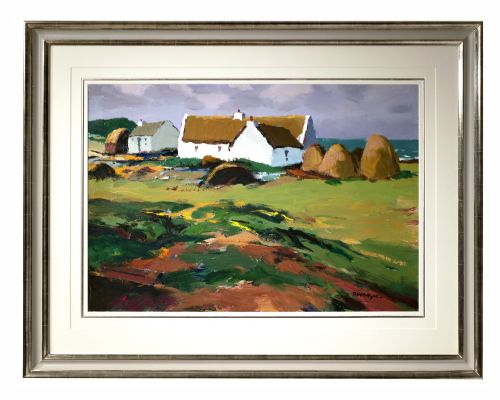
A scottish impressionist landscape painting brings together the atmospheric conditions of northern terrain and the expressive brushwork developed around the turn of the twentieth century. When browsing this selection, you encounter coastal views, rural farmyards, and highland vistas originating from the Victorian era through the mid-century decades.
The prevalent format on this page is an oil painting executed on canvas, board, or wood panel, framed in period gilt wood. These works record specific locations from Arran to the Hebrides, rendered by artists responding directly to light and weather rather than academic convention.
Materials and technique
Painters relied principally on oil paint applied to prepared canvas, wooden panels, or rigid boards, occasionally employing watercolour on paper for lighter studies. The handling ranges from thin, translucent glazes to thick impasto that leaves visible ridges of pigment across the surface.
Support materials shifted over the decades, moving from traditional heavy canvases stretched on wooden frames toward portable boards suited for outdoor sketching. Frames are predominantly moulded wood finished with gilt leaf, which complements the warm tones of the compositions.
The listings span from the Victorian period through the nineteen-sixties, utilising oil on canvas, board, and wood panel.
Distinctions in execution
Quality rests upon the confidence of the mark-making and the accuracy with which atmospheric weight is conveyed. Stronger examples demonstrate a sure control of tonal relationships, where the interaction of shadow and pale northern light creates depth without excessive detail.
Lesser works can rely on formulaic colour arrangements or hesitant brushwork that fails to capture movement in water or sky. The distinction lies in whether the pigment appears kneaded into the surface to build structure or merely applied to fill space.
George Houston·James Kay·Donald McIntyre·Alexander Jamieson·Alexander Wellwood Rattray·Archibald Kay·Sir David Murray·Thomas Bromley Blacklock·William Grant Murray·Robert Russell MacNee·Robert Gemmell Hutchinson·William Miller Frazer·James Torrington Bell·Owen Bowen·Hirst Walker·Robert Macaulay Stevenson·Robert McGregor·Emily M Paterson·George Smith·Josephine Haswell Miller·George Melvin Rennie·Alastair Flatterly·James G Faulds·Allan Douglass Mainds·George Neil
The Scottish Impressionist Landscape Painting Glossary
- Impasto
- Paint applied thickly to a canvas or board, standing out in relief from the surface so that the texture of the brush or palette knife remains visible.
- Gilt wood
- Carved or moulded timber finished with a thin layer of gold leaf or metallic powder, commonly used for framing antique artwork.
- Post-Impressionism
- An artistic movement following impressionism that rejected strict naturalism in favour of expressive forms and symbolic use of colour.
- Wood panel
- A rigid flat wooden support used as a painting surface before stretched canvas became universally adopted.
Scottish Impressionist Landscape Painting: Frequently Asked Questions
How do I date a Scottish landscape?
Dating relies on the style of the brushwork, the composition, and the framing materials used by the artist. Signatures and exhibition labels on the reverse often provide precise temporal anchors.
Changes in support materials also assist with chronology, as artists transitioned between heavy canvases, wooden panels, and lightweight boards across different decades.
Where were these artists working?
These painters travelled extensively across rural Scotland, capturing locations such as the Isle of Arran, the Hebrides, and coastal fishing harbours. Many also worked within European artistic centres before returning north.
Their subjects document both familiar landscapes and specific geographical landmarks altered by changing light and weather.
How should I hang an oil painting?
Oil paintings on canvas or board require stable indoor environments away from direct sunlight and excessive moisture fluctuations. Secure wall fixings matched to the weight of the gilt frame ensure safe display.
Allowing adequate space around the frame lets the energetic brushwork breathe within the room.
What defines Scottish impressionism?
This regional movement combines the loose brushwork and outdoor observation of French impressionism with a distinct palette suited to northern light. Painters focused on local topography, weather, and rural life.
The resulting images prioritize mood and atmosphere over photographic reproduction of scenery.