

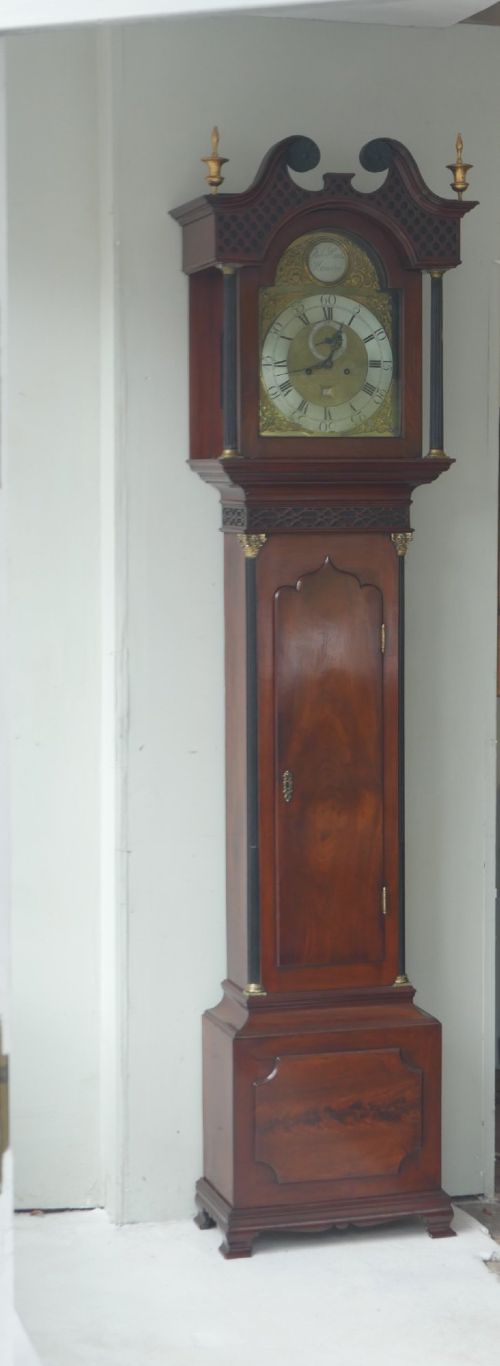
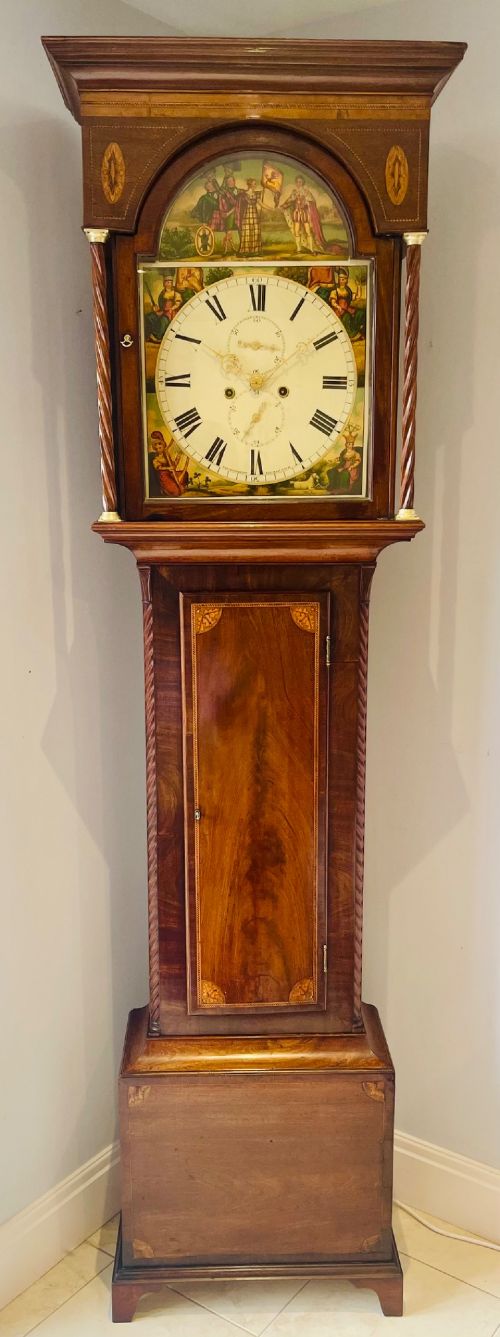
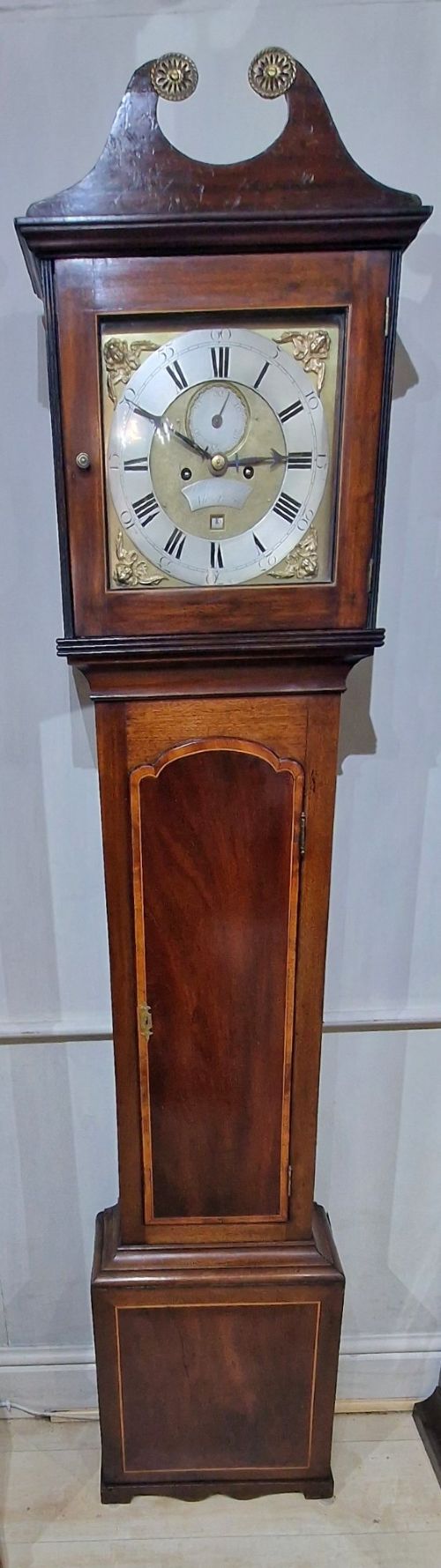
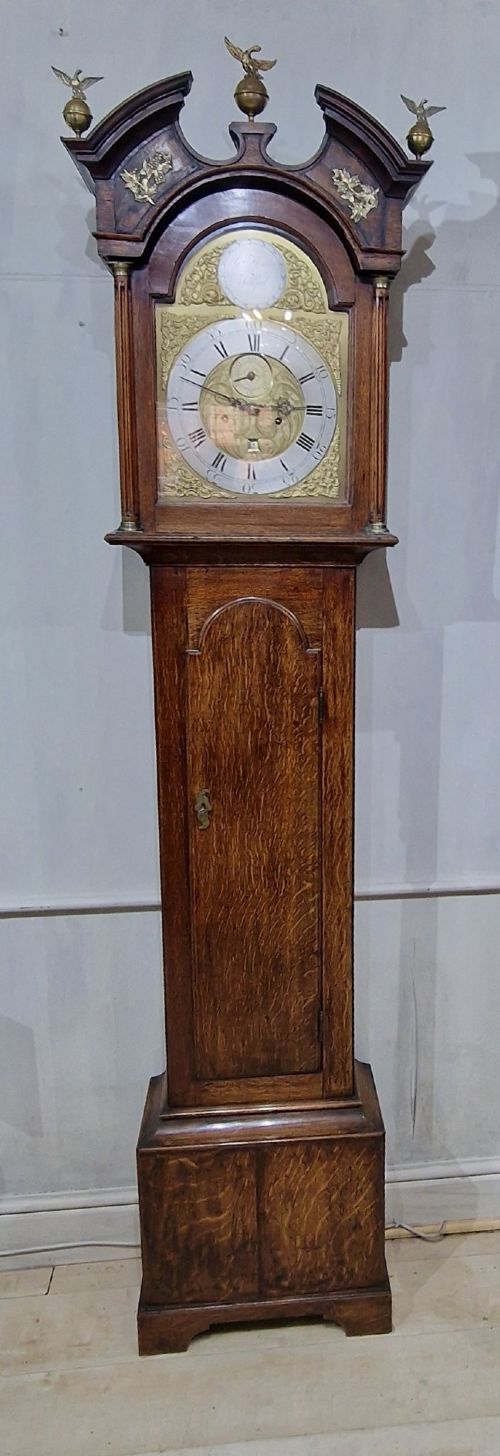


Scottish Georgian Grandfather Clock
A Scottish Georgian grandfather clock is a tall floor-standing timepiece housing precise mechanics, offering enduring character and traditional regional cabinet-making to any room.
Scottish Georgian Grandfather Clock
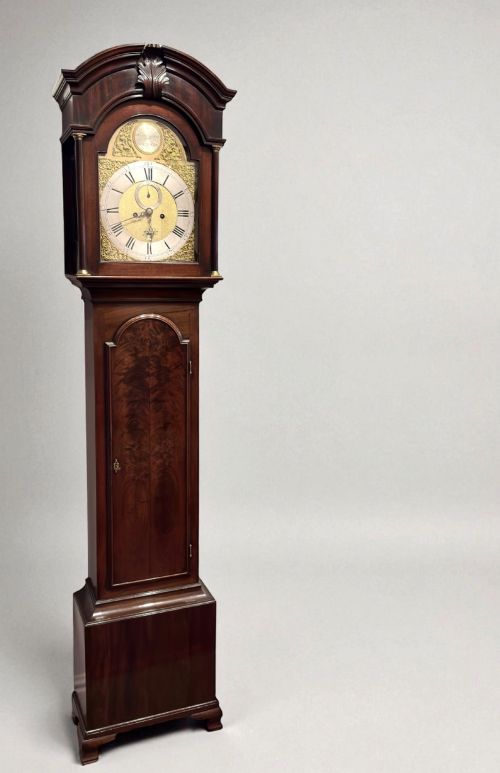
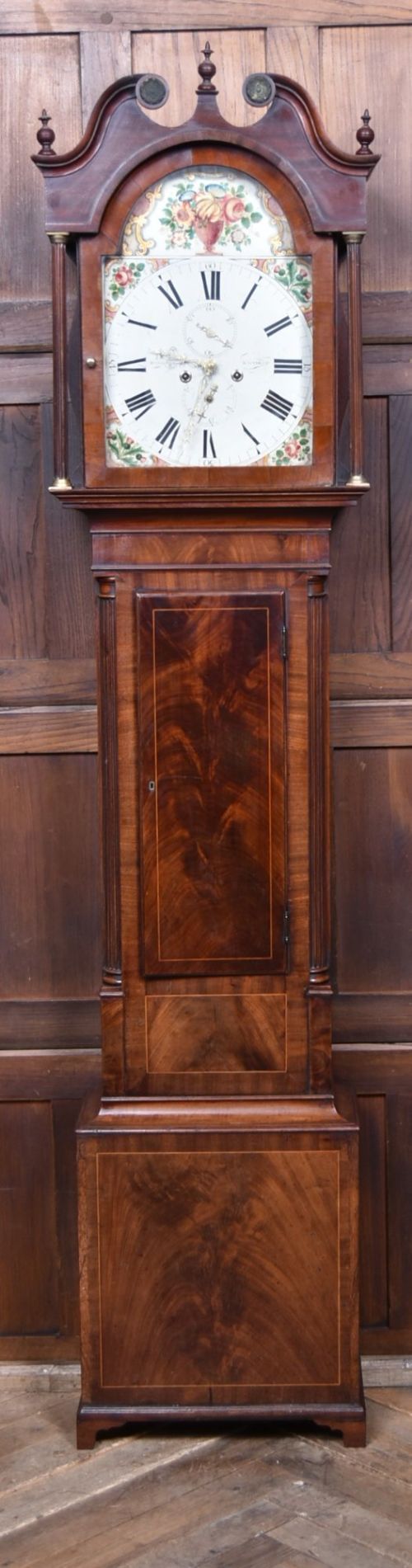
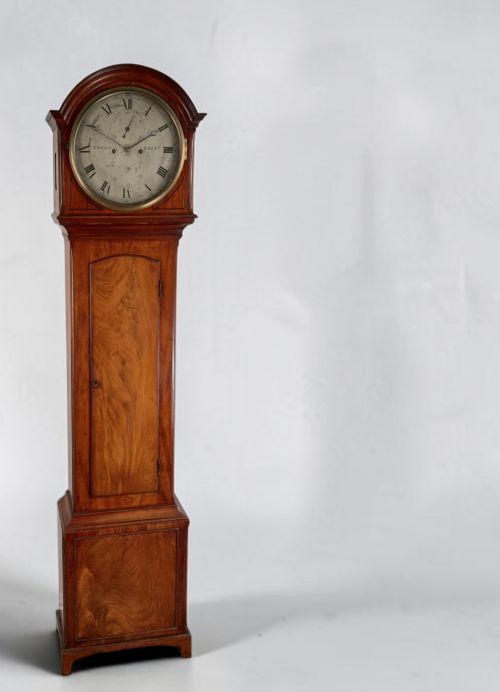
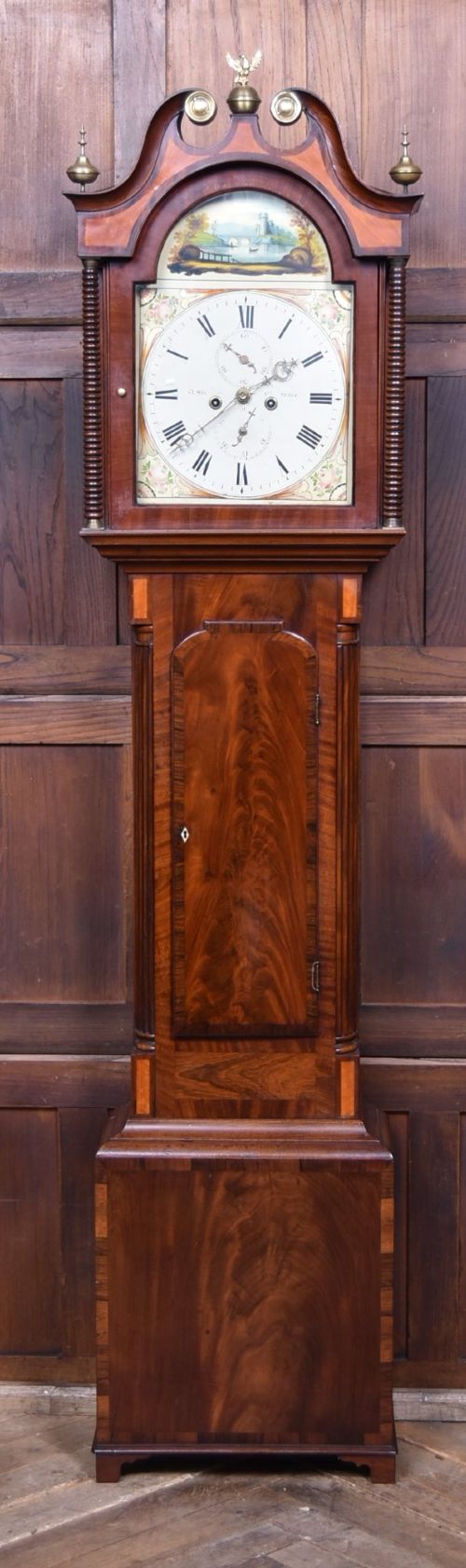
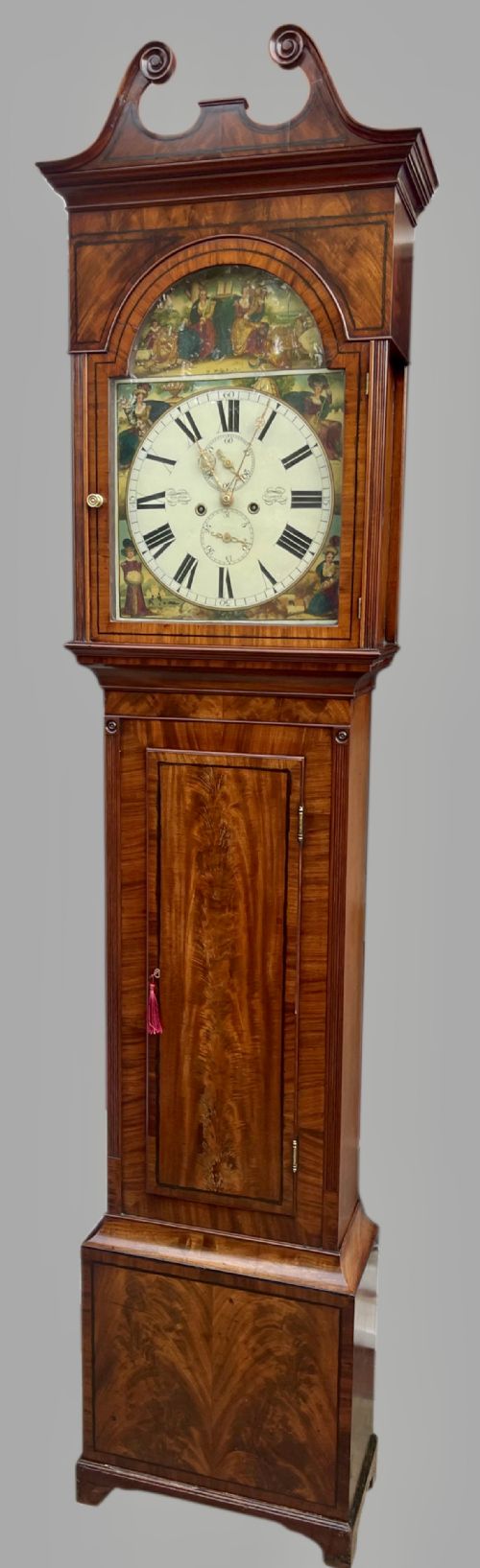
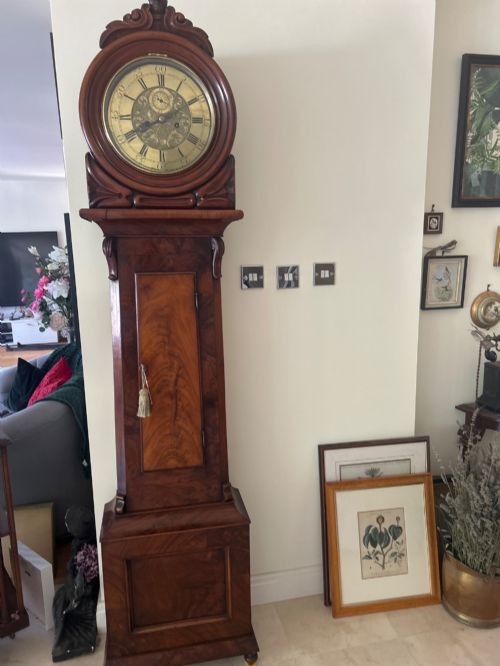
When you search for a scottish georgian grandfather clock, you are looking at tall case timepieces primarily originating from the Georgian period through the nineteenth century, including eighteenth-century examples and Regency variants. These tall instruments stand upright on the floor, protecting weighted mechanisms behind glazed or panelled wooden doors.
The versions you are most likely to meet on this page are housed in mahogany, flame mahogany, or oak cases, frequently featuring regional Scottish dials and cabinet work. Makers from towns such as Edinburgh, Montrose, Dundee, and Aberdeen built these longcase clocks to record hours, minutes, and sometimes lunar cycles with steady reliability.
How they were made
Cabinet makers utilised dense hardwoods like mahogany and oak, often selecting flame mahogany veneers to figure the tall trunk and hood. These timbers were planed, joined, and polished by hand to enclose the heavy brass movements securely.
Dial faces combined brass backing plates with painted iron or enamel surfaces, inscribed by regional clockmakers using dark enamels. Glass panels protected the delicate hands and painted moons without obstructing the view of the pendulum swing.
Scottish Georgian Grandfather Clock Retail Price Guide 2026
Typical asking prices for scottish georgian grandfather clock among the pieces listed under this phrase on Sellingantiques today, from the lower quarter to the upper quarter. They describe what is for sale here now, not the wider market.
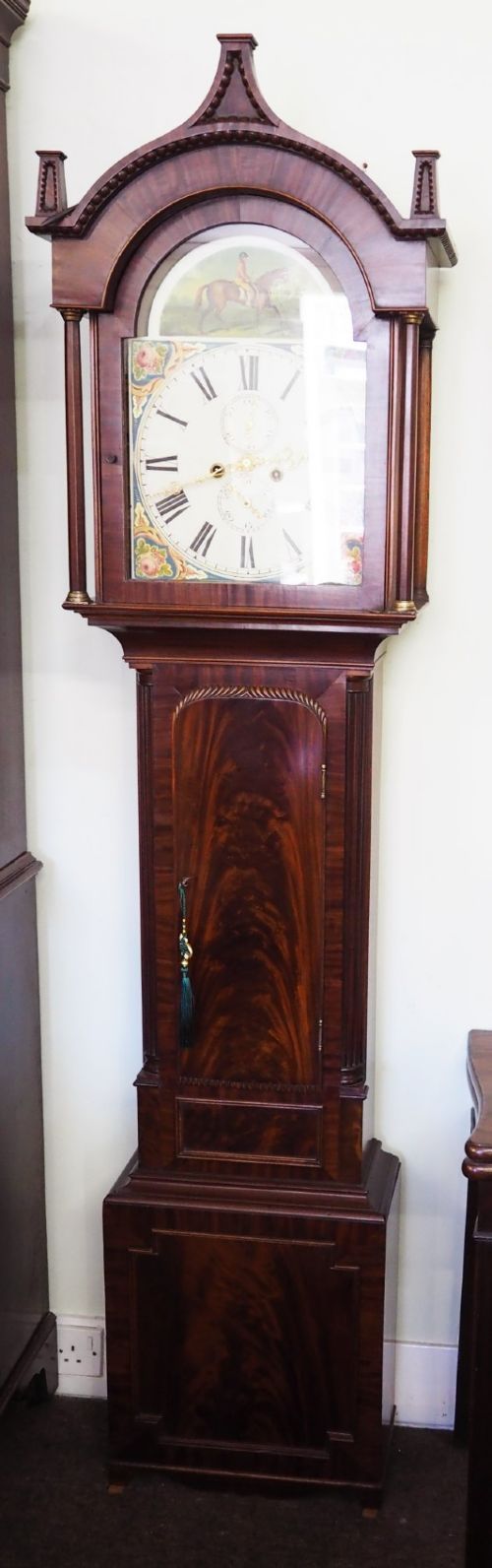
Several provincial clockmakers evidently had horses, as equestrian details occasionally found their way onto the painted panels of Scottish longcase dials.
What varies in quality
The standard of a scottish georgian grandfather clock depends on the harmony between the cabinet proportions and the signed movement within. Regional cabinet makers varied in their carving depth, wood selection, and the crispness of inlaid details along the trunk.
Movement quality rests on the precision of the brass wheelwork and the clarity of the painted or engraved dial inscriptions by named makers. Cases featuring figured flame mahogany or intricate marquetry separate the simpler utility clocks from the finest provincial workshop productions.
Hendrie Ogg·Gordon of Aberdeen·Green of Edinburgh·D. Straiton·William McEwan·David Morice·John Breakenrig·Ninian Davidson
The Scottish Georgian Grandfather Clock Glossary
- Longcase clock
- A tall pendulum clock enclosed in a wooden case that stands directly on the floor. These instruments are frequently called grandfather clocks.
- Moon dial
- A specialised dial mechanism displaying the lunar phases through a rotating painted disc. This complication tracked tides and moon cycles for agricultural and coastal communities.
- Flame mahogany
- A decorative veneer cut from wood fork sections where branches join the main trunk. This technique produces fiery, flamed patterns across the clock door.
- Regulator
- A precision pendulum clock designed for accurate timekeeping and calibration. These mechanisms prioritised exact time measurement over domestic chime complications.
Scottish Georgian Grandfather Clock: Frequently Asked Questions
How do I wind my grandfather clock?
Most eight-day longcase clocks require a winding key inserted into holes on the dial face to raise the internal weights every week. Turn the key steadily until the weight reaches its upper limit without forcing the mechanism.
Ensure the pendulum hangs evenly and the clock stands on a level floor before restarting the swing. Gentle handling protects the historic brass gear trains from unnecessary wear.
Where should I place a longcase clock?
Position your tall clock against an interior wall away from direct sunlight, central heating radiators, and damp exterior stone. Stable room temperatures protect the mahogany or oak timber casing from splitting.
Solid floorboards or firm foundations prevent vibrations from disturbing the pendulum swing and the escapement beat. Adequate clearance above the hood allows room for weight removal during maintenance.
How do I identify a Scottish Georgian movement?
Examine the painted iron or brass dial for signatures from provincial Scottish towns such as Edinburgh, Dundee, Montrose, or Aberdeen. Regional stylistic touches often distinguish these dials from English equivalents.
Inspect the interior brass plates and signed inscriptions for local maker attributions recorded during the eighteenth and nineteenth centuries. The cabinet proportions frequently reflect regional Scottish cabinet-making traditions.
What is the difference between an 8 day and 30 hour clock?
An eight-day movement requires winding approximately once a week using two or three internal weights suspended by cords or chains. These clocks usually include striking trains for the hours.
Thirty-hour movements require daily winding and often utilise simpler gear trains to track time between interventions. The interior weight drops faster through the narrow trunk than in eight-day versions.