



Scottish Cottage Landscape Art
These scottish cottage landscape art pieces bring rugged highland scenery and remote crofts into your home through expressive brushwork.
Scottish Cottage Landscape Art
When you search for scottish cottage landscape art, you find works depicting rural dwellings set against wild terrain. These paintings range from Georgian watercolours to mid-twentieth-century canvases.
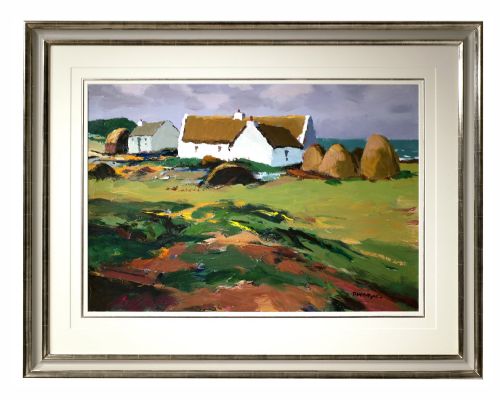
The selections on this page feature oils on canvas or board, capturing both quiet crofts and dramatic highland lochs. Victorian and 19th Century British landscape traditions sit alongside later Modern British and Scottish Expressionist interpretations.
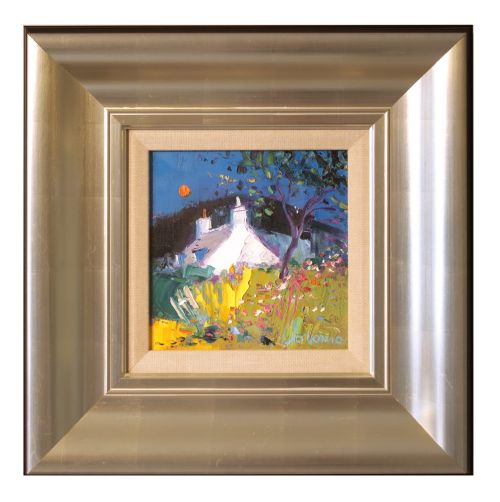
You encounter everything from early 19th Century depictions signed by Nasmyth to contemporary works by John Lowrie Morrison. Each piece documents remote vernacular architecture within an expansive environment.
Materials and methods
Artists typically applied oil paint to canvas, wood, or board to build textured surfaces that weather the visual elements. These mediums allowed painters to capture the shifting light and rugged textures of rural terrain.
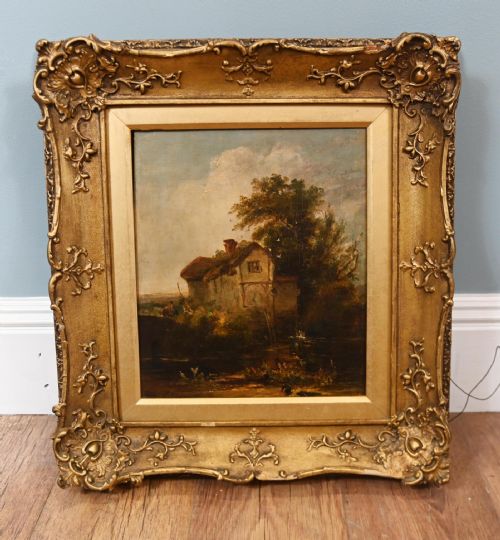
Many works incorporate traditional gilt wood frames that complement the depth of the oil compositions. The handling of the paint shifts from the meticulous detail of earlier periods to the looser impasto of later Scottish Impressionism.
Scottish Cottage Landscape Art Retail Price Guide 2026
Typical asking prices for scottish cottage landscape art among the pieces listed under this phrase on Sellingantiques today, from the lower quarter to the upper quarter. They describe what is for sale here now, not the wider market.
Listings feature works spanning the Georgian and Victorian eras up to mid-20th-century Scottish Impressionism and Post-Impressionism.
Distinctions in quality
Quality rests in the handling of light and the atmospheric weight of the Scottish landscape. Stronger examples demonstrate confident brushwork that conveys the isolation and weather of a remote croft without relying on rigid sentimentality.
Provenance and clear attribution to recorded painters elevate certain canvases above anonymous works. The synergy between the subject matter, the stability of the wood or canvas support, and the framing determines the overall standing of each piece.
John Lowrie Morrison·Donald McIntyre·Robert Gemmell Hutchinson·George Cole·Thomas Pritchard
The Scottish Cottage Landscape Art Glossary
- Croft
- A small agricultural landholding in Scotland, typically featuring a small dwelling house. These whitewashed homes form the focal point of many rural compositions.
- Impasto
- The process of laying paint thickly on a canvas so that it stands out from the surface. Artists employ this technique to give texture to stone walls and rugged terrain.
- Impressionism
- A style of painting that focuses on capturing the visual impression of a moment, especially through the shifting effect of light and colour. Scottish variants adapt this approach to northern skies.
- Gilt wood
- Wood that has been covered with a thin layer of gold leaf or gold paint. Frames utilising this finish are common on period landscape paintings.
- Watercolour
- A paint whose liquid medium is water, applied to paper or similar supports. These delicate works require glass protection and offer lighter, translucent tones.
Scottish Cottage Landscape Art: Frequently Asked Questions
What is scottish cottage landscape art?
These works depict rural dwellings, crofts, and remote homes set within the rugged terrain of Scotland. They span multiple centuries and artistic movements.
Paintings range from early 19th century watercolours to mid-century oil compositions by listed artists.
How were these paintings created?
Artists used oil paint on canvas, wood panels, or boards, often applying thick brushstrokes to capture weather and texture. Watercolours on paper also appear among the earlier items.
Traditional wooden frames, frequently gilt, enclose many of the canvases to complement the painted scenes.
How do I date a Scottish landscape?
Signatures, dates, and stylistic markers help establish the period of a painting. Georgian and Victorian works often show greater detail, while 20th-century pieces lean towards expressionist brushwork.
Frame construction and the material of the support board or canvas also provide clues to the era.
How do I live with oil paintings?
Keep oil paintings away from direct sunlight and dramatic shifts in room temperature to protect the canvas and paint layers. Display them on interior walls with stable conditions.
Dust the surface gently with a dry, soft brush and avoid using liquid cleaners on the paint or frame.