
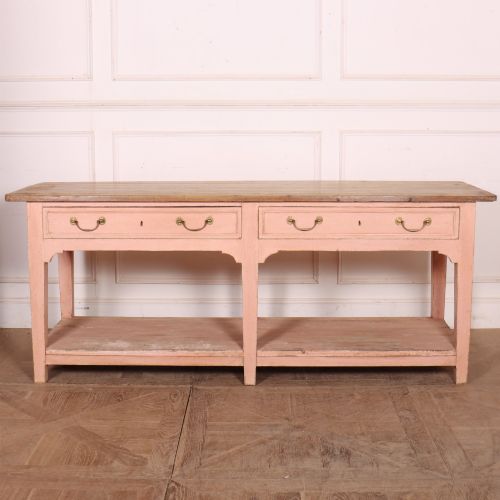
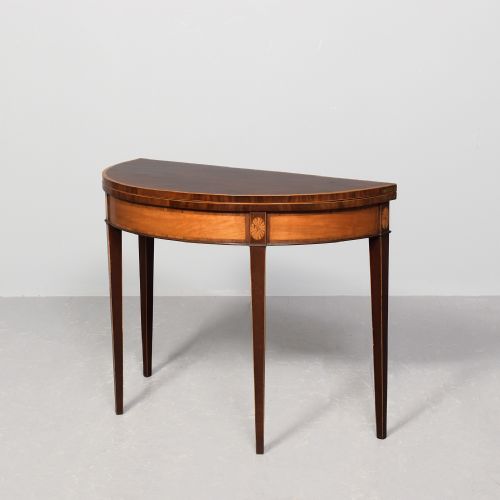
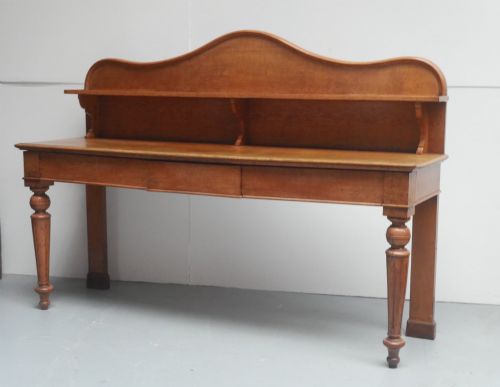
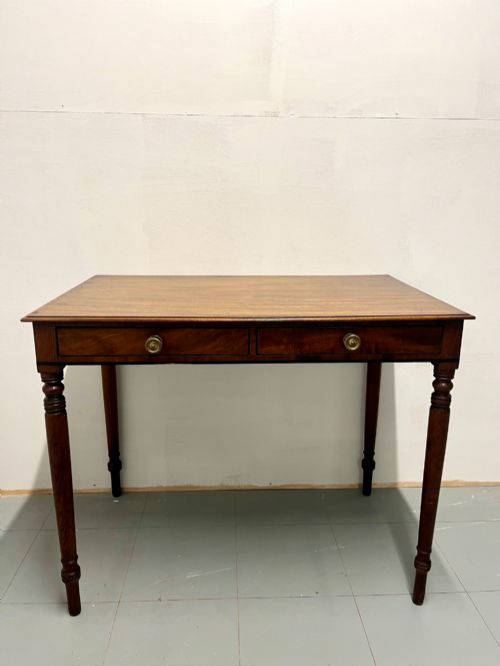
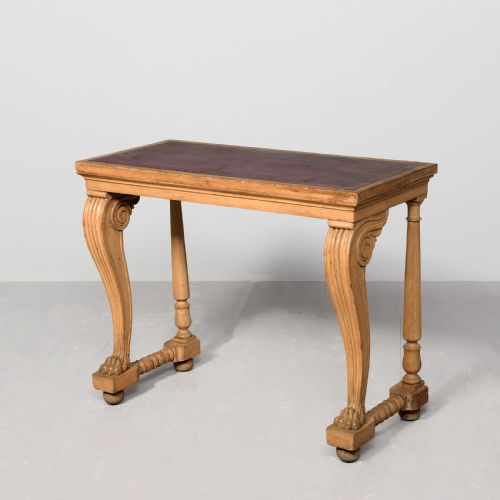
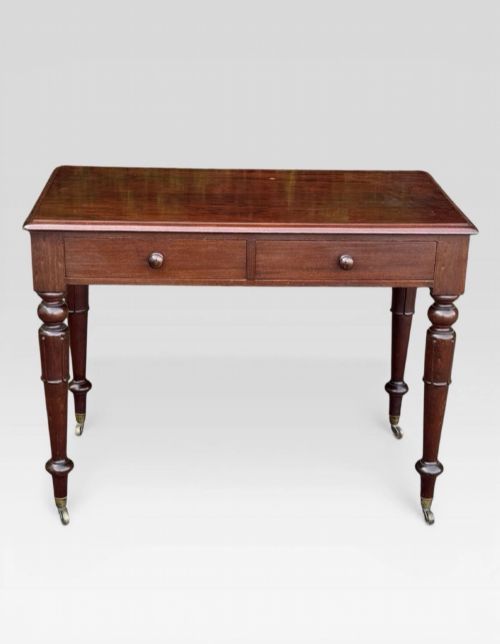
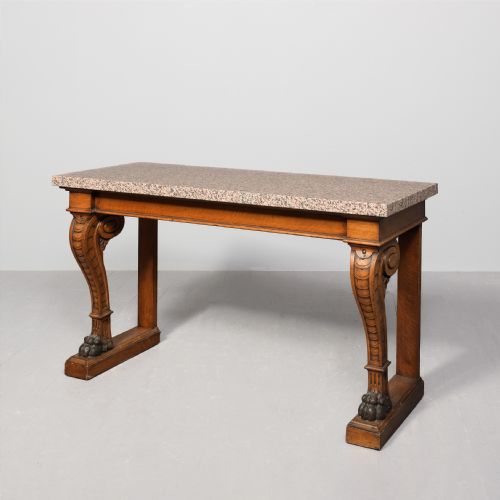


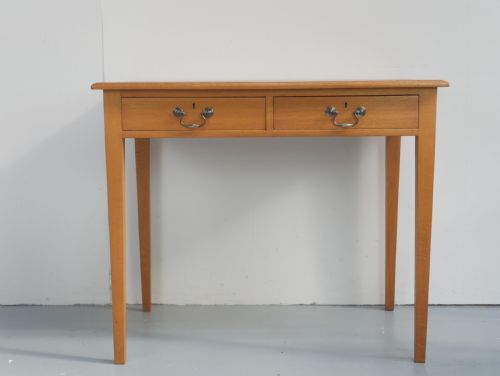


Scottish Console
When you handle a scottish antique console, you deal with heavy timber, deliberate proportions, and regional cabinet-making that stands apart from London work.
Scottish Console
A scottish antique console serves primarily as a side, hall, or serving table designed to stand against a wall, appearing across Georgian, Regency, and Victorian periods.
The versions most commonly met on this page span sturdy oak farmhouse pieces and formal mahogany or rosewood designs by notable Edinburgh makers.
These tables frequently double as card tables, serving tables, or dresser bases, showing the practical domestic needs of nineteenth-century Scottish households.
Materials and Construction
Cabinet-makers relied heavily on native timbers like oak and pine for structural carcases, alongside imported dense hardwoods such as mahogany and rosewood for show surfaces.
Surface decoration frequently involved precise wood inlay, brass mounts, and crossbanding, while heavier pieces utilised granite or marble tops for formal serving use.
Some sturdy oak surfaces retain the honest grease stains of nineteenth-century scullery work.
Evaluating Craftsmanship
Quality rests upon the selection of timber figure, such as burr oak or richly grained rosewood, and the crispness of hand-carved details or inlay work.
Structural integrity, original drawer linings, and authenticated attribution to documented regional workshops elevate a piece far above standard utilitarian joinery.
Bruce & Burns of Edinburgh·James Mein of Kelso·Alexander McKenzie of Glasgow·William Trotter·Whytock and Reid·J & T Scott
The Scottish Console Glossary
- Crossbanding
- A border strip of veneer laid on the edge of a table top with the grain running perpendicular to the centre. This technique frames the primary timber and adds visual contrast.
- Dresser base
- A lower sideboard or serving unit featuring drawers and cupboards without upper shelving. These pieces provided essential storage in Scottish dining rooms and kitchens.
- Potboard
- An open slatted lower shelf fitted between the legs of a dresser base or serving table. Originally designed for airing pots and earthenware.
- Chiffonier
- A compact sideboard fitted with enclosed cupboards below and often a shelf above. They became popular during the Regency and Victorian periods for smaller parlours.
- Bobbin turned
- A style of furniture leg or stretcher shaped into a series of rounded, spool-like spheres. Cabinet-makers produced this decorative turning using a lathe during the Victorian era.
Scottish Console: Frequently Asked Questions
Where did these tables stand?
These tables typically stood against walls in entrance halls, formal dining rooms, and drawing rooms where floor space remained clear.
Their shallow depth allowed them to fit neatly into narrow hallways or passage spaces without obstructing movement.
Were they used for dining?
Many larger examples served as serving tables or sideboard bases during formal meals to hold dishes and silverware.
Drop-leaf and card variants also provided adaptable surfaces that could expand when guests arrived.
How do I care for the wood?
Maintain antique timber surfaces by keeping them away from direct heat sources and sudden humidity changes that cause splitting.
Apply traditional beeswax sparingly and buff gently with a soft cloth to preserve the natural grain.