




Scientific Glass Instrument
These scientific glass instrument selections combine optical clarity and precision measurement, offering functional utility and historical interest for collectors and interior displays.
Scientific Glass Instrument
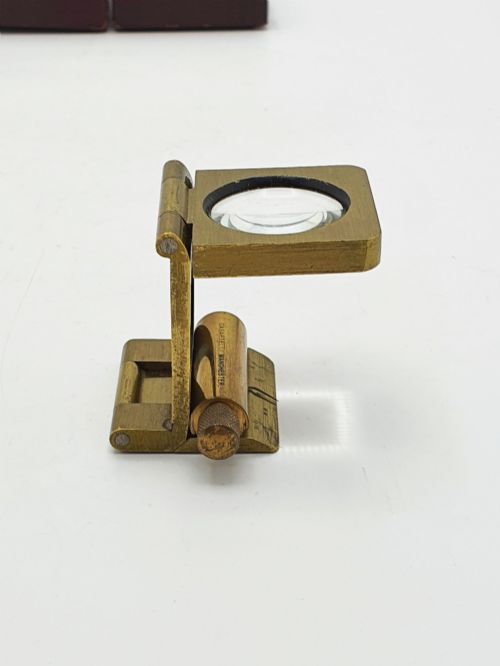
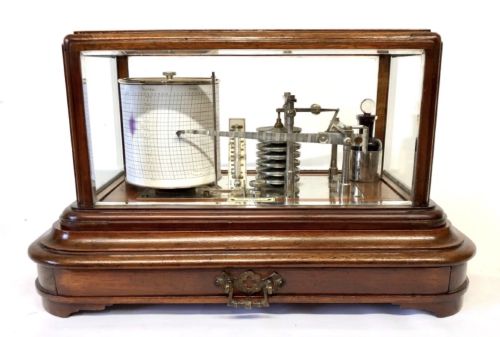
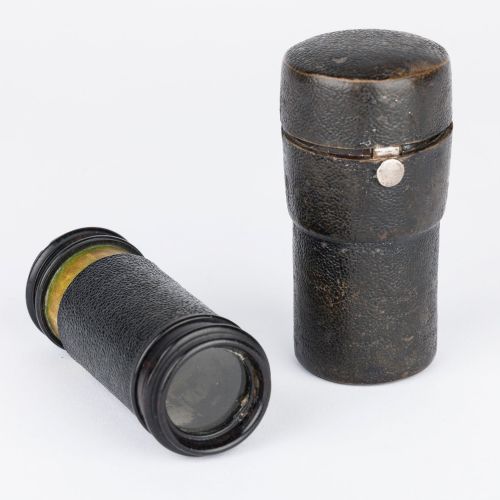
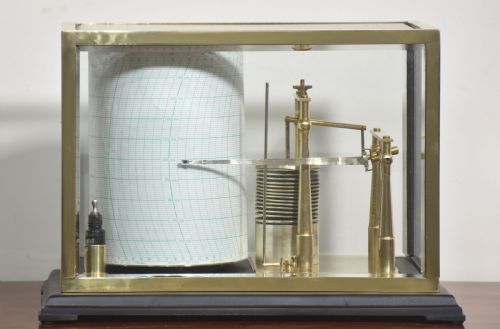
A scientific glass instrument encompasses functional apparatuses designed for measurement, observation, and recording, notably barometers, barographs, thermometers, and optical lenses.
The selections on this page span the Georgian, Victorian, and Edwardian periods, featuring mercury and aneroid barometers alongside optical lenses and test glass kits.
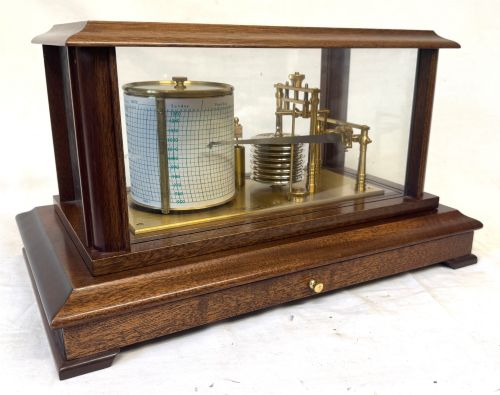
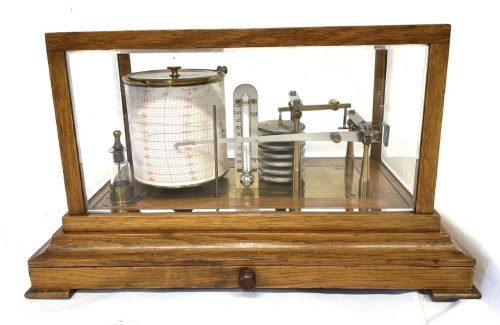
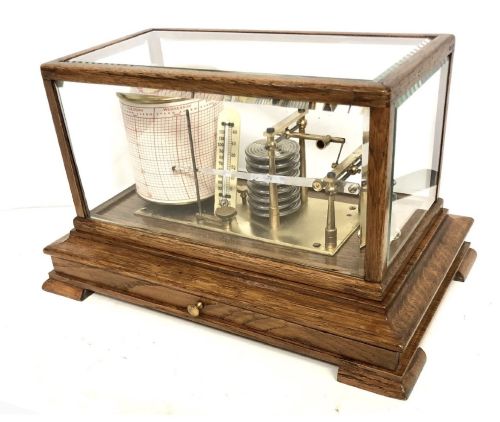
Wooden cases in mahogany, oak, and rosewood frequently house these glass components, often incorporating brass fittings, bevelled glass panels, and chart drawers.
Materials and Construction
Constructed primarily from blown and formed glass combined with seasoned hardwoods such as mahogany, oak, and rosewood, these pieces frequently incorporate turned brass bezels, scales, and hardware.
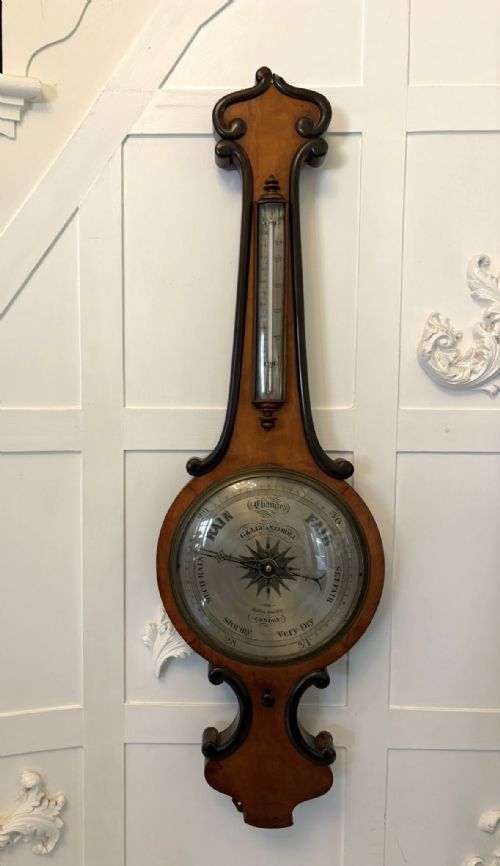
Makers utilised mercury filling for traditional barometers and barometer tubes, mounting them alongside silvered metal dials and engraved scales for precise atmospheric readings.
An optician test lens kit in a fitted wooden cabinet sits quietly ready to prescribe imaginary Victorian spectacles.
Assessing Quality
Quality rests in the legibility of the engraved scales, the clarity and integrity of the bevelled glass panels, and the preservation of original mercury tubes and paper charts.
Cabinetwork distinguishes the range, where finely inlaid rosewood, figured mahogany, and dovetailed oak housings with intact maker signatures represent superior execution.
Casartelli Manchester·Russell Norwich·Gaupp And Co·Short And Mason·George Adams London·Thomas Rubergall·G And L Guanziroli·Negretti And Zambra·Blunt·Ganthony Of London·Baines Harrogate·Molton Of Norwich·Luisetti Of London·Fagioli Of Clerkenwell London·Prada Of High Wycombe
The Scientific Glass Instrument Glossary
- Barograph
- A self-recording aneroid barometer that plots atmospheric pressure onto a rotating paper chart over a weekly period. This mechanical device relies on stacked metal vacuum capsules linked to an inked pen arm.
- Stick Barometer
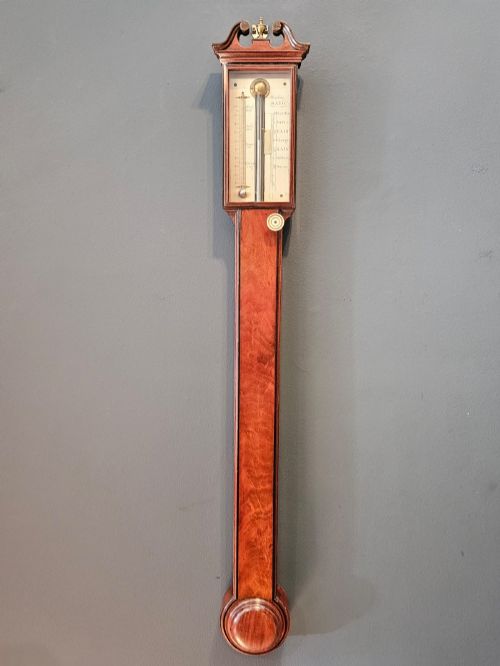
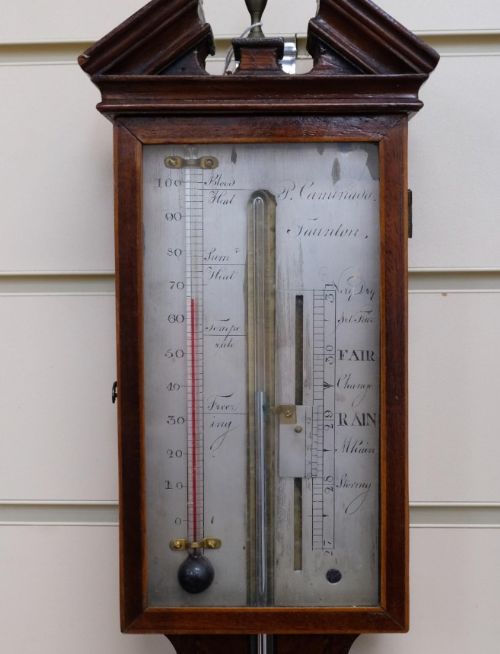
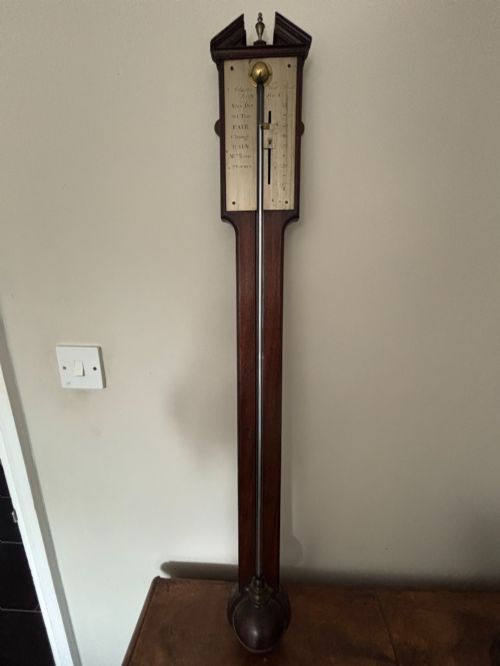
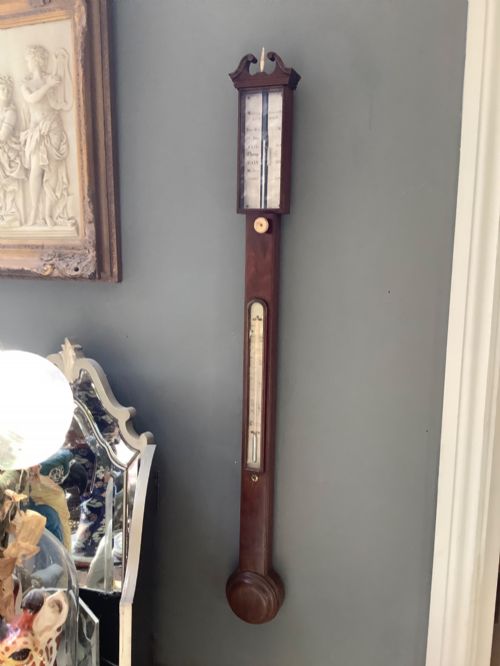
- A tall, vertical barometer utilising a mercury-filled glass tube to measure atmospheric pressure changes. These instruments are typically housed in slender wooden trunks featuring exposed or glazed scales.
- Aneroid Barometer
- A barometer that measures air pressure without liquid, using a flexible-walled metal capsule that expands or contracts. The movement connects mechanically to an indicator needle on a graduated dial.
- Thermometer
- An instrument for measuring temperature, often integrated directly into the wooden cases of barographs and stick barometers alongside the primary pressure scale.
Scientific Glass Instrument: Frequently Asked Questions
What is a barograph?
A barograph is a mechanical instrument that records atmospheric pressure continuously onto a paper chart fitted to a revolving drum.
Enclosed in a glazed wooden case, it relies on vacuum metal chambers that expand and contract with weather shifts.
How do stick barometers work?
Stick barometers measure atmospheric pressure through the height of a mercury column contained within a sealed glass tube.
Changes in air pressure outside push the mercury up or down against a graduated scale mounted behind the glass.
Are these barometers still accurate?
Many historical barometers retain functional accuracy and respond to contemporary barometric pressure changes.
Proper calibration depends on maintaining intact mercury columns or correctly tensioned aneroid mechanisms within the original housing.
What woods were used for the cases?
Cabinetmakers utilised dense hardwoods such as mahogany, oak, and rosewood to protect the delicate internal glass mechanisms.
These housings frequently feature bevelled glass windows, brass carrying handles, and integrated drawers for spare paper charts.