





Schoolgirl Embroidered Sampler
These schoolgirl embroidered sampler pieces are historic needlework panels worked by young girls in Georgian and Victorian times, prized for their personal touch and recording of domestic education.
Schoolgirl Embroidered Sampler
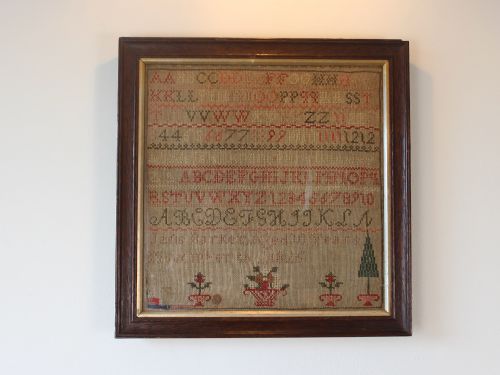
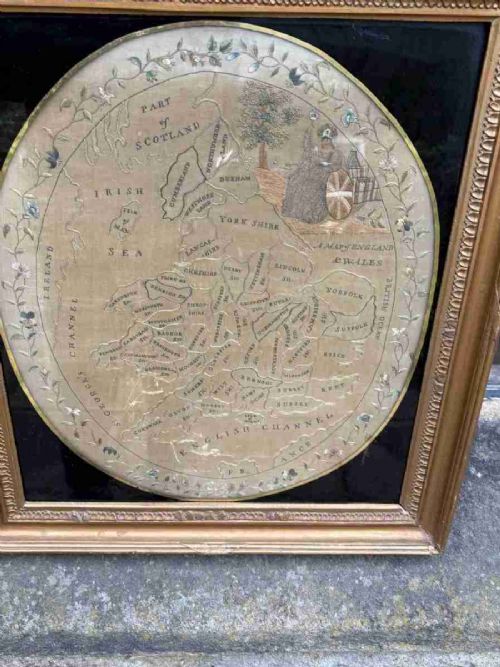
A schoolgirl embroidered sampler is a historic textile piece worked by a young girl to demonstrate her needlework skill, often featuring alphabets, maps, or moral verses. When you search for this phrase, you encounter works spanning the Georgian and Victorian eras, alongside specific pieces from the Regency and William IV periods.
The examples available on this page include alphabet panels, map needlepoints, and pictorial embroideries. Many preserve the name and age of the young maker, such as Mary Banion at nine years old or Margaret Ann Blackow at twelve, anchoring the textile in a specific moment of nineteenth-century life.
Forms range from simple linen panels worked in silk thread to framed textile wall art complete with original glass and wood glazing. These works function primarily as needlework samplers and framed embroideries that preserve domestic history through textile art.
How they were made
Makers constructed a schoolgirl embroidered sampler on a woven linen foundation, stretching the fabric to receive the stitches. Young hands worked the designs using silk thread, wool, and occasionally specialised threads to form the letters, borders, and pictorial motifs.
Framing materials mirror the domestic status of these textiles, utilising wood and gilt wood moulding to protect the fragile surface. Glazing with glass frequently preserves the antique silk and wool embroidery from atmospheric degradation.
Schoolgirl Embroidered Sampler Retail Price Guide 2026
Typical asking prices for schoolgirl embroidered sampler among the pieces listed under this phrase on Sellingantiques today, from the lower quarter to the upper quarter. They describe what is for sale here now, not the wider market.
Listings feature works spanning the Georgian and Victorian periods, utilising materials such as linen, silk thread, wool, and gilt wood.
What varies in quality
Quality in a schoolgirl embroidered sampler rests upon the complexity of the design and the neatness of the execution. Map samplers and detailed pictorial compositions demand greater skill than standard alphabet exercises, elevating the standing of the piece.
The preservation of the linen ground and the vibrancy of the silk thread determine the visual success of the panel. Clear signatures, legible dates, and recorded ages of makers like Louiss Elkins or Sarah Baker add distinct historical weight to the work.
Mary Banion·Louiss Elkins·Margaret Ann Blackow·Sarah Baker·Mary Mason·Rachel·Susan Mary Williams
The Schoolgirl Embroidered Sampler Glossary
- Sampler
- A piece of needlework produced as a demonstration or test of skill in embroidery. These works often display various stitches, alphabets, and numbers.
- Needlepoint
- A type of canvas work embroidery where yarn or thread is stitched through a stiff open-weave fabric. This technique creates a dense, durable surface often seen on map samplers.
- Gilt Wood
- Wood that has been treated with a thin layer of gold leaf or gilt finish. Frames of this material frequently encase antique needlework panels.
- Linen
- A textile made from the fibres of the flax plant providing the foundational ground cloth. Historic samplers rely on this sturdy fabric to support heavy silk and wool stitching.
Schoolgirl Embroidered Sampler: Frequently Asked Questions
What is a schoolgirl embroidered sampler?
A schoolgirl embroidered sampler is a historic textile panel worked by a young girl during her education to demonstrate proficiency in stitching alphabets, maps, or decorative motifs.
These pieces frequently record the maker's name, age, and date, offering a direct link to domestic life in the Georgian and Victorian periods.
How do I date a sampler?
Dating relies on explicit inscriptions left by the maker, such as dates or stated ages, alongside stylistic indicators like lettering styles and framing materials.
Evidence from this category points to periods such as the Georgian era, the Regency, William IV, and Victorian times.
What materials were used?
Historic needlework samplers utilise a woven linen foundation stitched with silk thread or wool. Many examples also incorporate period wood and gilt wood frames protected by glass.
These materials ensure the survival of the fragile textile art over two centuries.
How should I display a sampler?
Samplers require protection from direct sunlight to prevent the fading of antique silk thread and wool. Wall art placement should avoid areas of high humidity to safeguard the linen ground.
Keeping the original glass and wood frame intact helps shield the embroidery from environmental damage.