




Beige Needlepoint
These beige antique needlepoint textiles bring quiet texture and historic handwork into modern rooms.
Beige Needlepoint
When you search for beige antique needlepoint, you find a varied collection of historical hand-stitched works, ranging from framed samplers to upholstered armchairs and footstools. The selection spans the Georgian, Victorian, and early twentieth-century periods, showcasing domestic craft alongside formal European designs. English and French origins appear frequently, reflecting different traditions of textile decoration.
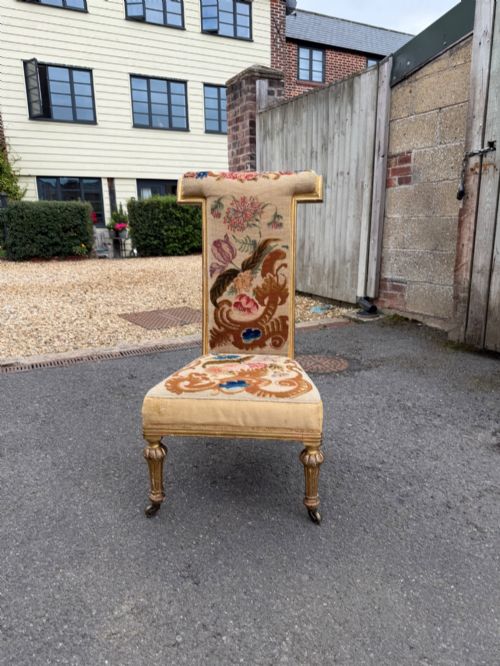
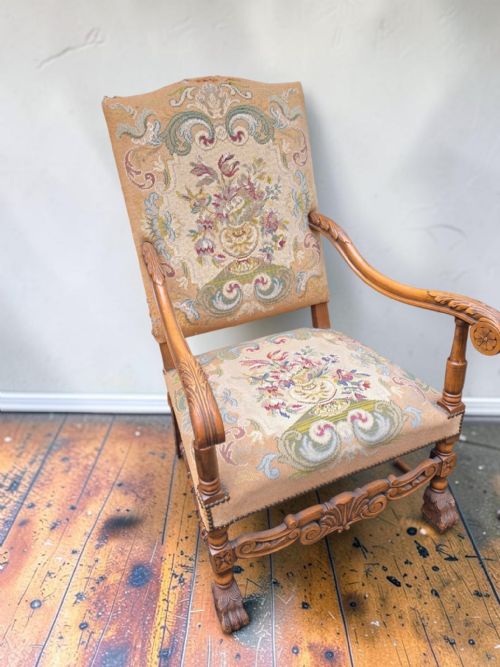
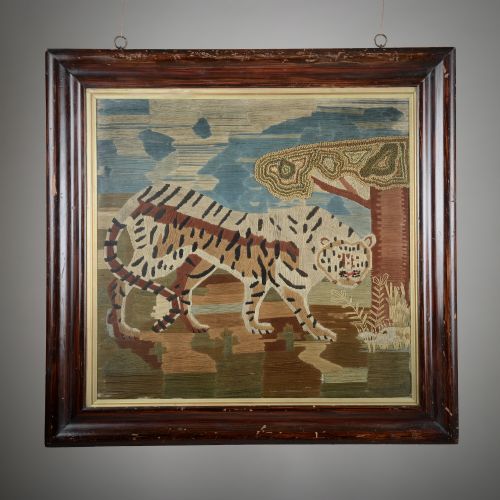
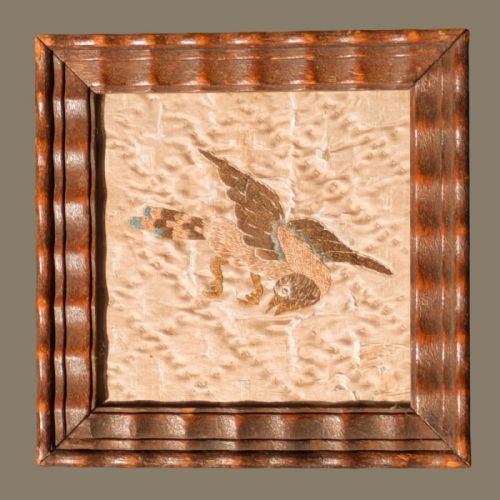
Framed samplers and embroidered panels dominate the wall art category, often bearing the names and ages of young makers alongside stitched alphabets and motifs. Larger textiles include carpets and upholstered seating such as prie-dieu chairs, ottomans, and large armchairs covered in wool or silk work. Smaller decorative items take the form of cushions featuring Aubusson-style or floral needlework.
The aesthetic leans towards neutral and earthy tones, where natural wool and linen threads have aged to soft beige, ecru, and muted brown hues. These pieces suit interiors seeking historic character, whether through a folky stitched sampler or a substantial nineteenth-century tapestry carpet.
How they were made
Makers stitched these textiles primarily using wool, silk, and cotton threads worked onto open-weave linen canvas or foundation fabrics. Stitches varied from tent stitch and cross stitch to fine petit point, allowing for detailed pictorial scenes and geometric borders. Iron or wooden frames held the canvas taut during the lengthy stitching process.
Structural elements for seating relied on traditional carpentry using timber frames of walnut and other woods. Upholstered pieces integrated stuffing materials beneath the needlepoint covers, secured with webbing and traditional tacking techniques.
Listings incorporate items spanning the eighteenth century through to the 1930s, utilising wool, silk, linen, walnut, and glass.
What varies in quality
The fineness of the stitchwork largely dictates the distinction between standard domestic items and finer examples. High-quality pieces display precise tension, dense thread packing, and intricate pictorial detail, whereas simpler works show broader, more rustic execution.
The condition of the textile fibres and the integrity of the underlying wooden frames also define the tier of a piece. Original upholstery foundations and well-preserved needlework retain greater integrity than heavily restored or worn examples.
The Beige Needlepoint Glossary
- Sampler
- A piece of embroidery produced as a demonstration or test of skill in various stitches and patterns. They often include alphabets, numerals, and maker details.
- Petit point
- A very fine tent stitch worked on single-thread canvas that allows for high photographic detail in needlework pictures and tapestries.
- Prie-dieu
- A devotional chair designed for kneeling during prayer, typically featuring a low seat and an upright back topped with a narrow shelf.
- Aubusson
- A style of tapestry and textile weaving originating from the French town of Aubusson, known for pastoral and floral designs.
- Tapisserie
- The French term for tapestry, frequently used to describe heavy decorative needlework used for upholstery and wall hanging.
Beige Needlepoint: Frequently Asked Questions
How do I clean antique needlepoint?
Surface dust should be removed gently using a soft brush or low-suction vacuum attachment protected by mesh.
Water and liquid cleaners risk shrinking or bleeding the old wool and silk threads, so professional textile conservation is advised for deeper cleaning.
Are these samplers original?
Genuine antique samplers usually display period-appropriate linen grounds, hand-spun threads, and natural ageing consistent with eighteenth and nineteenth-century domestic work.
Details such as maker names, dates, and traditional stitching irregularities further confirm their authenticity.
Can I use needlepoint chairs daily?
Sturdy nineteenth-century walnut and timber frames provide solid structural support for everyday seating.
However, delicate needlework covers require careful use to prevent thread wear and friction damage over time.
How do I date an embroidered panel?
Dating relies on stylistic clues, including costume details in pictorial scenes, framing methods, and inscribed dates or maker signatures.
Comparing the fibre types and canvas weaves against known manufacturing periods helps narrow the origin.