

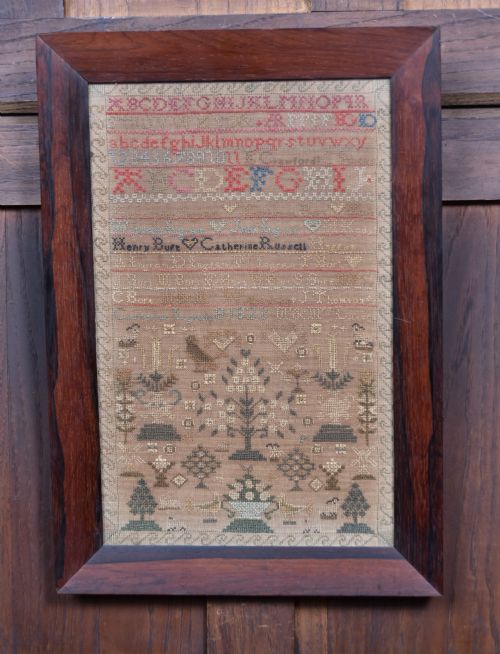


Linen Embroidered Sampler
Linen embroidered samplers are historic textile works recording alphabets, maps and verses, combining needlecraft skill with domestic history.
Linen Embroidered Sampler
A linen embroidered sampler is a historic needlework piece created to practice or demonstrate stitching proficiency, often incorporating alphabets, numerals, verses, and motifs. When you search for a linen embroidered sampler, you encounter textile works spanning from the Stuart and Georgian eras through to the Victorian period and the twentieth century. These pieces frequently record the maker's name, age, and date, preserving personal histories alongside technical skill.
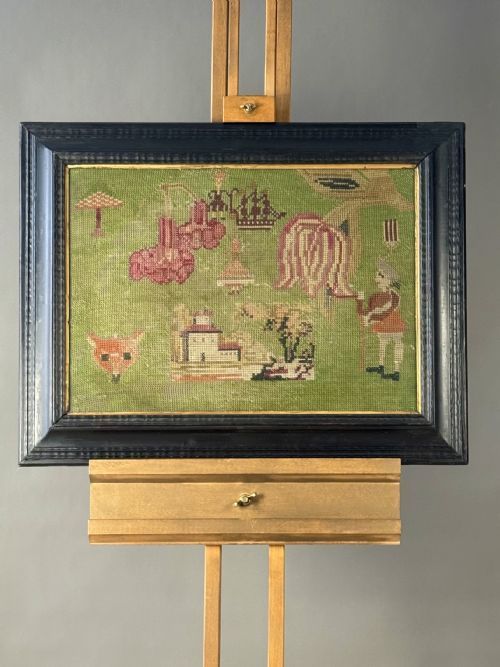
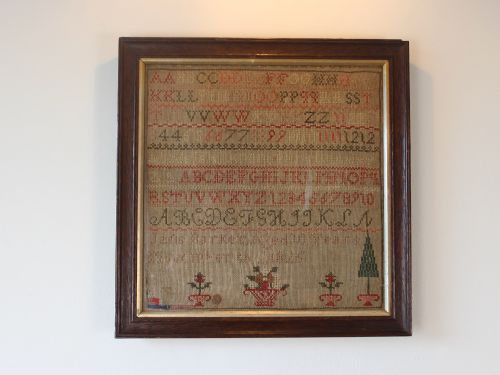
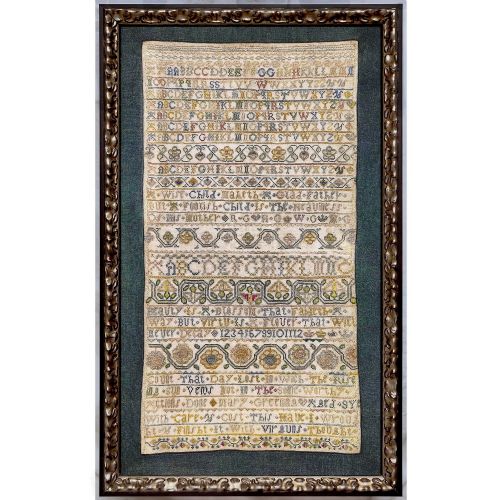
The examples available on this page encompass various forms including map samplers, alphabet exercises, religious texts, and pictorial needlework pictures. Most of the pieces you will meet originate from the eighteenth and nineteenth centuries, executed by young girls or women in domestic or school settings. Forms range from miniature works to large framed wall art.
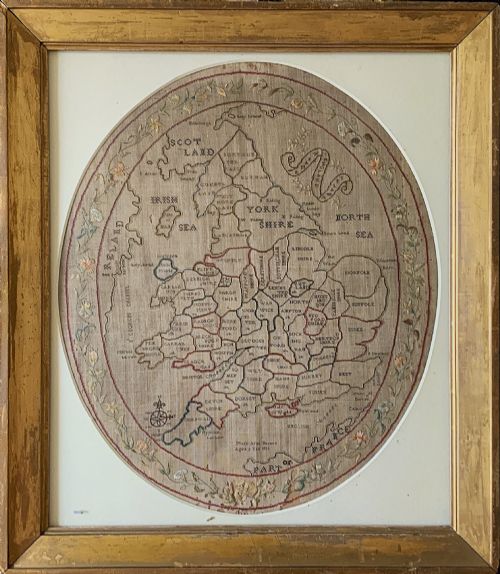
Styles reflect the prevailing aesthetics of their respective periods, moving from early band samplers to structured Georgian compositions and expressive Victorian folk art. Alongside standard alphabet exercises, geographic subjects such as maps of England and Wales appear within the selection, demonstrating advanced needlework ability.
Materials and construction
These pieces are constructed on woven linen foundations using various threads including silk, silk floss, and wool. Stitchers utilised these materials to practise different techniques, creating textured surfaces and pictorial designs across the fabric ground.
Many surviving examples retain their historic character through the use of original wood frames and glass protection. The interaction between the natural linen ground and the faded organic threads defines the visual appearance of these historic textiles.
Mary Banion stitched her map of England and Wales at just nine years old.
Assessing quality and execution
Quality in these textile works rests on the precision of the stitching and the complexity of the design. Examples featuring detailed cartography, pictorial scenes, or accomplished lettering demonstrate superior skill compared to basic alphabet exercises.
The preservation of the original materials significantly influences the standing of a piece. Well-maintained linen grounds and stable, legible threads distinguish better examples, while the presence of identifiable makers, dates, and locations adds documented provenance.
Mary Banion·Mary Greening·Louiss Elkins·Ann Hodson·Margaret Ann Blackow·Sarah Baker·Mary Mason·Martha Hall·Mary Street·Rachel·Emma and Hannah Barnes·Jane Pattinson·Susan Mary Williams·Mary Pinfold
The Linen Embroidered Sampler Glossary
- Band sampler
- An early format where horizontal rows of distinct stitch patterns and motifs are worked across the length of the linen. This style predates the wider pictorial compositions of later periods.
- Needlepoint
- A form of canvas work where yarn or thread is stitched through a woven mesh ground. It appears in several geographic and pictorial compositions within the selection.
- Alphabet sampler
- A specific exercise focusing on rows of letters and numerals, often accompanied by the maker's signature and date. These pieces served as proof of a young stitcher's foundational literacy and needle skills.
- Map sampler
- A specialised geographic needlework depicting counties, countries, or regions, such as England and Wales. These ambitious projects required precise calculation and advanced stitching ability.
- Silk floss
- A lustrous embroidery thread used to create varied surface textures and sheen in historic needlework. Its survival in good condition contributes to the visual quality of the textile.
Linen Embroidered Sampler: Frequently Asked Questions
What is a linen embroidered sampler?
A linen embroidered sampler is a historic needlework piece created to practice or display stitching proficiency using linen ground and various threads.
These textile works often feature alphabets, numerals, religious verses, or maps, frequently recording the name and age of the maker.
How old are these samplers?
The pieces available span multiple centuries, with examples dating from the late seventeenth century through the Georgian and Victorian eras up to the twentieth century.
Many bear inscribed dates or names which allow historians and collectors to place them precisely within their period of origin.
How were samplers used historically?
Historically, samplers served as educational exercises for young girls to master various stitches, alphabets, and design layouts.
Once completed, these textile works were frequently framed and displayed in homes as evidence of domestic accomplishment and refinement.
How should I care for an antique sampler?
Antique samplers require protection from direct sunlight to prevent the fading of silk and wool threads against the linen background.
Keeping them behind protective glass in stable environmental conditions helps preserve the fragile historic textiles from deterioration.