



Scarborough Coastal Artwork
Scarborough coastal artwork captures the rugged Yorkshire coastline through marine watercolours and oil paintings.
Scarborough Coastal Artwork
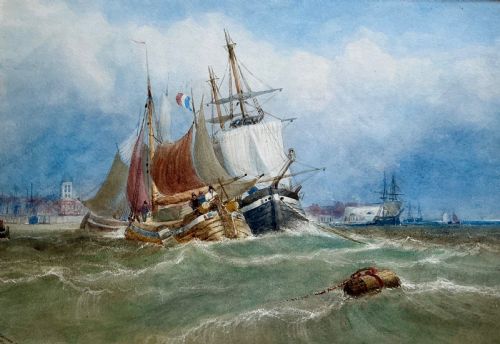
Scarborough coastal artwork centres on paintings depicting the Yorkshire coast, focusing heavily on harbour views, shipping in choppy waters, and nearby bays like Cayton. These pieces document maritime life through the nineteenth and early twentieth centuries.
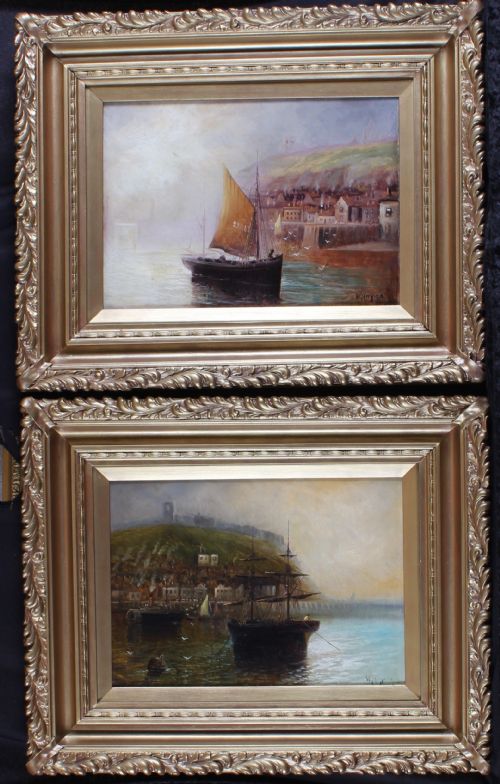
Buyers frequently encounter works executed in watercolour on paper, alongside oil paintings on canvas framed in gilt or giltwood. The artistic styles range from Victorian marine realism to early modern British townscapes.
The selection includes framed watercolours bearing signatures from notable regional painters alongside atmospheric oil paintings of coastal landscapes. Each piece reflects the enduring artistic appeal of this specific North Yorkshire shore.
How they were made
Artists utilised watercolour pigment on paper to capture the luminous atmospheric conditions of the Yorkshire coast, often working en plein air or translating field sketches into finished marine scenes. These watercolours rely on delicate washes and fine brushwork to depict coastal shipping and expansive skies.
Oil paint applied to canvas allowed painters to build rich textures for turbulent seas and dramatic coastal cliffs. Many of these canvases were subsequently housed within decorative gilt or giltwood frames that enhanced the visual depth of the marine subject matter.
Listings feature works spanning the nineteenth century, Victorian period, and 1930s, utilising paper, canvas, watercolour pigment, oil paint, and giltwood.
What varies in quality
Quality in these coastal paintings rests upon the artist's handling of light, atmosphere, and maritime movement. Superior examples demonstrate a confident command of proportion and scale when rendering vessels and harbour architecture.
The physical preservation of the paper support in watercolours or the canvas tension in oils influences the longevity and visual impact of the piece. Well-preserved works retain their original pigment vibrancy and are often paired with period-appropriate framing.
Henry Barlow Carter·Ernest Dade·Joseph Newington Carter·Fred Lawson·Frederick William Booty·John James Wilson·Walter Meegan
The Scarborough Coastal Artwork Glossary
- Watercolour
- A painting method in which the paints are made of pigments suspended in a water-based solution. This medium allows for transparent washes that suit coastal skies.
- Giltwood
- Wood carved and covered with a thin layer of gold leaf or gold paint. Frames of this material frequently accompany nineteenth-century marine art.
- Marine art
- Any form of figurative art that depicts or draws great inspiration from the sea. This genre forms the core of Scarborough coastal paintings.
- Townscape
- An artistic representation of the physical aspects of an urban area or town. Several pieces in this category depict Scarborough town and harbour views.
Scarborough Coastal Artwork: Frequently Asked Questions
What periods do these paintings date from?
The available artworks span from the nineteenth century through the Edwardian era and into the early twentieth century, capturing distinct shifts in regional painting styles.
Victorian pieces often lean towards marine realism, while later works edge into early modern British townscapes and coastal studies.
Are these works usually framed?
Many pieces come within period frames, including decorative gilt and giltwood surrounds that complement the maritime subject matter.
Framing styles typically reflect the era in which the painting was produced, adding historical context to the artwork.
What subjects feature in these scenes?
Common subjects include fishing boats, harbour entrances, shipping in choppy waters, and coastal townscapes along the Yorkshire shoreline.
Specific locations such as Scarborough Bay, Cayton Bay, and nearby coastal landmarks appear frequently across the watercolours and oil paintings.
How do watercolours and oils differ here?
Watercolour paintings utilise pigment on paper to achieve delicate atmospheric effects and transparent marine light. Oil paintings on canvas employ heavier paint layers to build texture, particularly effective for dramatic seas.