

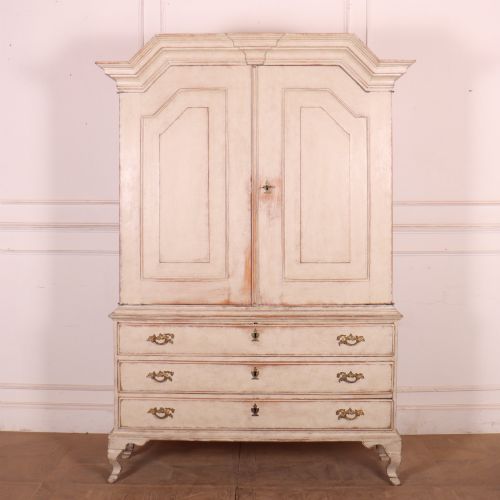


Scandinavian Pine Cabinet
A scandinavian pine cabinet brings pale timber and muted painted surfaces to an interior, offering practical storage with distinct regional character.
Scandinavian Pine Cabinet
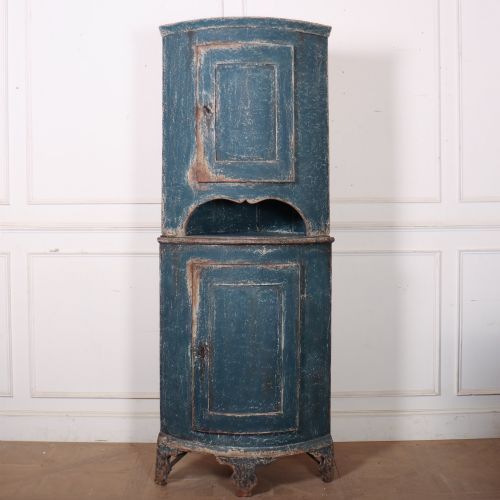
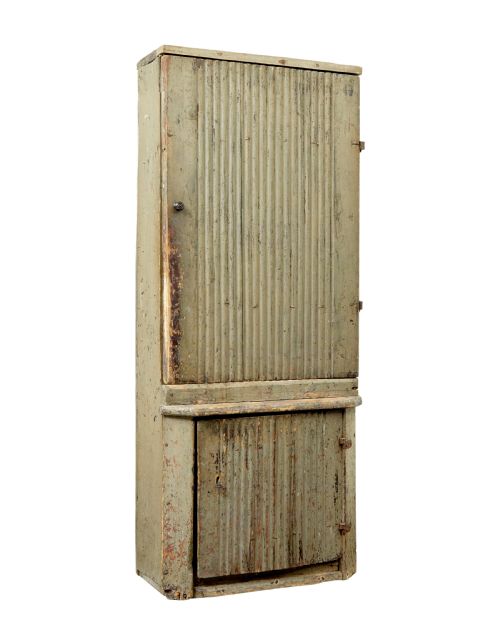
A scandinavian pine cabinet typically encompasses wall cupboards, linen cupboards, and corner cupboards originating from Sweden, Denmark, Finland, and the broader Baltic region. These pieces range from compact wall-hanging units to substantial double-door wardrobes and kitchen dressers produced across the eighteenth, nineteenth, and early twentieth centuries.
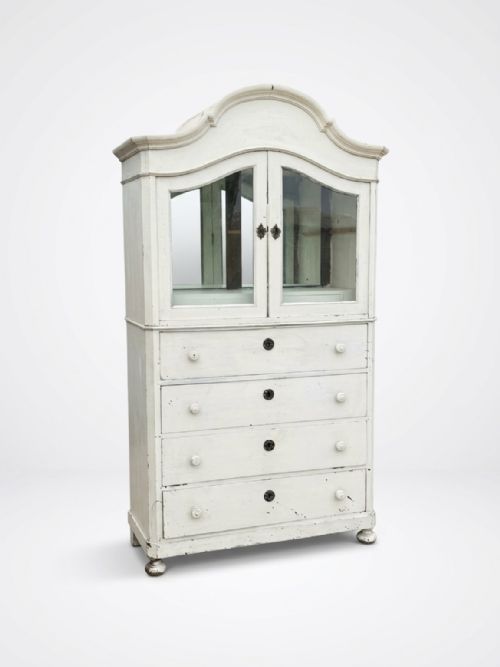
The version most commonly encountered on this page is the nineteenth-century Swedish painted cupboard, often constructed from softwood and finished with traditional surface treatments. Buyers also frequently find bureau bookcases, commodes, and bonnet top cabinets reflecting regional country aesthetics.
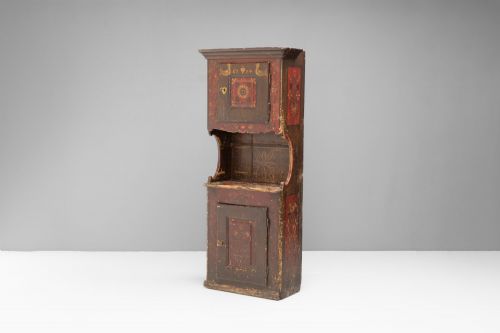
Origins stretch across distinct stylistic traditions, including Gustavian restraint, Scandinavian folk art, and rustic baroque forms. Workshops in rural and provincial areas shaped these utilitarian storage pieces to serve domestic needs in farmhouses and town houses alike.
Materials and Construction
Construction relies heavily on native pine and softwood, shaped by joiners using traditional pegged and panelled methods to build robust carcases for everyday use. Iron and brass hardware such as hinges, latches, and key escutcheons secure doors and drawers while adding functional detail.
Many surfaces carry layers of paint, ranging from simple monochrome coats to decorative ragwork, hand-painted floral motifs, and scraped finishes that reveal earlier colours underneath. Glass panes appear in upper bookcase and display sections, framed within timber doors.
The inventory encompasses wall cabinets, corner cupboards, bureau bookcases, and commodes finished in styles from baroque to folk art.
Surface and Proportion
Quality rests significantly on the originality and depth of the painted surface, where untouched historic layers command greater interest than later re-painting. The survival of scraped original paintwork and authentic folk art decoration distinguishes superior examples from standard utility pieces.
Proportion and architectural detailing also separate standard items from finer works, visible in the carving of a bonnet top, the grace of a bowfront, or the balance of panelled doors. Well-proportioned cornices and original hardware contribute to the integrity of the piece.
The Scandinavian Pine Cabinet Glossary
- Gustavian
- A Swedish neoclassical style popular in the late eighteenth and early nineteenth centuries, characterised by restrained lines and pale painted finishes. It draws inspiration from French Louis XVI design adapted to local Scandinavian tastes.
- Ragwork
- A decorative painting technique where rags or cloths are used to manipulate wet glaze on a surface, creating mottled or textured patterns. This method appears frequently on nineteenth-century country furniture.
- Bonnet top
- A curved or arched upper hood on a cabinet or highboy, resembling the shape of a bonnet. This architectural feature adds height and formal presence to provincial storage pieces.
- Bowfront
- A convex, outwardly curved front section on a cupboard or commode. This curved form softens the corners of a room and requires advanced woodworking skill.
- Softwood
- Timber derived from conifers such as pine, which forms the primary structural material for these regional cabinets. It accepts paint readily and was abundant in Scandinavian forests.
Scandinavian Pine Cabinet: Frequently Asked Questions
What rooms suit a scandinavian pine cabinet?
These cabinets suit kitchens, hallways, and living spaces where their pale timber and painted finishes complement neutral or rustic interiors. Wall-hanging cupboards work well in smaller areas to provide compact storage without occupying floor space.
Larger linen cupboards and double-door wardrobes offer substantial capacity for clothing or household linens in bedrooms. Their versatile proportions allow them to function as display units or utility storage depending on the internal configuration.
How do I identify a gustavian piece?
Gustavian pieces display neoclassical influences such as fluted columns, urn motifs, and symmetrical panel layouts executed with restrained elegance. The finish is typically a pale monochrome paint, often in soft grey, cream, or muted white.
Cabinetmakers working in this style avoided heavy baroque ornamentation in favour of lighter, classical proportions derived from French royal design adapted for Swedish homes.
Are painted finishes usually original?
Painted finishes vary from untouched original layers to later decorative coats applied over the decades of a piece's life. Surviving historic paint often shows craquelure, subtle fading, and wear consistent with age.
Examining edges and interior surfaces helps determine whether the current colour scheme represents the original workshop finish or a subsequent nineteenth- or twentieth-century re-decoration.
What is the difference between a dresser and a cupboard?
A dresser typically combines a lower section of drawers or cupboards with an open upper plate rack for displaying ceramics. These pieces served as central fixtures in farmhouse kitchens for everyday domestic utensils.
A cupboard consists primarily of enclosed storage space behind doors, ranging from single-door wall cabinets to tall linen presses. They are designed to keep contents hidden and protected from dust rather than displayed openly.