


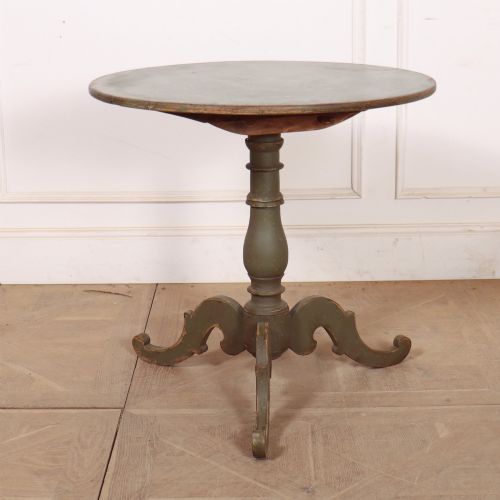
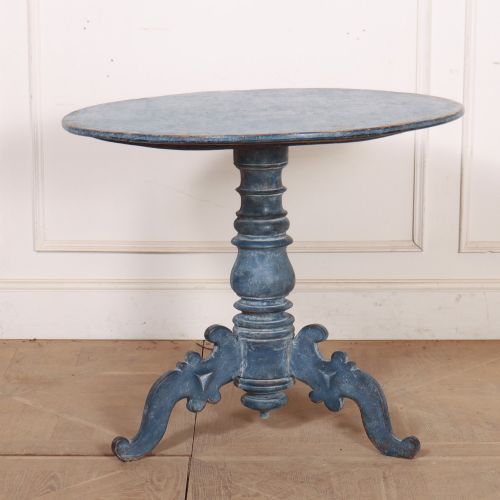
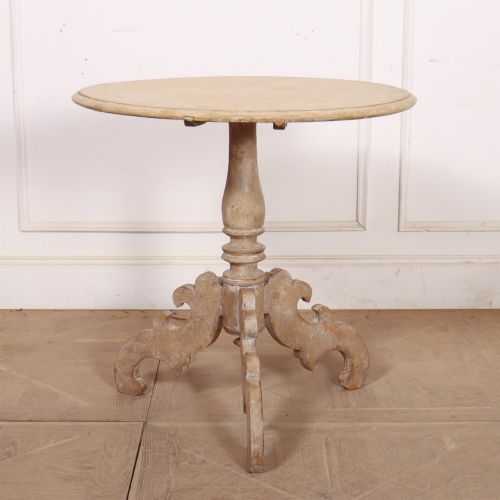
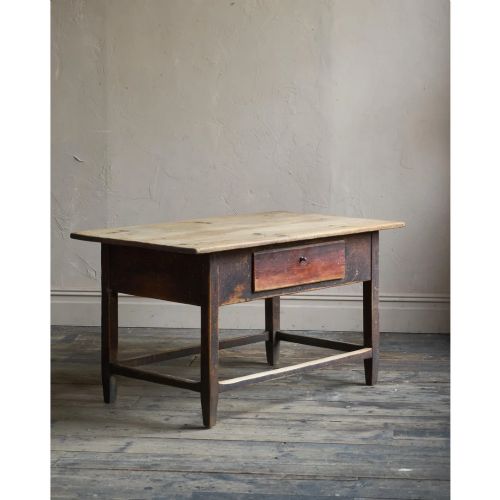
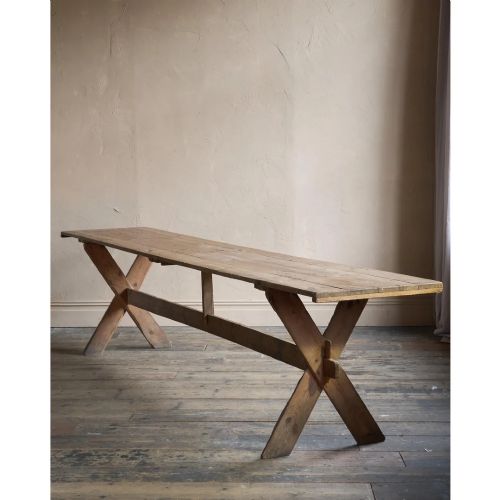
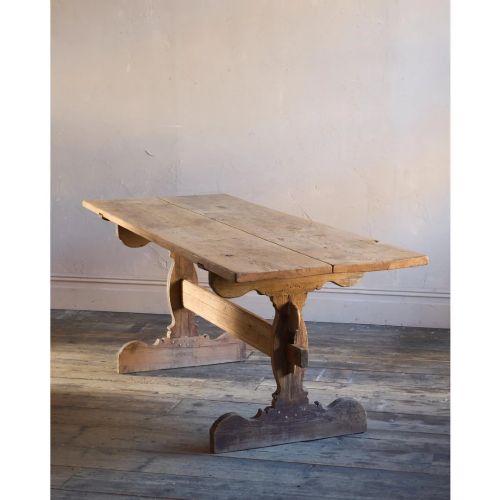
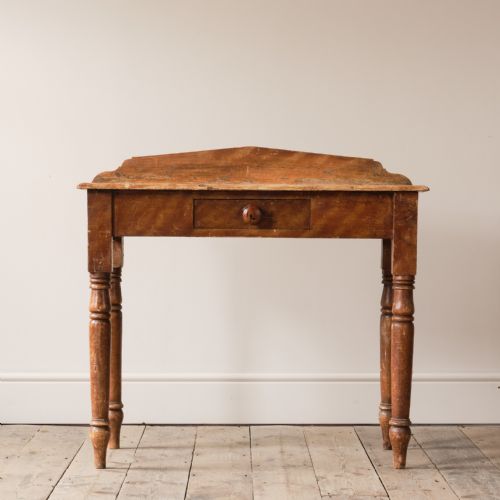


Scandinavian Country Table
A Scandinavian country table brings robust northern utility and muted painted surfaces to a room, offering practical daily workspace through centuries-old pine and timber craftsmanship.
Scandinavian Country Table
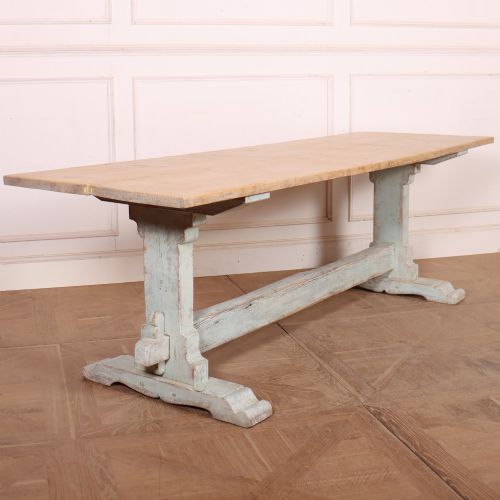
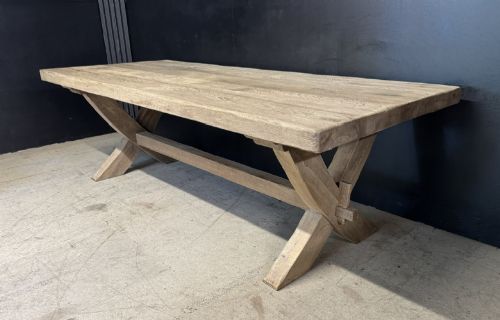
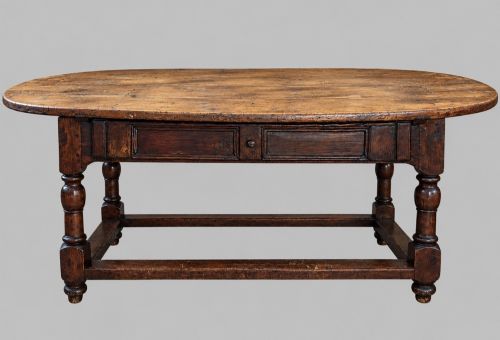
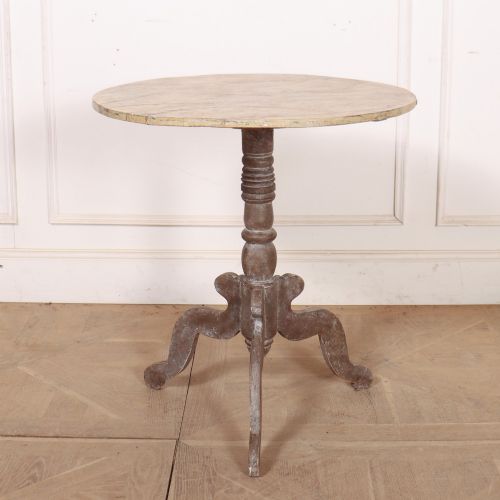
A Scandinavian country table encompasses a diverse range of domestic furniture designed for preparation, dining, and daily living across northern European homes. Buyers searching for a scandinavian country table encounter forms spanning grand kitchen boards, trestle dining structures, and smaller occasional pieces.
The nineteenth century dominates the selection, though examples stretch back to the eighteenth century and forward into the twentieth century. Common formats include side tables, console tables, and drop-leaf designs intended for versatile domestic use.
Painted finishes, particularly historic schemes like Falu red or layered scraped paint, define the visual character of these domestic boards. Timber construction in pine, softwood, and oak provides the structural foundation for these rural pieces.
How a Scandinavian country table was made
Cabinetmakers and rural joiners utilised accessible local timbers, predominantly pine and softwood, supplemented by oak, alder root, and birch for specific structural or decorative elements. Boards were joined simply and solidly, often employing box stretchers, trestle supports, or drop-leaf mechanisms to accommodate changing household needs.
Surfaces received protective and decorative coats of paint, including traditional pigments and ragwork techniques, which weathered over generations of daily domestic labour. Metal fittings in brass occasionally appear on related cupboards and drawers, whilst timber frames rely on traditional joinery without modern adhesives.
Scandinavian Country Table Retail Price Guide 2026
Typical asking prices for scandinavian country table among the pieces listed under this phrase on Sellingantiques today, from the lower quarter to the upper quarter. They describe what is for sale here now, not the wider market.
Listings feature eighteenth, nineteenth, and early twentieth-century pieces, spanning the Edwardian era back to 1700s domestic utility.
What varies in quality
The integrity of the original paint surface dictates much of the character in these rural pieces, distinguishing untouched historic finishes from later decoration. Tables retaining genuine nineteenth-century layers, such as Falu paint or scraped pine patination, hold greater historical coherence.
Structural honesty and the retention of original components, from trestle bases to drop-leaf hinges, separate utilitarian survivals from heavily altered examples. The choice of timber, whether standard pine or more unusual materials like alder root, influences the density and visual depth of the frame.
The Scandinavian Country Table Glossary
- Falu paint
- A traditional deep red paint originating from the copper mines of Falun in Sweden, frequently used to protect exterior and interior timber surfaces. It contains copper flakes that bind into the wood over time.
- Slagbord
- A traditional Scandinavian drop-leaf table supported by swing legs or gates. This folding mechanism allowed tables to expand for dining and contract to save floor space.
- Gustavian
- The Swedish neoclassical style spanning the late eighteenth and early nineteenth centuries, characterised by restrained carving and lighter painted furniture. It draws inspiration from French Louis XVI design filtered through a northern sensibility.
- Ragwork
- A decorative paint technique applied with rags or cloths to create mottled, textured patterns on timber surfaces. This method mimics more expensive stone or wood grains using simple oil paints.
- Trestle table
- A robust table construction comprising two or more support frames connected by a horizontal beam or stretcher. This design provides maximum legroom and stable support for heavy dining preparation.
Scandinavian Country Table: Frequently Asked Questions
What defines a scandinavian country table?
A scandinavian country table is defined by its robust pine or softwood construction, practical domestic form, and traditional painted finish. These pieces originated in rural northern homes for heavy daily use.
Most examples date from the nineteenth century and reflect utilitarian needs through trestle bases, drop leaves, or simple side table formats.
How do I care for painted pine furniture?
Care for historic painted surfaces by keeping furniture away from direct heat sources and sudden temperature shifts. Dust gently with a dry, soft cloth without applying modern chemical polishes.
Protect the timber from excess moisture by using coasters and mats during daily use to preserve the original patination.
Were these tables used in kitchens?
Many of these boards served as kitchen tables, bakers tables, or dining preparation surfaces in rural Scandinavian households. Their sturdy construction accommodated rolling dough, chopping food, and family meals.
Smaller occasional and lamp tables were placed in living spaces rather than work areas.
How do I identify original paint?
Original paint shows natural wear, craquelure, and subtle variations in tone accumulated over decades of use and cleaning. Inspect edges and protected underside areas to observe the layering of historic pigment.
Modern repainting often appears uniform and lacks the deep integration into the softwood grain found on nineteenth-century surfaces.