



Scandinavian Country Cabinet
These scandinavian country cabinet selections bring practical storage and pale painted charm to modern interiors.
Scandinavian Country Cabinet
A scandinavian country cabinet brings utilitarian storage and regional folk character together in substantial timber forms. Pieces span the eighteenth, nineteenth and early twentieth centuries, reflecting rural domestic needs across Sweden, Denmark and the wider region.
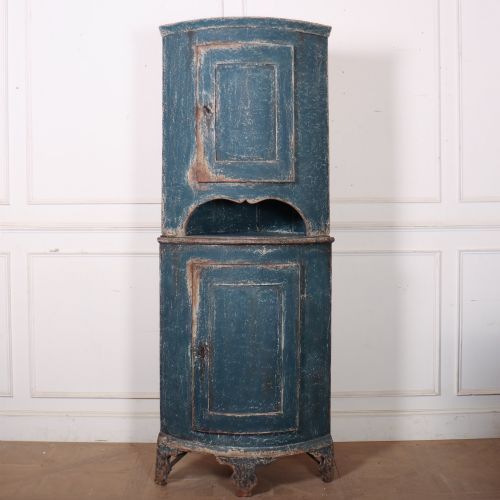
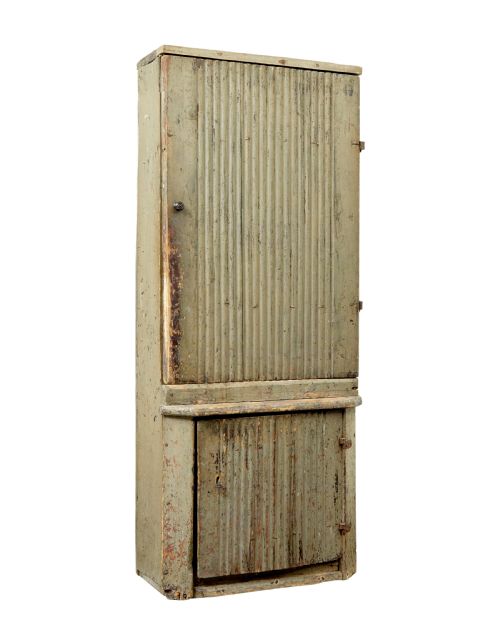
The most common examples on this page are painted pine cupboards and linen cupboards designed for household storage. Wall cabinets, corner cupboards and kitchen dressers also appear frequently, often scaled for specific domestic rooms.
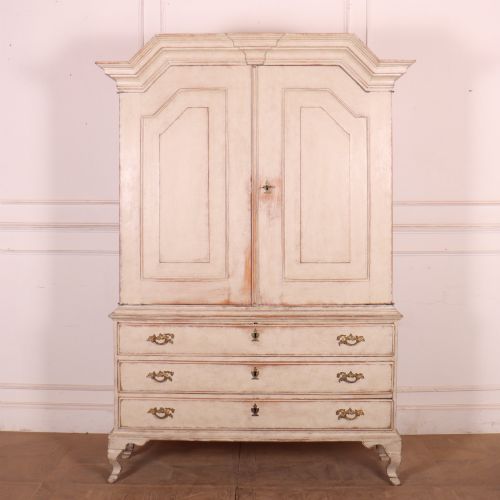
Regional styles range from restrained Gustavian pieces with classical symmetry to rustic folk art finishes and decorative ragwork paint effects. Form follows practical function, providing deep shelving or hanging space behind single and double doors.
Materials and construction methods
Carpenters relied primarily on native pine and softwood, constructing carcases with pegged joints and solid timber panels. Birch also appears in select pieces, offering a denser grain for finer interior fittings and smaller items.
Surface decoration relies heavily on historical paint layers, ranging from original scraped finishes to traditional hand-painted motifs and layered ragwork. Iron and brass hinges, latches and locks secure the doors, reflecting utilitarian hardware of the period.
Child's wardrobes share shelf space with kitchen clock cupboards in the rural inventory.
Judging quality and craftsmanship
The integrity of the original paint surface dictates much of the visual appeal, distinguishing untouched layered finishes from later overpainting. Surviving scraped paint surfaces retain a depth and texture that modern refinishing cannot replicate.
Proportion and scale separate standard utilitarian storage from finer cabinetmaking, particularly in pieces influenced by Gustavian design. Clean lines, well-balanced door panels and original ironwork indicate thoughtful regional workshop production.
The Scandinavian Country Cabinet Glossary
- Gustavian
- The Swedish interpretation of neoclassical style, characterised by restrained carving, symmetry and pale paint. It emerged during the late eighteenth century under King Gustav III.
- Ragwork
- A decorative painting technique where rags are used to apply or wipe paint, creating a mottled or textured pattern on wooden furniture. This finish appears frequently on nineteenth-century rural pieces.
- Enfilade
- A suite of pieces or a long cabinet designed to stand in a row along a wall. These items provide extended surface space and storage.
- Softwood
- Timber from conifer trees, predominantly pine in these listings, used extensively for country furniture carcases and panel work. It takes paint finishes readily.
- Bowfronted
- Having a convex, curved front profile that softens the corners of a cabinet or cupboard. This shape appears on select eighteenth-century corner pieces.
Scandinavian Country Cabinet: Frequently Asked Questions
What rooms suit a scandinavian country cabinet?
These cabinets suit kitchens, hallways and living spaces where practical storage is required. Their pale painted finishes brighten smaller rooms while offering deep shelving for everyday items.
Larger linen cupboards work well in bedrooms for clothing storage, while wall-mounted versions utilise vertical space in compact areas.
How do I care for painted pine furniture?
Dust surfaces regularly with a soft, dry cloth to protect the historic paint layers from abrasion. Avoid placing timber pieces near direct heat sources or in fluctuating humidity.
Keep out of direct sunlight to prevent fading or drying of the original painted finishes and softwood carcases.
What is the difference between Gustavian and folk pieces?
Gustavian pieces draw on classical architectural motifs, featuring clean lines, fluting and restrained symmetry painted in pale tones. They reflect courtly neoclassical taste adapted for Swedish homes.
Folk art pieces embrace bolder regional painting, ragwork textures and simpler vernacular construction. They showcase local rural traditions rather than formal academic design.
Are these cabinets practical for modern clothes storage?
Many nineteenth-century cupboards and linen cabinets offer deep internal shelving suitable for folded garments and bedding. Some larger wardrobes and armoires include hanging space for modern apparel.
Checking internal dimensions before purchase ensures the depth accommodates standard coat hangers and storage boxes.