


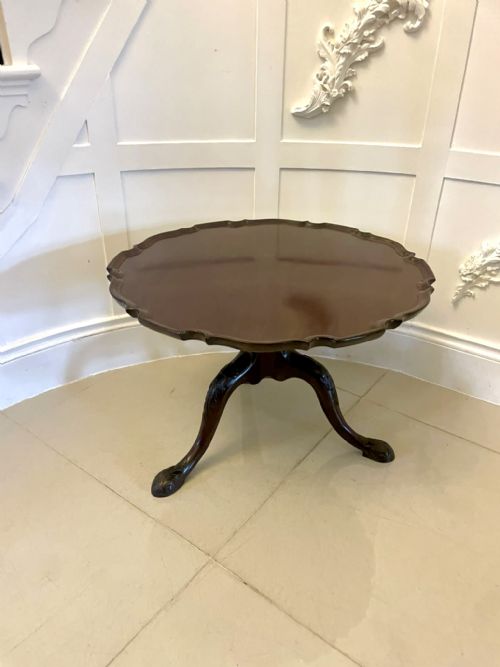
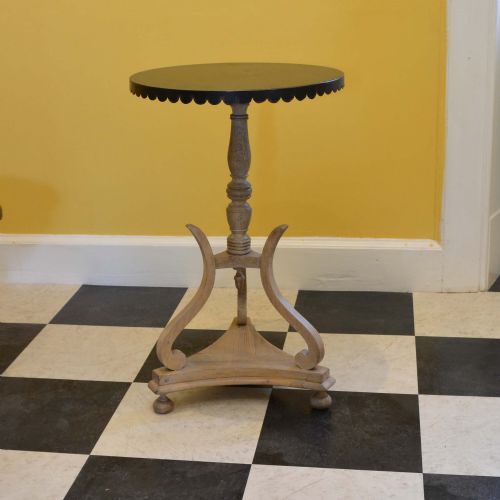
Scalloped Round Table
A scalloped round table brings a fluid, moulded edge to domestic spaces, offering a useful surface with distinct visual movement.
Scalloped Round Table
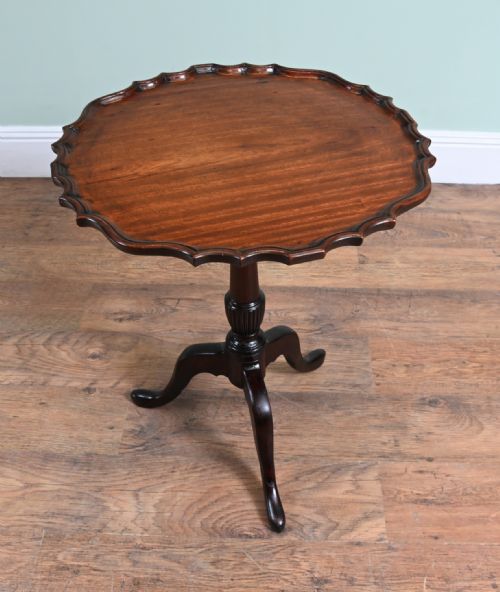
A scalloped round table is an item designed for various domestic functions, appearing in forms such as centre tables, coffee tables, side tables, and wine tables. These pieces span multiple eras, including the eighteenth century, the Victorian period, and the twentieth-century revival movements.
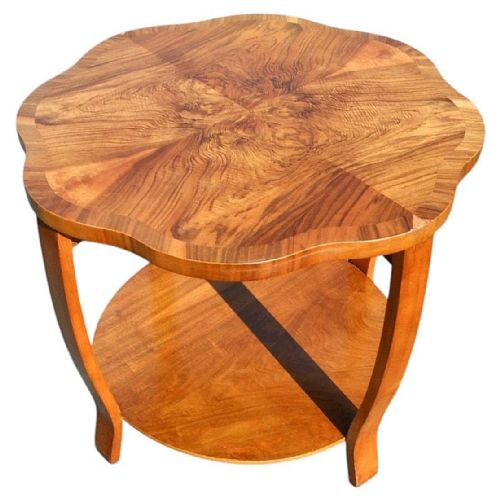
The selections available here range from George III dining and centre tables to Art Deco walnut coffee tables and Victorian occasional pieces. Buyers encounter diverse origins and designs, from Anglo-Indian padauk examples to Irish Killarney marquetry and English hardwood productions.
How They Were Made
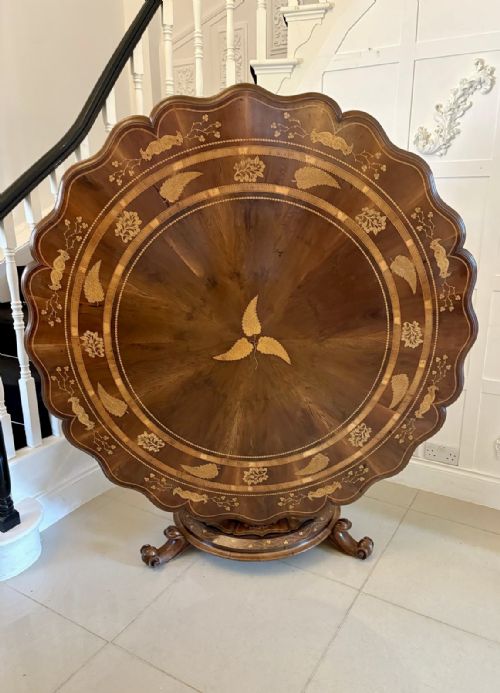
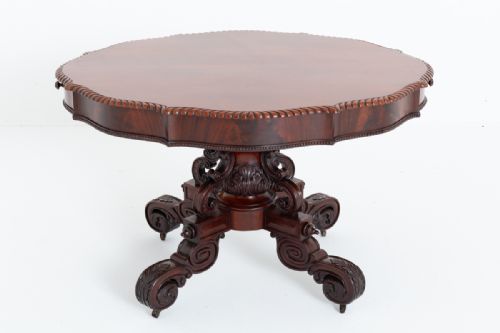
Cabinet makers utilised timber selections such as mahogany, walnut, rosewood, oak, teak, padauk, and yew wood to construct these items. Many surfaces incorporate figured veneers, marquetry inlay, or carved details around the shaped perimeters.
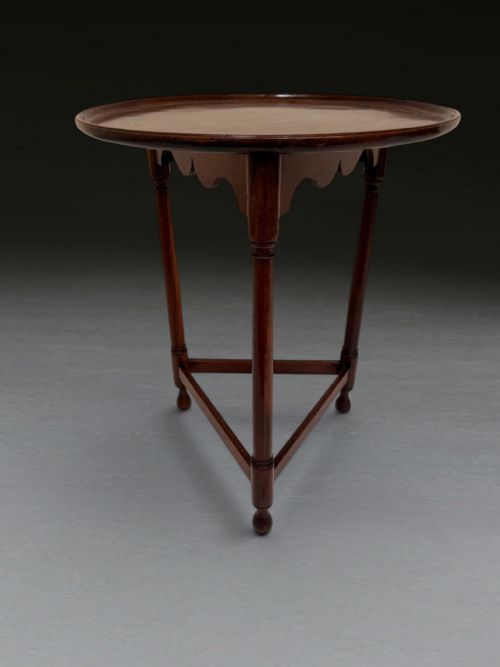
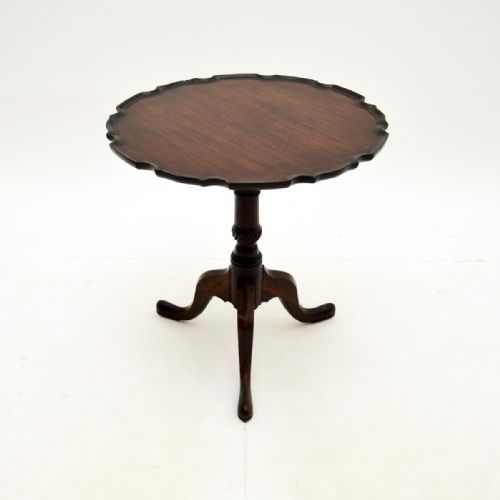
Construction techniques include tilt-top mechanisms, tripod bases, and tiered structures. Brass fittings and ebonised elements appear alongside traditional joinery to support the circular and shaped tops.
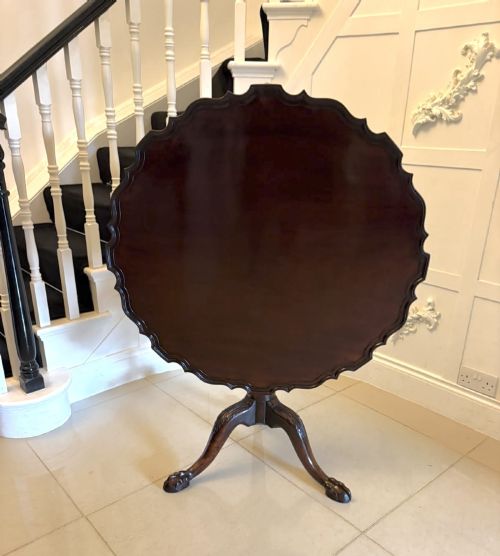
Tilt-top tables were originally designed to double as fire screens when tipped upright against the room's hearth.
What Varies in Quality
The refinement of the moulded or piecrust edge distinguishes the execution of the top, requiring precise hand-carving or shaping in the timber. Finer examples display superior timber selection, such as highly figured walnut, rich mahogany, or intricate marquetry inlay.
The integrity of the structural supports, whether pedestals, tripod legs, or multi-tiered columns, determines the stability and balance of the piece. Attribution to specific workshops or exhibition standards further elevates the standing of an individual table.
Egan Workshop·Whytock and Reid
The Scalloped Round Table Glossary
- Piecrust edge
- A raised, carved circular border with a decorative scalloped or undulating profile resembling pastry work. This detail is frequently found on tilt-top and occasional tables.
- Tilt-top table
- A table designed with a mechanism allowing the surface to pivot vertically for storage against a wall when not in use. Such tables typically rest on a central pillar and tripod base.
- Marquetry
- The art of applying decorative pieces of veneer to a structure to form intricate pictorial designs or patterns. This technique appears on finer tables utilising timbers like yew wood.
- Tripod base
- A support structure consisting of three legs radiating from a central column. This arrangement provides stability for round and circular table tops.
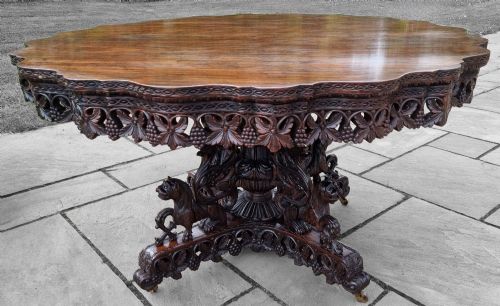
- Centre table
- A freestanding piece intended to be viewed from all sides, placed in the middle of a room or an entrance hall. These often feature substantial ornamentation.
Scalloped Round Table: Frequently Asked Questions
What is a scalloped round table used for?
These tables serve multiple functions across the home, acting as coffee tables in living areas, wine tables beside seating, or striking centre tables in entrance halls. Their circular format makes them adaptable for displaying decorative objects or holding drinks.
Depending on the height and scale, certain larger examples function effectively as intimate dining surfaces or occasional tables. The shaped edge adds a decorative element that suits both traditional and period interiors.
How do I identify a George III table?
George III pieces date from the eighteenth century into the early nineteenth century, characterised by traditional cabinet making methods and timber choices like dense mahogany. Look for classic proportions and restrained ornamentation typical of the Georgian era.
Many later pieces adopt these eighteenth-century motifs under Georgian revival movements of the early twentieth century. Examining the construction of the top and the joinery helps clarify the actual period of manufacture.
What is Killarney ware?
Killarney ware refers to nineteenth-century Irish decorative woodwork, typically characterised by intricate marquetry inlay using native timbers like yew wood. These pieces often depict traditional motifs and local scenery.
Items originating from this tradition frequently include exhibition quality centre tables intended for prominent display in entrance halls. The detailed inlay work distinguishes them from standard mahogany or walnut pieces.
How do I care for antique wood tables?
Protect the polished wooden surfaces from direct sunlight and excessive moisture to preserve the natural grain and finish of timbers like rosewood, walnut, and mahogany. Regular dusting with a soft, dry cloth prevents the accumulation of abrasive particles.
Avoid placing hot items directly onto the table top and apply appropriate natural waxes sparingly when the wood appears dry. Maintaining stable room humidity prevents the timber from warping or splitting over time.