

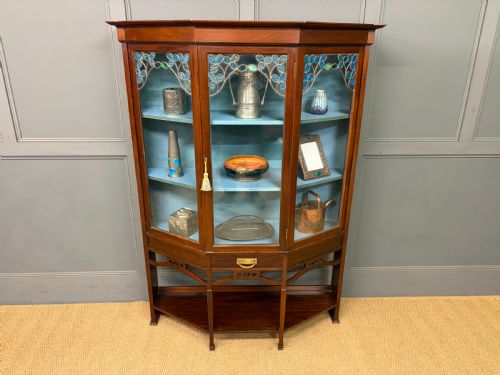


Arts and Crafts Mahogany
Arts and crafts mahogany brings together honest utility and refined cabinetmaking, offering functional furniture that grounds a room with quiet warmth.
Arts and Crafts Mahogany
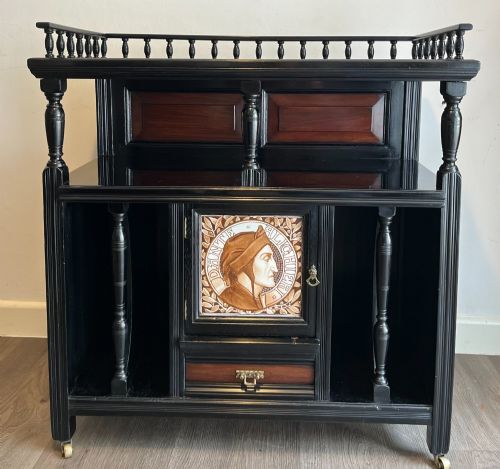
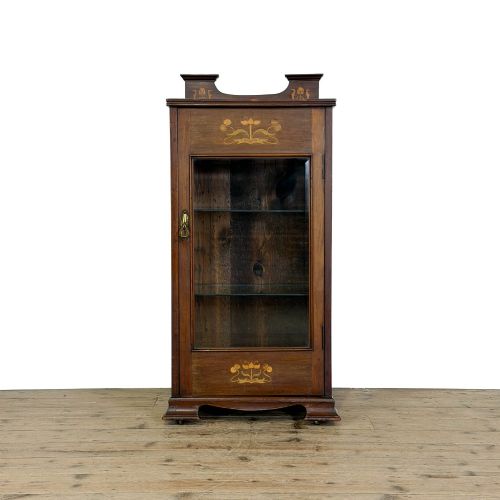
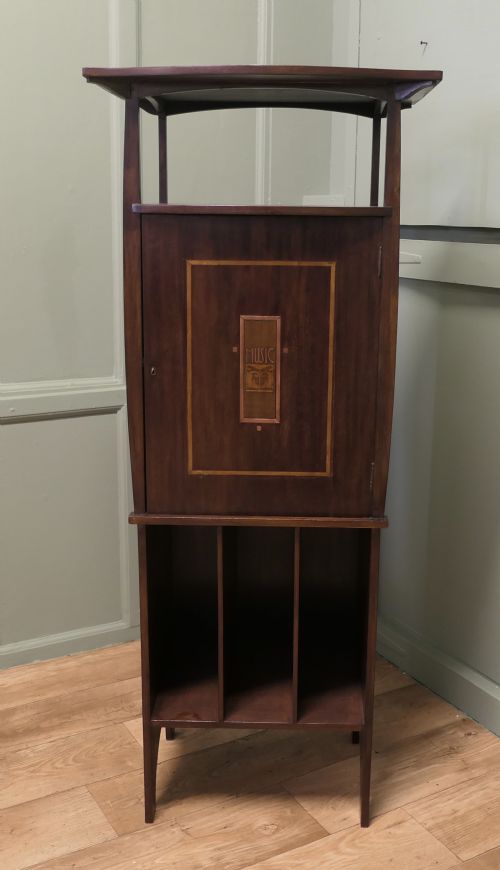
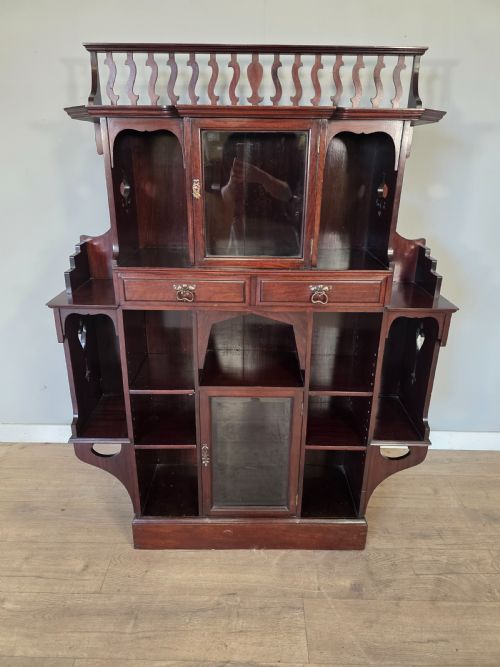
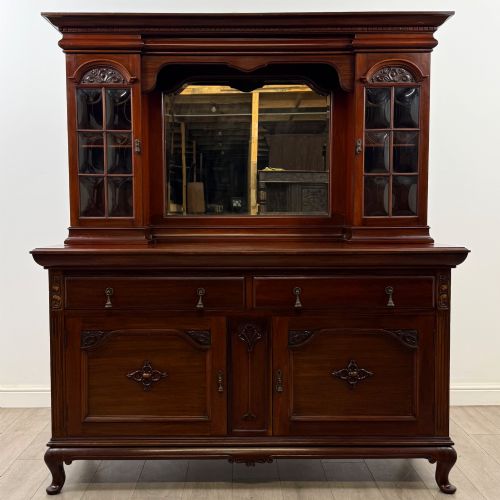
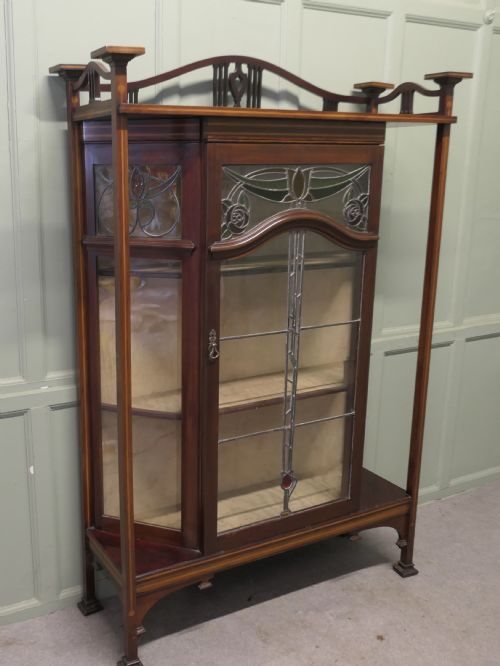
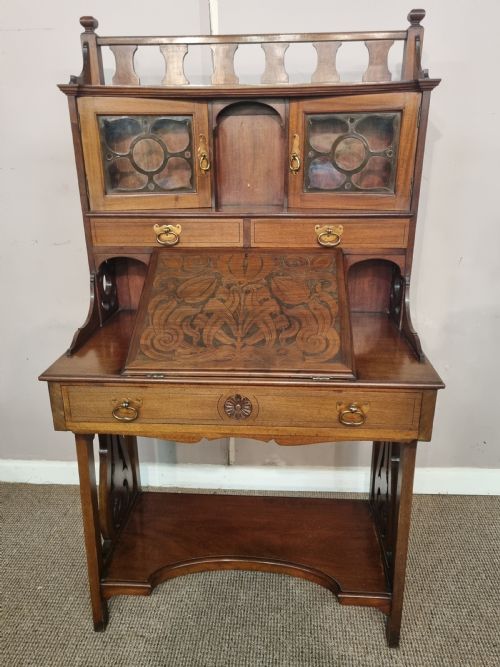
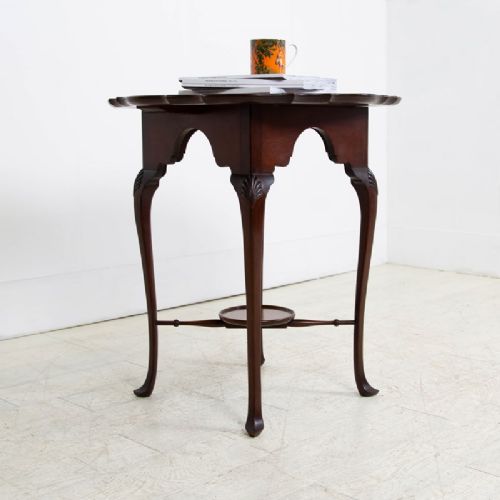
When you search for arts and crafts mahogany, you encounter a distinct departure from heavy Victorian ornamentation in favour of structure rooted in utility and proportion. The pieces listed here span utilitarian items like occasional tables, hall stands, and towel rails alongside substantial furniture such as bookcases, sideboards, and writing desks.
You are most likely to meet household furniture dating from the late nineteenth century through to the Edwardian period, often reflecting regional British design movements. Makers turned to rich timber to showcase clean lines, subtle joinery, and functional design tailored for domestic interiors.
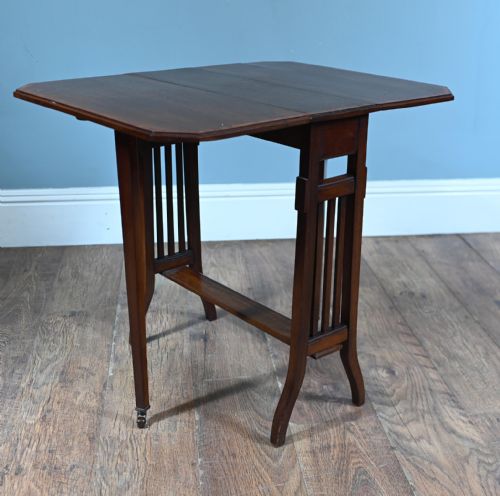
The selection ranges from simple vernacular pieces to ambitious architect-designed cabinets. Whether you need a compact drop-leaf table or a towering display cabinet, these objects retain their practical purpose while displaying the distinct character of the movement.
Materials and Technique
Cabinetmakers utilised solid mahogany and carefully selected veneers to achieve rich grain patterns without excessive ornamentation. Structural integrity relied on exposed tenons, pegged joints, and dovetailed construction that celebrated the integrity of the material.
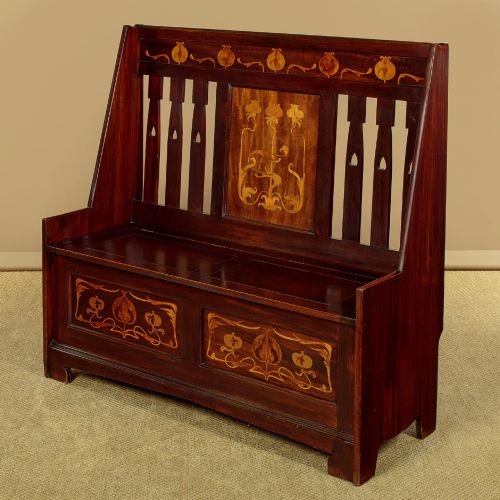
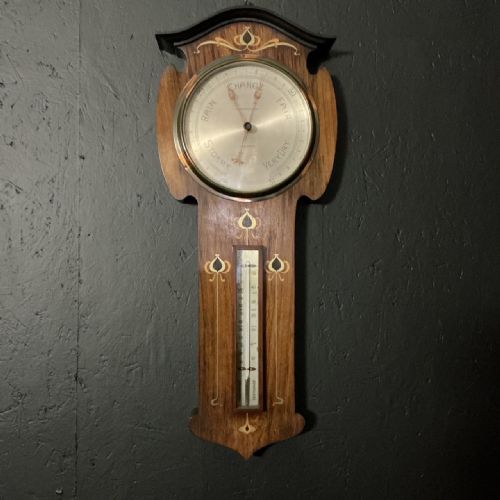
Metal hardware played an essential role in defining the aesthetic, with hammered copper, polished brass, and pewter used for hinges, handles, and escutcheons. Subtle wood inlay, contrasting banding, and occasional ceramic or tile inserts provided muted colour and texture to flat surfaces.
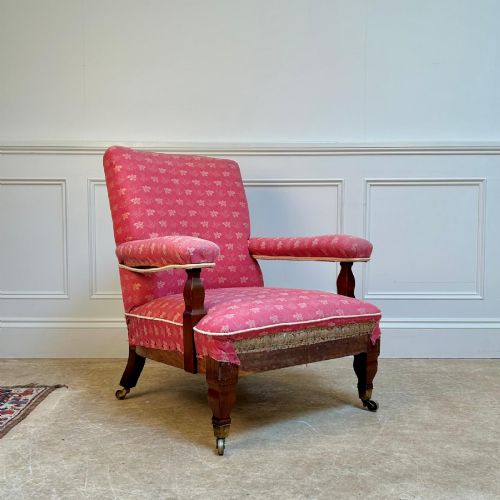
Materials paired with mahogany across these records include brass, copper, glass, and patterned fabric.
The Measure of Craft
Quality rests in the precision of the joinery and the selection of the timber. Superior pieces exhibit tight, hand-cut dovetails and harmonious grain matching across large surfaces, whereas simpler examples rely on standard factory construction.
The distinction between standard commercial output and workshop production appears in the hardware and secondary woods. Original patinated brass or copper fittings and thoughtful detailing elevate a piece far above mass-produced alternatives.
GM Elwood·JS Henry·George Jack·Morris and Co·Shapland and Petter·James Shoolbred·E. A. Taylor·Whytock and Reid·Liberty and Co·Lambs of Manchester
The Arts and Crafts Mahogany Glossary
- Inlay
- A technique where contrasting materials are inserted into recessed cavities in the wood surface to create decorative patterns. It adds visual interest without breaking the plane of the furniture.
- Fretwork
- Openwork ornamentation carved or pierced through thin boards of wood. This technique appears frequently on brackets and friezes to lighten heavy visual masses.
- Occasional table
- A small, movable table designed for a specific, intermittent domestic use such as holding books or tea. These pieces often feature tiered shelves or drop leaves.
- Settle
- A wooden bench with high backrest, solid arms, and often a storage compartment beneath the seat. In this movement, settles combined medieval vernacular forms with modern comfort.
- Glasgow School
- A circle of influential designers and architects active in Scotland during the late nineteenth and early twentieth centuries. Their work emphasised elongated proportions and austere geometry.
- Cotswold School
- A twentieth-century design movement focused on traditional hand-tool woodworking and vernacular construction methods. Practitioners prioritized honesty of materials above machine production.
Arts and Crafts Mahogany: Frequently Asked Questions
How do I identify arts and crafts mahogany?
Look for clean structural lines, honest joinery, and a rejection of fussy historicist revival styles in favour of simple utility.
Examine the hardware and secondary details, as original copper or brass fixtures and subtle wood inlay often confirm the period.
Can I use these desks for daily work?
Many writing desks and bureaus from this period suit contemporary laptops and daily study quite well.
Ensure the writing height and drawer dimensions match your ergonomic needs before committing the piece to daily office tasks.
How should I care for mahogany surfaces?
Keep the timber away from direct sunlight and extreme heat sources to prevent the wood from drying out or warping.
Apply natural beeswax periodically and buff gently with a soft cloth to maintain the historic lustre of the grain.
Where do these pieces fit in modern homes?
The restrained proportions and warm tones allow arts and crafts furniture to blend easily with contemporary or mid-century interiors.
A single bookcase, hall stand, or occasional table provides practical storage while grounding a neutral modern room with historic character.