
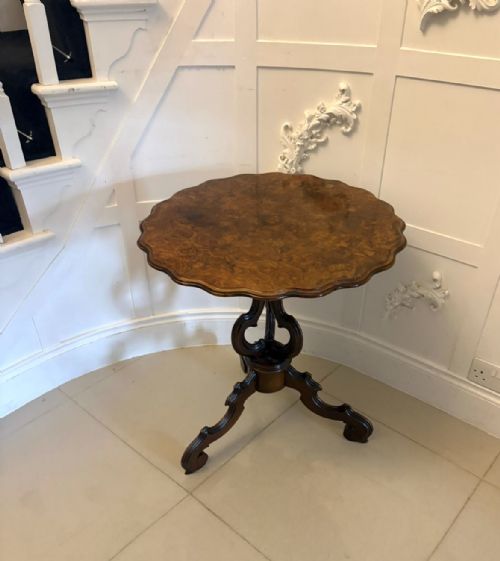


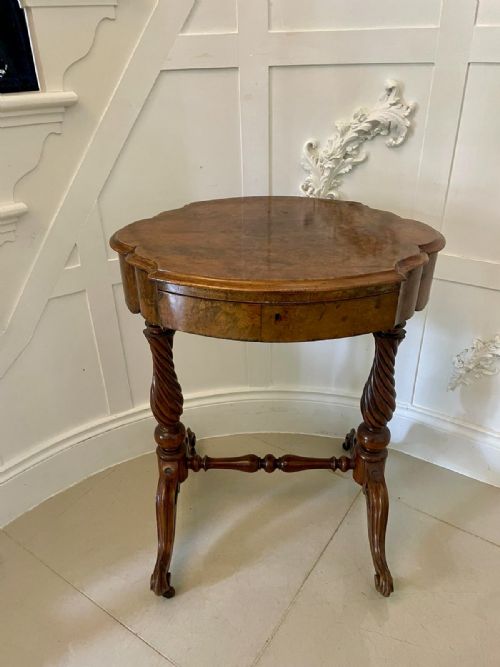


Scalloped Burr Walnut Table
A scalloped burr walnut table brings warmth and rich grain patterns to a room through centuries of cabinet-making skill.
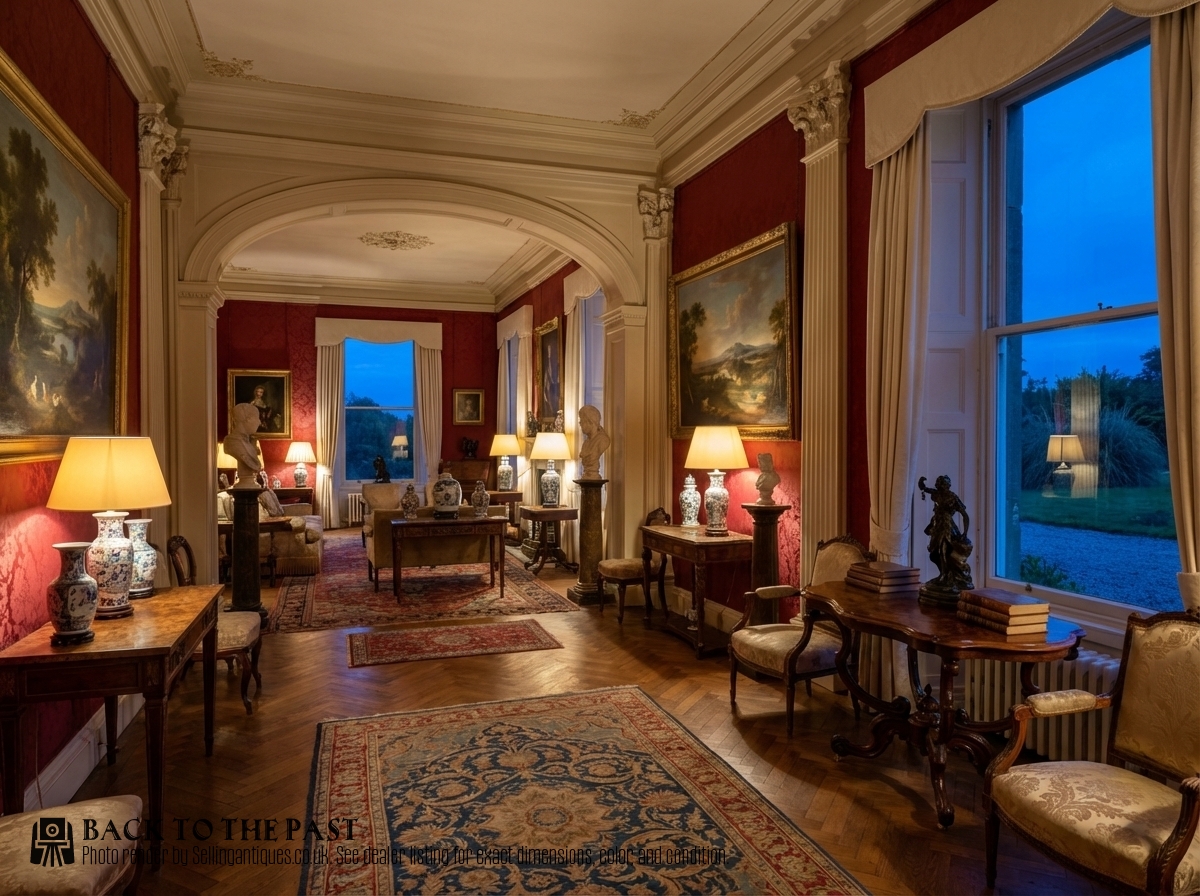
Scalloped Burr Walnut Table
Buyers encounter various functional formats across these listings, ranging from large centre and dining tables to compact coffee, lamp, and occasional tables.
The aesthetic draws heavily on revival styles and period designs, with Queen Anne influences and Victorian revival work dominating the available selection.
Materials and construction methods
Cabinet makers utilised burr walnut veneer and figured walnut applied over solid wood foundations to achieve complex swirling grain patterns across the surface.
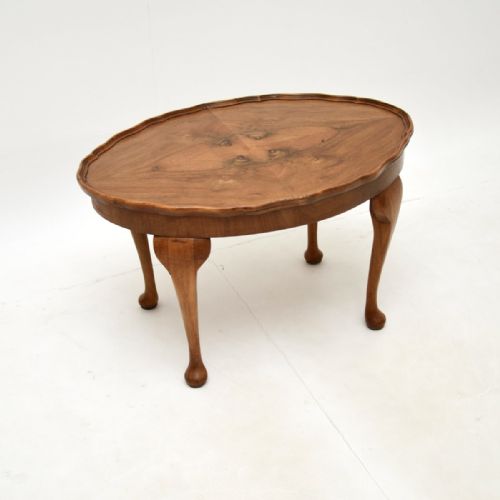
Detailed edge shaping creates the signature pie crust and scalloped outlines, often paired with wood inlay, marquetry, and brass fittings on pedestals or drawer mounts.
Listings for this phrase span multiple distinct eras, stretching from the Victorian period through to the 1930s.
Assessing quality and craftsmanship
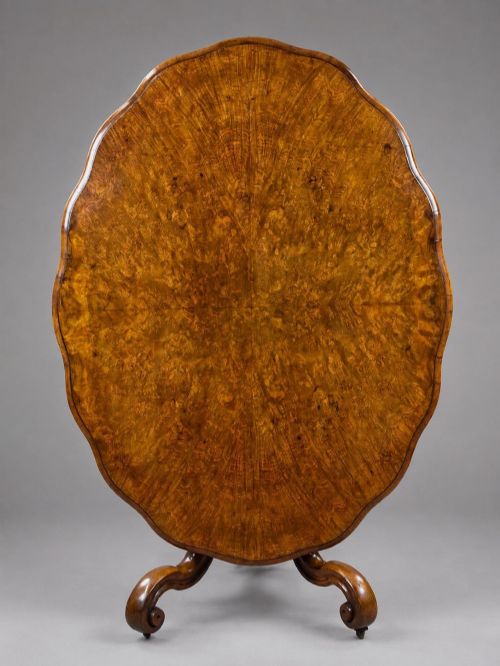
Quality rests upon the selection and matching of the burr walnut veneer across the shaped top, alongside the crispness of the carved scalloped borders and edges.
Structural integrity in the pedestals, tilt-top mechanisms, and pillar supports separates standard utilitarian pieces from finer nineteenth-century cabinet work.
John Kendal
The Scalloped Burr Walnut Table Glossary
- Burr walnut
- A specialised wood veneer taken from the wart-like growths on walnut trees, creating intricate, swirling grain patterns. This material forms the primary visual appeal of these tables.
- Centre table
- A freestanding table designed to be viewed from all sides rather than pushed against a wall. These often feature central pedestals or four-leg bases.
- Pie crust table
- A small table with a raised, carved, and scalloped edge resembling traditional pastry crusts. The technique requires careful hand-carving along the perimeter.
- Marquetry
- The art of applying pieces of veneer to a structure to form decorative patterns and pictures. It frequently appears alongside wood inlay on Victorian examples.
- Tilt top
- A table top hinged to the pedestal column so it can pivot vertically when not in use. This mechanism allowed tables to be stored against walls in period rooms.
Scalloped Burr Walnut Table: Frequently Asked Questions
What is a scalloped burr walnut table?
A scalloped burr walnut table is a piece of furniture featuring a decorative wood veneer with a distinctively shaped, undulating edge. These range from small coffee tables to large pedestal dining tables.
The use of burr walnut creates unique swirling patterns across the top surface, making each table visually distinct. They span periods from the mid-nineteenth century through the art deco era of the twentieth century.
How do I care for burr walnut furniture?
Burr walnut requires protection from direct sunlight and excessive heat to prevent the veneer from drying out or cracking. Regular dusting with a soft, dry cloth preserves the polished finish.
Applying a quality beeswax periodically helps nourish the wood and maintain its natural lustre. Avoid placing damp items directly on the surface to protect the delicate grain.
Where should I place a centre table?
A centre table works best as a freestanding focal point in the middle of a room, hallway, or large seating area. Because these tables are finished on all sides, they allow 360-degree viewing.
They function effectively as lamp tables, display surfaces for decorative objects, or central gathering points in principal rooms.
How do I distinguish Victorian from later tables?
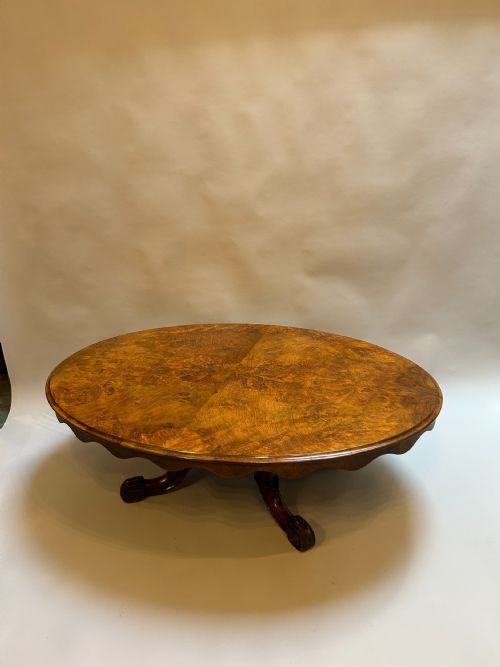
Victorian examples often feature heavier pedestal bases, elaborately carved pillar supports, and traditional marquetry or inlay work. They date primarily from the mid to late nineteenth century.
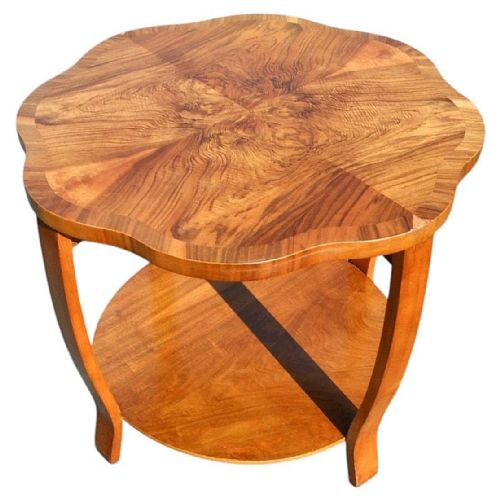
Later twentieth-century pieces, including those from the art deco period, tend to show cleaner lines, simpler geometric forms, and different base configurations while retaining the signature walnut grain.