




Satsuma Moriage Vases
Satsuma moriage vases bring layered enamel decoration and heavy gilding into a room, offering collectors intricate Japanese craftsmanship from the late nineteenth and early twentieth centuries.
Satsuma Moriage Vases
These satsuma moriage vases are glazed ceramic vessels originating primarily from the Meiji period, alongside pieces stretching into the early twentieth century. When buyers search for satsuma moriage vases, they encounter works characterised by raised enamel dotting and intricate hand-painted detailing.
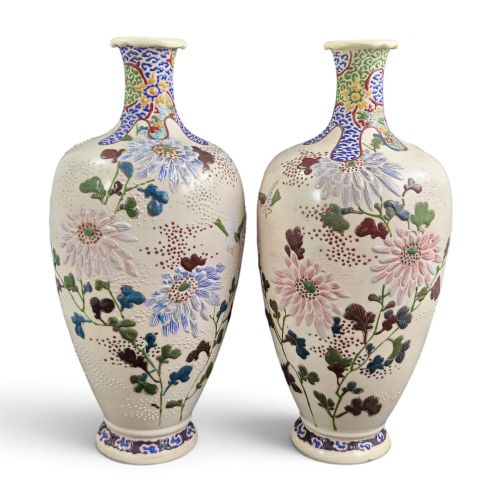
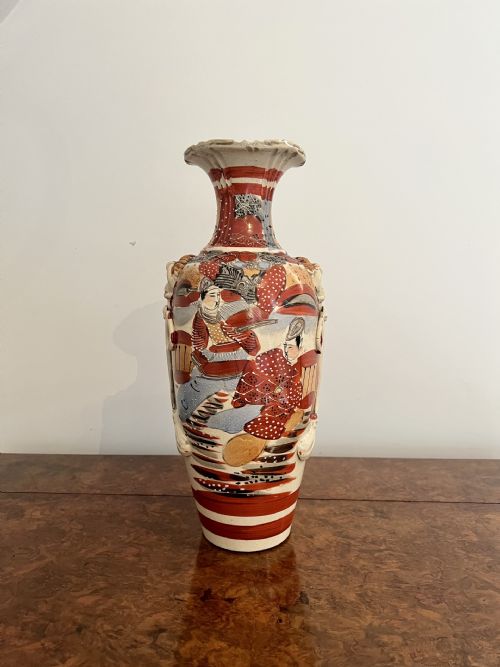
The pieces on this page appear mainly as pairs and single decorative vases displaying traditional Japanese subjects such as court figures, deities, dragons, and landscapes. Forms range from standard baluster shapes to structured hexagonal vessels created in regional workshops.
Most examples date from the nineteenth century or around nineteen hundred, reflecting the distinct aesthetic output of Meiji Japanese makers. Collectors typically find items bearing cobalt blue grounds, rich gilt highlights, and dense floral motifs like the chrysanthemum.
How they were made
Makers shaped these vessels from earthenware and glazed ceramic, applying specialised enamels to build up the distinctive raised moriage patterns. Artisans used trailing techniques to pipe slip or thick enamel onto the surface before firing, creating a tactile relief effect.
Gold leaf and gold gilt provide the lavish metallic accents found across the panels and borders of these vases. Hand-painting supplied the fine facial expressions on figures and the detailed backgrounds of landscapes and religious scenes.
Listings feature earthenware and glazed ceramic vessels dated across the nineteenth century, nineteen hundred, and nineteen twenty.
What varies in quality
The density and complexity of the panel designs also dictate the standing of a piece within the range. Vessels featuring multiple distinct motifs, such as combined dragons and Rakan figures against deep cobalt grounds, demonstrate higher artistic ambition.
Chikusai·Nanzan
The Satsuma Moriage Vases Glossary
- Moriage
- A decorative technique involving the piling of slip or enamel to create raised, tactile patterns on ceramics. This method forms the defining textural element of these vases.
- Satsuma
- A type of Japanese earthenware traditionally featuring a crackled ivory glaze and fine overglaze enamel painting. It serves as the ceramic foundation for these pieces.
- Meiji Period
- The era in Japanese history spanning from eighteen sixty-eight to nineteen twelve, noted for the flourishing of decorative arts for export. Most listed pieces connect directly to this era.
- Rakan
- The Japanese term for arhats or enlightened followers of Buddha, frequently depicted in religious panel scenes. These figures appear alongside dragons and court personages.
- Gilt
- A thin layer of gold applied to the ceramic surface to highlight panels and borders. This material adds significant visual weight to the decoration.
Satsuma Moriage Vases: Frequently Asked Questions
What is moriage decoration?
Moriage refers to the raised, beaded, or piped enamel work applied across the ceramic surface to create a distinct three-dimensional texture. Artisans built up these decorative relief patterns by hand before firing.
This technique allows floral motifs, borders, and garments on the painted figures to stand proud of the glazed body, offering a tactile contrast to smooth painted areas.
How do I spot Meiji period pieces?
Meiji period pieces typically exhibit dense hand-painted compositions, heavy gilt ornamentation, and specific motifs like court figures and religious panels. The earthenware bodies often feature finely crackled glazes characteristic of Satsuma wares.
Examining the precision of the brushwork and the complexity of the raised enamel helps distinguish these nineteenth-century items from later twentieth-century productions.
Where were these vases made?
These decorative vessels originated in Japan during the late nineteenth and early twentieth centuries, drawing on regional ceramic traditions associated with Satsuma ware. Kyoto also served as a prominent centre for producing these export pieces.
Workshops in these areas employed specialised painters and gilders to create the intricate panels intended for international collectors.
How should I display them?
These vases suit placement on sturdy mantelpieces, cabinets, or dedicated display tables where their detailed panels and gilt highlights catch ambient light. Keeping them away from direct sunlight protects the delicate overglaze enamels.
Pairing matching vessels symmetrically enhances formal interior arrangements, while individual large vases serve as standalone focal points in a room.