





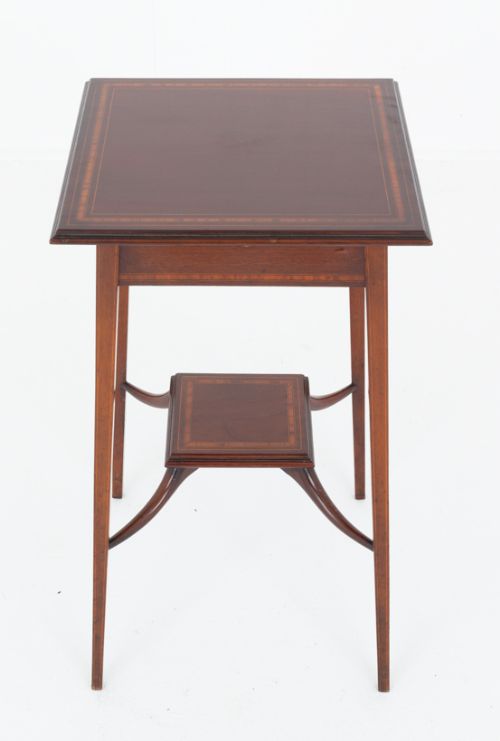
Satinwood Standing Shelf
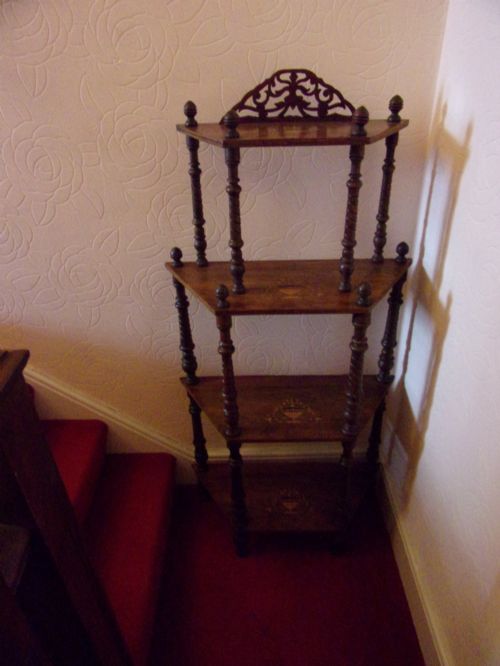
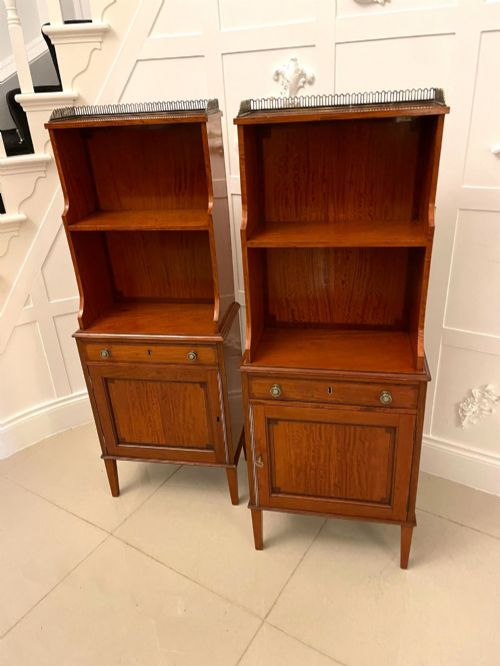
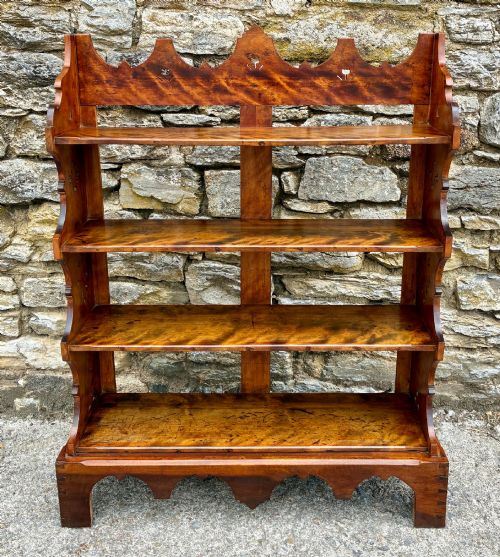
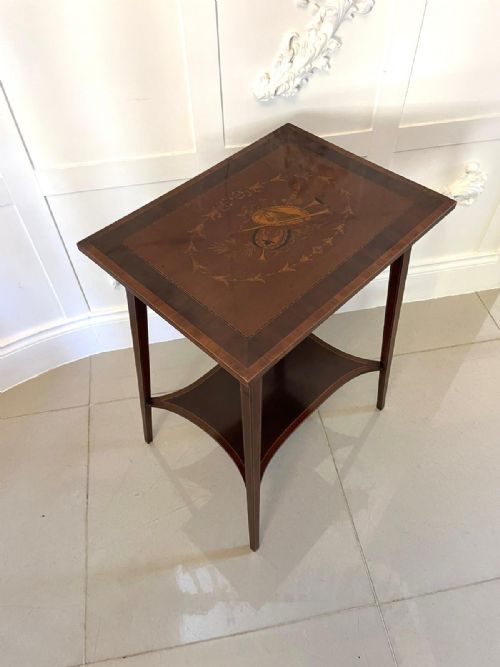
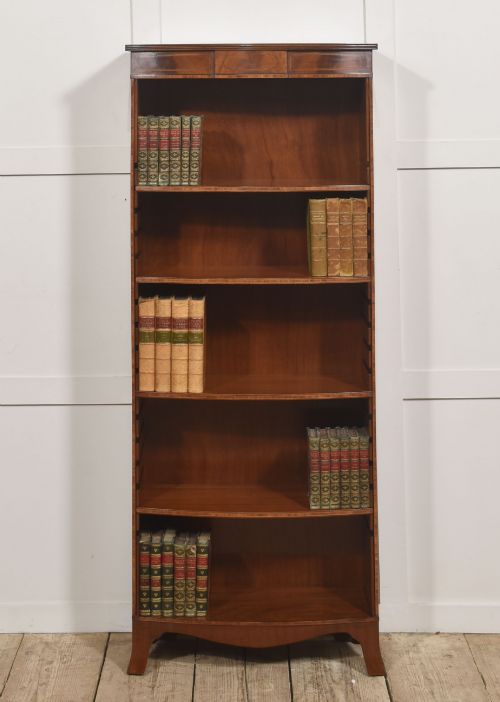
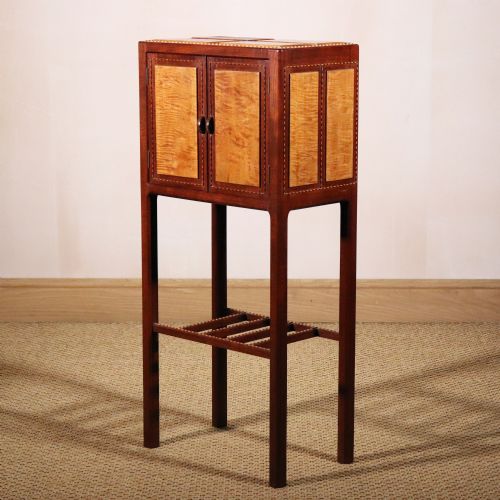
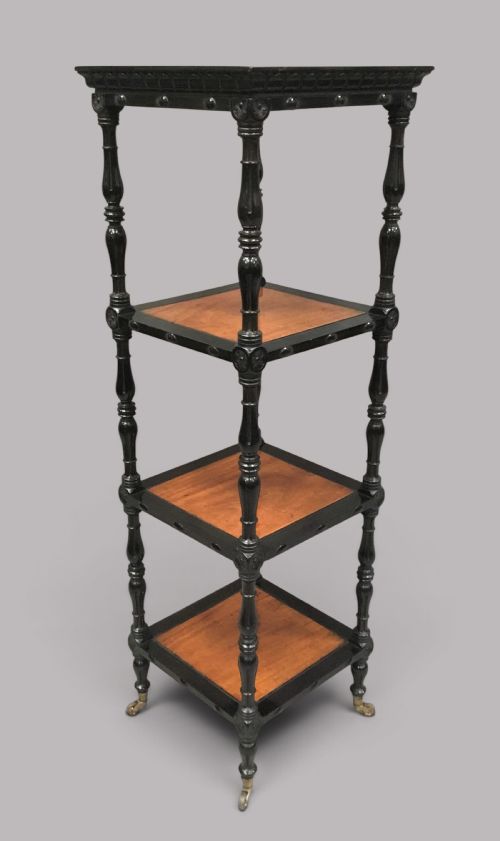
These satinwood standing shelf pieces bring figured timber and upright display into a room, offering both character and storage.
Satinwood Standing Shelf
A satinwood standing shelf brings together open display space and upright storage, often taking the form of bookcases, etageres, and bookcases and shelving. These pieces serve primarily to hold books and decorative objects while adding warmth through light-grained timbers.
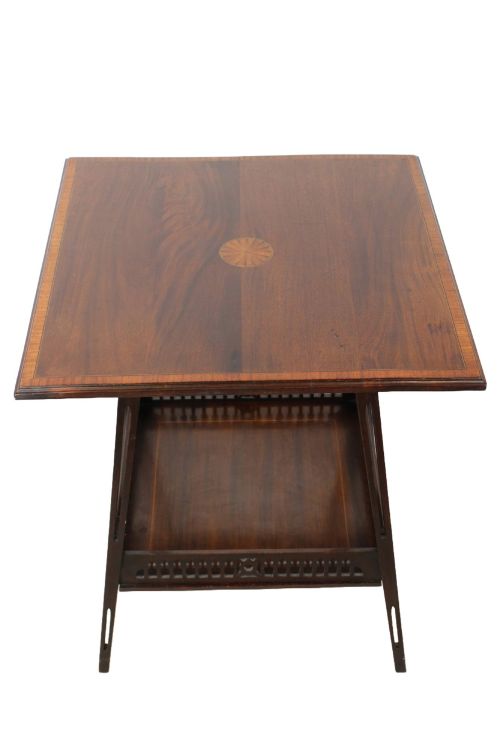
The pieces you encounter span several decades, with Edwardian and Victorian examples forming a significant part of the selection alongside later interpretations. Forms range from slender open bookcases to revolving bookcases and occasional tables with tiered shelving.
Makers and workshops utilised contrasting timbers, incorporating mahogany, walnut, and ebony alongside the principal satinwood surface. This mix of woods creates the characteristic bordered panels and banded edges seen across the category.
Materials and construction methods
Makers built these pieces using solid timbers and carefully selected veneers applied to supportive carcases. Satinwood provides the pale, reflective ground, while mahogany and walnut frequently form the structural frames and secondary woods.
Inlay and marquetry demand precise hand-cutting of boxwood, brass, and darker veneers to create contrasting lines and decorative motifs. Ormolu mounts appear on select pieces, fixed securely to accent corners and borders.
Satinwood Standing Shelf Retail Price Guide 2026
Typical asking prices for satinwood standing shelf among the pieces listed under this phrase on Sellingantiques today, from the lower quarter to the upper quarter. They describe what is for sale here now, not the wider market.
Rotating a revolving bookcase too fast sends small paperbacks flying, proving Victorian innovation had a mischievous side.
Factors of construction and finish
The choice of timber figure dictates much of the visual impact, with tightly figured satinwood displaying greater depth and chatoyancy under light. Plain or evenly grained boards lack this movement, resulting in a quieter appearance.
Joinery execution separates standard production from finer work, visible in the tightness of dovetails, the fit of adjustable shelves, and the crispness of inlaid banding. Secondary woods and backing boards also reflect the original maker's investment in materials.
Gillows·Trevor Page & Co
The Satinwood Standing Shelf Glossary
- Satinwood
- A hard, durable timber prized for its lustrous, golden-yellow sheen and fine grain. It is often used as a veneer or for stringing.
- Inlay
- A decorative technique where pieces of contrasting wood, metal, or shell are fitted into depressions within a solid background.
- Etagere
- A piece of furniture consisting of a set of open shelves for displaying small objects or ornaments. It usually stands free in the room.
- Marquetry
- Elaborate patterns formed by the insertion of veneers into a veneer ground, creating pictorial or geometric designs.
- Ormolu
- Gilded bronze used for decorative mounts and fittings on furniture. It adds metallic contrast to wooden surfaces.
Satinwood Standing Shelf: Frequently Asked Questions
Where should I place a standing shelf?
These pieces suit living rooms, studies, and libraries where upright display and book storage are required. Their finished backs and compact footprints allow them to stand against walls or within open room layouts.
Ensure the piece sits away from direct heat sources and strong sunlight to protect the polished satinwood surfaces and delicate veneers from drying or fading.
How do I care for satinwood furniture?
Dust the timber regularly with a soft, dry cloth to prevent dirt accumulation. Avoid silicone-based polishes and excessive moisture, using traditional wax sparingly to nourish the grain.
Maintain stable room humidity levels to prevent the wood and veneers from expanding, contracting, or developing shrinkage splits along the joints.
How do I distinguish Edwardian pieces?
Edwardian examples often feature lighter construction, refined satinwood inlay, and Sheraton Revival influences. The proportions tend to be slender, reflecting the lighter aesthetic of the early twentieth century.
Construction details such as machine-cut elements, lighter secondary woods, and specific hardware styles help separate these later pieces from heavier Victorian predecessors.
Can I adjust the shelf heights?
Many open bookcases and shelving units feature adjustable shelf systems supported by brass pins, wooden ratchets, or traditional tracks. This allows you to configure the internal space for different book sizes.
Fixed shelves are more common in specific cabinet forms and smaller etageres, where structural rigidity relies on permanent joints rather than movable supports.