






Satinwood Library Furniture
Satinwood library furniture brings luminous timbers and refined craftsmanship into domestic studies, offering timeless utility.
Satinwood Library Furniture
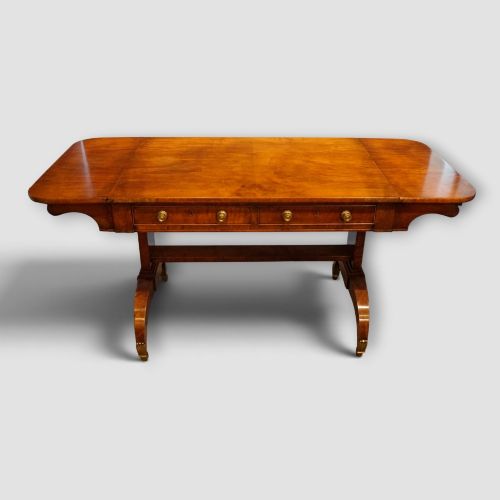
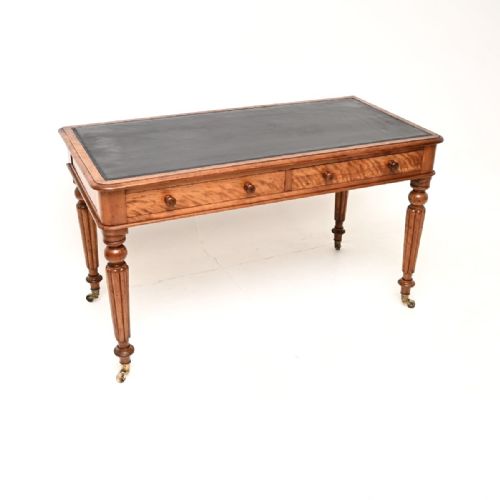
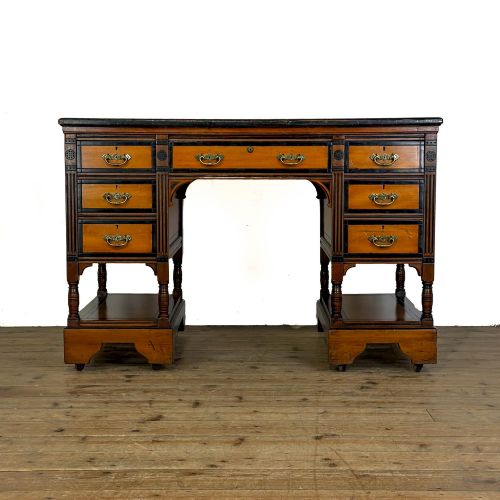
Satinwood library furniture encompasses desks, writing tables, bookcases, and chairs fashioned primarily from dense, pale exotic timbers. Buyers seeking satinwood library furniture typically encounter Victorian, Edwardian, and nineteenth-century interpretations of classical design.
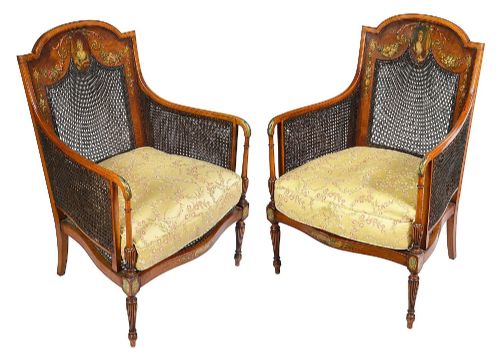
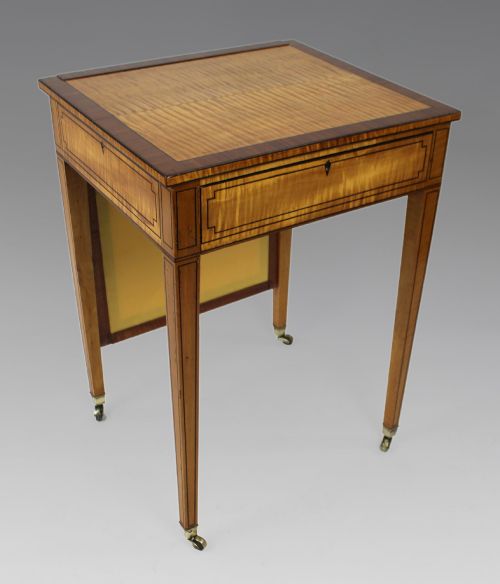
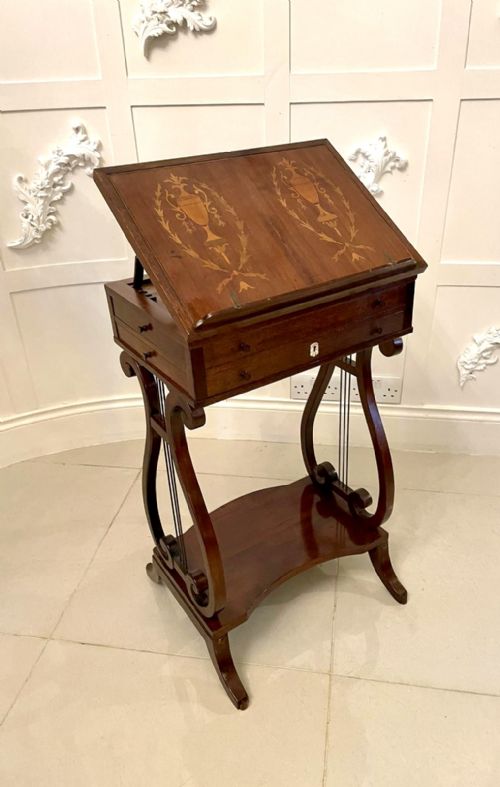
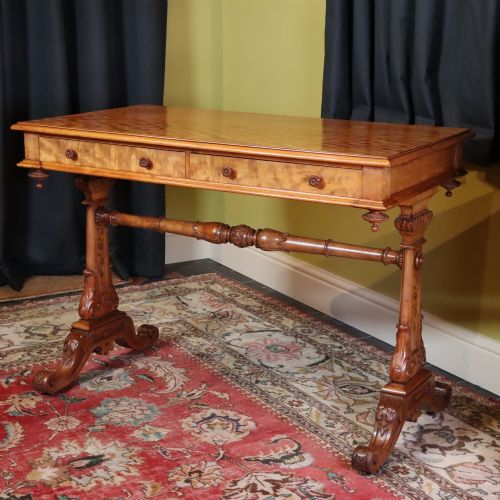
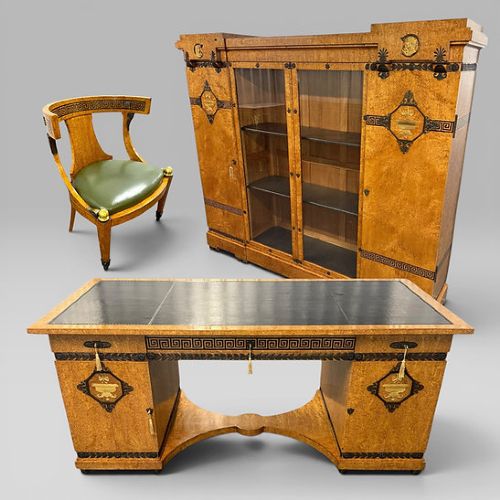
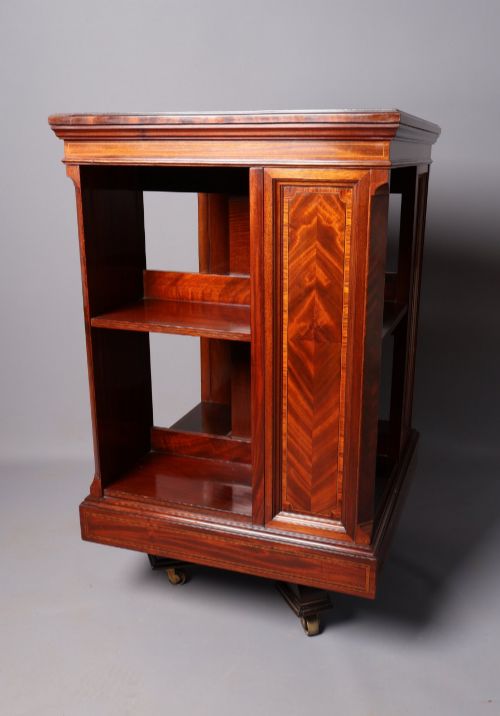
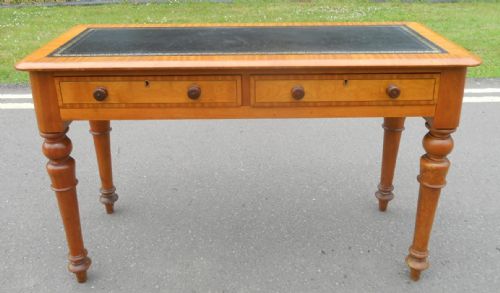
The selection ranges from George III Sheraton writing tables to Edwardian revolving bookcases and Sheraton revival bergere chairs. Side tables and comprehensive office sets complete the domestic study arrangements seen across these examples.
Makers such as Maple and Co, Mercier Frères, Donald Ross, J Shoolbred, and Howard and Sons appear among these nineteenth and early twentieth-century pieces. These workshops produced freestanding knee-hole desks, double-sided partners desks, and inlaid reading tables.
Materials and Construction
Cabinetmakers utilised satinwood alongside contrasting timbers like mahogany, rosewood, calamander, and satin Birch. Surface enrichment frequently involved delicate marquetry, parquetry, and linear inlay work.
Functional hardware relied upon brass fittings, while seating incorporated leather, fabric, cane, and upholstered elements. French neoclassical and aesthetic movement influences shaped the joinery and decorative motifs of the period.
Satinwood Library Furniture Retail Price Guide 2026
Typical asking prices for satinwood library furniture among the pieces listed under this phrase on Sellingantiques today, from the lower quarter to the upper quarter. They describe what is for sale here now, not the wider market.
Some revolving bookcases spin freely enough to make browsing a seated sport.
Judging Quality and Execution
Distinctions in quality rest upon the selection of timber veneers and the precision of the marquetry or parquetry. Hand-decorated surfaces and coherent decorative schemes set finer workshop productions apart from standard utility pieces.
Structural integrity depends upon the integration of brass hardware, leather writing inserts, and secondary timbers like mahogany. Pieces bearing attribution to recognised makers demonstrate superior cabinet-making traditions.
Maple and Co·Mercier Freres·Donald Ross·J Shoolbred·Howard and Sons
The Satinwood Library Furniture Glossary
- Satinwood
- A dense, durable tropical timber prized for its lustrous, golden-yellow sheen and smooth grain. It forms the primary visual surface for high-status case furniture and writing desks.
- Marquetry
- The art of applying decorative veneer pieces to a structure to form pictorial or geometric patterns. Artisans utilise contrasting woods to create detailed ornamentation on table tops and desk fronts.
- Parquetry
- A geometric mosaic of wood pieces used for decorative floors and table surfaces. This technique displays precise angular joinery.
- Bergere
- An enclosed upholstered armchair with wooden framing and cane sides. These chairs often accompany library writing desks.
- Calamander
- A heavy, durable wood featuring dark brown streaks on a fawn background. Cabinetmakers employ it as an accent timber alongside satinwood and rosewood.
Satinwood Library Furniture: Frequently Asked Questions
How do I care for satinwood surfaces?
Keep satinwood away from direct sunlight and excessive heat sources to prevent the pale timber from darkening or drying out.
Apply gentle beeswax polishes occasionally and buff with a soft cloth to maintain the natural golden lustre without buildup.
Where should a revolving bookcase go?
Revolving bookcases suit corners of studies or beside armchairs where frequent access to reference volumes matters.
Ensure adequate floor clearance around the piece so the rotating mechanism turns freely without hitting surrounding furniture.
Can I use an antique writing table daily?
Writing tables built from dense hardwoods and sturdy frames withstand everyday writing tasks and laptop use.
Protect vulnerable leather writing inserts with blotters and avoid placing unpadded hot cups directly onto the polished wood surface.
What defines Sheraton revival style?
Sheraton revival pieces draw inspiration from late eighteenth-century classical proportions, featuring clean lines and tapered legs.
These later interpretations often incorporate elaborate satinwood veneers and delicate floral marquetry typical of Edwardian execution.