

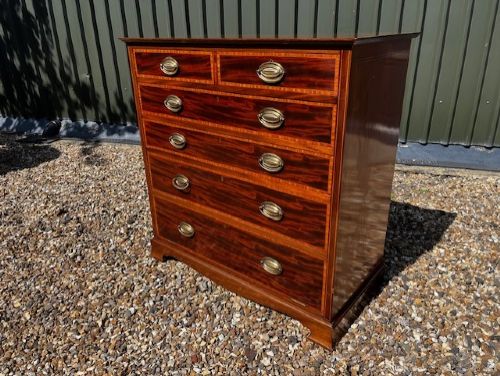
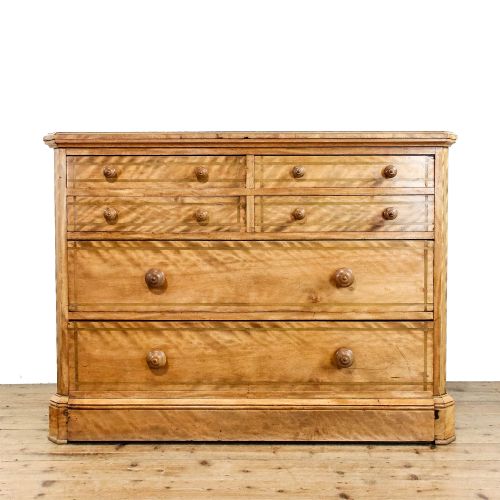
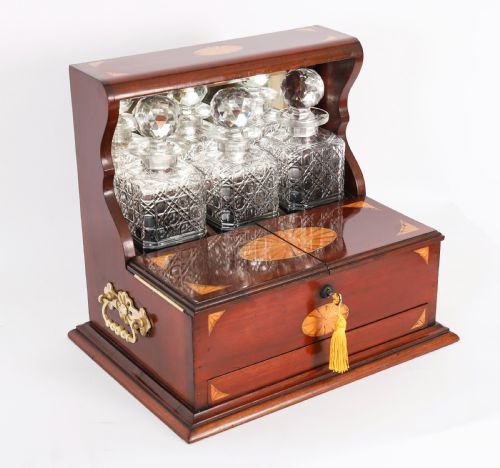
Satinwood Inlay Chest
A satinwood inlay chest brings luminous timber and crisp marquetry into a room, offering both practical storage and refined decorative presence.
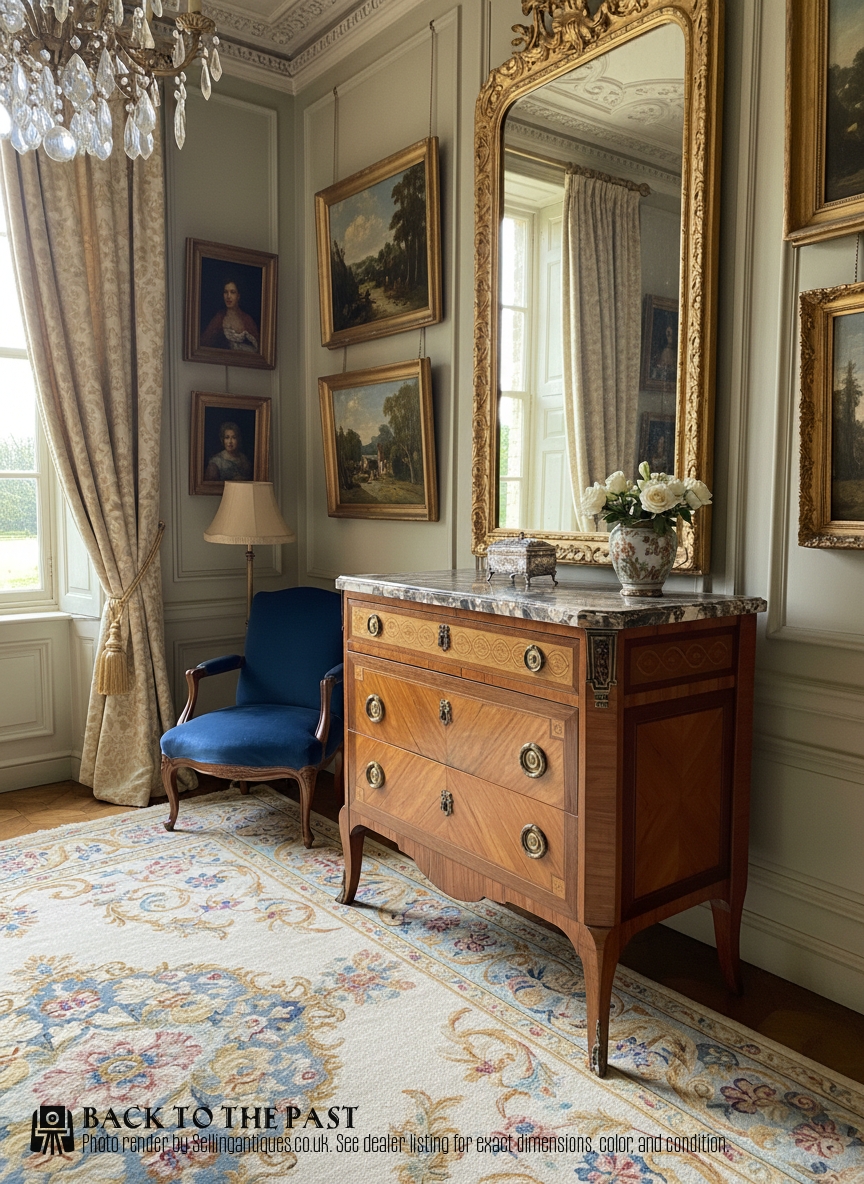
Satinwood Inlay Chest
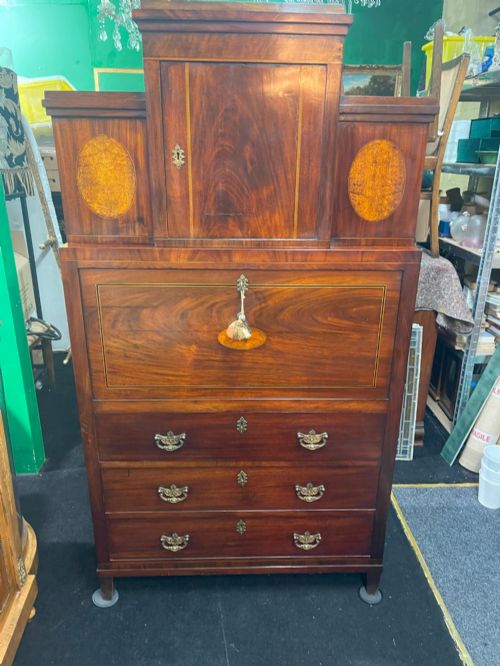
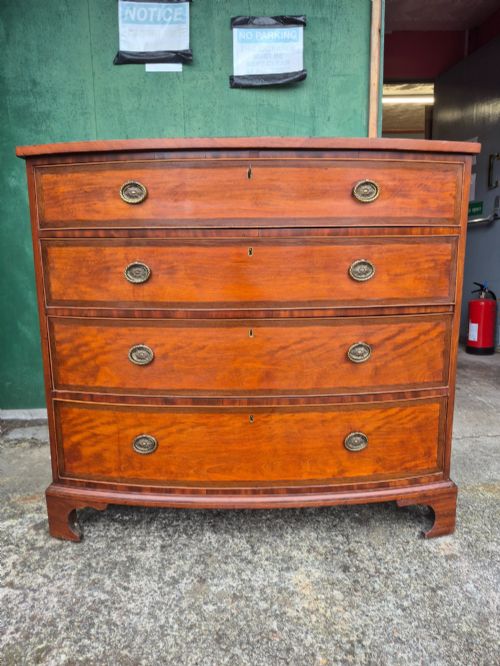
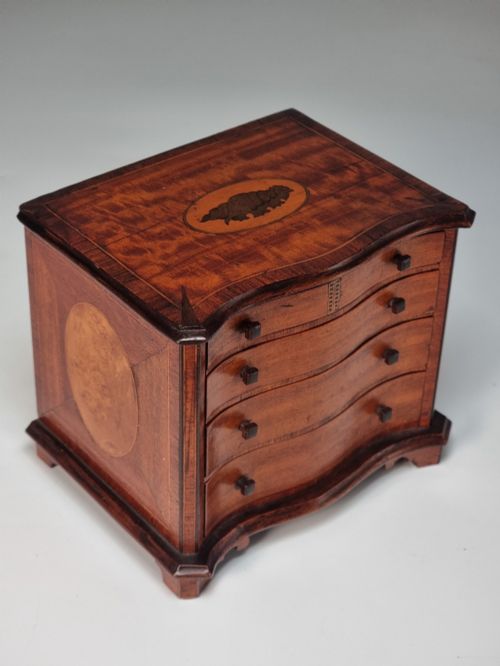
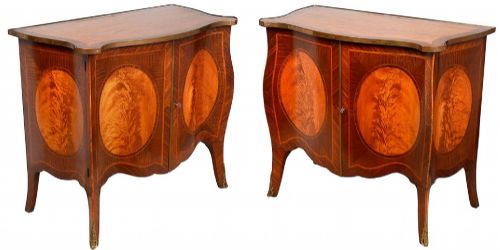
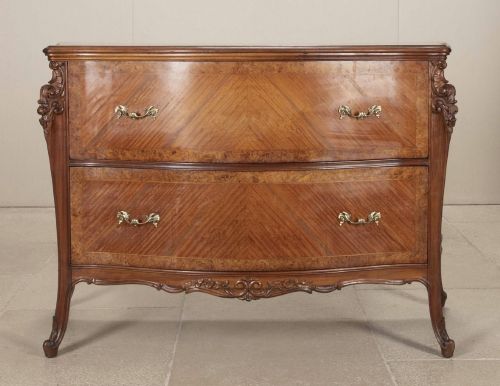
A satinwood inlay chest combines structural hardwoods like mahogany, walnut, or solid satinwood with contrasting lighter timber details, creating a striking visual rhythm across drawers and panels. These pieces span periods from the Georgian and Regency eras through the Victorian and Edwardian decades, reflecting shifting tastes in domestic furniture.
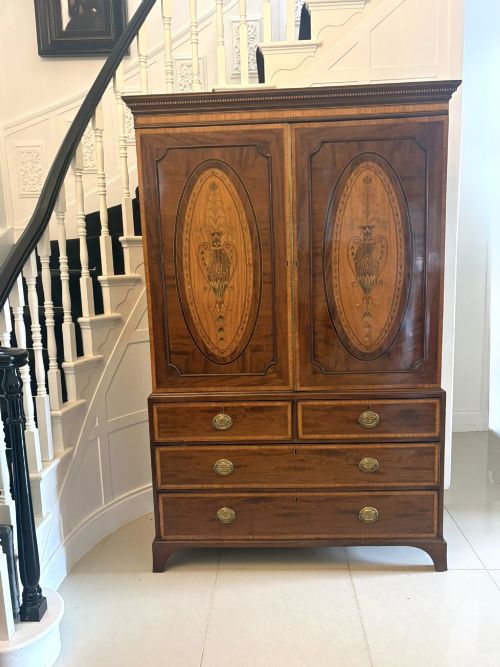
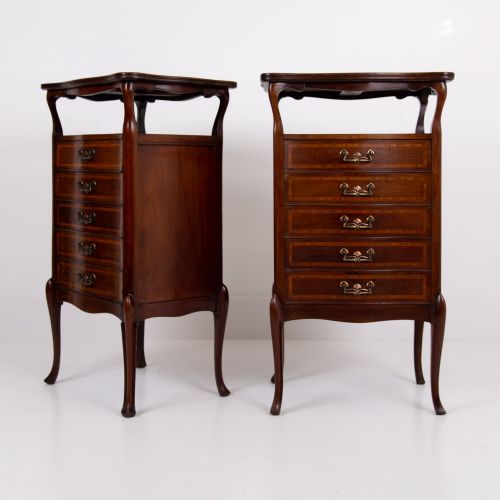
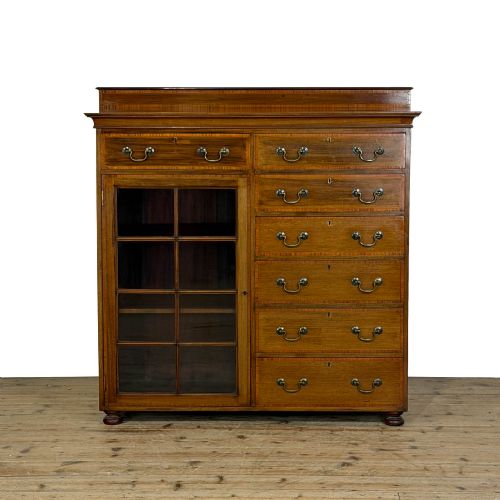
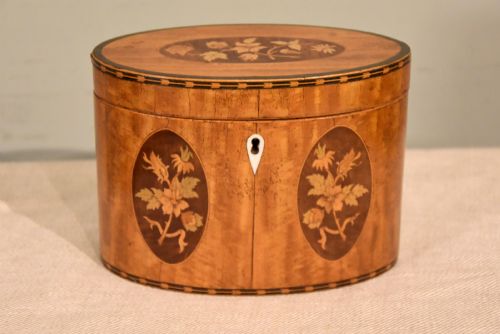
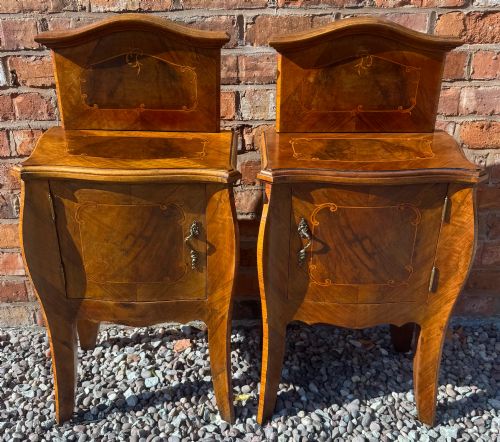
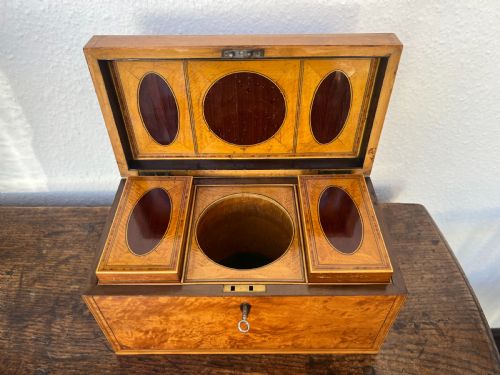
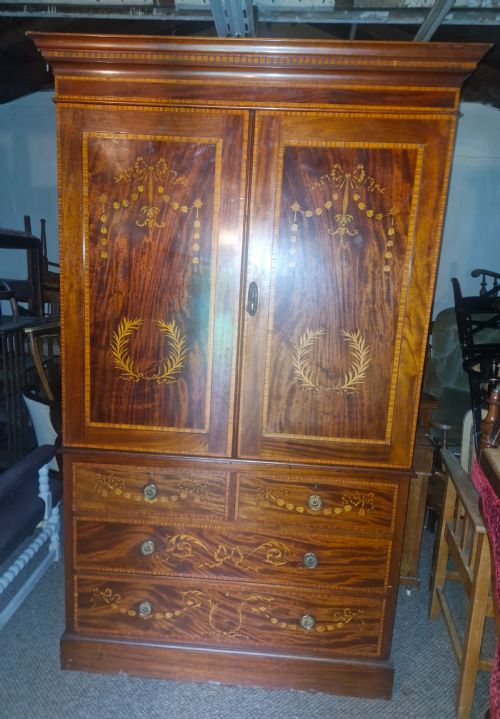
The form ranges widely across the selection, appearing as grand serpentine commodes, compact bedside chests, tallboys, and linen presses alongside smaller tea caddies and dressing tables. Buyers seeking this phrase typically encounter mahogany carcases enriched with satinwood panels, stringing, and floral or butterfly motifs.
Originating in both English workshops and continental makers, these items demonstrate how cabinet makers utilised exotic veneers to catch the light. The execution shifts from restrained George III geometric banding to elaborate Edwardian Sheraton Revival curves.
Materials and construction
Cabinet makers constructed the carcase using sturdy timbers such as mahogany, walnut, or oak, applying fine veneers of satinwood and harewood to the primary surfaces. Crossbanding and line inlay in ebony, boxwood, and bone provided sharp definition to drawer fronts and top edges.
Marquetry and parquetry techniques involved cutting intricate floral, oval, or butterfly motifs from dyed and natural woods, then fitting them meticulously into recesses carved into the ground timber. Brass handles, escutcheons, and hinges completed the hardware, often cast or stamped to suit the prevailing style of the period.
Listings feature satinwood combined with mahogany, walnut, harewood, brass, bone, and ebony across Georgian, Victorian, and Edwardian periods.
Judging quality and execution
Quality rests in the crispness of the inlay work and the harmonious grain selection of the satinwood panels. Superior examples display seamless integration where contrasting veneers meet, maintaining flush surfaces without lifting or shrinking.
The integrity of the underlying structure, original brassware, and drawer construction further separate standard production from exceptional craftsmanship. Well-preserved pieces retain the natural golden luminescence of the timber without excessive darkening or heavy restoration.
A. F. Lloyd, Bideford·Druce & Co.·Maple & Co.
The Satinwood Inlay Chest Glossary
- Satinwood
- A hard, durable tropical timber known for its distinctive golden sheen and satin-like texture. It serves as the primary veneer for highlights and geometric banding.
- Inlay
- A technique where pieces of contrasting wood, bone, or metal are embedded into depressions in the wood surface to form a flat decorative pattern.
- Serpentine
- A curved furniture front characterised by a convex centre flanked by concave curves. This shape requires advanced cabinet making skills.
- Crossbanding
- A border veneer applied around the edges of a panel or drawer front where the wood grain runs perpendicular to the central grain.
- Tea caddy
- A small box fitted with compartments, originally designed to store loose tea leaves securely under lock and key.
Satinwood Inlay Chest: Frequently Asked Questions
How do I clean satinwood furniture?
Dust surfaces regularly with a soft, dry cloth to prevent dirt accumulation. Avoid modern silicone sprays or excessive moisture, which can damage aged veneer.
Apply a traditional beeswax polish sparingly once or twice a year to nourish the timber and maintain its natural lustre. Buff gently with a clean cloth after application.
Are these chests suitable for daily bedroom use?
These pieces function well for everyday storage when handled with reasonable care. Drawers operate smoothly when maintained, though historical timber requires gentle operation.
Keep them away from direct heat sources and strong sunlight to prevent the satinwood veneer from drying, fading, or lifting over time.
How can I tell Georgian from Edwardian pieces?
Georgian examples often feature heavier timber scantlings, hand-cut dovetails, and restrained neoclassical stringing or oval medallions. The proportions lean toward architectural gravity.
Edwardian pieces, particularly Sheraton Revival items, display lighter construction, machine-assisted precision, and more exuberant floral marquetry or satinwood wrapping.
What causes veneer to lift on older chests?
Fluctuations in household humidity and temperature cause the underlying wood and glue to expand and contract at different rates. Over decades, this tension weakens the adhesive bond beneath the satinwood.
Stable indoor climates help preserve the bond, and professional conservation can secure loose sections before loss occurs.