

Parquetry Marble Top Commode
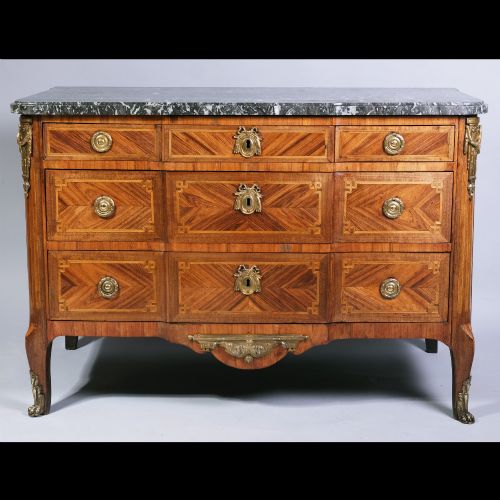
A parquetry marble top commode combines geometric wood veneers with a heavy stone surface for a formal storage piece.
Parquetry Marble Top Commode
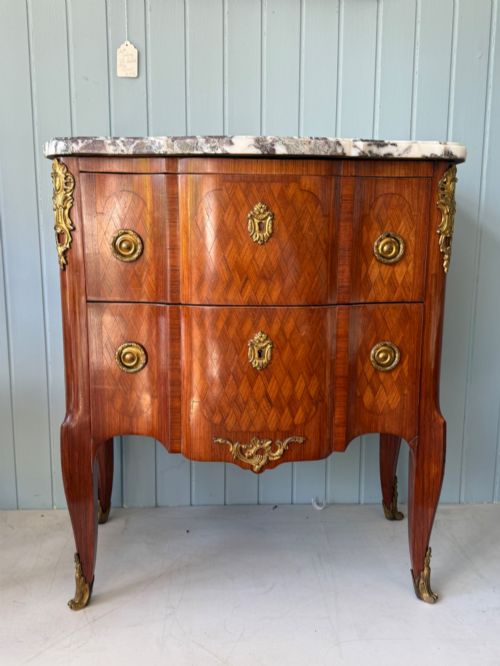
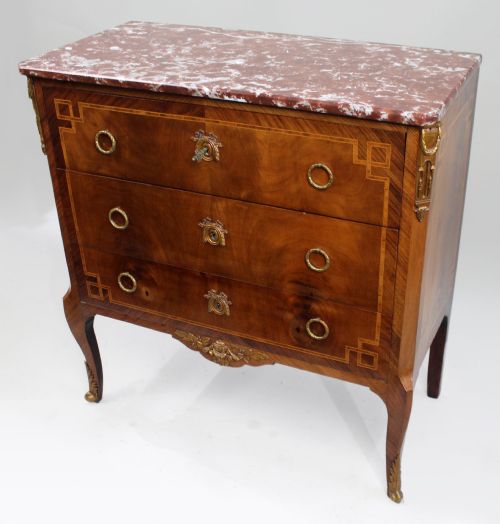
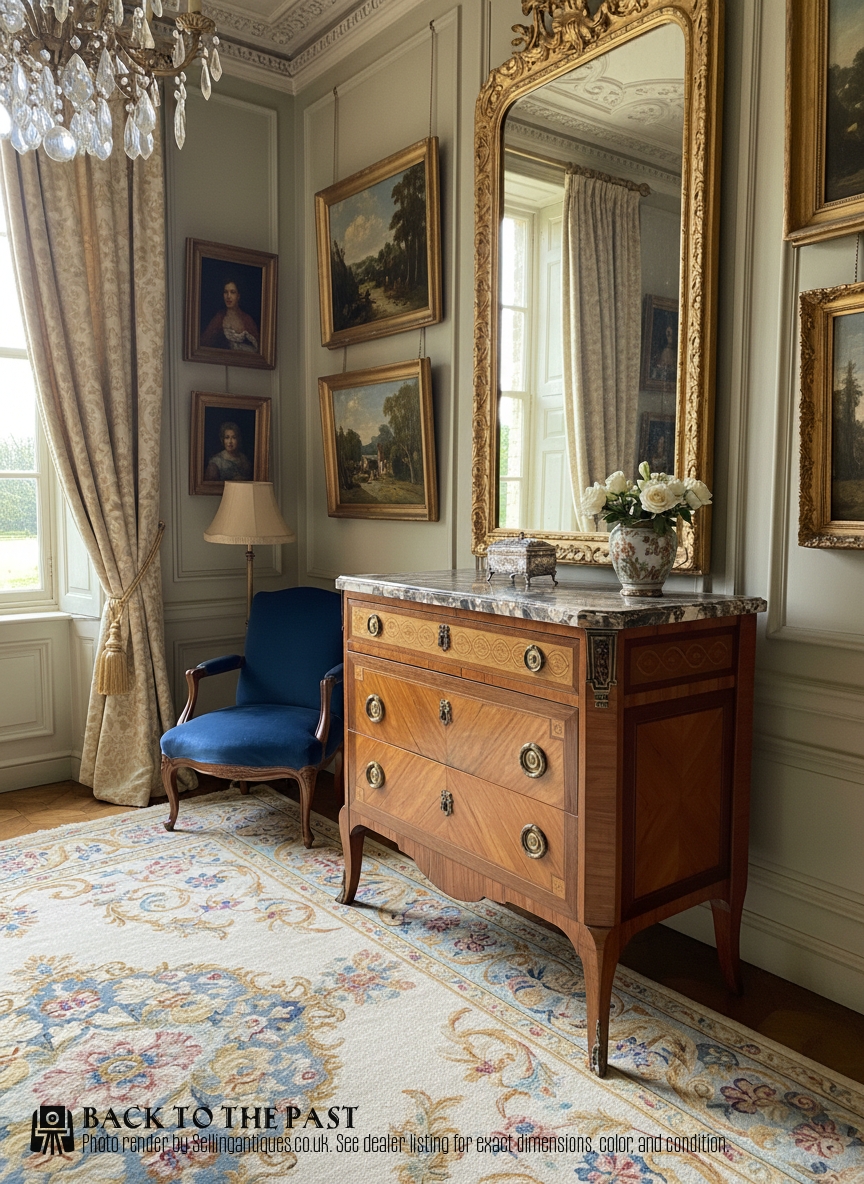
A parquetry marble top commode is a low chest of drawers or cabinet designed primarily for formal reception rooms and bedrooms. These pieces combine fitted stone surfaces with timber frameworks, offering both display space and concealed storage.
The versions most commonly met on this page originate from French workshops spanning the eighteenth and nineteenth centuries. They appear frequently in Louis XV and Louis XVI styles, alongside later revival periods up to the early twentieth century.
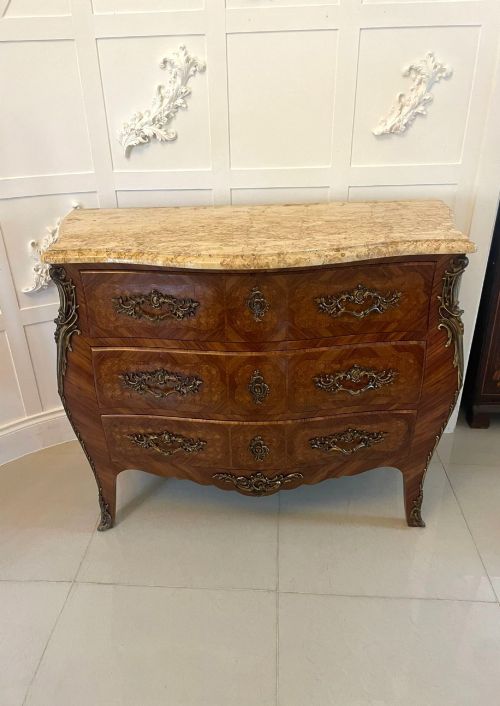
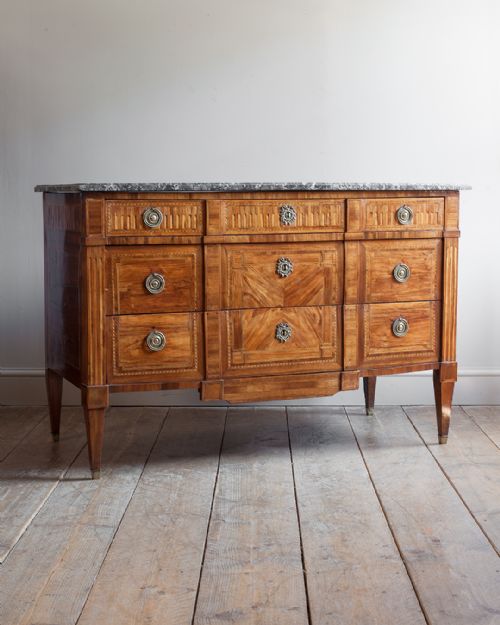
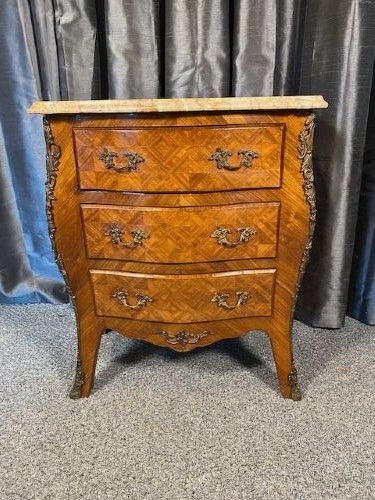
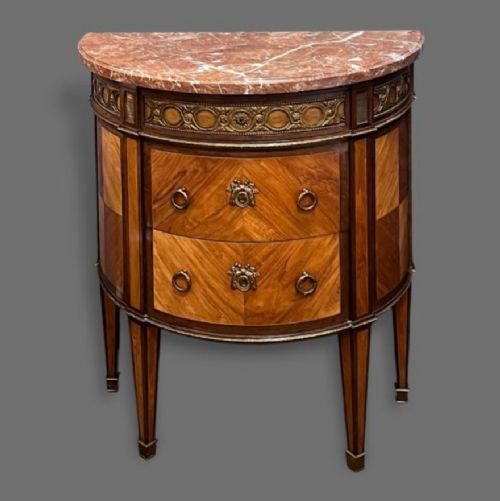
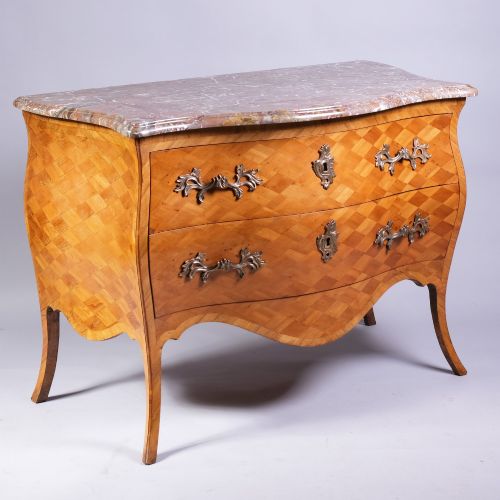
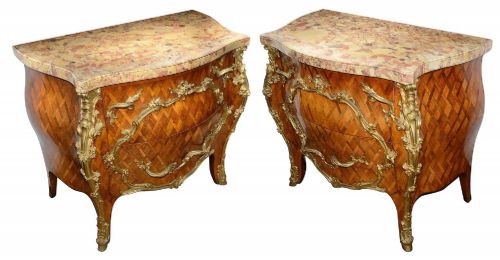
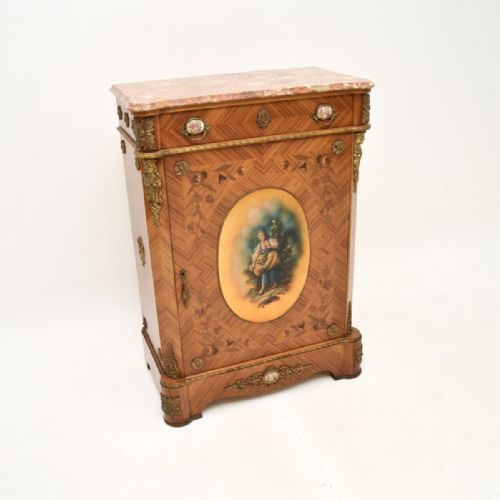
Beyond standard chests of drawers, the selection includes serpentine fronts, bombé profiles, and smaller bedside cabinets. Walnut, kingwood, and tulipwood provide the primary timber foundations for the geometric veneer work.
How they were made
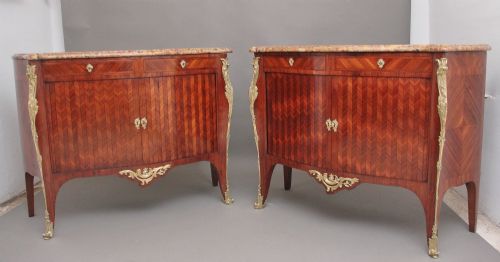
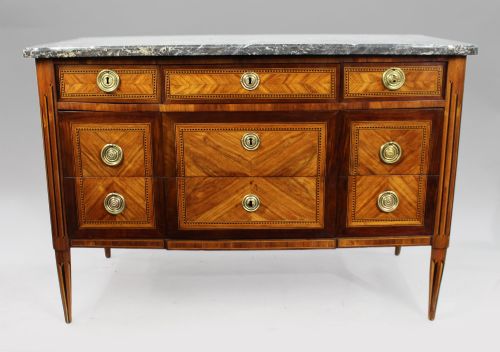
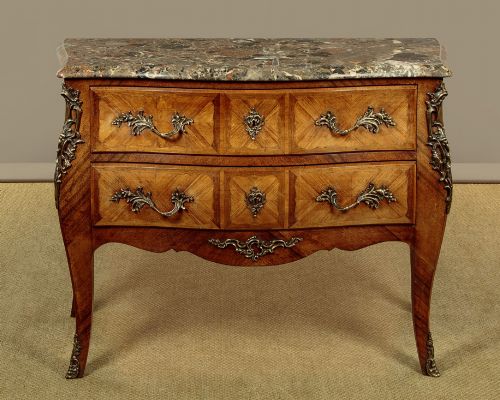
Cabinetmakers constructed carcass frames from native and exotic timbers before applying thin veneers in precise geometric patterns. Parquetry layouts utilised contrasting grains of walnut, kingwood, and tulipwood arranged to catch the light across the drawer fronts and sides.
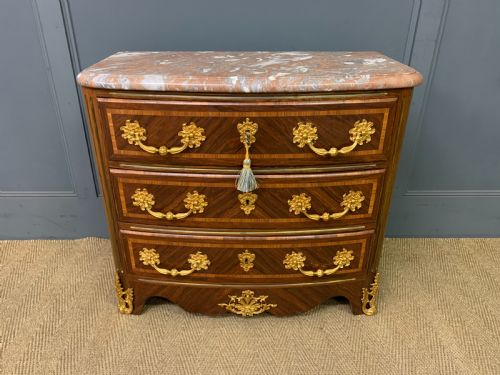
Heavy marble slabs, often cut with moulded edges to follow the serpentine or breakfront contours of the commode, rested directly on the timber top. Cast or chased ormolu and bronze mounts were then fitted to protect vulnerable corners and accent the structural lines.
Early cabinetmakers occasionally hid small secret drawers behind decorative ormolu mounts to guard family letters.
What varies in quality
The precision of the veneer work dictates the initial tier of distinction among these pieces. Tight, seamless geometric alignment and varied timber selection separate master parquetry from simpler repeating patterns.
Mount quality establishes the next level of refinement, where crisp, heavy bronze or ormolu chased by hand contrasts against plain, cast-metal alternatives. The thickness, figuring, and original matching of the marble slab complete the hierarchy of execution.
Maison Millet
The Parquetry Marble Top Commode Glossary
- Parquetry
- Geometric wood veneer arrangement. Small pieces of timber are cut and fitted together to form repeating patterns such as cubes or chevrons.
- Ormolu
- Gilded bronze. This decorative metal mount is cast and chased before being applied to the corners and handles of the commode.
- Bombe
- Swelling outward in a convex curve. This distinctive profile defines many pieces built in the mid-eighteenth-century French taste.
- Serpentine
- Wave-like shaped contour. The front curves inward at the centre and outward at the ends, requiring specialist joinery for the drawers and marble.
Parquetry Marble Top Commode: Frequently Asked Questions
Can I use a commode as a bedside table?
Smaller variations, particularly bedside cabinets and neat-sized chests, function well next to a bed for enclosed storage and surface lamps. Their height matches standard mattress levels while providing drawer space.
Ensure the room has adequate clearance for opening drawers or cupboard doors if choosing a bombé or serpentine profile. The heavy stone top safely supports lighting and bedside items without risk of tipping.
How do I tell an 18th-century piece from a revival piece?
Eighteenth-century examples display hand-cut secondary timbers, older joinery techniques, and natural wear patterns consistent with extended use. Examination of the drawer linings and backboards reveals period-specific tool marks.
Revival pieces from the nineteenth and early twentieth centuries often utilise machine-sawn timbers and standardised hardware fixings. Stylistic cues frequently blend Louis XV and Louis XVI elements rather than adhering strictly to a single historical reign.
What is the difference between parquetry and marquetry?
Parquetry relies on geometric configurations such as cubes, diamonds, and squares to create abstract patterns across the wood surface. The emphasis rests on the grain direction and contrast of different timber species.
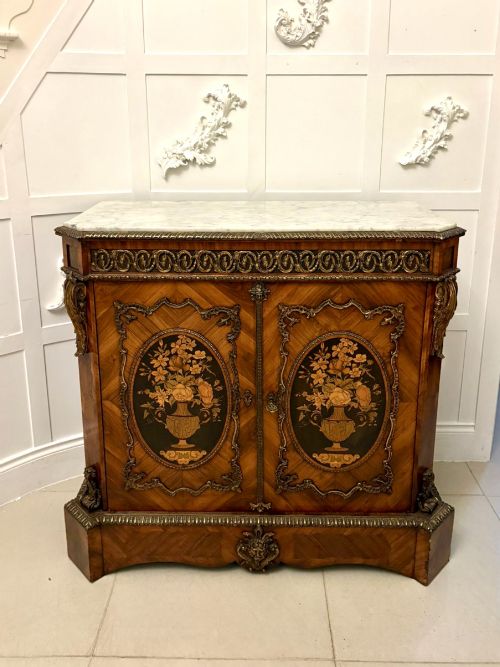
Marquetry employs pictorial assemblies of veneer to depict flowers, foliage, or scenes rather than repeating geometric tiles. Many pieces on this page combine both techniques across different sections of the carcass.