




Satinwood Inlay Box
A satinwood inlay box brings together pale timber and contrasting stringing, turning utilitarian storage into a sophisticated decorative object.
Satinwood Inlay Box
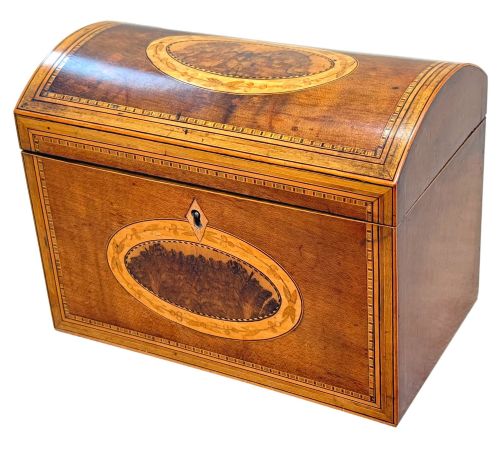
A satinwood inlay box is a container designed for specific domestic uses, most commonly tea caddies, writing boxes, and small decorative storage pieces. These items appear across the Georgian, Regency, Victorian, and Edwardian periods, reflecting changing social habits and interior tastes.
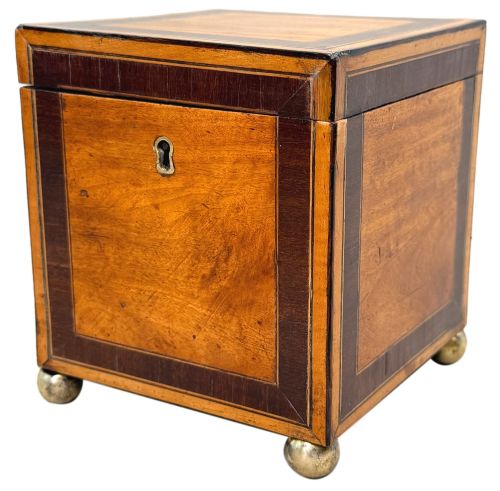
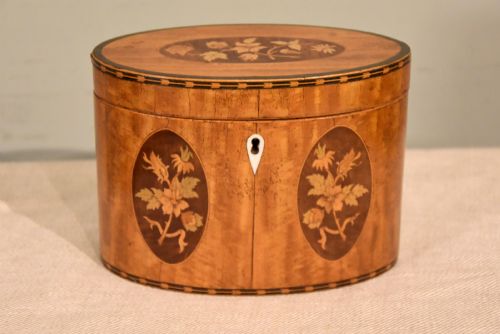
The most frequent form encountered in this group is the tea caddy, often shaped as an oval or rectangle, alongside writing boxes and work boxes. They combine light-toned satinwood surfaces with contrasting timber inlays, demonstrating the refined cabinet-making skills of the eighteenth and nineteenth centuries.
Materials and construction methods
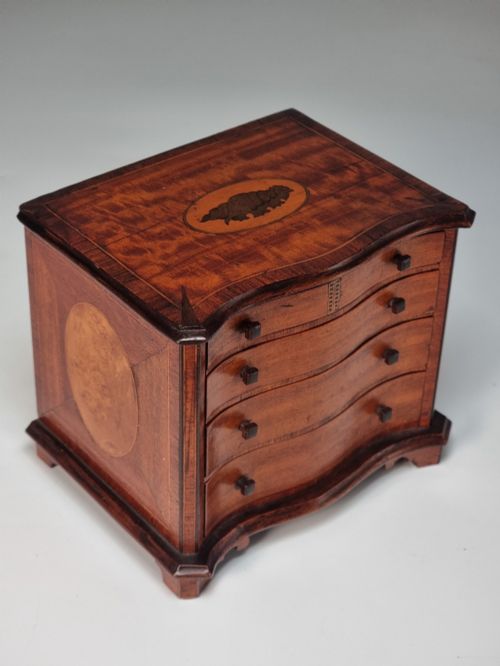
Makers constructed these pieces using solid or veneered satinwood, frequently paired with mahogany, rosewood, or harewood for the primary carcase. They added delicate details using boxwood and ebony for stringing, banding, and pictorial motifs such as shells and butterflies.
Surface decoration relies on precision cutting of contrasting veneers, set flush into the primary timber before finishing with polish or wax. Brass handles, escutcheons, and hinges provide functional hardware that complements the inlaid geometric or naturalistic designs.
Satinwood Inlay Box Retail Price Guide 2026
Typical asking prices for satinwood inlay box among the pieces listed under this phrase on Sellingantiques today, from the lower quarter to the upper quarter. They describe what is for sale here now, not the wider market.
The listings include pieces from the Georgian, Regency, Victorian, and Edwardian periods, utilising satinwood, mahogany, rosewood, and harewood.
Differentiating quality across pieces
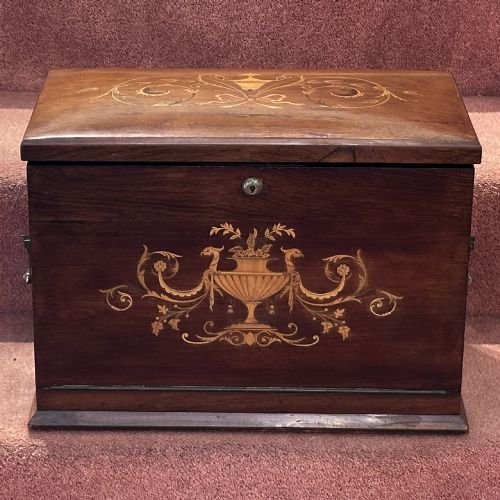
Quality shows in the precision of the veneer work and the complexity of the inlaid motifs, where tight joints and balanced composition elevate a piece. Simpler linear stringing contrasts with elaborate marquetry panels depicting shells or neoclassical urns.
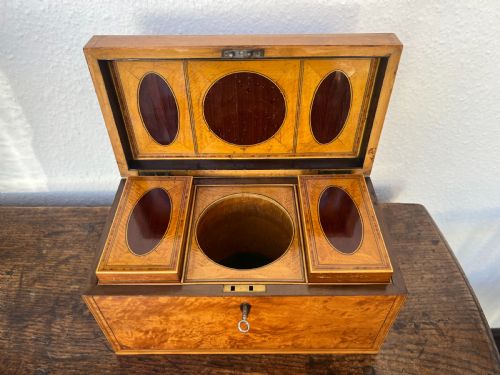
The choice of secondary timbers and the integrity of the original polish and hardware distinguish superior examples from standard production. Interior fittings, such as fitted tea canisters or velvet-lined compartments, further indicate the original tier of manufacture.
A. F. Lloyd, Bideford
The Satinwood Inlay Box Glossary
- Satinwood
- A lustrous, yellow-brown timber imported from the West Indies and Ceylon, prized for its reflective grain and smooth finish. It serves as the primary veneer on finer Georgian and later decorative boxes.
- Inlay
- A technique where pieces of contrasting wood, bone, or metal are inserted into recessed cavities on a timber surface to form decorative patterns. This method creates the linear borders and central motifs seen on these objects.
- Stringing
- Very narrow strips of contrasting wood, such as boxwood or ebony, inlaid in lines to outline panels, drawers, or lids. It provides a crisp geometric border to the softer tones of satinwood.
- Caddy
- A small container originally designed for storing loose tea leaves securely, often featuring internal lidded compartments. Georgian examples frequently display oval or serpentine outlines with shell inlays.
- Marquetry
- Elaborate patterns of veneer assembled to form pictorial or decorative designs, exceeding simple geometric stringing. Master craftsmen utilised varied woods to achieve shading and depth within the picture.
Satinwood Inlay Box: Frequently Asked Questions
What were satinwood inlay boxes used for?
These boxes served various domestic functions, primarily holding valuable commodities like tea, writing materials, or small personal items. Their decorative exterior suited placement on prominent tables in reception rooms.
Tea caddies stored precious leaves under lock and key, while writing and stationery boxes kept correspondence organised. Over time, their role shifted toward pure display and small-scale storage.
How do I date a satinwood inlay box?
Dating relies on the overall form, the timber species used in the carcase, and the style of the inlay work. Georgian and Regency pieces often feature neoclassical motifs and simpler geometric stringing.
Later Victorian and Edwardian examples incorporate broader stylistic revivals and different secondary woods. Examining the interior construction and hinges provides further clues to the period of manufacture.
How should I care for satinwood?
Keep these items away from direct sunlight and heat sources to prevent the satinwood veneer from fading or splitting. Maintaining a stable room environment protects the delicate boxwood and ebony stringing.
Dust gently with a dry, soft cloth and avoid commercial polishes containing silicone. Occasional application of a quality wax preserves the historic sheen of the timber.
What distinguishes Sheraton style boxes?
Sheraton style pieces from the late eighteenth century emphasise classical proportions, clean lines, and contrasting veneers. They frequently feature satinwood combined with harewood and delicate boxwood stringing.
Motifs on these items often include symmetrical shell inlays, urns, and patera. The overall aesthetic is restrained and refined, reflecting the design books of the period.