



Satinwood Inlaid Sofa
A satinwood inlaid sofa brings lightness and refined marquetry into a room, spanning Edwardian revivals and earlier Georgian craftsmanship.
Satinwood Inlaid Sofa
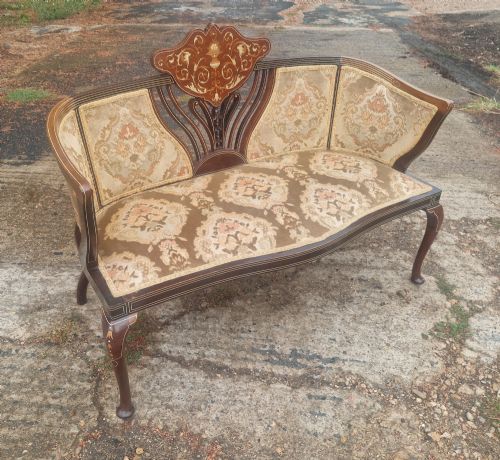
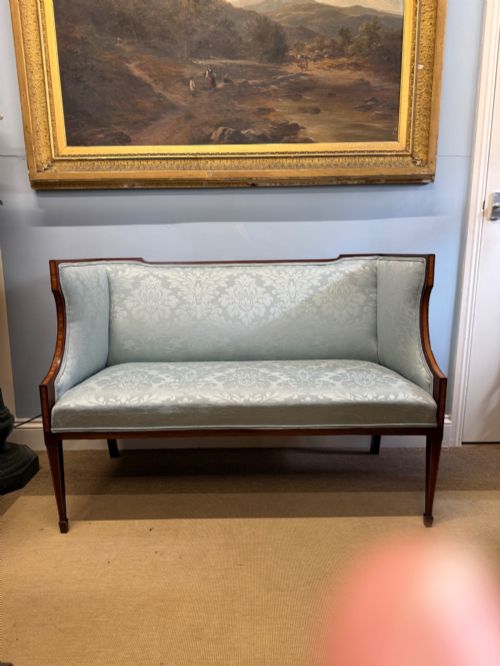
A search for satinwood inlaid sofa reveals seating designed for drawing rooms and salons, most commonly appearing in Edwardian interpretations alongside earlier nineteenth-century examples. These pieces range from compact end-of-bed settees to larger two-seater salon couches upholstered in various fabrics.
Makers utilised contrasting timbers to frame the satinwood panels, creating decorative seating that functioned as focal points within formal interiors. The forms vary from straightforward salon settees to elaborate inlaid frames accompanied by matching chairs.
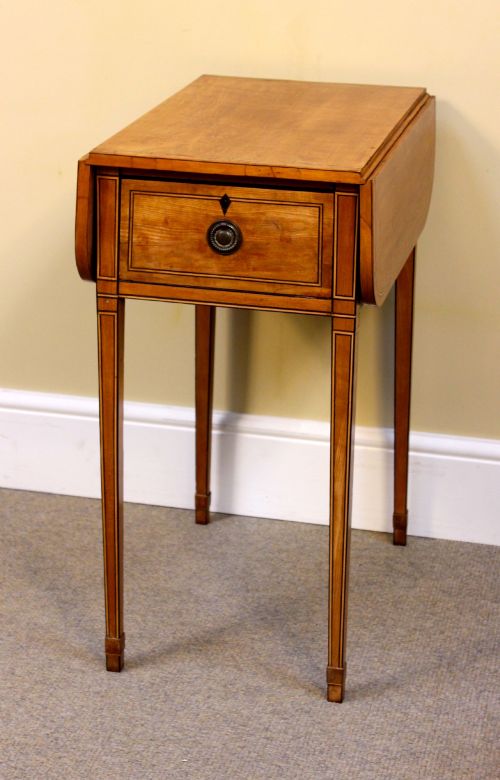
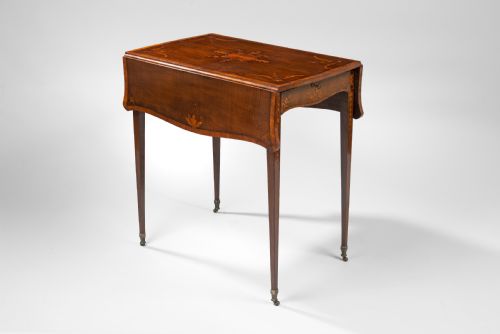
Alongside traditional settees, buyers frequently encounter related hybrid furniture forms within this category, reflecting the diverse ways cabinet makers applied satinwood inlay across seating and occasional tables.
How they were made
Cabinet makers constructed the foundational frames using mahogany, rosewood, or solid satinwood, applying intricate boxwood, ebony, and bone stringing to delineate the borders and panels. Marquetry details were meticulously hand-cut and fitted into the primary timber surfaces to form floral or geometric motifs.
Surface decoration relied on contrasting veneers and banded borders rather than heavy carving, preserving the luminous quality characteristic of satinwood. Upholstered sections required traditional webbing, stuffing, and fabric covers tailored to the specific proportions of the settee frame.
Some Edwardian settees double as end-of-bed daybeds, proving that Victorians took afternoon reclining quite seriously.
What varies in quality
The distinction between standard production and superior craftsmanship rests on the precision of the marquetry and the choice of secondary timbers. Finely executed pieces display crisp, tight joints in the inlay work and sophisticated grain selection within the satinwood panels.
Proportion and structural integrity define the higher tier of these settees, where the carved elements and framing timbers remain balanced without appearing heavy. Original surface patination and minimal disturbance to the underlying veneer further separate exceptional examples from heavily restored pieces.
The Satinwood Inlaid Sofa Glossary
- Satinwood
- A hard, yellowish timber native to Ceylon and India with a reflective, satin-like sheen. It forms the primary decorative veneer on high-status furniture.
- Marquetry
- The art of applying pieces of veneer to a structure to form decorative patterns and pictorial designs. Craftsmen assemble these motifs carefully before gluing them to the carcass.
- Stringing
- Thin strips of contrasting wood inlaid into channels cut into the surface of a furniture piece. It provides delicate framing lines around panels and drawer fronts.
- Settee
- A long upholstered seat with a back and arms, designed to accommodate multiple people. These forms developed distinct stylistic traits across the Georgian and Edwardian periods.
- Banding
- A narrow border of veneer surrounding a central panel, often constructed with alternating grains to create a frame effect. It serves to define the geometric layout of tabletop and backrest surfaces.
Satinwood Inlaid Sofa: Frequently Asked Questions
How do I clean a satinwood surface?
Dust the timber regularly with a soft, dry cloth to prevent particulate buildup on the delicate veneer. Avoid using modern chemical polishes, which can damage the historic polish layer.
Apply a traditional microcrystalline wax sparingly when the wood appears dry, buffing it gently to maintain the natural lustre of the satinwood.
Can these sofas be used daily?
These antique settees function well for ordinary seating provided they receive considerate treatment and appropriate weight distribution. Edwardian and Victorian frames offer sturdy construction suited for drawing rooms.
Period pieces upholstered for re-upholstery may require internal webbing reinforcement before enduring heavy daily use in a busy household.
What distinguishes Edwardian satinwood furniture?
Edwardian pieces frequently draw inspiration from eighteenth-century Sheraton designs, incorporating lighter proportions and extensive mahogany framing with satinwood veneers. Makers during this era embraced decorative stringing and bone inlay.
These later interpretations offer a brighter palette and distinct manufacturing marks compared to their earlier Georgian predecessors.
How do I identify different inlay woods?
Close inspection under good light reveals the natural colour variations between boxwood, ebony, and satinwood used in the marquetry motifs. Dark ebony creates sharp boundaries, while pale boxwood highlights delicate floral tendrils.
Consulting the grain direction and natural hue helps differentiate genuine contrasting timbers from painted decorative lines.