

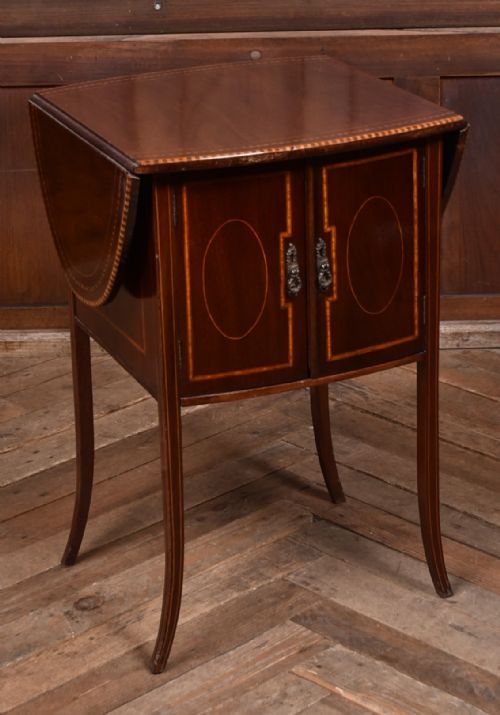


Satinwood Inlaid Pembroke Table
Satinwood inlaid pembroke table designs bring luminous veneers and folding leaves to any room, offering nimble surface space and refined 18th-century style.
Satinwood Inlaid Pembroke Table
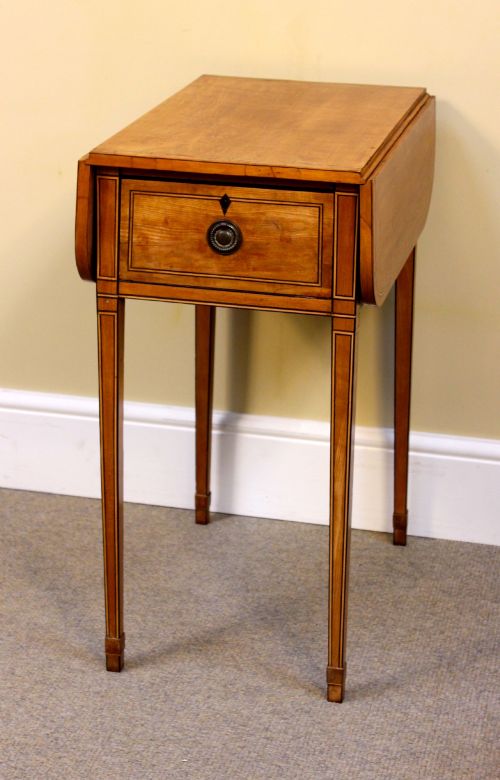
A satinwood inlaid pembroke table is a compact drop-leaf occasional piece defined by its hinged flaps on either side, designed for versatile placement in sitting rooms. The form emerged in the Georgian period and continues through Regency and Edwardian revivals.
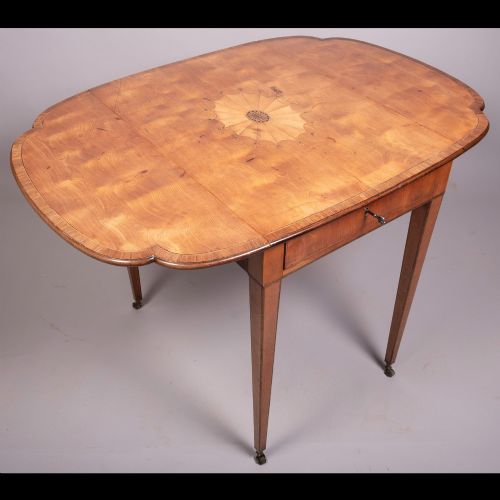
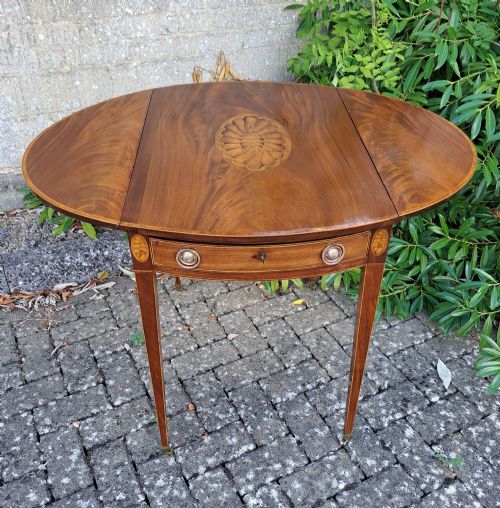
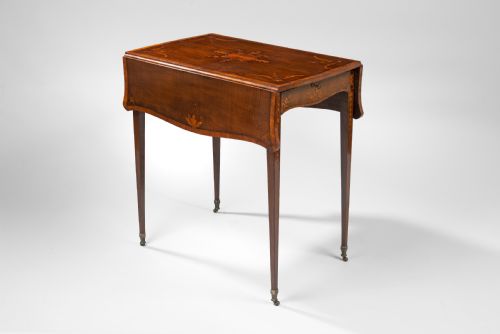
Most examples found on this page feature satinwood veneers complemented by contrasting bandings and stringing, often standing on slender tapered legs. Makers utilised mahogany, rosewood, kingwood, and harewood alongside satinwood to create geometric or floral marquetry details.
Buyers encounter variations ranging from authentic 18th-century George III pieces to later Sheraton Revival and Edwardian interpretations. These tables function as writing desks, lamp surfaces, or tea tables depending on their internal drawer arrangements.
How they were made
Cabinetmakers constructed these tables using solid carcase woods like mahogany, applying fine veneers of satinwood, rosewood, and kingwood to the top and drawer fronts. Crossbanding in tulipwood, ebony, or boxwood frames the central grain patterns.
Inlay techniques involve contrasting woods and dark stringing cut precisely into the primary surface to form delicate borders or central paterae. Brass castors frequently finish the tapering legs, allowing the drop flaps to be supported smoothly by swinging brackets.
Some sewing tables feature tiny interior compartments designed precisely for spools and needles, waiting to hide your modern paperclips.
What varies in quality
The choice of secondary timbers and the complexity of the marquetry distinguish standard production from exceptional examples. Dense, figured satinwood paired with rich rosewood or amboyna indicates high-status workshops during the George III and Sheraton periods.
The crispness of the boxwood and ebony stringing and the retention of original brass hardware elevate an item. Finer pieces demonstrate precise joinery in the drawer construction and seamless movement of the drop-leaf rule joints.
The Satinwood Inlaid Pembroke Table Glossary
- Pembroke table
- A small drop-leaf table with hinged flaps on opposite sides, popular from the Georgian era onwards. It typically includes one or two small drawers.
- Satinwood
- A pale, lustrous exotic timber native to the tropics, prized for its golden sheen and smooth finish. Cabinetmakers used it extensively as a veneer.
- Marquetry
- Decorative patterns formed by fitting together thin slices of various coloured woods into a veneer. This technique adorned tabletop surfaces.
- Stringing
- Thin, contrasting lines of wood inlay used to outline borders and drawer edges. Boxwood and ebony are common materials for this detail.
- Crossbanding
- A border of veneer laid with the wood grain running perpendicular to the central panel. It frames the top of the table.
- Rule joint
- A moulded joint connecting the tabletop to the drop flaps, allowing the leaves to hang down cleanly. It conceals the hinges when the leaf is raised.
Satinwood Inlaid Pembroke Table: Frequently Asked Questions
How do I use a pembroke table today?
These tables function well as compact desks, lamp tables, or side surfaces in a living room. Raising one or both leaves provides extra space when entertaining.
Their narrow profile when folded allows them to sit flush against a wall or sofa back when floor space is limited.
How do I tell an 18th-century table from an Edwardian revival?
Examine the secondary woods inside the drawers and the underside construction for signs of period hand-tooling. Eighteenth-century pieces often display softer patination and hand-cut dovetails.
Edwardian Sheraton Revival pieces from around 1900 frequently exhibit machine-straight graining and standardised interior fittings.
What is the difference between satinwood and mahogany versions?
Satinwood tables showcase a pale, golden-yellow veneer that reflects light, often highlighted by dark wood marquetry. Mahogany versions rely on deep reddish-brown grain, sometimes accented with satinwood banding.
Both timbers appear across Georgian and Edwardian examples depending on the workshop style.
Can I place a lamp or drinks on a satinwood table?
Polished veneer surfaces require coasters and mats to prevent moisture rings and heat marks from damaging the finish. Careful placement away from direct sunlight protects the pale satinwood from fading over time.
Routine dusting with a soft cloth maintains the natural lustre of the wood.