




Georgian Marquetry Accent Table
These georgian marquetry accent table examples bring patterned wood surfaces to smaller rooms, offering both decorative detail and practical utility.
Georgian Marquetry Accent Table
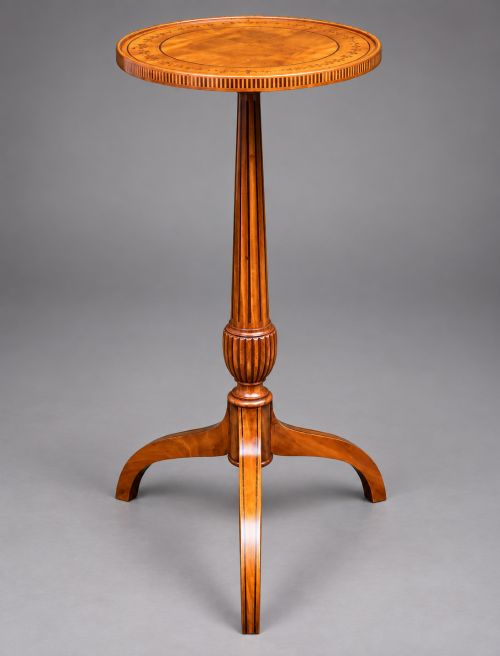
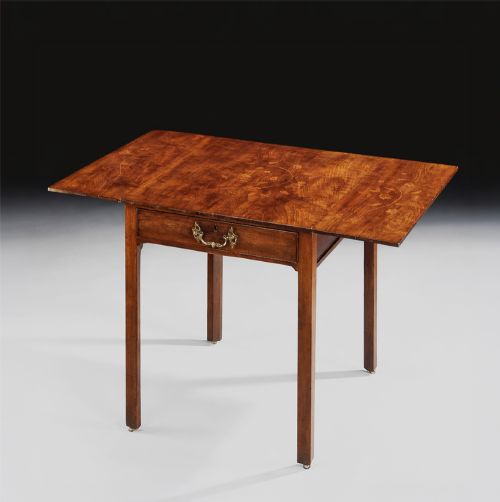
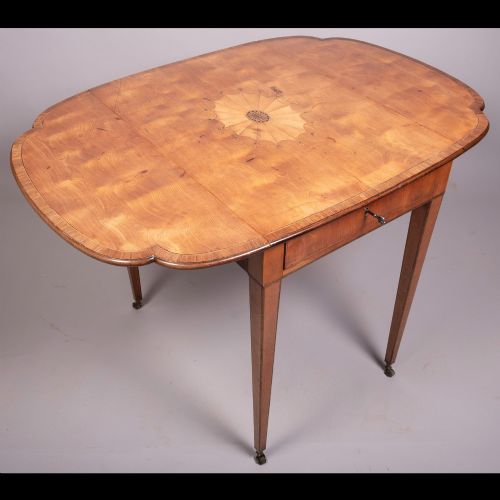
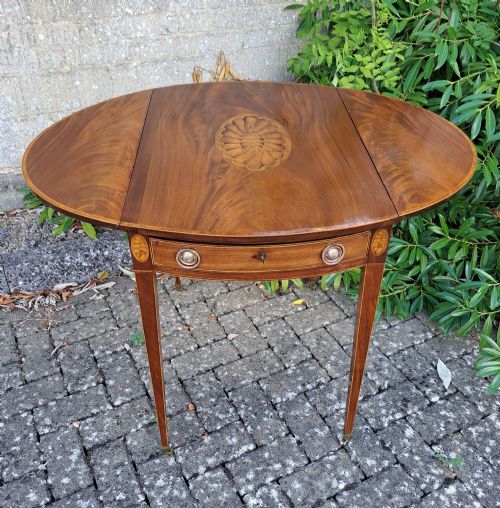
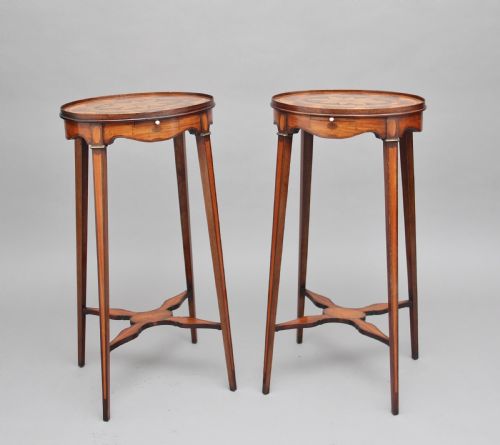
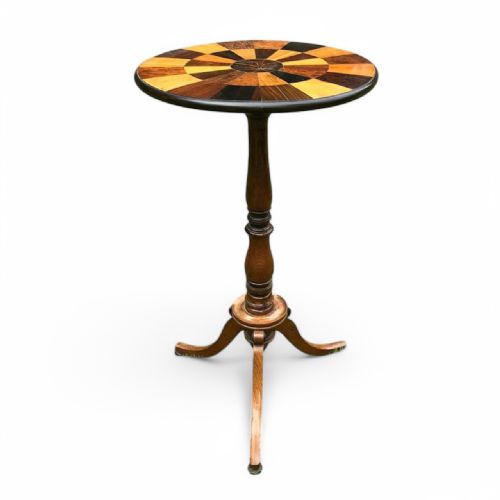
A georgian marquetry accent table typically takes the form of a side table, occasional table, wine table, or Pembroke table designed for domestic utility. These pieces originate across the eighteenth and nineteenth centuries, including revival periods such as Sheraton Revival and Edwardian interpretations.
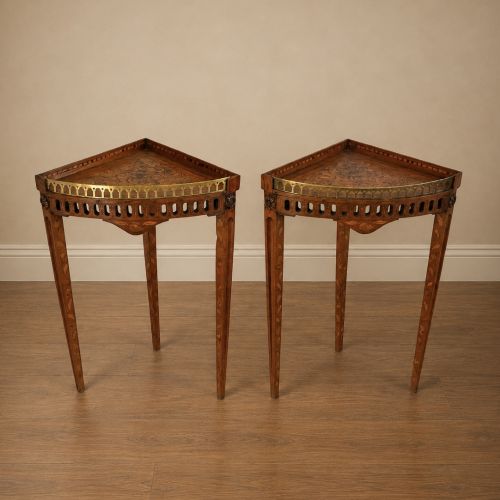
The assortment on this page spans compact corner tables, drop-leaf Pembroke tables, and round occasional pieces. Timelines stretch from mid-eighteenth-century examples through to twentieth-century revivals, keeping the focus firmly on inlaid wooden surfaces.
How they were made
Cabinet makers constructed these tables using foundational timbers like mahogany, oak, and walnut, overlaid with decorative veneers such as satinwood, rosewood, and kingswood. Wood inlay, boxwood lines, and contrasting specimens built up the pictorial or geometric patterns across the tops.
Metal elements appear selectively, including brass galleries surrounding table tops or brass stringing integrated into the timber. Joinery methods support tripod bases, pillar supports, and four-legged frames suited to the specific scale of each piece.
Periods represented span mid-eighteenth-century Georgian work through to Edwardian and early twentieth-century revivals.
What varies in quality
The refinement of the marquetry design separates standard production from finer work, visible in the precision of the wood inlay and the variety of contrasting timbers employed. Richness in timber selection, such as figured satinwood paired with darker borders, elevates the visual impact.
Structural harmony also marks the difference, where slender pillar supports, well-turned tripod legs, or balanced drop-leaf mechanisms operate with precision. The integration of brass galleries and secondary woods demonstrates the original maker's investment of time and material.
The Georgian Marquetry Accent Table Glossary
- Marquetry
- Decorative veneer work assembled in patterns or pictures using various woods applied to a carcass. This technique allows intricate floral or geometric designs to cover a table top.
- Pembroke table
- A small drop-leaf table with hinged flaps on either side, introduced in the eighteenth century. These versatile tables served for breakfast, writing, or general occasional use.
- Satinwood
- A durable timber with a golden sheen, heavily utilised in eighteenth-century and revival furniture. Its bright surface made it the preferred ground for detailed inlay work.
- Wine table
- A small, often tripod-based stand designed to hold glasses or bottles near seating. They appear in circular and segmented wooden formats.
- Brass gallery
- A low pierced metal rail fitted around the perimeter of a table top to prevent items from sliding off. This detail frequently accompanies lamp and corner tables.
Georgian Marquetry Accent Table: Frequently Asked Questions
What is a Pembroke table?
A Pembroke table is a small occasional table featuring hinged leaves on two opposite sides that can be raised or lowered. They often include a single drawer and stand on four legs.
Cabinet makers designed them for flexibility, allowing the table to sit compactly against a wall until extra surface area was required.
How do I identify marquetry?
Marquetry involves assembling thin veneers of different coloured woods into a decorative picture or geometric pattern before gluing them to the table surface. Close inspection reveals the tiny joints between individual wooden pieces.
This differs from painted decoration or simple surface carving by utilising the natural grain and tones of various timbers.
Where should I place an accent table?
These smaller tables suit reception rooms, hallways, and corners where full-sized furniture would overwhelm the space. They function effectively beside armchairs or as lamp stands.
Round occasional tables and wine tables fit well into tighter spaces, while Pembroke tables offer adjustable footprints.
How do I distinguish eighteenth-century pieces from revivals?
Eighteenth-century pieces display construction methods, timber ageing, and hand-cut joinery characteristic of the Georgian period. Revival pieces, such as those from the Edwardian era or Sheraton revival, often use standardised secondary woods and machine-cut elements.
Examining the underside and drawer linings reveals the construction era and the tools used by the maker.