
Satinwood Inlaid Desk Edwardian
A satinwood inlaid desk edwardian brings polished light wood surfaces and delicate stringing into a room, offering a functional workspace with refined period character.
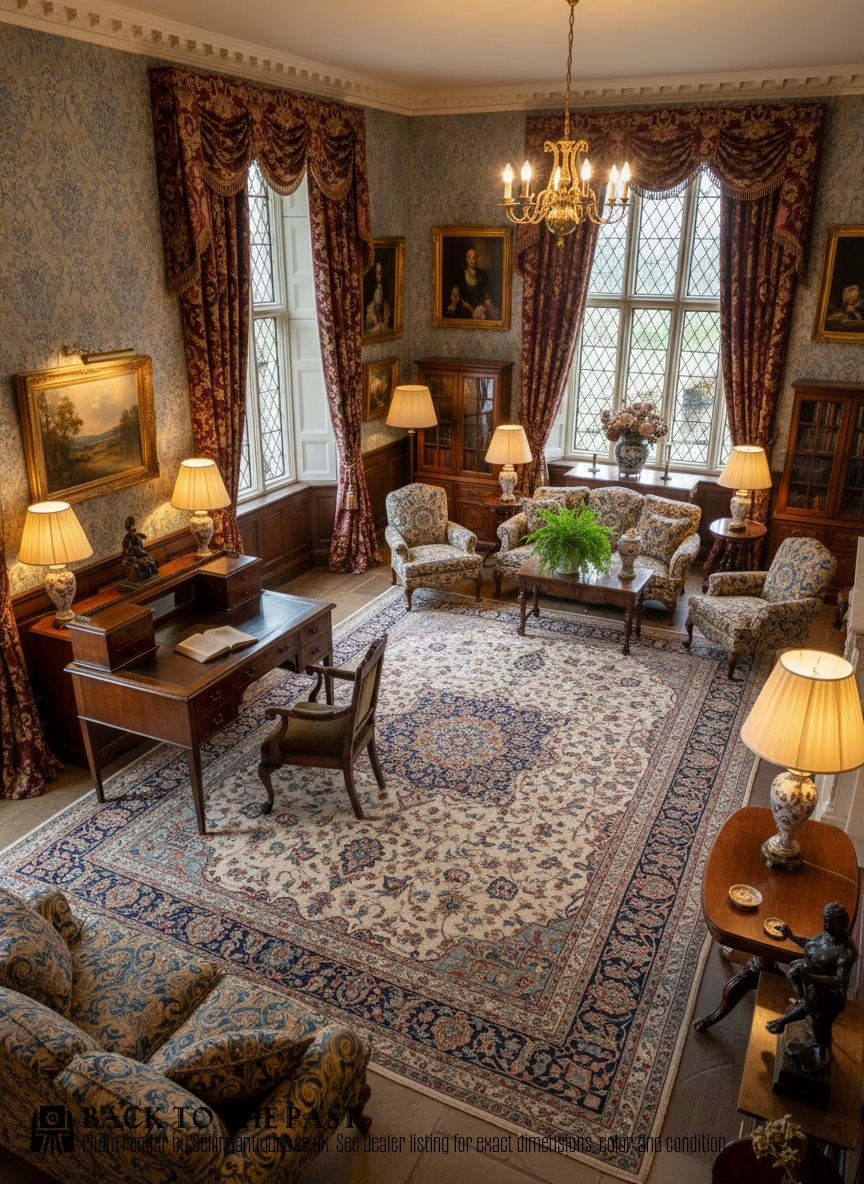
Satinwood Inlaid Desk Edwardian
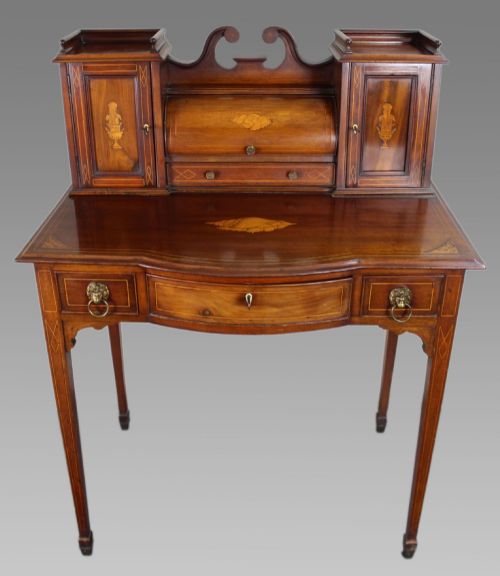
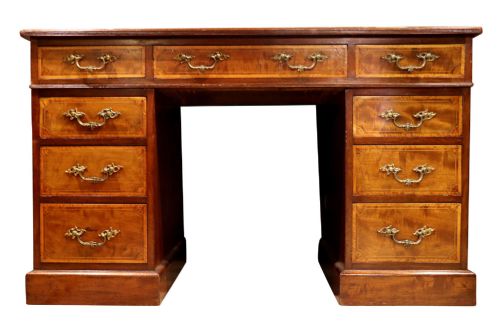
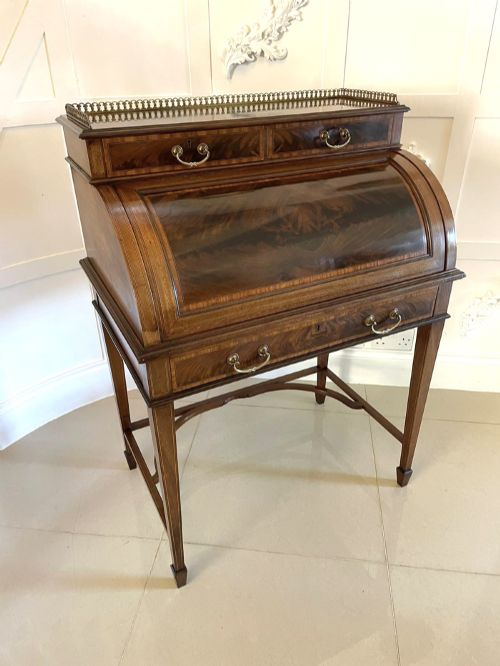
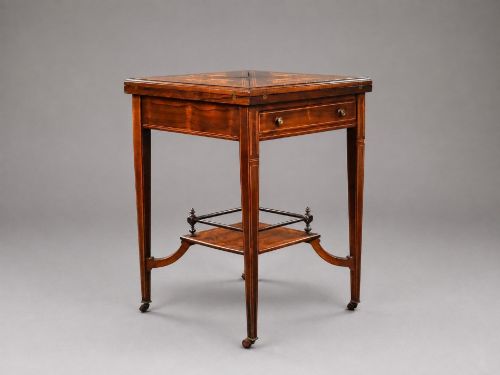
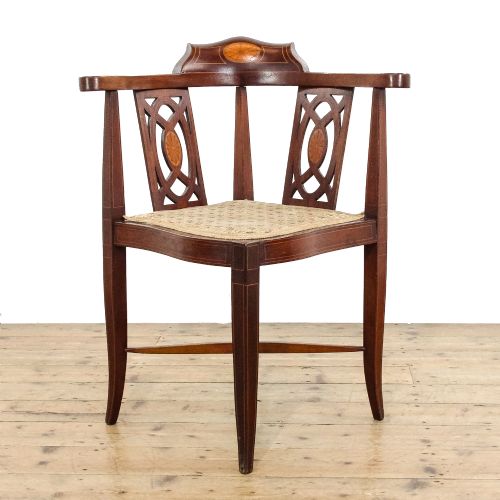
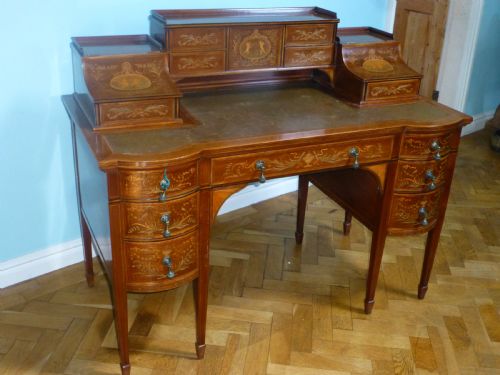
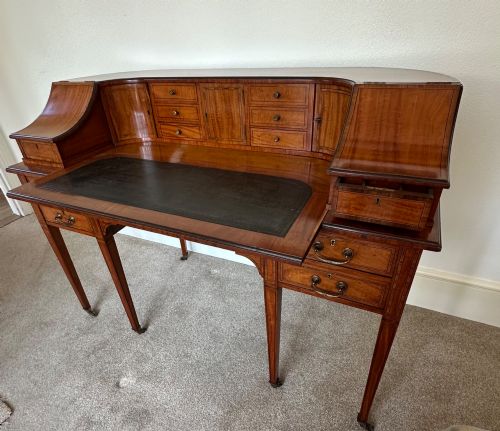
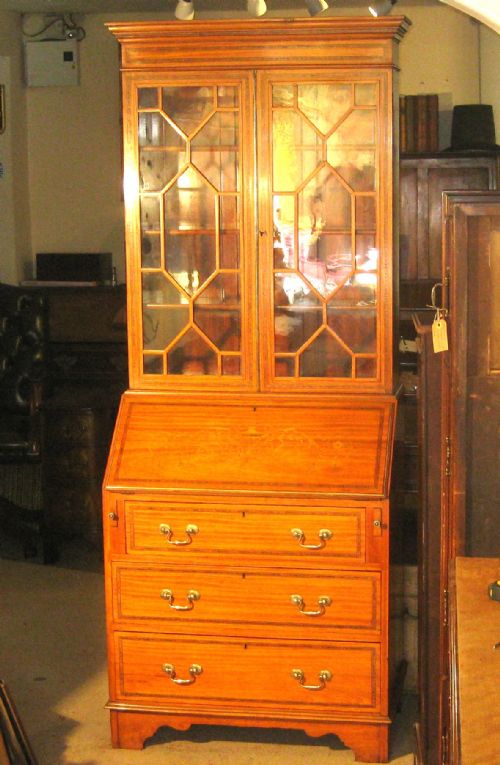
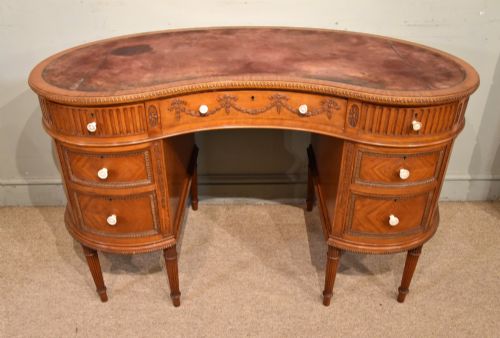
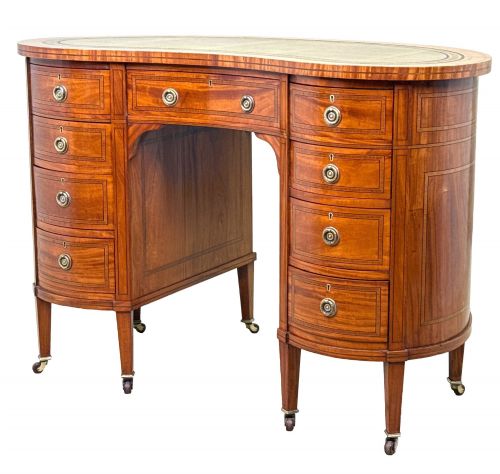
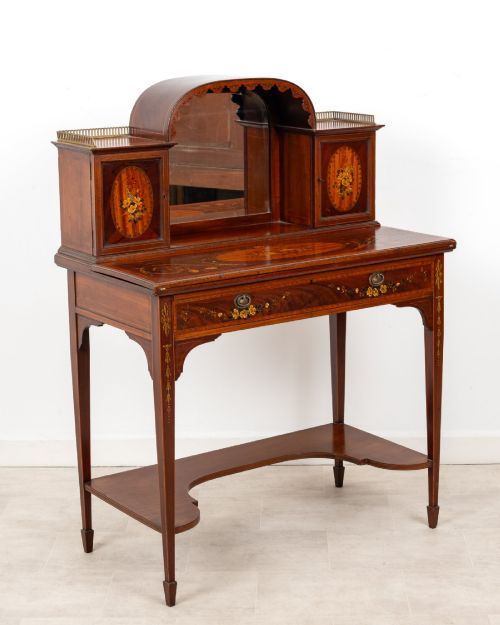
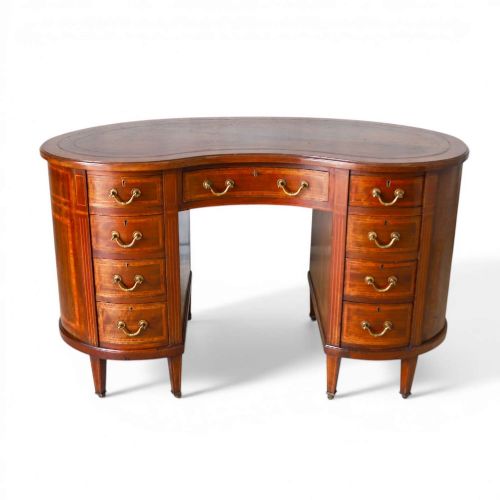
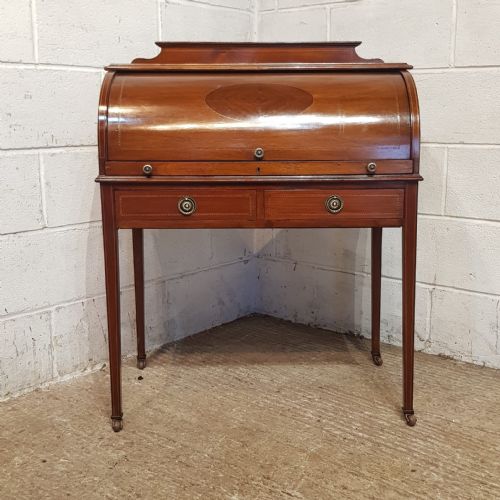
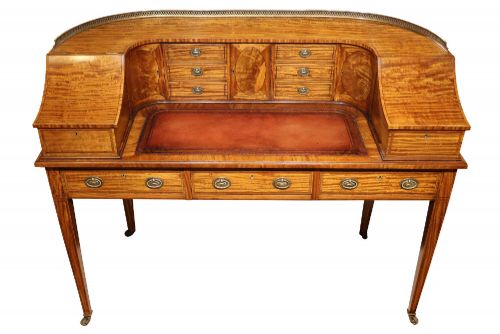
Buyers seeking a satinwood inlaid desk edwardian encounter pieces originating predominantly from the Edwardian era and the late nineteenth century, alongside Sheraton Revival interpretations. The selection frequently includes kidney-shaped writing tables, Carlton House desks, and cylinder desks executed in mahogany and satinwood.
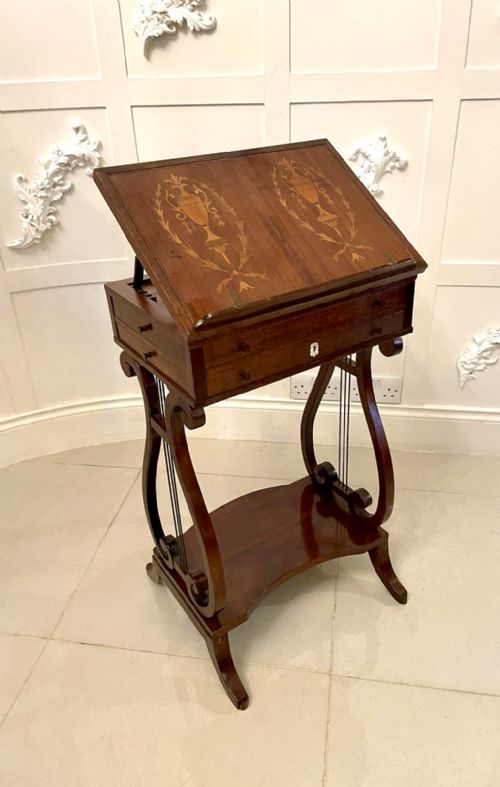
The prevailing form on this page is the compact ladies writing desk or freestanding pedestal model, often fitted with original leather inserts and delicate stringing. These domestic writing pieces reflect the lighter proportions favoured at the turn of the twentieth century.
Materials and construction
Cabinet makers utilised mahogany and rosewood as primary timber foundations, applying fine veneers of satinwood across drawer fronts, writing surfaces, and superstructures. Marquetry and contrasting stringing define the surface decoration, executed in diverse tinted woods to form classical urn, floral, and ribbon motifs.
Hardware consists of brass handles, knobs, and galleried rails, while writing surfaces rely on inset tooled leather. Structural framing employs traditional joinery, supporting complex forms such as curved cylinder lids and enveloping superstructures.
Listings span multiple eras from the late nineteenth century through the Edwardian period, incorporating mahogany, satinwood, rosewood, and brass hardware.
Distinctions in craftsmanship
Quality rests upon the precision of the marquetry inlay and the selection of the satinwood veneer, where tight figuring and balanced grain patterns elevate the piece. The crispness of the boxwood and ebony stringing, coupled with the retention of original brass hardware and fitted leather inserts, marks the distinction between standard production and masterwork output.
Structural complexity also dictates standing, with multi-drawer Carlton House desks and freestanding cylinder models demanding superior carpentry compared to simpler flat-top writing tables.
Edwards & Roberts·Maple & Co. London
The Satinwood Inlaid Desk Edwardian Glossary
- Satinwood
- A hard, yellow timber sourced from tropical trees, prized for its lustrous grain and reflective sheen. It forms the primary decorative veneer on Edwardian writing furniture.
- Carlton House desk
- A form of writing desk featuring a curved superstructure fitted with small drawers and pigeonholes around a leather-lined writing surface. This layout emerged in the late eighteenth century and saw revival popularity during the Edwardian period.
- Stringing
- Thin inlaid lines of contrasting wood, such as boxwood or ebony, set flush into the primary timber surface to create geometric borders and panel outlines.
- Marquetry
- Elaborate patterns formed by fitting together pieces of various coloured veneers into a wooden panel. This technique creates pictorial or symmetrical ornament across desk lids and drawer fronts.
- Kidney desk
- A writing table characterised by a concave curved front that wraps around the user. These pieces often feature freestanding pedestals and delicate tapered legs.
Satinwood Inlaid Desk Edwardian: Frequently Asked Questions
How do I identify Edwardian satinwood?
Edwardian satinwood displays a pale, golden-yellow hue with a natural shimmer that catches light across the grain. It appears most commonly as a veneer contrasted against darker mahogany carcases.
Makers combined this bright timber with dark stringing lines and floral marquetry to achieve the light, neoclassical aesthetic characteristic of the Edwardian era.
Were these desks meant for daily writing?
These desks served domestic writing and correspondence needs in upper-middle-class homes during the early twentieth century. Their lighter proportions reflect a shift away from heavy Victorian furniture towards more delicate room layouts.
Today, they function effectively as laptop tables or writing surfaces in studies and bedrooms, provided the original leather tops receive appropriate care.
What distinguishes Sheraton Revival from original pieces?
Sheraton Revival pieces replicate the neoclassical proportions and decorative vocabulary of late eighteenth-century designer Thomas Sheraton, but manufacture occurred primarily during the Victorian and Edwardian eras. This later production utilises period machinery alongside hand-cut inlay.
Evidence on this page shows these Revival pieces sharing the same materials, including satinwood veneers and brass mounts, as items dated strictly to the turn of the century.