




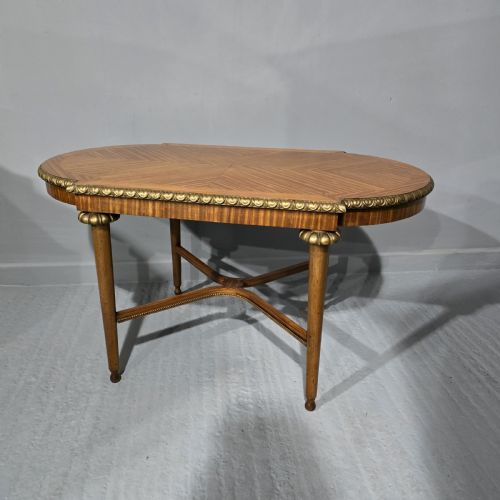

Satinwood Inlaid Coffee Tables
Satinwood inlaid coffee tables bring light and classical lines into a room, offering versatile surfaces from nests to oval occasional pieces.
Satinwood Inlaid Coffee Tables
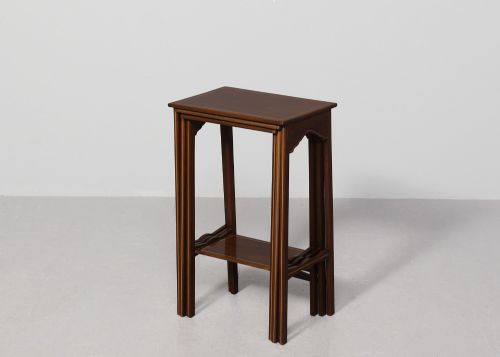
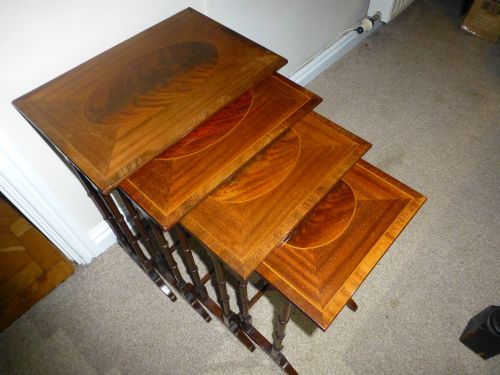
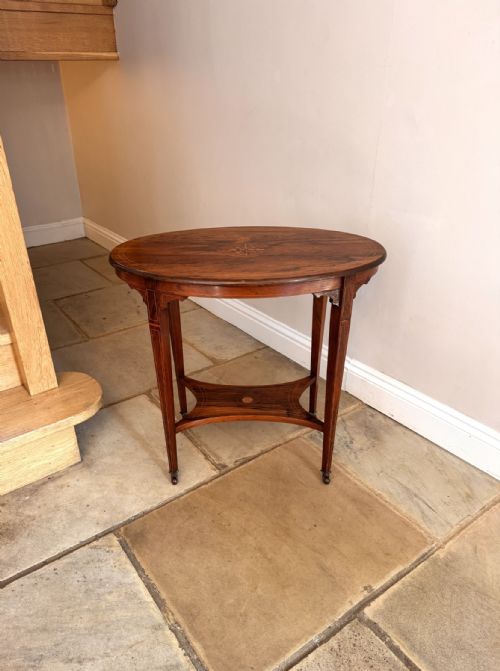
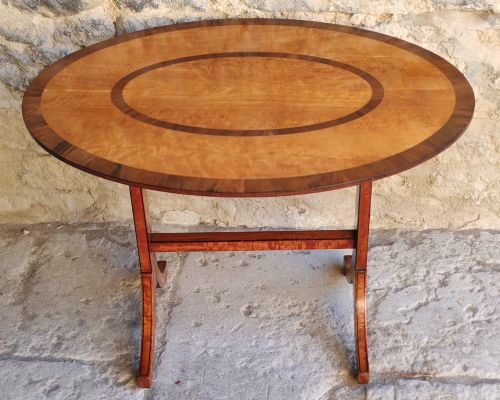
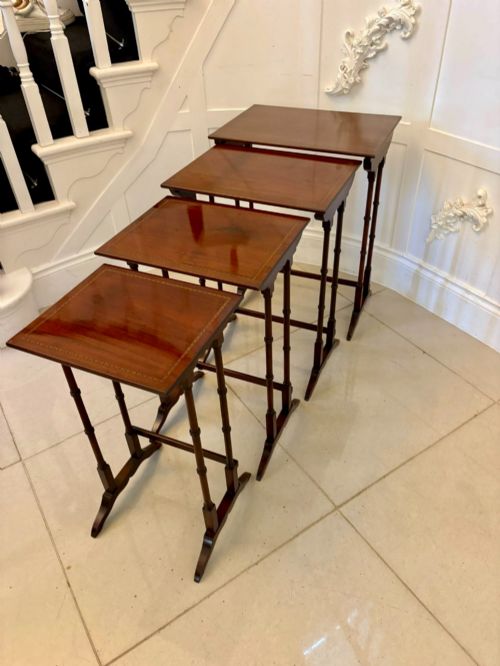
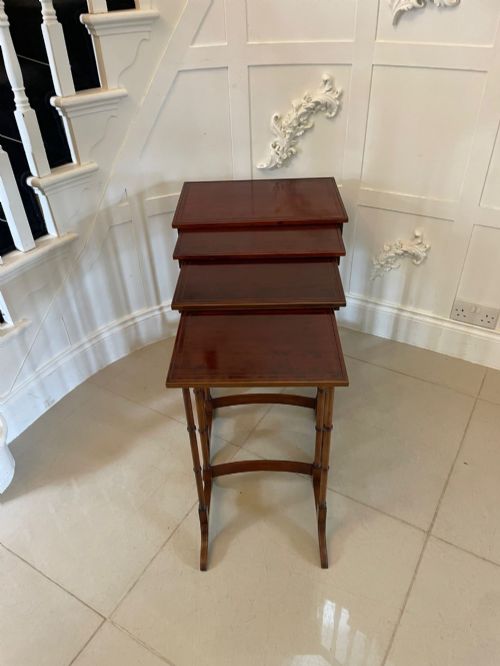
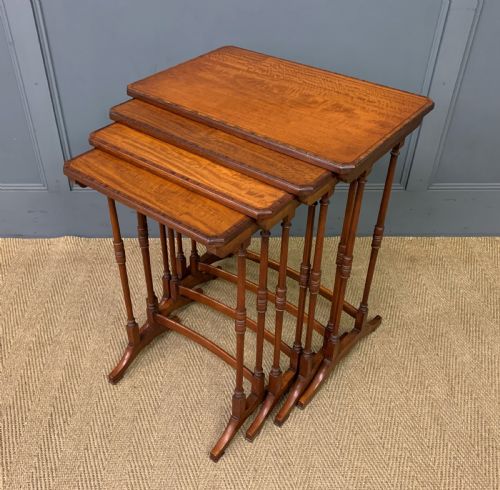
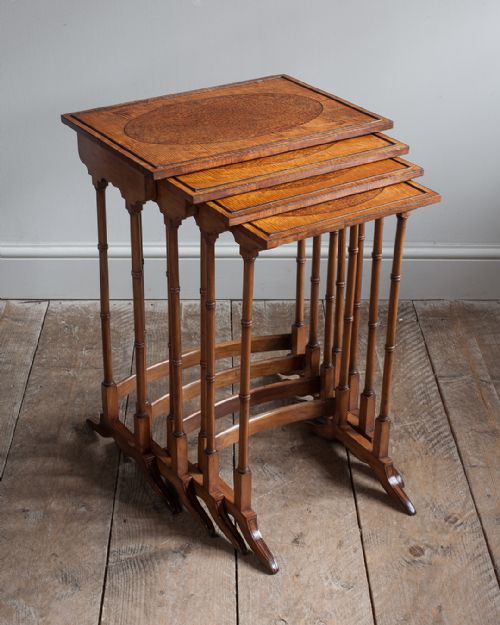
When you search for satinwood inlaid coffee tables, you encounter an array of occasional furniture spanning the Victorian, Edwardian, and Sheraton Revival periods. These pieces range from individual oval and kidney-shaped tables to nests of four tables known as quartetto sets.
The version you are most likely to meet on this page is the Edwardian mahogany table featuring contrasting satinwood inlay, often configured as a nesting set or an occasional lamp table. Pieces from the nineteenth century also appear, bringing classical revival forms to the collection.
Makers such as Edwards and Roberts contributed to this tradition, producing marquetry-inlaid tables that set a high standard for subsequent workshops. The forms serve practical roles in contemporary spaces while retaining their original period character.
How they were made
Cabinet makers utilised dense timbers such as mahogany and rosewood for the primary structure, applying pale satinwood veneers to create luminous contrasting surfaces. Boxwood and brass accents frequently frame the panels to accentuate the geometry of the design.
Inlay techniques defined the decorative vocabulary of the Sheraton Revival and Edwardian eras, incorporating floral motifs, urns, and linear banding. Marquetry required precise cutting of diverse woods to form complex pictorial scenes set directly into the tabletop.
Satinwood Inlaid Coffee Tables Retail Price Guide 2026
Typical asking prices for satinwood inlaid coffee tables among the pieces listed under this phrase on Sellingantiques today, from the lower quarter to the upper quarter. They describe what is for sale here now, not the wider market.
The selection includes classical oval and kidney-shaped forms alongside dropleaf coffee tables and quartetto nesting sets decorated with traditional marquetry and stringing.
What varies in quality
The refinement of the timber selection marks the distinction between standard production and top tier pieces, with choice cuts of satinwood and figured mahogany commanding attention. Grain matching across table surfaces and nesting sets demonstrates the maker's discipline.
Execution of the inlay work separates simpler output from exceptional pieces, where meticulous hand-cut details maintain crisp edges without excessive filler. The structural stability of nesting tables and the grace of tapered legs further define the caliber of the piece.
Edwards and Roberts
The Satinwood Inlaid Coffee Tables Glossary
- Satinwood
- A durable exotic hardwood known for its golden lustre and reflective grain. It was frequently used as a veneer on late Victorian and Edwardian occasional furniture.
- Quartetto
- A matched set of four graduating tables designed to stack neatly beneath one another. They gained popularity during the Edwardian period for compact entertaining.
- Sheraton Revival
- A late nineteenth and early twentieth century design movement that reinterpreted the classical neoclassical furniture of Thomas Sheraton. Pieces in this style feature delicate inlay and tapered legs.
- Marquetry
- The art of applying pieces of veneer to a structure to form decorative patterns and pictures. It differs from simple inlay by covering the entire surface with a mosaic of wood.
- Kidney-shaped
- A curved table top configuration popular in Victorian and Edwardian occasional pieces. This organic form allowed the table to sit comfortably against seating.
Satinwood Inlaid Coffee Tables: Frequently Asked Questions
What is a quartetto nest?
A quartetto nest consists of four graduating tables designed to stack inside each other when not in use. They provide flexible surface space in drawing rooms and sitting areas.
Craftsmen configured them so the smallest table slides smoothly into the frame of the next. This format became a staple of Edwardian interior arrangement.
How do I identify Sheraton Revival work?
Sheraton Revival pieces replicate the neoclassical lightness and symmetry popularised in the eighteenth century. Look for delicate satinwood banding, floral marquetry, and slender tapered legs.
These later interpretations often utilise mahogany as a base timber with contrasting light veneers. They reflect an Edwardian enthusiasm for refined classical proportions.
Where were these tables used originally?
These occasional tables served multiple functions in period drawing rooms and parlours for holding lamps, books, or tea. Nests of tables could be distributed around a room as guests arrived.
Dropleaf and centre variants accommodated larger gatherings when space required adjustment. Their portability made them central to flexible Victorian and Edwardian hospitality.
How do I care for satinwood surfaces?
Satinwood veneer responds best to gentle dusting with a dry, soft cloth and protection from direct sunlight. Excessive heat and moisture can damage the delicate polish and lift the fine timber veneers.
Applying a quality wax sparingly preserves the golden sheen of the wood. Regular maintenance ensures the classical inlay remains crisp and secure.