





Edwardian Period Side Tables
Edwardian period side tables bring lightness and refined inlay to a room, offering adaptable surfaces crafted from rich timbers.
Edwardian Period Side Tables
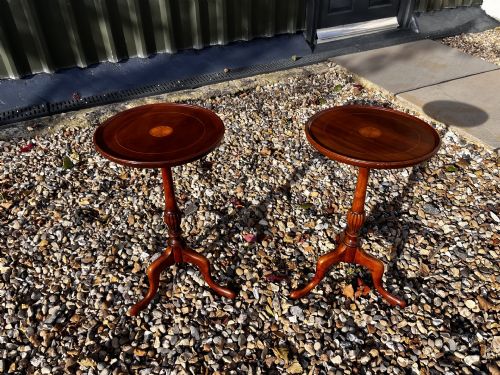
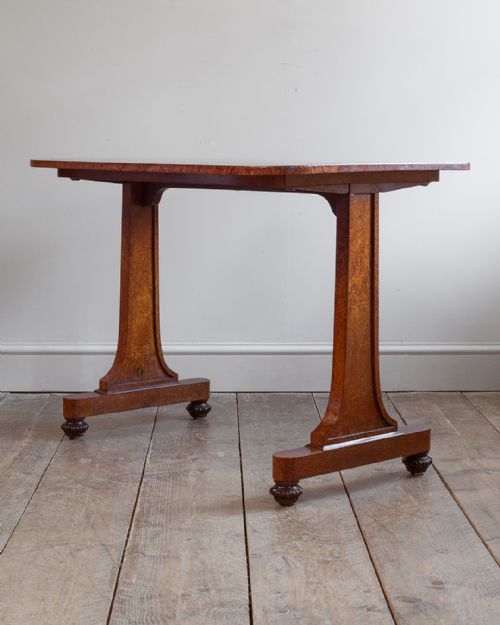
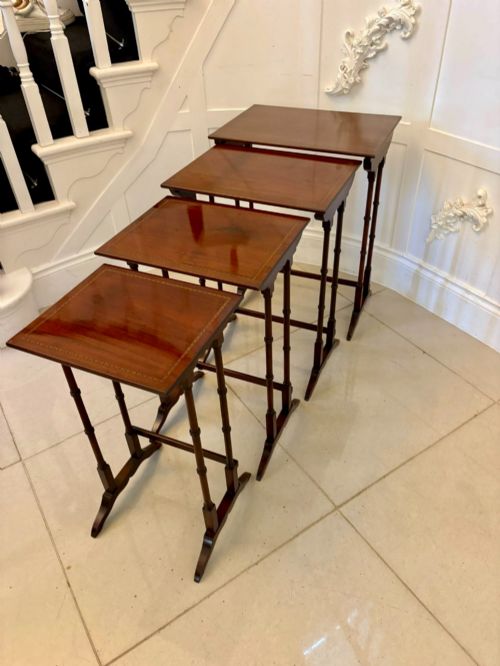
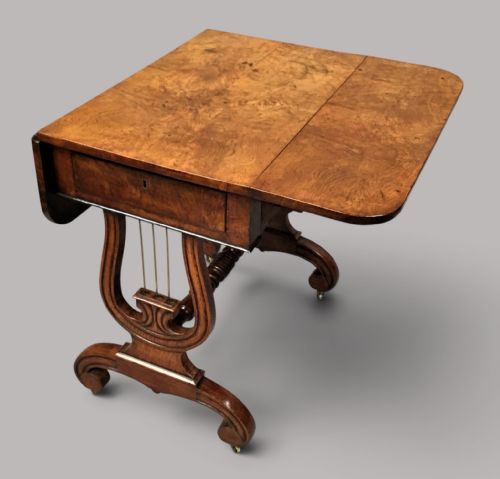
Edwardian period side tables are versatile occasional pieces designed for domestic utility and display. When searching for edwardian period side tables, buyers encounter formats ranging from nests of tables to demilune console tables and wine tables.
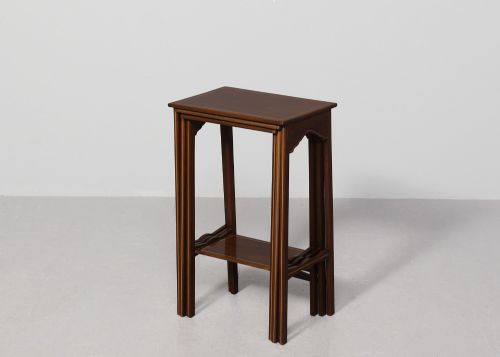
The material vocabulary draws heavily on mahogany, often enhanced with satinwood inlay or cross-banding. Many pieces adopt Sheraton revival design motifs, echoing eighteenth-century elegance through balanced proportions and delicate stringing.
Beyond standard single tables, nests of tables provide stackable convenience within sitting rooms and drawing rooms. These forms demonstrate the Edwardian preference for practical furniture that occupies minimal space when not in active use.
Materials and construction techniques
Cabinetmakers utilised solid mahogany and supporting timbers as foundations for veneering and decorative banding. Satinwood inlay creates sharp visual contrast against darker mahogany grounds, executed with precision along table edges and panel borders.
Construction methods rely on traditional joinery adapted to lighter, more slender proportions than those seen in earlier Victorian furniture. Surfaces receive polished finishes that highlight the natural grain patterns of the timber.
Edwardian Period Side Tables Retail Price Guide 2026
Typical asking prices for edwardian period side tables among the pieces listed under this phrase on Sellingantiques today, from the lower quarter to the upper quarter. They describe what is for sale here now, not the wider market.
The listings show Edwardian side tables frequently incorporating Sheraton revival styling alongside satinwood inlay on mahogany.
Distinctions in craftsmanship and design
Quality separates standard production from finer workshop pieces through the crispness of inlay and the selection of timber veneers. Subtle stringing and balanced satinwood cross-banding indicate deliberate design choices rather than mass production.
Structural integrity in slender legs and joints determines the durability of these lighter tables. Finer examples maintain stability without relying on heavy internal bracing, preserving the graceful silhouette intended by the maker.
Gillows
The Edwardian Period Side Tables Glossary
- Satinwood inlay
- A decorative technique inserting lighter yellowish wood into contrasting timber surfaces. This method defines much of the refined ornamentation found on Edwardian furniture.
- Sheraton revival
- A design movement looking back to the classical forms of the eighteenth-century designer. It manifests in slender tapered legs and geometric stringing.
- Nest of tables
- A set of graduated tables designed to slide neatly beneath one another. This form maximises surface area while minimising floor space.
- Demilune
- A half-moon shape utilised for console and pier tables. Such pieces fit flush against walls in hallways and drawing rooms.
Edwardian Period Side Tables: Frequently Asked Questions
What is an Edwardian side table?
An Edwardian side table is a light occasional piece of furniture produced during the Edwardian period, typically constructed from mahogany with decorative inlay.
These tables served various domestic functions in drawing rooms and parlours, ranging from small wine tables to nests of tables.
How do I identify Sheraton revival style?
Sheraton revival pieces echo eighteenth-century neoclassical designs through symmetrical layouts, tapered legs, and contrasting satinwood stringing.
This style emphasises delicate proportions and refined geometric inlay rather than heavy carving.
Where were nests of tables used?
Nests of tables were positioned in sitting rooms to provide temporary surfaces for tea, writing, or books.
The stackable design allowed multiple tables to occupy the floor space of a single small table.
What timbers are most common?
Mahogany serves as the primary structural timber for these tables, frequently paired with satinwood for inlay and cross-banding.
Occasional examples also incorporate oak, rosewood, or lacquered finishes depending on the specific design movement.