

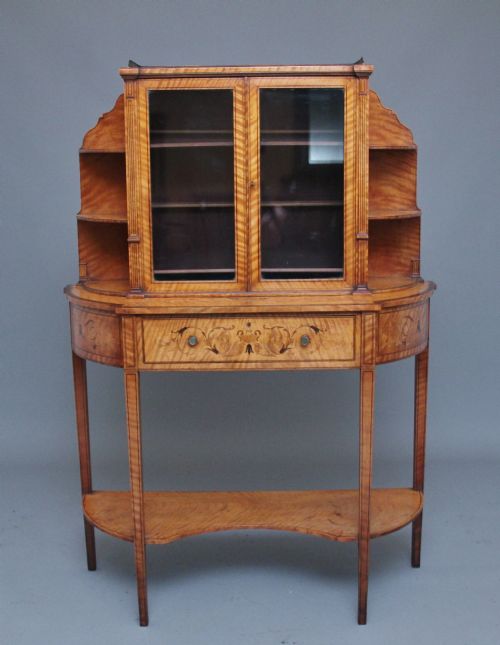
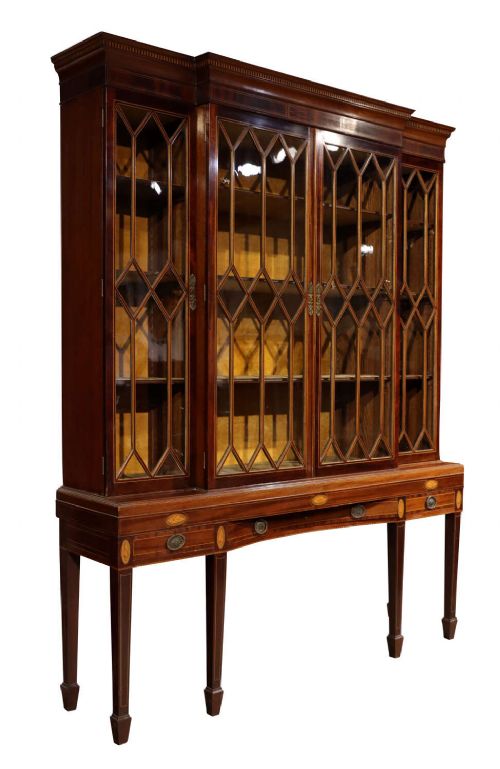
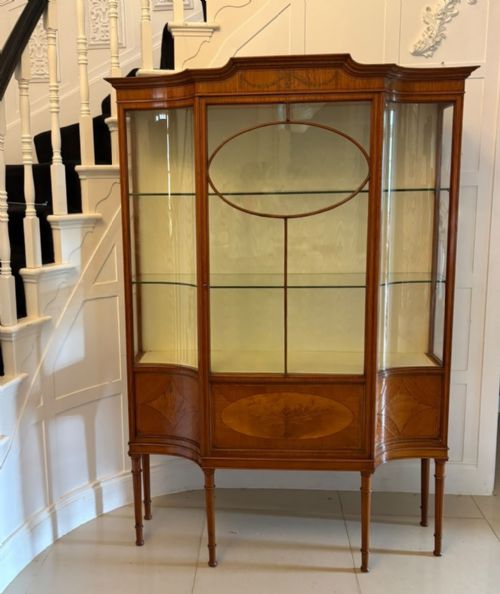
Satinwood Glazed Vitrine
Satinwood glazed vitrine pieces bring refined display space to a room, combining luminous timber surfaces with clear glass cabinets.
Satinwood Glazed Vitrine
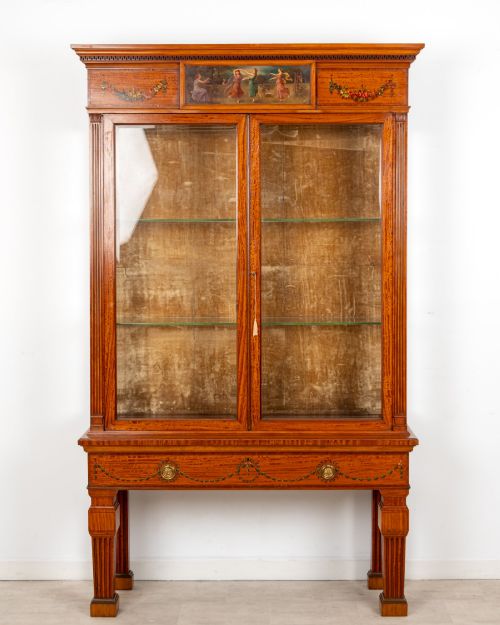
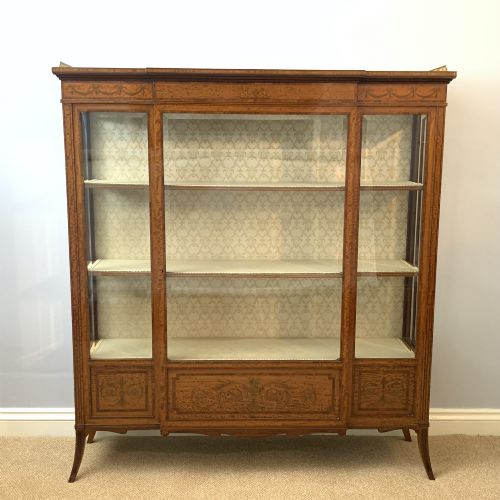
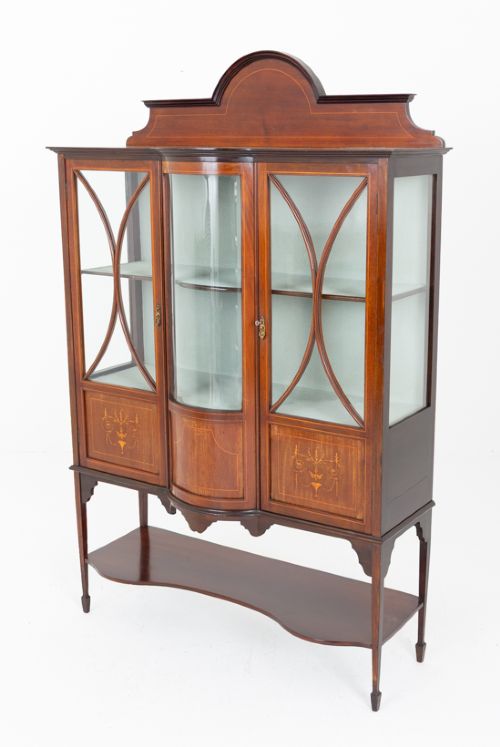
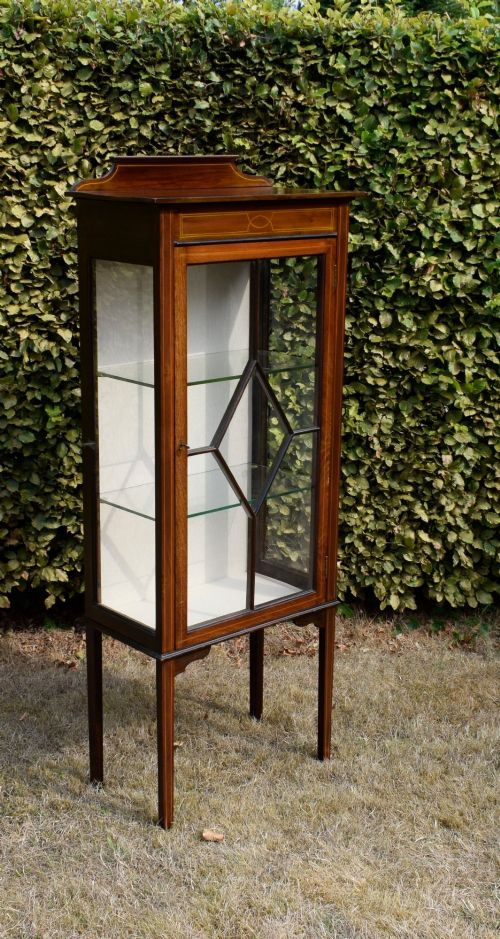
A satinwood glazed vitrine is a piece of furniture designed to showcase treasured objects behind glass doors or panels. These cabinets emerge primarily from the Victorian and Edwardian eras, spanning the nineteenth and early twentieth centuries.
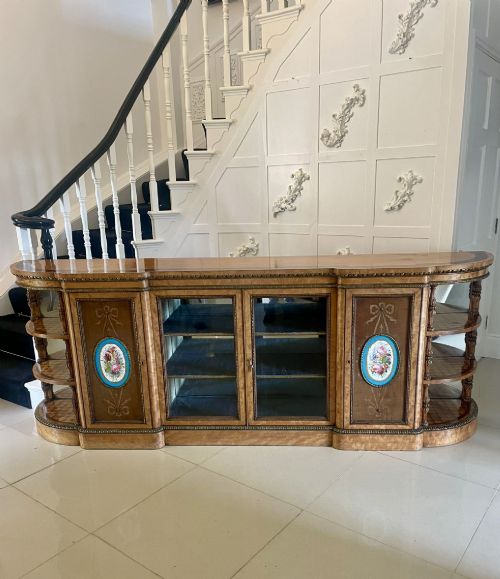
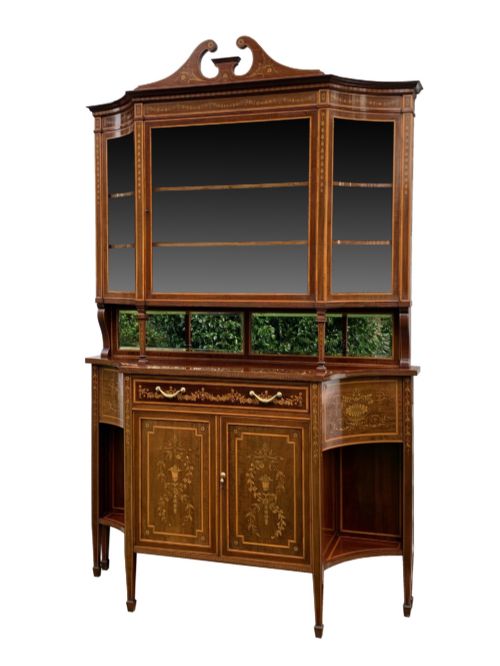
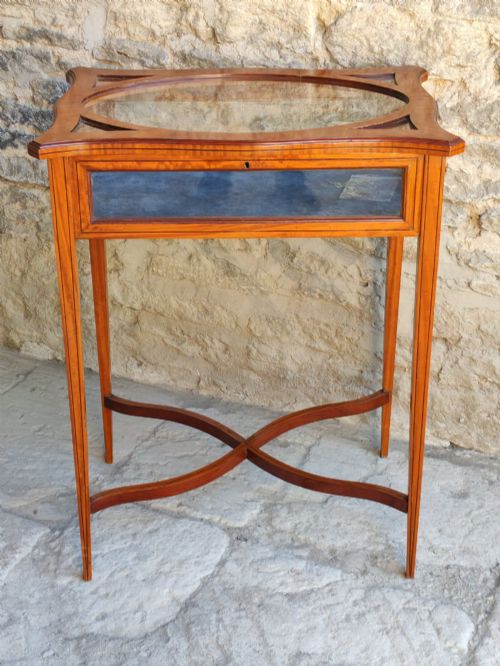
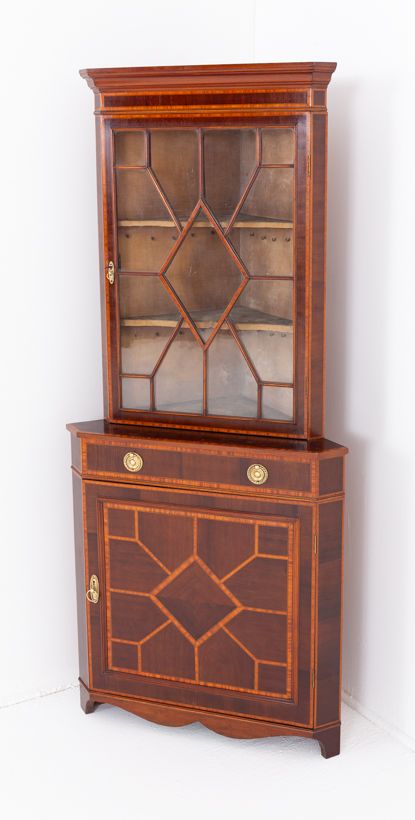
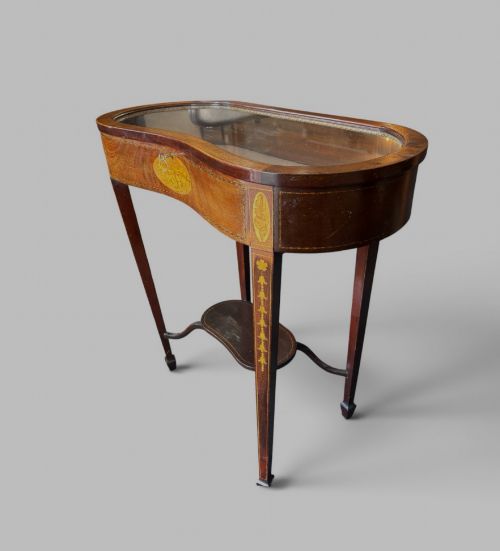
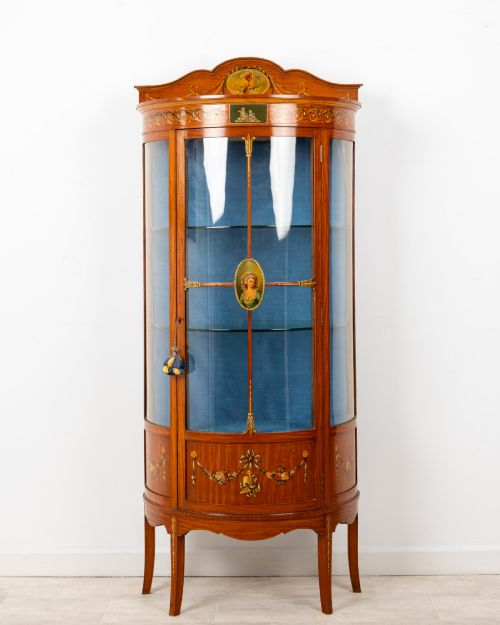
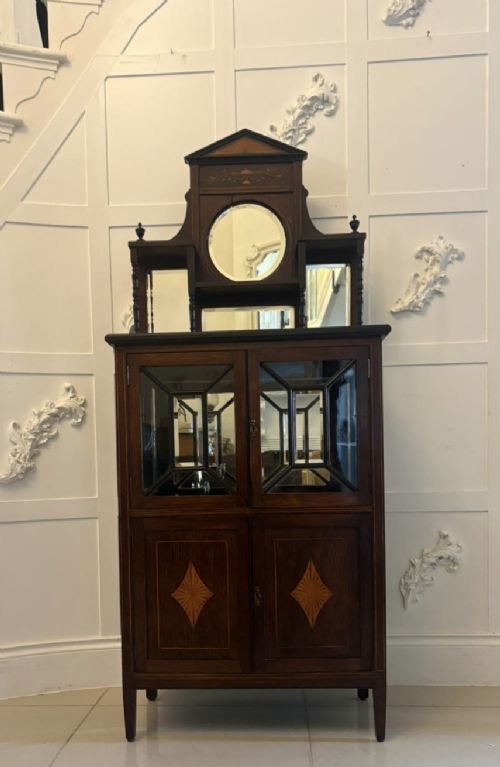
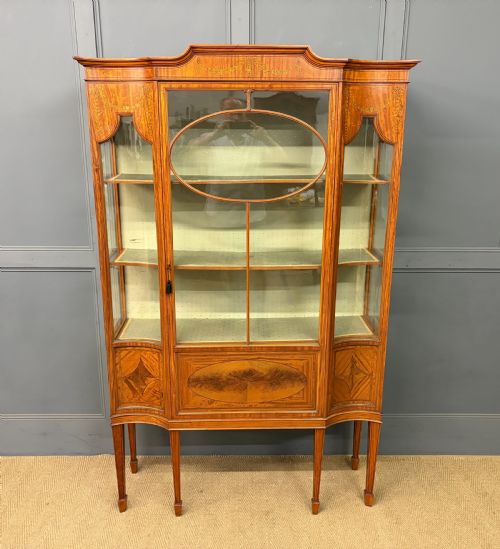
The pieces on this page appear in various configurations, including freestanding display cabinets, corner cabinets, pier cabinets, and smaller bijouterie tables. Most examples draw upon Sheraton Revival, Louis XVI Revival, and Adam Revival styles, utilising mahogany foundations with satinwood veneers.
Makers such as Hampton & Sons, Edwards & Roberts, Maple & Co., James Hicks, and Waring & Gillow often constructed these sophisticated display cases. Buyers encounter both painted decorations and delicate marquetry inlay across the available forms.
Materials and Construction
Cabinet makers utilised dense timber foundations like mahogany, applying figured satinwood veneers to exterior surfaces. Artisans incorporated brass hardware, ormolu mounts, and mirrored backs to enhance light reflection within the display chamber.
Surface decoration frequently relied on intricate marquetry, painted motifs, and contrasting stringing inlay. Glazing methods involved individual glass panes secured within timber framework to protect the interior contents from dust.
Determining Quality
The standard of a satinwood glazed vitrine rests upon the crispness of its marquetry and the figure of the selected timber. Superior examples exhibit precise joinery, balanced proportions, and high-grade ormolu or brass fittings rather than cast metal replacements.
Attribution to documented makers such as Edwards & Roberts or Maple & Co. elevates a piece through verified workshop provenance. Painted embellishments also differ significantly, where skilled hand-painting commands greater regard than simpler stencilled decoration.
Hampton & Sons·Edwards & Roberts·Maple & Co·James Hicks·Waring & Gillow·Jewell of Holborn
The Satinwood Glazed Vitrine Glossary
- Vitrines
- A glass-fronted cabinet designed specifically for displaying fine porcelain, ornaments, or curiosities.
- Satinwood
- A lustrous, yellowish-grey timber prized for its fine grain and reflective quality when polished.
- Marquetry
- The art of applying decorative pieces of veneer to a structure to form intricate pictorial or geometric patterns.
- Ormolu
- Gilt bronze ornamentation applied to furniture, popular during the revival periods of the nineteenth century.
- Bijouterie table
- A glass-topped display table intended for holding small valuable items, jewellery, or medals.
Satinwood Glazed Vitrine: Frequently Asked Questions
What is a satinwood glazed vitrine used for?
These cabinets serve to display collections of ceramics, glass, or small decorative objects while protecting them from dust. The glazed doors and mirrored backs allow light to circulate around the interior items.
Historically, they occupied drawing rooms and parlours where hosts exhibited their finest possessions to visitors. Today, they continue this traditional role in modern homes.
How do I distinguish Edwardian pieces from Victorian ones?
Victorian examples tend to display heavier proportions, darker woods, and more elaborate ormolu mounts or marquetry. They often date from the mid to late nineteenth century.
Edwardian pieces, made around the turn of the twentieth century, frequently favour lighter satinwood veneers, painted decorations, and delicate Sheraton Revival lines.
Where should I place a vitrine in a room?
Vitrines suit corners, wall spaces between windows, or as freestanding focal points in drawing rooms and dining areas. Positioning them near natural light sources helps illuminate the interior display.
Avoid placing delicate satinwood timber in direct, strong sunlight to prevent the polished surfaces from fading over time.
How do I care for satinwood and glass surfaces?
Dust satinwood gently with a soft, dry cloth and polish it occasionally with traditional beeswax to maintain the timber lustre. Avoid using modern silicone sprays.
Clean the glass panels with a mild glass cleaner applied to a cloth rather than sprayed directly onto the cabinet, protecting the surrounding wood.