

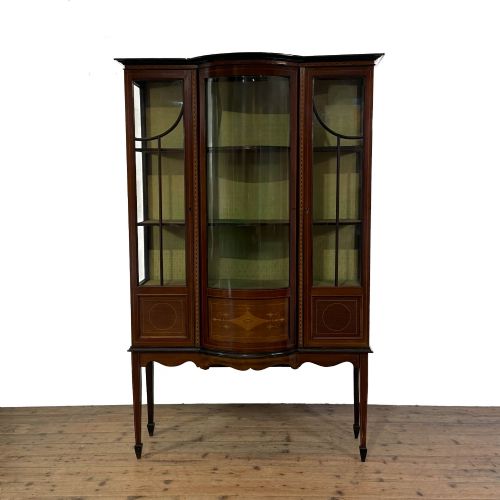


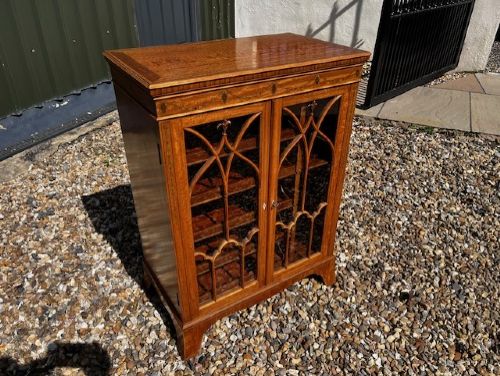


Satinwood Glazed Case
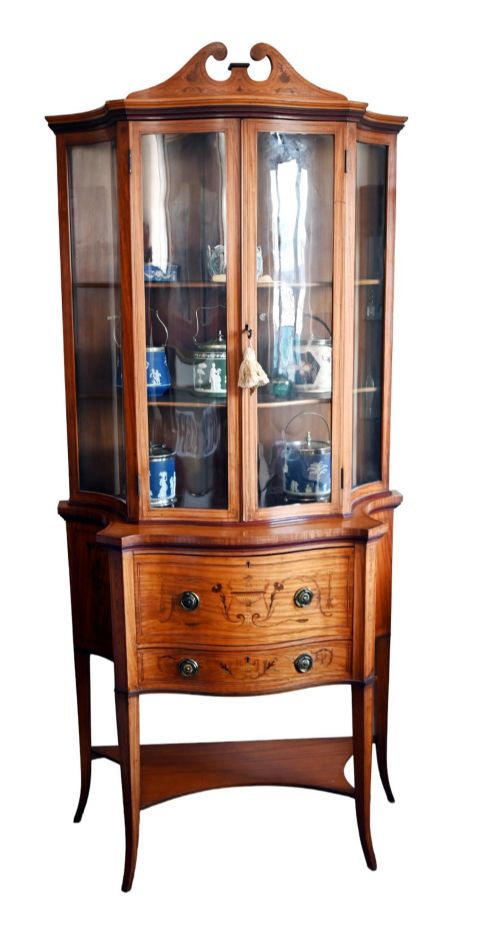
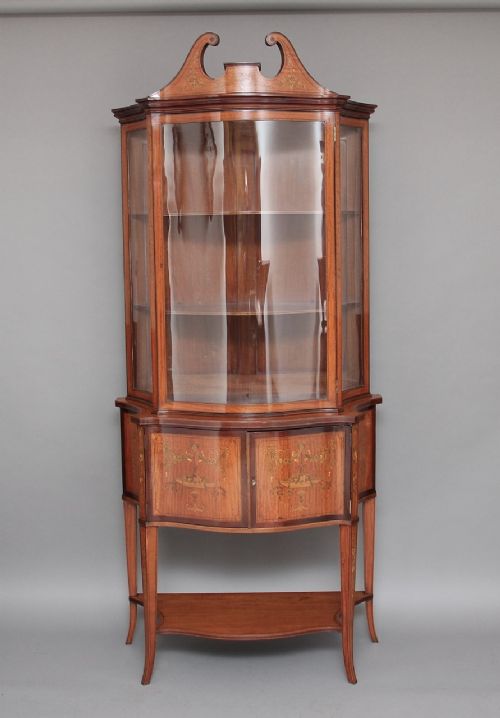
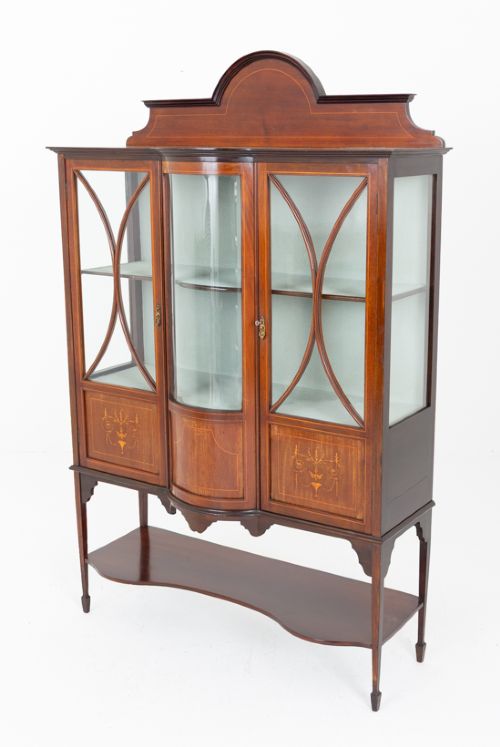
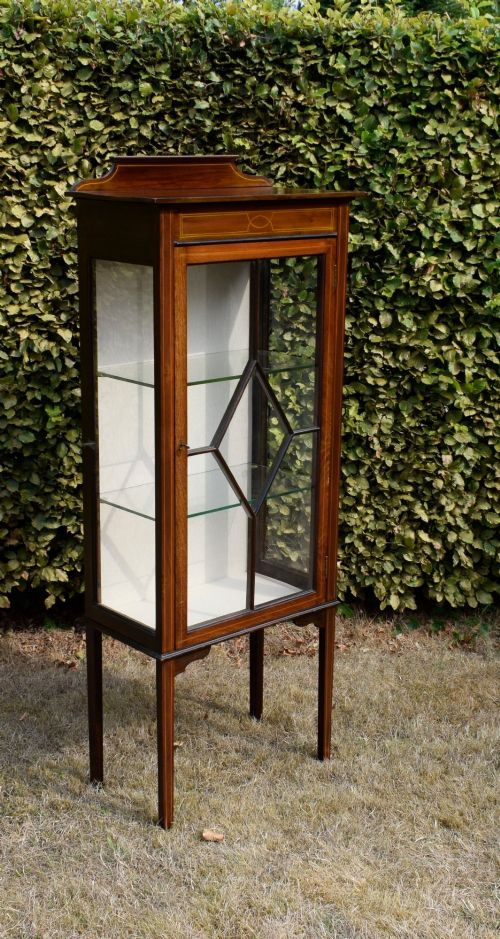
When you search for a satinwood glazed case, you are looking at timber display cabinets and bookcases designed to hold and protect treasured objects.
Satinwood Glazed Case
A satinwood glazed case combines figured timber with glass panels to showcase collections, books, and decorative items. These pieces span the Victorian and Edwardian eras, alongside earlier Georgian examples and later revivals.
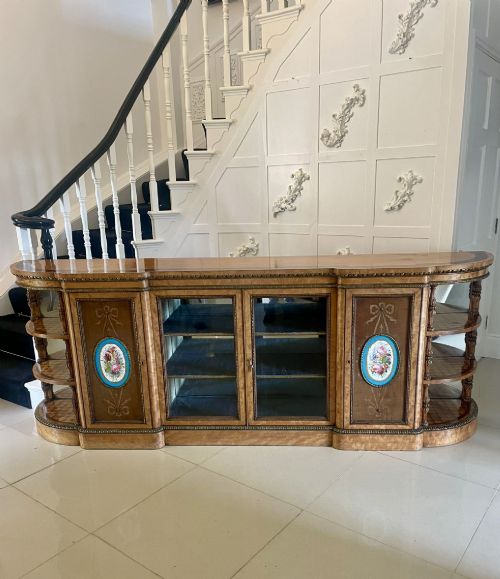
You will most commonly encounter Edwardian and Victorian display cabinets, corner cabinets, and bookcases on this page. They range from small-scale table vitrines to monumental credenzas and standing double-height corner units.
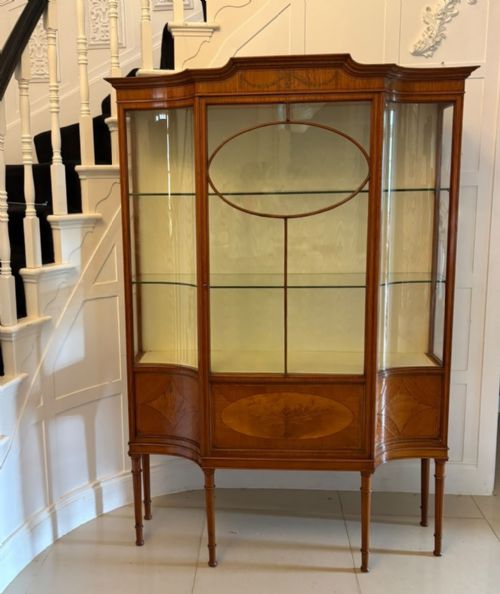
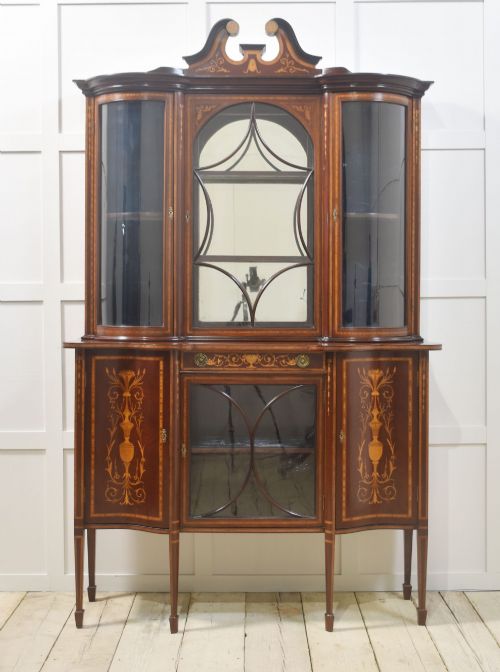
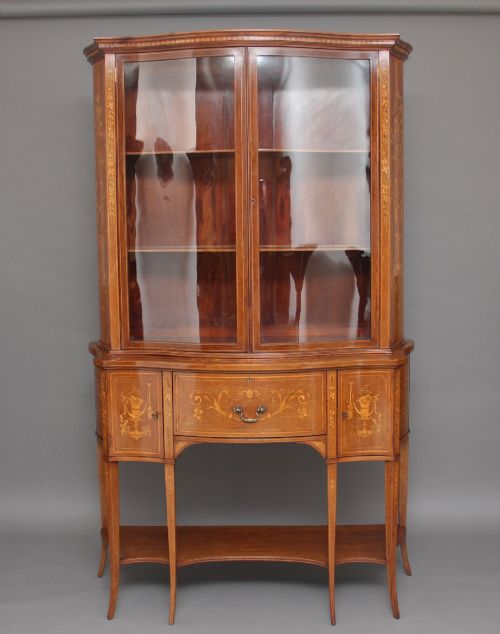
The primary forms include bow fronted cabinets, kidney shaped bijouterie tables, and upright single door display cases. Many incorporate satinwood inlay, marquetry, or crossbanding upon mahogany or satinwood carcasses.
Materials and construction
Cabinet makers utilised dense timbers such as mahogany and satinwood as the structural foundation for these glazed cases. Satinwood provided a pale, reflective surface ideal for contrasting inlay and marquetry work.
Glass panels were secured within wooden frames or astragal bars, often complemented by brass hardware and sometimes ormolu mounts. Fabric linings frequently featured inside display areas to highlight porcelain and glassware.
Several pieces feature kidney shaped glass tops designed specifically for peering down at small, treasured curiosities.
Distinctions in quality
The refinement of the timber preparation and the intricacy of the inlay determine the tier of the piece. Fine examples display precise marquetry, harmonious crossbanding, and carefully selected wood grain rather than simple painted decoration.
Structural harmony also marks the distinction, where proportions, glazing bar alignment, and the integration of brass fittings reflect high levels of cabinet making skill.
James Hicks
The Satinwood Glazed Case Glossary
- Satinwood
- A hard, durable timber with a characteristic golden lustre and satiny sheen. It was frequently used for fine veneering and inlay during the eighteenth and nineteenth centuries.
- Glazed case
- A cabinet or bookcase featuring glass panels designed for the display and protection of contents. These range from table vitrines to large standing units.
- Sheraton Revival
- A late nineteenth and early twentieth century design movement that reinterpreted the lighter, neoclassical styles associated with Thomas Sheraton. It heavily utilised satinwood inlay and classical motifs.
- Marquetry
- Decorative woodwork where pieces of veneer are fitted into a ground to form intricate pictorial or geometric patterns. It often adorns the doors and friezes of display cabinets.
- Vitrine
- A glass-sided cabinet or display case specifically intended for porcelain, curiosities, and small valuable objects. The term originates from the French word for glass.
Satinwood Glazed Case: Frequently Asked Questions
What fits inside a satinwood glazed case?
These cabinets were traditionally built to house delicate collections of porcelain, glassware, books, and small curiosities. The glass fronting protects the contents from dust while allowing them to be viewed clearly.
Smaller table variants, often called vitrines or bijouterie cases, suit flat items, medals, and jewellery. Larger standing bookcases and corner units accommodate larger volumes and decorative objects.
How do I date a glazed cabinet?
Dating relies on observing the combination of timber, hardware, and stylistic revival movements. Pieces from the Victorian and Edwardian periods frequently draw upon Georgian and Sheraton Revival aesthetics.
Details such as the weight of the glass, the construction of the door frames, and the type of internal fabric lining provide further chronological clues.
Where should I place a corner cabinet?
Corner cabinets are specifically engineered to utilise the intersecting angles of a room. Standing double-height versions make efficient use of vertical wall space while framing a collection effectively.
They sit well in reception rooms and studies, though exposure to direct sunlight should be avoided to protect the satinwood veneer.