
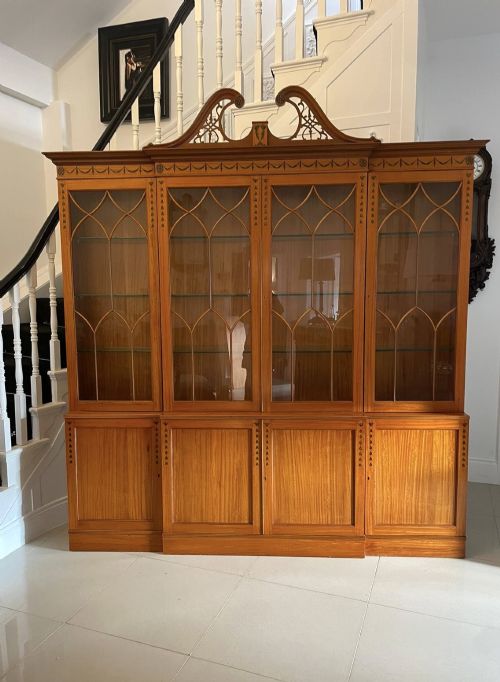

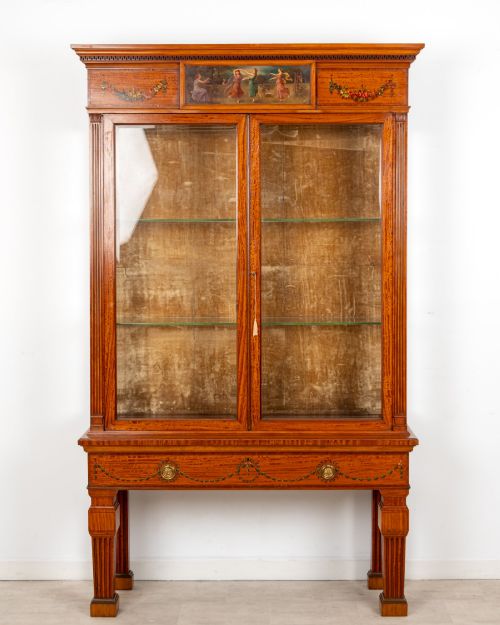
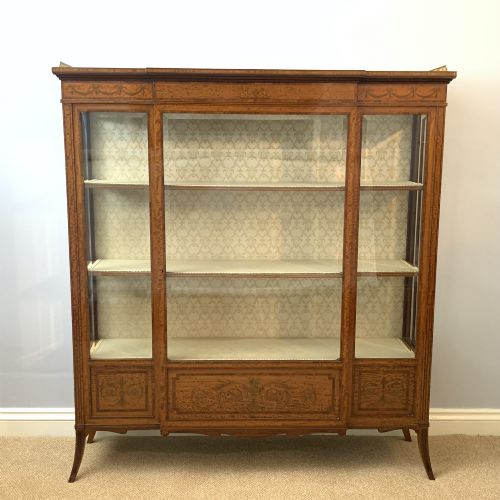
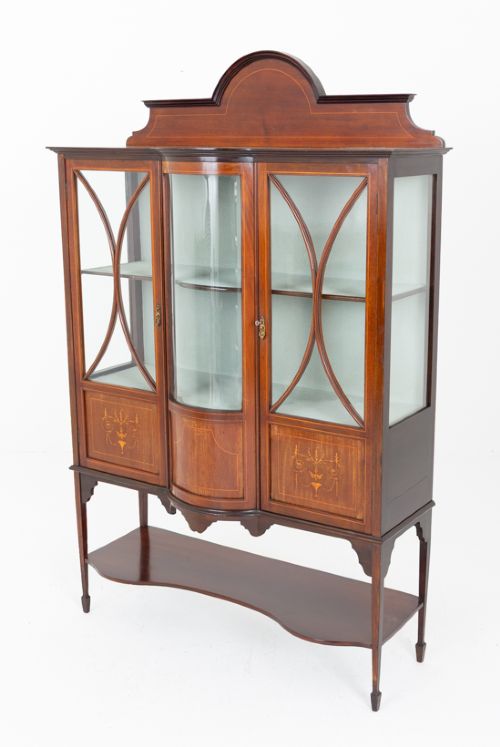
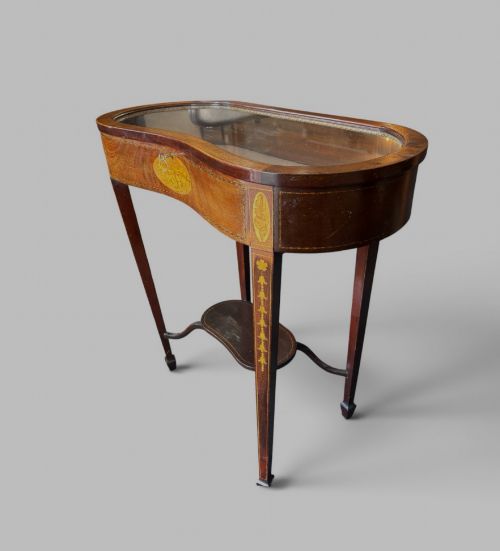
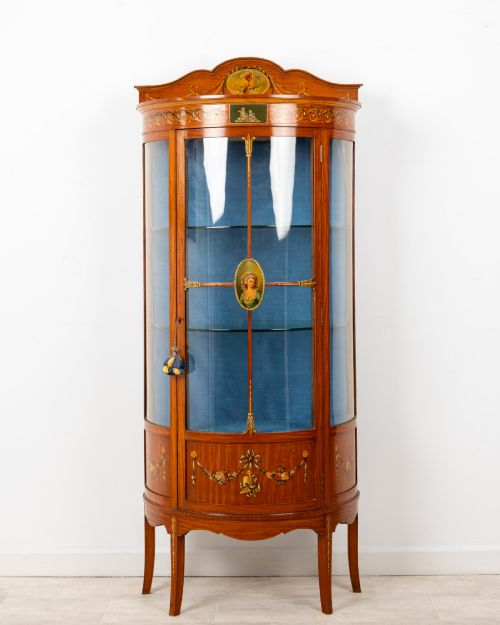
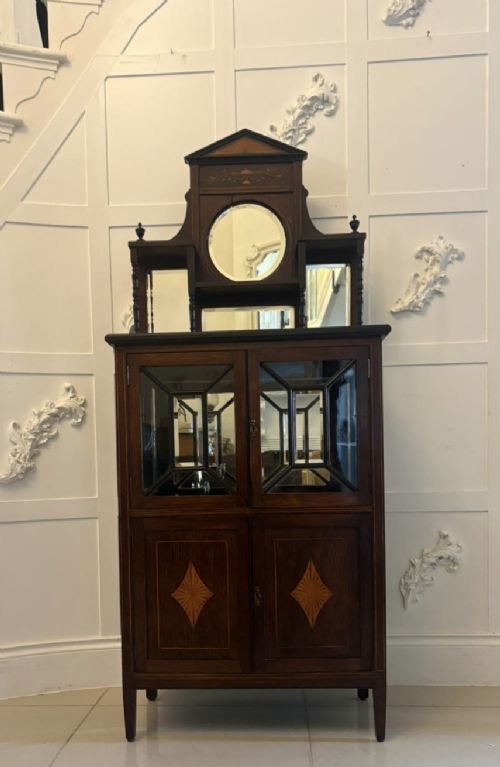
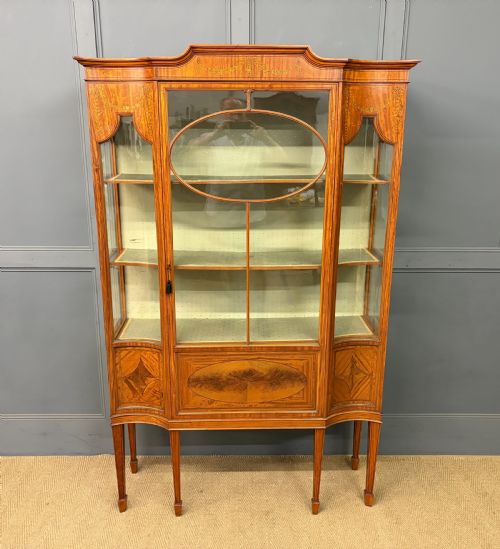
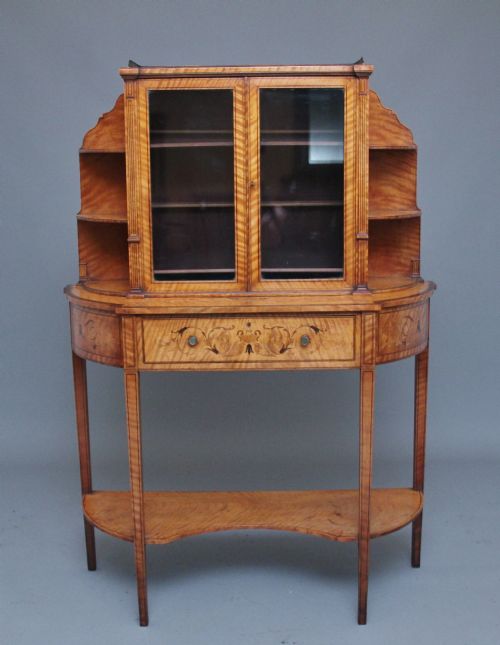
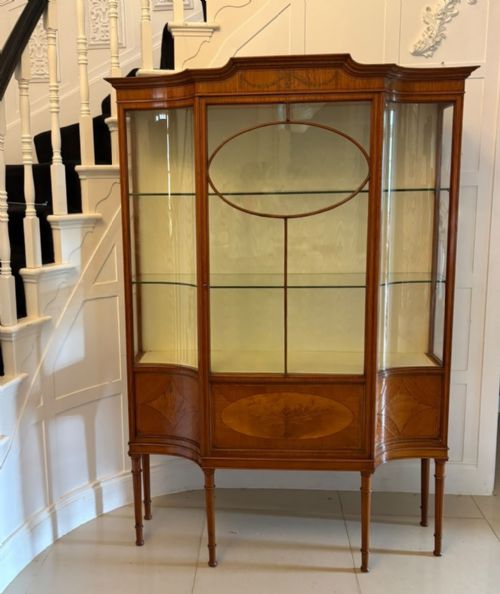
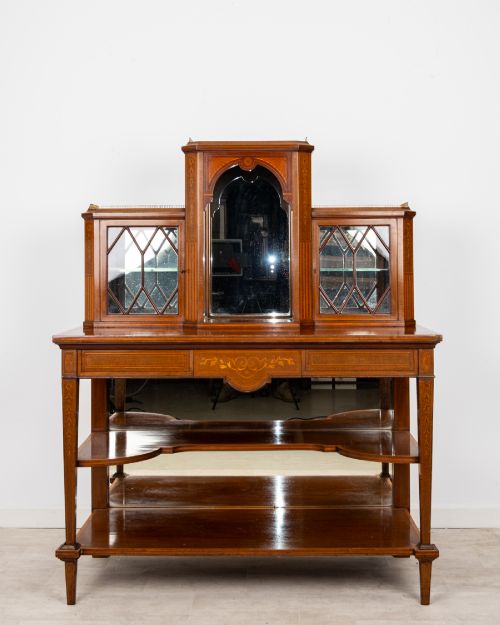
Satinwood Glass Cabinet
A satinwood glass cabinet brings bright timber and clear glass together to display precious objects with elegance.
Satinwood Glass Cabinet
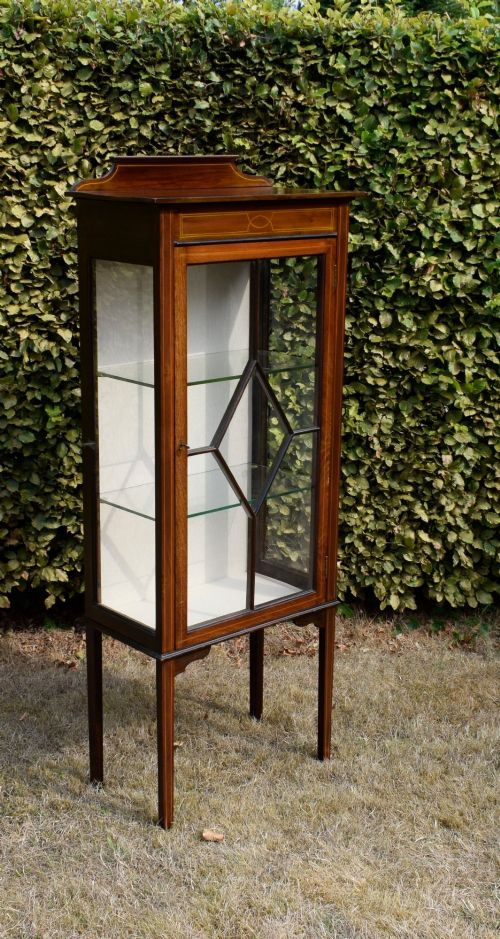
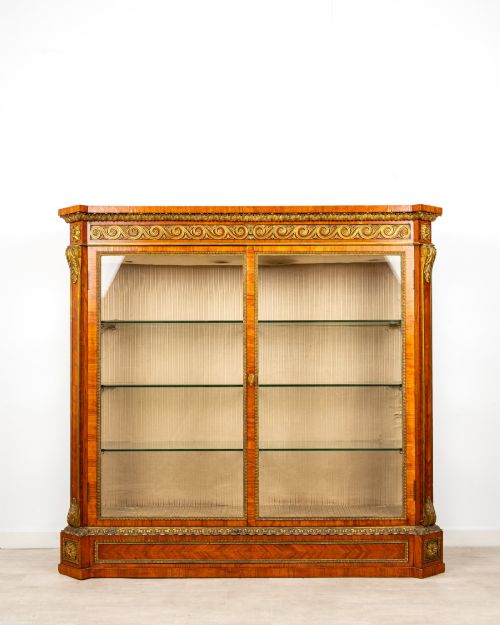
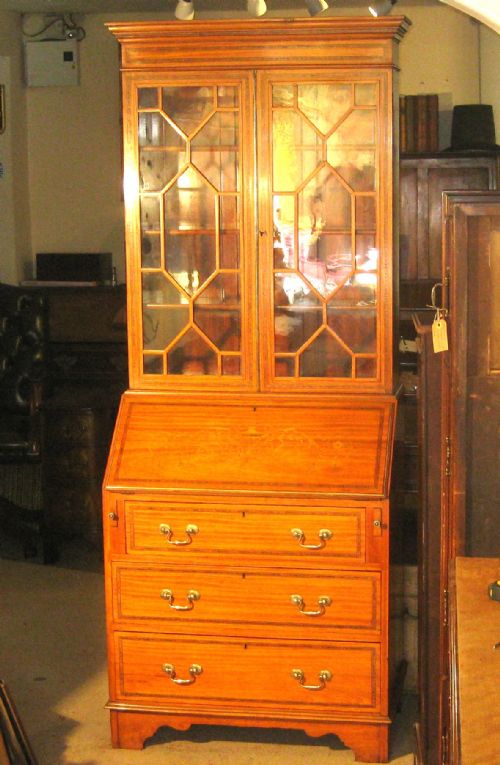
A satinwood glass cabinet is a refined piece of furniture designed to exhibit ceramics, glassware, and small collections within a domestic interior. When searching for a satinwood glass cabinet, buyers encounter various forms spanning display cabinets, corner cabinets, and vitrines.
The pieces on this page originate predominantly from the Victorian and Edwardian eras, with many examples adopting the Sheraton Revival style. Makers often combined satinwood with mahogany, brass, and painted decoration to create visually striking focal points for drawing rooms and reception spaces.
Materials and Construction
Cabinet makers utilised light timbers such as satinwood and mahogany as the primary foundation for these display pieces, often incorporating fruitwood inlay and marquetry. Ormolu mounts, glass panes, and mirrored backs were integrated to reflect light through the interior chambers.
Structural integrity relied on precise joinery to support glazed doors, bow fronts, and delicate display shelves. Surface finishes were carefully polished to highlight the natural grain and shimmering quality of the satinwood veneer.
Listings feature Edwardian, Victorian, and nineteenth-century pieces incorporating satinwood, mahogany, brass, and mirror glass.
Distinctions in Quality
Quality in these cabinets rests upon the subtlety of the inlay work, the choice of timber figure, and the precision of the cabinetmaking. Superior examples exhibit hand-painted decoration, finely cast ormolu mounts, and original bevelled glass rather than later replacements.
The architectural presence of a piece, whether through a serpentine front, breakfront proportions, or sophisticated proportions, separates standard production items from master cabinetmaker commissions.
Hampton and Sons·Edwards and Roberts·Maple and Co·James Hicks
The Satinwood Glass Cabinet Glossary
- Satinwood
- A tropical hardwood prized for its golden lustre and reflective sheen. It was frequently used as a veneer on high-status Edwardian and Victorian furniture.
- Sheraton Revival
- A late nineteenth and early twentieth-century design movement inspired by the neoclassical work of Thomas Sheraton. It is characterised by symmetrical geometry and delicate marquetry.
- Bijouterie Table
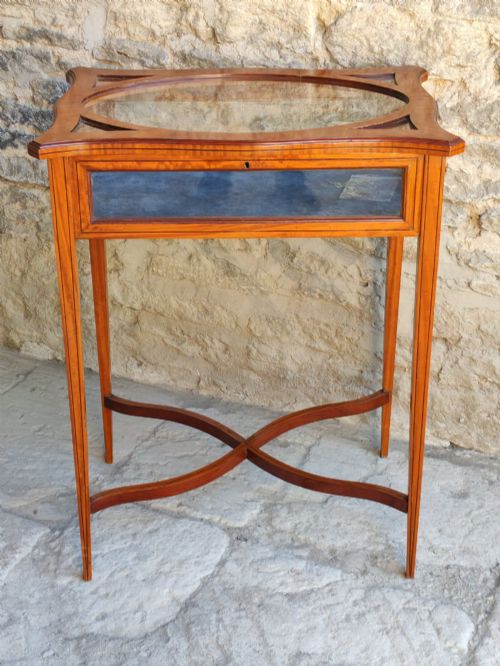
- A glazed display table with a hinged top designed for showing small ornaments and curiosities. These pieces often sat in formal drawing rooms.
- Ormolu
- Gilded bronze used for decorative mounts and hardware. It adds metallic contrast to wood surfaces.
- Marquetry
- Decorative woodwork where pieces of various coloured veneers are fitted into a ground to form intricate patterns. Craftsmen utilised this technique on doors and friezes.
Satinwood Glass Cabinet: Frequently Asked Questions
What is a satinwood glass cabinet?
A satinwood glass cabinet is a display furniture piece featuring glazed doors or panels set into light golden timber frames. These pieces were built to showcase porcelain, silver, and decorative objects in domestic interiors.
They emerged strongly during the Victorian and Edwardian periods, often adhering to Sheraton Revival aesthetics. The combination of reflective glass and pale wood made them ideal for brightening Victorian reception rooms.
How were these cabinets used?
Owners utilised these cabinets to protect and exhibit prized possessions, such as imported ceramics, glassware, and family mementos. The glass panels kept dust away while allowing visitors to admire the contents from across the room.
In some instances, smaller versions functioned as bijouterie tables or vitrines designed specifically for miniature curiosities. They served both a practical storage function and a social role in displaying household refinement.
How do I live with one?
Placing a satinwood glass cabinet requires attention to lighting and sunlight exposure, as bright direct sun can fade delicate painted decorations and timber tones. Positioning the piece away from direct heat sources prevents the veneered surfaces from drying out.
Inside the cabinet, low-wattage interior lighting can enhance the display of glass and ceramics without generating excessive heat. Regular dusting with a soft, dry cloth preserves the polished finish of the satinwood.
How do I date these cabinets?
Dating relies on examining construction methods, hardware types, and stylistic revivals present in the design. Pieces from the late nineteenth century often display heavy Victorian proportions, whereas Edwardian examples frequently adopt lighter Sheraton Revival lines.
Maker marks, paper labels, and retailer stamps inside drawers or on the backboards provide definitive chronological markers. The integration of specific revival movements like Louis XVI or Adam style also helps narrow the period of manufacture.