


Satinwood Dressing Bureau
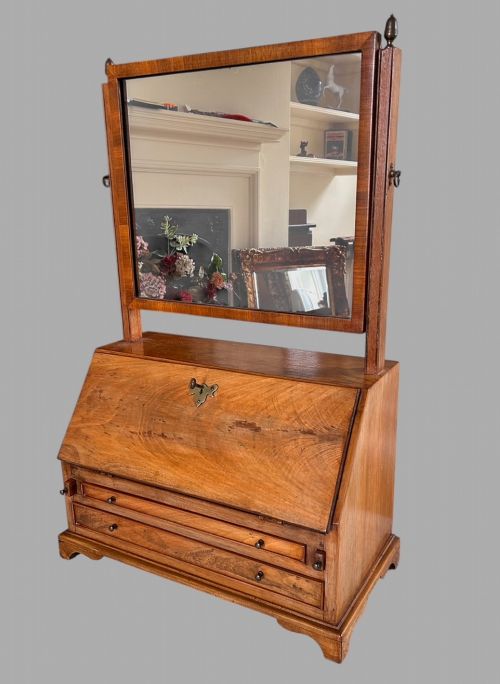
These satinwood dressing bureau pieces combine a writing desk and a mirror in polished timber, offering a functional surface for writing alongside a dedicated dressing space.
Satinwood Dressing Bureau
A satinwood dressing bureau serves as a combined writing desk and dressing table, frequently featuring a mirrored superstructure or a tabletop bureau layout. Buyers searching for a satinwood dressing bureau encounter forms that blend the utility of a desk with the personal grooming space of a dressing table.
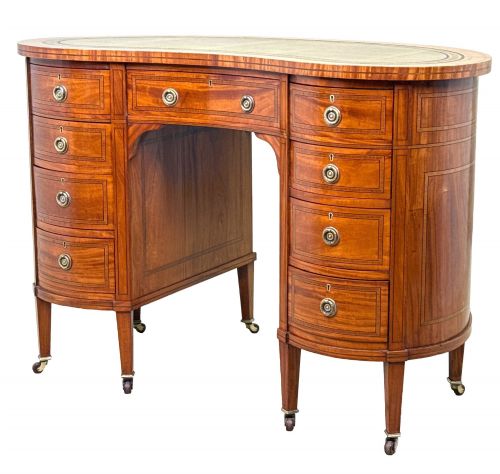
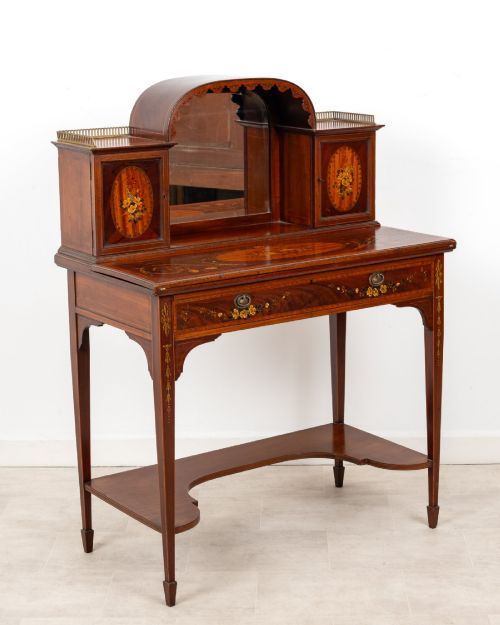
The pieces appearing on this page span the Victorian and Edwardian eras, incorporating styles such as Sheraton Revival, French Empire Revival, and George III alongside English Country House designs. These examples utilise satinwood timber, often paired with mahogany, oak, and kingwood, to create kidney-shaped desks, kneehole desks, and bonheur du jour forms.
Makers and workshops of the period produced these items with integrated drawers, leather writing inserts, and brass hardware. The resulting furniture ranges from small tabletop units to freestanding kneehole desks suited for period interiors.
Assessing Quality and Execution
The refinement of the timber selection and the precision of the inlay work distinguish the execution of these pieces. Higher-grade examples display carefully matched grain patterns, intricate hand-painted decoration, and robust internal drawer construction.
The integration of the mirror superstructure and the quality of the hardware, including brass fittings and leather inserts, indicate the level of craftsmanship involved. Consistency in the polish and the structural integrity of the kneehole or kidney shape further define the standard of manufacture.
Some pieces include secret compartments hidden behind small drawers for storing love letters.
James Shoolbred of London·Maple and Co.
The Satinwood Dressing Bureau Glossary
- Satinwood
- A lustrous timber native to Ceylon and the West Indies, prized for its golden colour and satiny sheen. Makers utilised it extensively for high-end veneer and inlay during the eighteenth and nineteenth centuries.
- Superstructure
- An upper framework attached to the back of a desk or table, commonly holding a mirror or small drawers. This addition transforms a standard writing surface into a combination dressing and writing station.
- Kidney shape
- A curved desk or table configuration resembling a bean, popular in late nineteenth-century designs. This contour allows the user to sit closer to the central writing space.
- Bonheur du jour
- A small, light ladies' writing desk featuring a tiered superstructure with compartments or drawers above the main surface. The form originated in France during the eighteenth century and reappeared in later revival periods.
- Kneehole desk
- A freestanding desk with a central recess for the user's legs, flanked by pedestals of drawers. This layout provides ample storage whilst maintaining a compact footprint.
Satinwood Dressing Bureau: Frequently Asked Questions
What is a satinwood dressing bureau?
A satinwood dressing bureau is a dual-purpose piece of furniture that combines a writing desk with a dressing table, often featuring a mirror and compartments for writing materials and cosmetics.
These items were produced in various forms, including kidney-shaped desks, kneehole configurations, and tabletop units with integrated mirrors.
How do I care for satinwood furniture?
Satinwood surfaces require gentle maintenance using a soft, dry cloth to remove dust. Avoid exposure to direct sunlight and moisture to protect the polished timber and delicate inlay work.
Applying a quality wax periodically helps maintain the lustre of the wood without building up a heavy residue.
Where were these pieces used in the home?
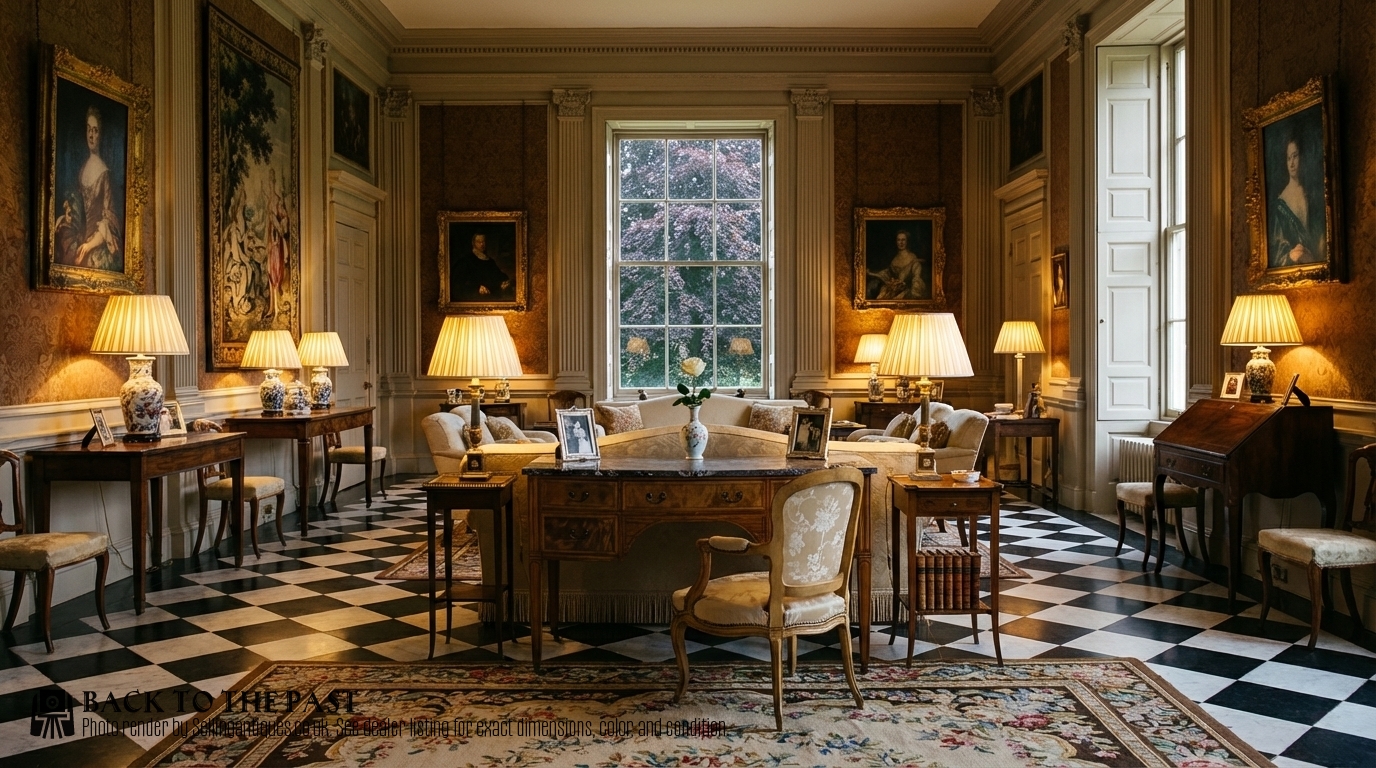
These pieces typically served in bedrooms, dressing rooms, or private sitting rooms as personal writing and grooming stations. Their dual function made them practical for correspondence and daily toilette.
Freestanding versions also functioned as decorative centrepieces in period drawing rooms and studies.
How do I distinguish Victorian from Edwardian pieces?
Victorian examples tend to feature heavier proportions, darker secondary timbers, and deeper finishes, reflecting mid to late nineteenth-century tastes. Edwardian pieces often display lighter satinwood veneers, painted floral decoration, and Sheraton Revival influences.
Examining the construction methods, drawer linings, and hardware styles helps clarify the period of manufacture.