





Satinwood Display Case
A satinwood display case brings the shimmering warmth of figured timber and clear glass together to hold cherished collections in plain sight.
Satinwood Display Case
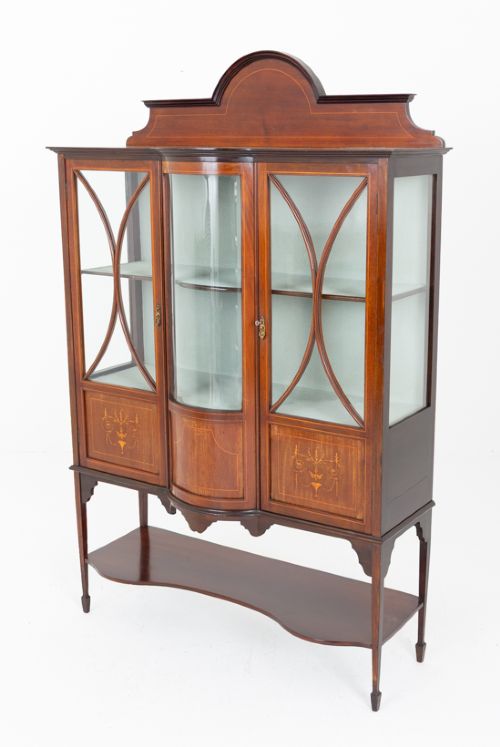
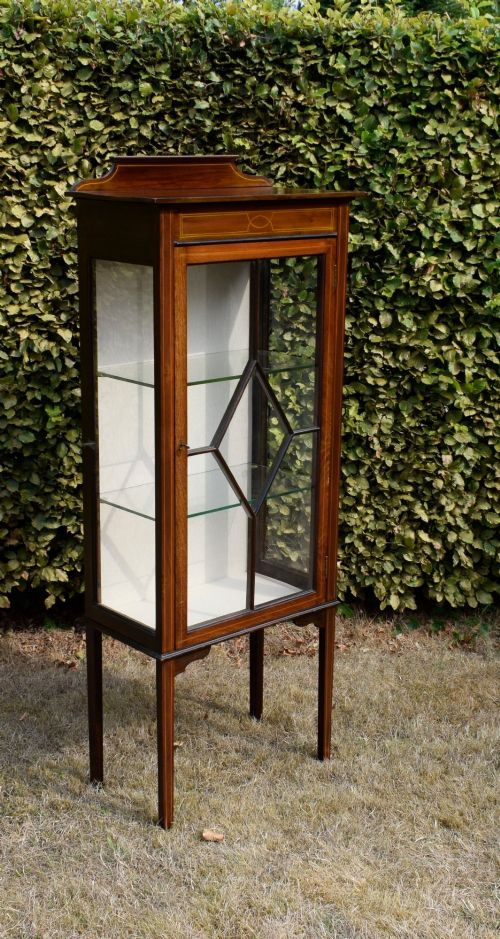
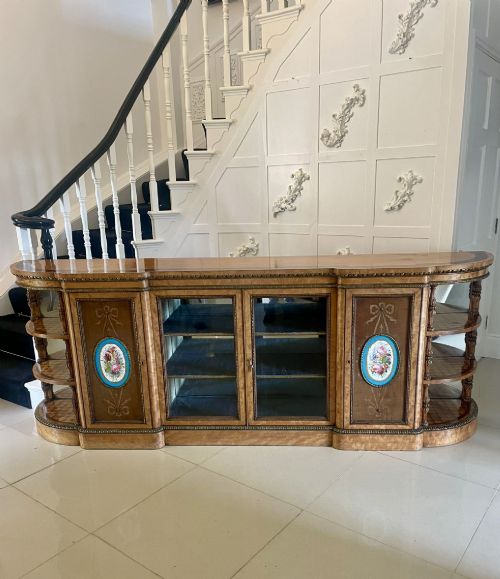
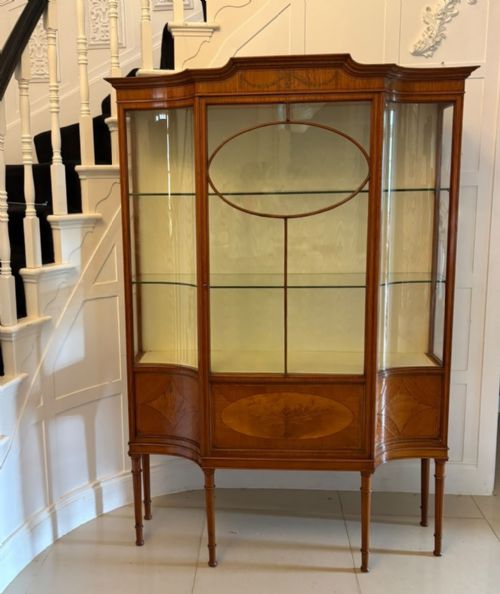
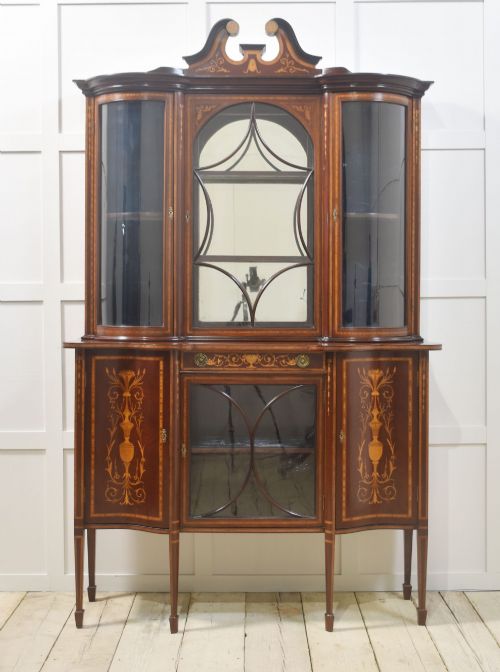
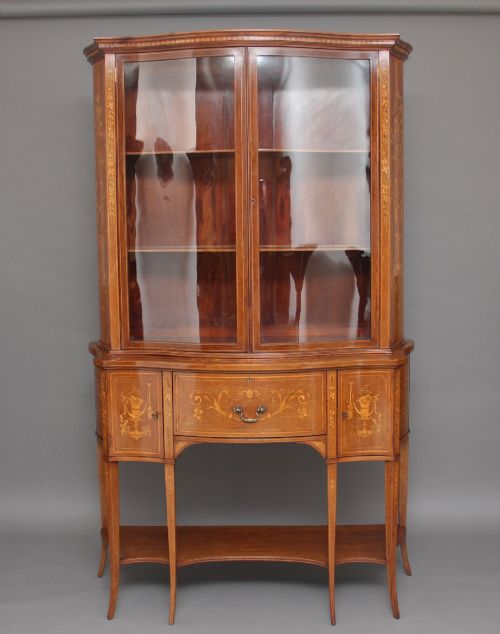
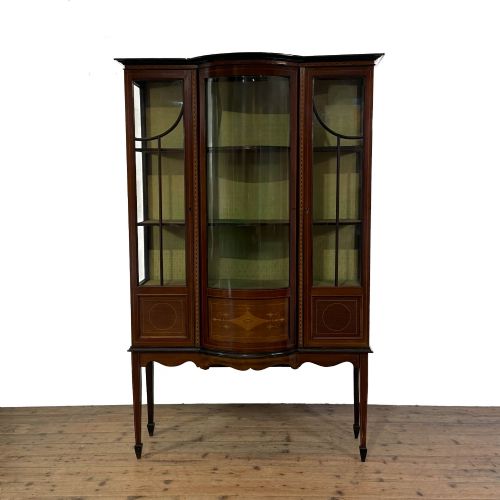
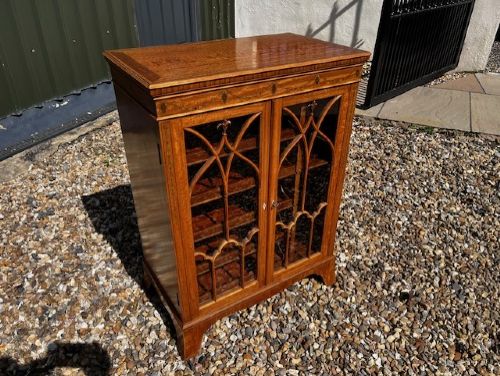
A satinwood display case encompasses glazed cabinets, standing vitrines, bow-fronted credenzas, and glass-topped bijouterie tables designed to showcase fine objects. These pieces emerge chiefly from Victorian and Edwardian workshops, drawing heavily on Sheraton Revival aesthetics alongside French Empire and late nineteenth-century forms.
The buyer meets freestanding corner cabinets, single-door pedestals, and larger double-height cupboards featuring glass panels for viewing porcelain, silver, and curiosities. Many examples combine satinwood veneers with mahogany structures, crossbanding, and delicate line inlay.
Dating ranges from mid-nineteenth-century manifestations through the height of the Edwardian era around nineteen hundred. Smaller scale collectors cabinets and kidney-shaped display tables sit alongside monumental credenzas outfitted with ormolu mounts.
How they were made
Cabinetmakers utilised dense mahogany frames as a stable carcass before laying down luminous satinwood veneers across the visible surfaces. Detailed marquetry, parquetry, and floral painted motifs embellish the panels, accompanied by intricate satinwood inlay and contrasting crossbanding.
Glazing relies on hand-formed glass panes fitted tightly into wooden or brass framework, while structural enrichment frequently employs cast ormolu mounts and brass hinges. Fabric linings often pad the interior shelves and base boards of bijouterie tables and vitrines.
Cabinetmakers occasionally integrated nautical elements, producing maritime ships bookcases designed to withstand rolling seas while keeping porcelain secure.
What varies in quality
The hierarchy of quality rests upon the selection of timber, the crispness of the marquetry, and the finesse of the hand-painted details. Highly figured satinwood grain combined with precise floral inlay or parquetry separates finer examples from plainer production.
Construction subtleties such as serpentine or bow fronts, bowed glass doors, and substantial cast ormolu mounts elevate specific pieces. The harmony between the primary mahogany structure and the satinwood veneer defines the overall success of the piece.
James Hicks
The Satinwood Display Case Glossary
- Satinwood
- A light-yellow timber with a lustrous, natural sheen utilised extensively for fine cabinet veneers during the eighteenth and nineteenth centuries. It takes a high polish and accepts delicate painted decoration with ease.
- Vitrine
- A glass-fronted cabinet designed specifically for the display of porcelain, curiosities, or fine objects. These cases often feature all-glass sides to maximise ambient light upon the contents.
- Marquetry
- The art of forming decorative patterns using thin veneers of different coloured woods, ivory, or shell applied to a wooden carcass. In these pieces, floral sprays and geometric ribbons frequently decorate the satinwood panels.
- Bijouterie table
- A shallow glazed display table with hinged or lifting glass top, created to exhibit small portable treasures like jewellery, medals, or miniatures. They typically stand on slender tapering legs.
- Crossbanding
- A narrow strip of veneer laid around the border of a panel so that the grain runs at right angles to the central wood. This technique frames the satinwood surfaces with a distinct linear boundary.
- Sheraton Revival
- A late nineteenth and early twentieth-century design movement inspired by the neoclassical furniture of George Sheraton. Pieces from this revival favour satinwood, painted urns, bellflower husks, and slender tapered legs.
Satinwood Display Case: Frequently Asked Questions
What is a satinwood display case?
A satinwood display case is a glazed cabinet or vitrine surfaced in lustrous satinwood veneer, built to exhibit small collections safely behind glass.
These pieces range from tall corner cupboards and bow-fronted credenzas to low bijouterie tables with glass tops.
How do I tell Victorian from Edwardian cases?
Victorian examples often feature heavier proportions, rich marquetry, ormolu mounts, and deeper mahogany carcases dating from eighteen fifty onward.
Edwardian pieces lean toward lighter Sheraton Revival styling, delicate painted floral motifs, and slender tapered legs around nineteen hundred.
Where were these cabinets placed?
They found homes in formal drawing rooms, parlours, and libraries to display prized porcelain, silver, and curiosities to visiting guests.
Corner cabinets utilised unused room angles, while narrow vitrines and bijouterie tables occupied wall spaces between windows.
How do I care for satinwood?
Keep the timber away from direct sunlight and steady heat sources to protect the delicate veneers and painted decorations from fading or drying.
Dust gently with a dry, soft cloth and avoid chemical polishes that might damage the historical finish.