




Satinwood Dining Buffet
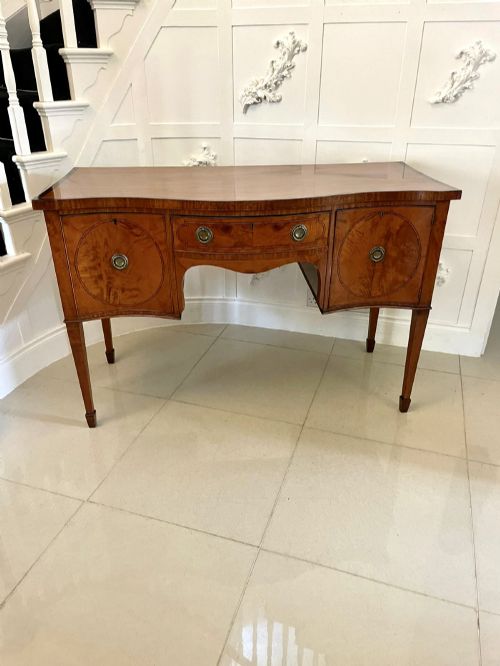
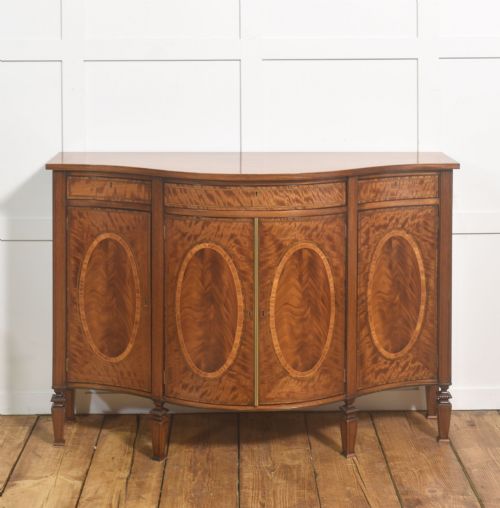
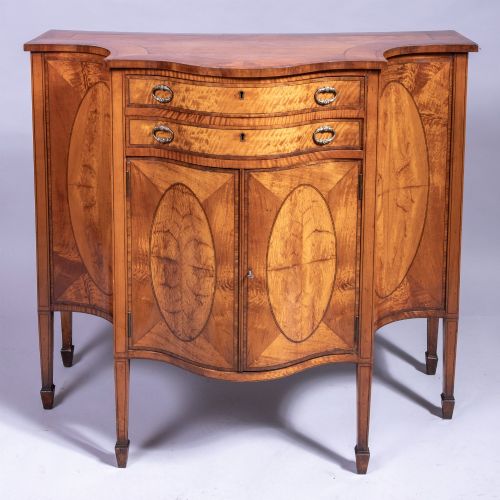
A satinwood dining buffet brings light timber and refined neoclassical revival design to a dining space, offering both a serving surface and substantial storage.
Satinwood Dining Buffet
When searching for a satinwood dining buffet, a buyer encounters a selection of sideboards, side cabinets, serving tables, and credenzas spanning the Georgian period, the Victorian era, and the Edwardian years. These pieces function primarily as serving surfaces and storage units for the dining room.
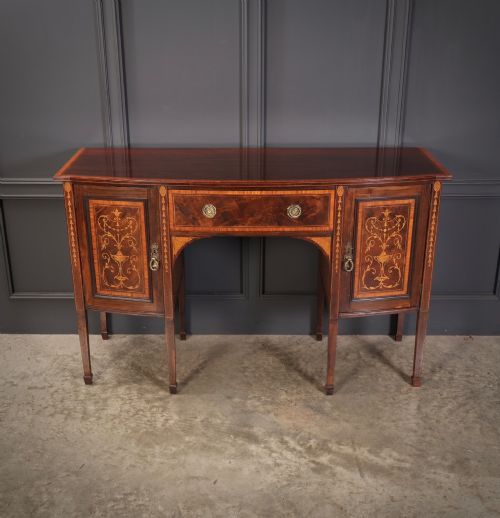
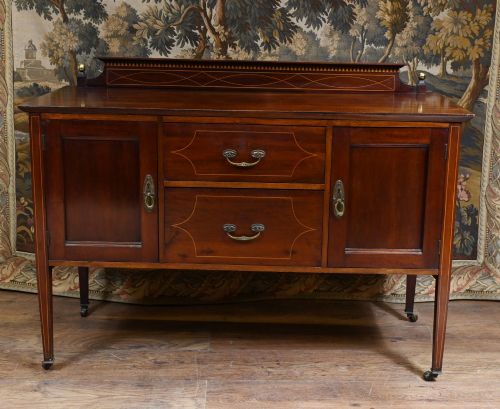
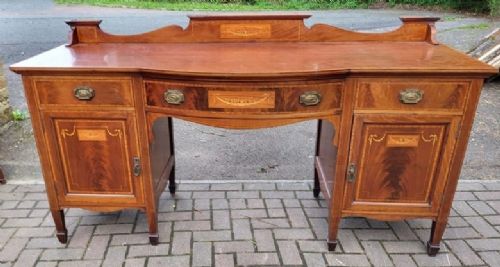
The version most commonly met on this page is the Edwardian or Sheraton Revival piece dating around 1900, often constructed from mahogany with generous satinwood veneers and intricate inlay work. Pieces span from the late eighteenth century through to the early twentieth century.
Forms include serpentine shapes, bow-front designs, and breakfront layouts. These layouts provide varying configurations of cupboards and drawers for dining linen and silver.
Materials and construction methods
Cabinet makers utilised dense timbers such as mahogany as a foundational structural wood, applying pale satinwood veneers across the visible exterior surfaces to create a striking contrast. Boxwood, ebony, and rosewood were frequently introduced for delicate stringing and contrasting border details.
Surface decoration relies heavily on wood inlay and marquetry techniques, creating classical urns, floral motifs, and geometric patterns within the timber grain. Brass fittings, including handles and occasionally galleries, complete the hardware requirements of these serving pieces.
Design styles represented across the inventory include Sheraton Revival, George III, and Grand Regency, encompassing bow-front, breakfront, and serpentine forms.
Distinctions in quality
The standard of timber selection and veneer matching defines the visual impact of each cabinet, with symmetrical grain patterns commanding greater attention than plain surfaces. Finely executed marquetry and precise boxwood or ebony stringing reflect superior workshop capability.
Structural integrity is evident in the weight of the drawers, the smoothness of curved serpentine or bow-front construction, and the preservation of original brass hardware. Pieces bearing documented maker attribution generally represent the upper tier of cabinet making.
Edwards and Roberts
The Satinwood Dining Buffet Glossary
- Satinwood
- A pale, lustrous hardwood native to Ceylon and India, highly prized for its reflective golden sheen in high-status furniture. It is frequently utilised as a veneer rather than a solid construction timber.
- Crossbanding
- A strip of veneer applied perpendicularly to the grain of the main surface around the border of a drawer front or tabletop. This technique frames the primary timber with a contrasting wood.
- Marquetry
- The art of forming decorative patterns by fitting together small pieces of various coloured woods, veneers, and shells. It is commonly seen in floral and classical motifs on Edwardian and Sheraton Revival pieces.
- Breakfront
- A cabinet design where the central section projects forward from the flanking outer sections. This architectural arrangement adds depth and visual rhythm to sideboards and side cabinets.
- Serpentine
- A furniture front characterised by a wavy contour that curves outward in the centre and inward towards the ends. It demands advanced woodworking skill to execute accurately in solid timber and veneer.
Satinwood Dining Buffet: Frequently Asked Questions
How do I style a buffet in a dining room?
A satinwood buffet serves as a focal point for displaying silver, glassware, or ceramics against its pale timber surface. The reflective quality of the satinwood veneer pairs effectively with both traditional dining settings and lighter modern interiors.
Adequate clearance around the piece ensures cabinet doors and drawers function without obstruction during dinner parties. The surface also provides a practical platform for serving food or arranging drinks when hosting guests.
What is the difference between George III and Sheraton Revival?
George III pieces date from the eighteenth century and represent the original neoclassical period of furniture design. They feature period construction methods and authentic ageing of the timber.
Sheraton Revival pieces date predominantly from the late nineteenth and early twentieth centuries, copying the lighter neoclassical styles of Thomas Sheraton. These later iterations often incorporate bright satinwood veneers and elaborate marquetry inlay.
How should I care for satinwood veneer?
Satinwood furniture requires protection from direct sunlight to prevent the pale timber from darkening or fading unevenly over time. Dusting with a soft, dry cloth maintains the finish without introducing moisture.
Application of traditional beeswax helps nourish the wood and preserves the lustre of the polished surface. Avoid placing hot dishes directly onto the buffet top to protect the delicate veneer underneath.
Where were these sideboards used?
These pieces were originally commissioned for the dining rooms of large townhouses and country estates during the Georgian and Edwardian periods. They functioned as staging areas for carving meats and holding dinner service before food was brought to the table.
Cupboards and drawers housed table linen, cutlery, and serving dishes within easy reach of the dining table. Today, they transition into living rooms and hallways as storage cabinets as well as dining room servers.