
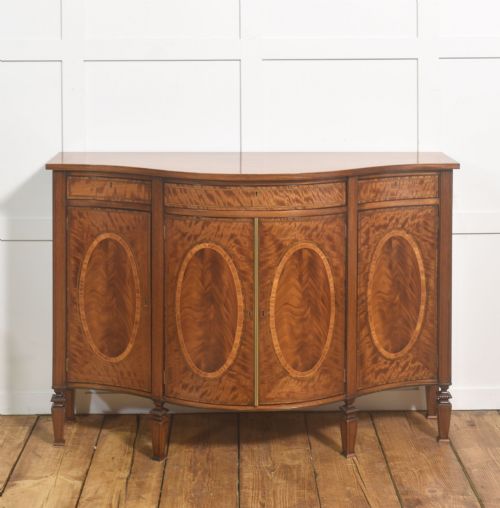
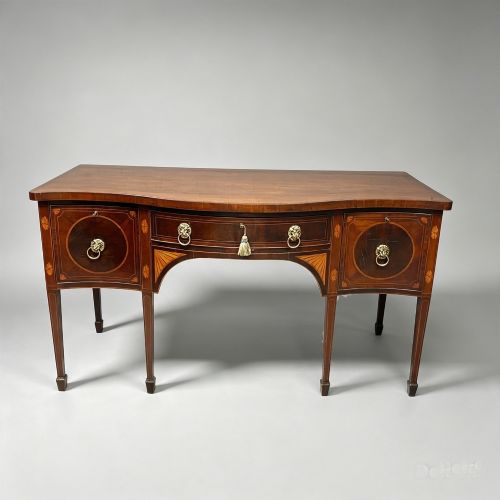
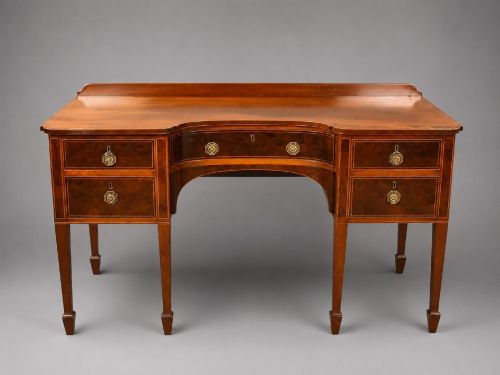
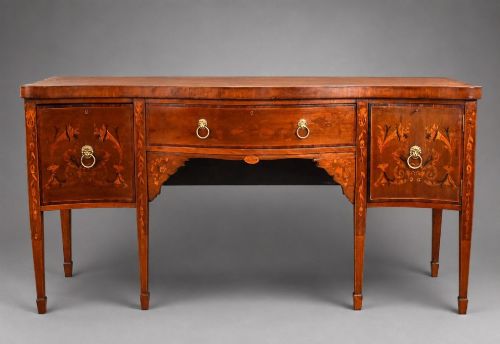
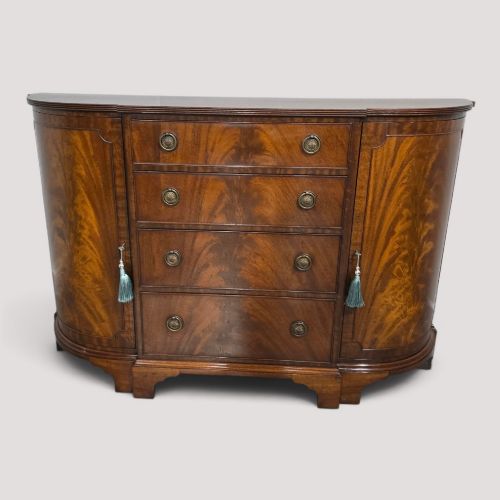
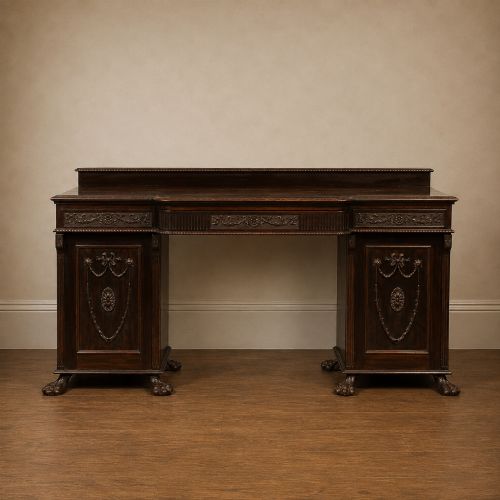
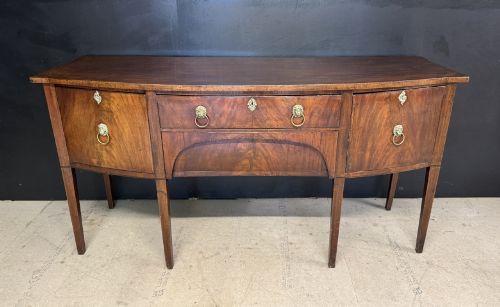
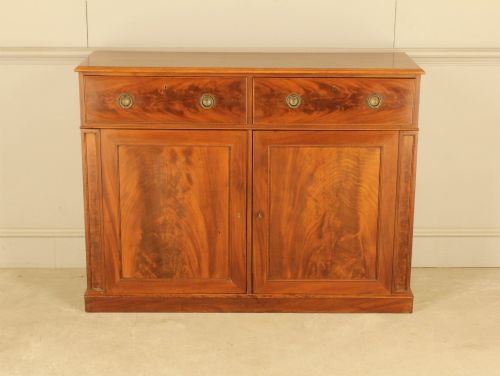
Georgian Style Dining Credenza
A georgian style dining credenza brings formal proportions and rich timber grain to the dining room, combining deep storage with classic proportions.
Georgian Style Dining Credenza
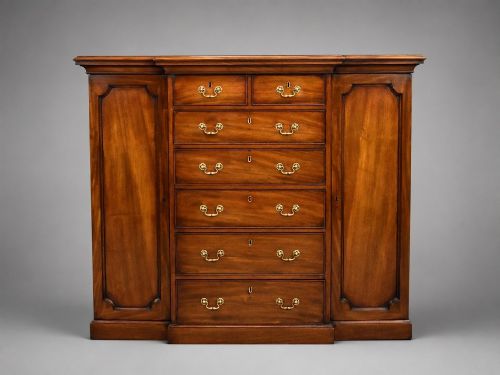
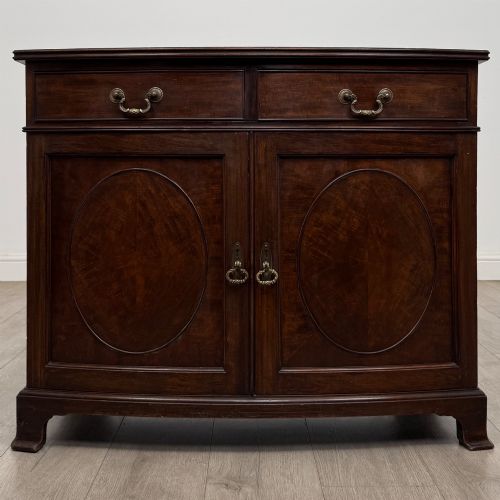
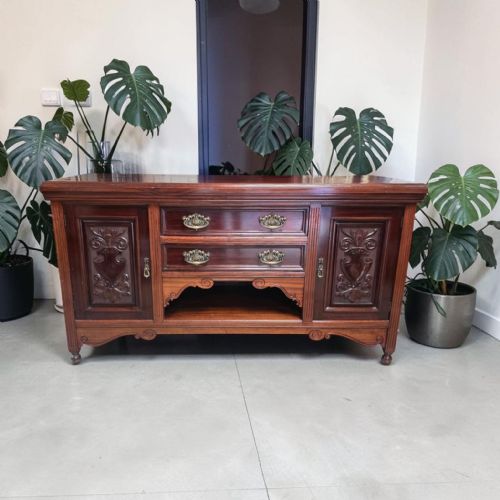
A georgian style dining credenza encompasses formal dining room storage pieces, appearing on this page most frequently as sideboards, side cabinets, and cupboards. These forms serve the practical purpose of storing dining silver and linen while anchoring the room.
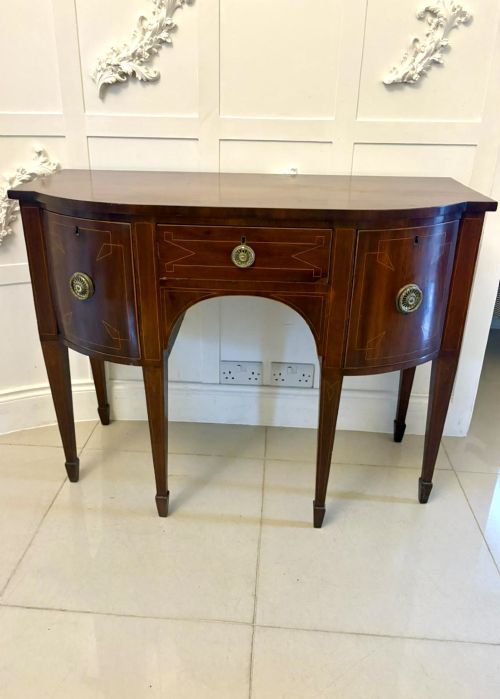
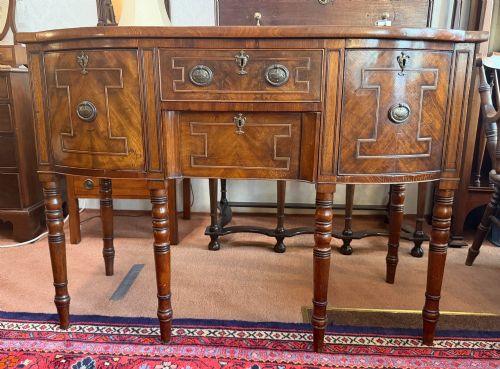
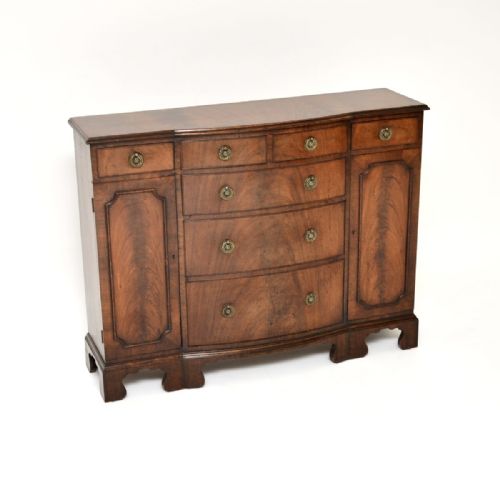
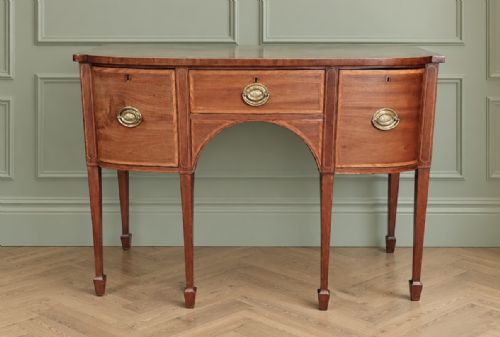
The pieces span periods from the eighteenth century through to the early twentieth century, taking in George III, Regency, Edwardian, and revival interpretations. Buyers encounter straight-fronted formats alongside more sculptural serpentine, bow-front, and breakfront shapes.
Makers and workshops of the nineteenth and twentieth centuries adapted these enduring silhouettes for contemporary dining rooms. The resulting pieces maintain classical proportions whether constructed in the original period or during later revivals.
How they were made
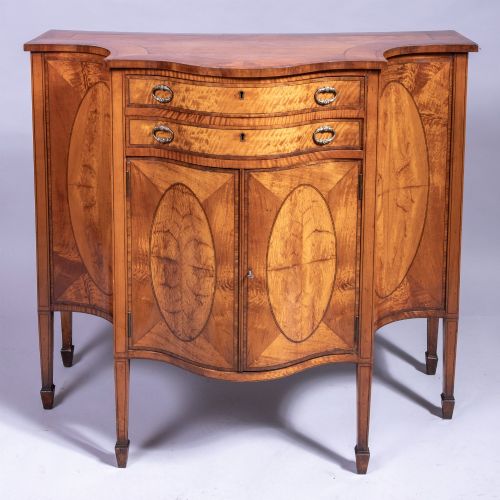
Carpenters built these pieces primarily from solid mahogany and flame mahogany veneer, often selecting specific cuts to highlight the natural grain. Workshops introduced contrasting warmth through satinwood, boxwood, and intricate wood inlay.
Cabinet makers shaped the timber into curved fronts and applied marquetry patterns to drawer fronts and top surfaces. Fine brass hardware, including handles and occasionally paw feet, completed the structural assembly.
Listings feature periods spanning from the eighteenth century through the Edwardian era, constructed primarily in mahogany with satinwood and boxwood inlay.
What varies in quality
The standard of timber selection separates finer examples from standard production, particularly the depth and movement in flame mahogany veneers. Artisans who took care to align grain patterns across multiple drawers created a more unified visual presence.
The crispness of inlaid borders and satinwood banding indicates the skill of the workshop. Well-executed carving around the legs and apron demonstrates attention to detail that elevates the entire piece.
M D Miller And Sons
The Georgian Style Dining Credenza Glossary
- Serpentine
- A front contour that curves outward in the centre and inward toward the ends, creating a gentle S-shape. This profile demands precise woodworking to follow the sweeping lines.
- Breakfront
- A cabinet form where the central section projects forward from the flanking outer sections. This arrangement creates visual depth and varied storage compartments.
- Bow-front
- A convex curved front that swells outward in an even arc. It softens the linear appearance of a dining room wall.
- Marquetry
- Decorative patterns formed by fitting together thin pieces of wood veneer and other materials like shell or ivory. Workshops used this technique to create elaborate floral or geometric designs on table tops and cabinet fronts.
- Satinwood
- A lustrous, hard timber native to Ceylon and India with a golden-yellow sheen. Cabinet makers used it primarily for contrasting stringing, banding, and inlay work.
Georgian Style Dining Credenza: Frequently Asked Questions
How do I spot a revival piece?
Revival pieces often date from the Edwardian era or the early twentieth century, showing machine-sawn internal timbers alongside traditional mahogany veneers. Stylistic cues like Sheraton Revival details point to later reinterpretations of eighteenth-century designs.
Examining the drawer construction and secondary woods helps distinguish an original eighteenth-century piece from a later Edwardian copy. Cabinet making techniques evolved significantly between the original Georgian period and subsequent revival movements.
Where should I place my sideboard?
These dining pieces sit naturally against a primary dining room wall, where their long proportions balance the dining table. They function well in hallways or large living spaces when the room's dimensions accommodate their depth.
Consider the clearance needed for opening drawers and cabinet doors when positioning the piece. Direct sunlight should be avoided to protect polished mahogany and delicate satinwood inlay from fading.
How do I care for mahogany surfaces?
Routine maintenance involves dusting with a soft, dry cloth to prevent grit accumulation on the polished finish. Traditional beeswax applied sparingly helps nourish the timber and maintain its natural lustre over time.
Moisture and heat can damage veneer and polish, so coasters and mats are essential during dining use. Immediate wiping of spills protects both the solid mahogany and any intricate wood inlay work.
What is the difference between a sideboard and a credenza?
Traditional sideboards generally feature a combination of drawers and cupboards specifically designed for serving food and storing dining ware. Credenza forms historically emphasise enclosed cabinet storage behind doors rather than central cutlery drawers.
Over successive periods, makers blurred these functional distinctions, leading to overlapping terminology in auction and marketplace listings. Both forms serve the same foundational role in a formal dining arrangement.