


Satinwood Bureau Bookcase
A satinwood bureau bookcase brings together fine timber and architectural height, offering a fitted writing space beneath glazed shelving.
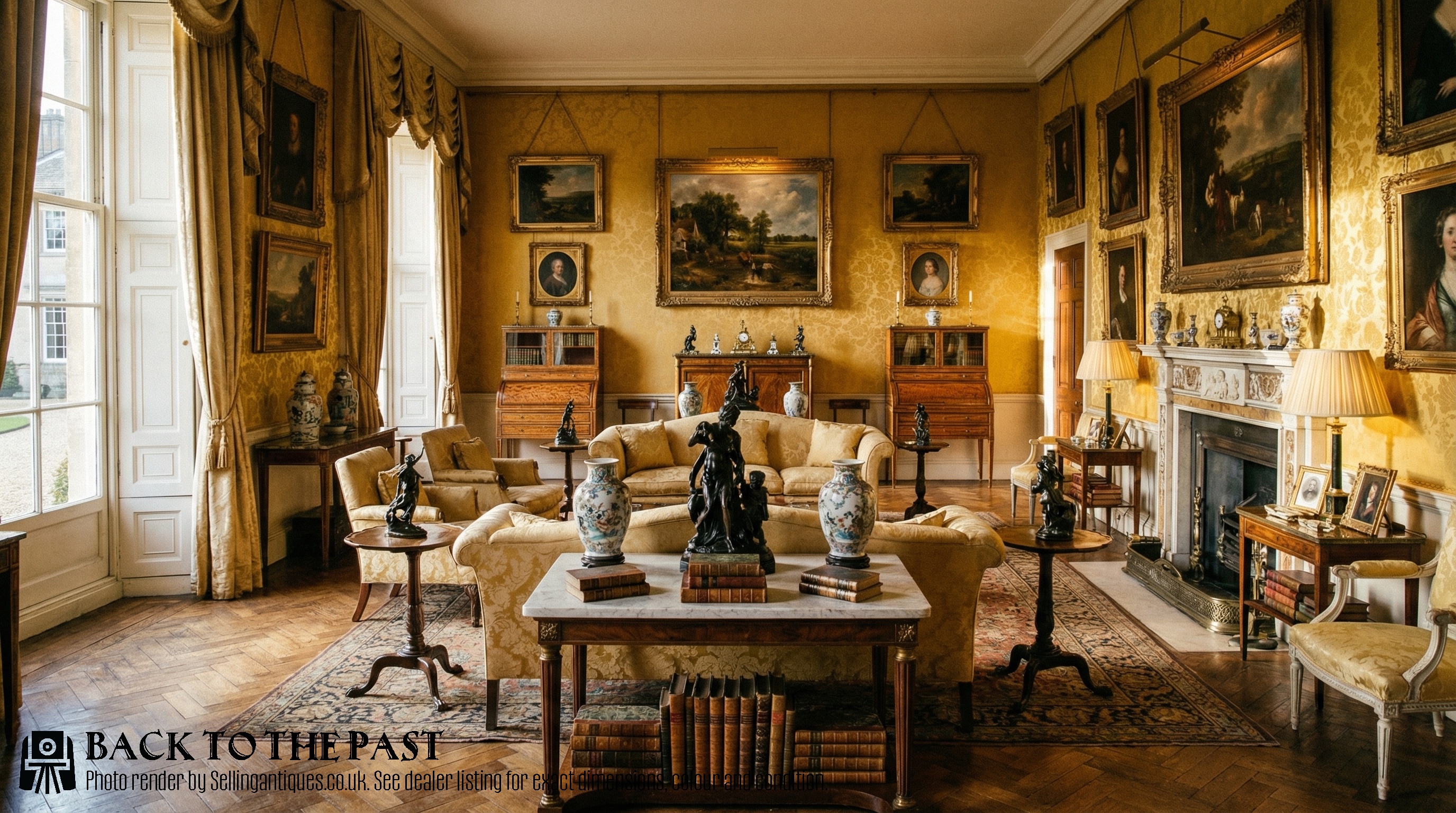
Satinwood Bureau Bookcase
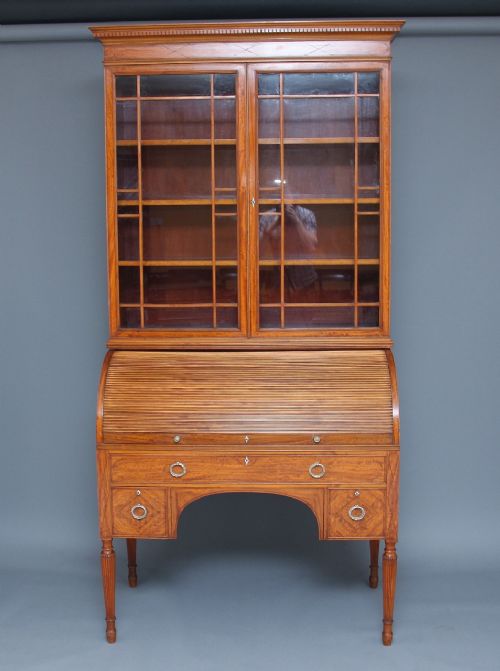
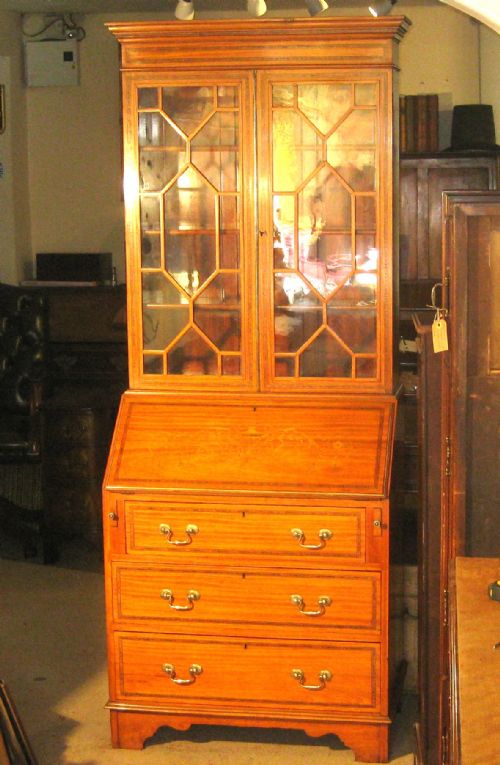
A satinwood bureau bookcase combines a drop-front desk or cylinder writing compartment with enclosed shelving above, creating a substantial piece of case furniture. These works appear in forms ranging from Georgian and George III designs to Edwardian Sheraton Revival pieces.
The most common examples on this page date from the eighteenth century through to the Edwardian period, often featuring glazed upper doors and interior pigeonholes. Makers also produced variations such as secretaire cabinets, writing cabinets, and cylinder bookcases.
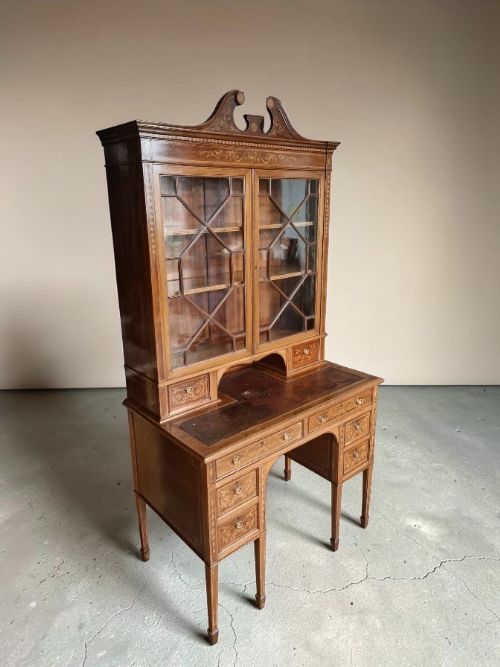
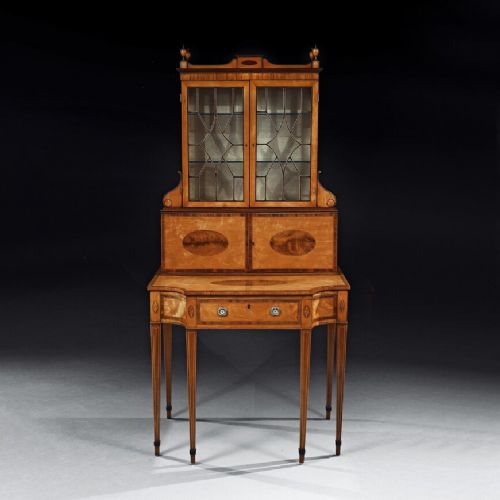
The materials span solid and veneered satinwood alongside mahogany, sabicu, and brass hardware, frequently enhanced by detailed marquetry inlay. Many pieces reflect specific regional tastes, including Adam Revival and Sheraton styles.
Materials and construction
Cabinet makers built these pieces using dense hardwoods like mahogany and sabicu as carcase foundations, applying figured satinwood veneers to the exterior surfaces. This method allowed craftsmen to display striking grain patterns across large drawer fronts and fall-front desks.
Marquetry inlay and painted ornamentation provided decorative contrast, utilising darker timbers and tinted woods to form floral or geometric motifs. Glazed upper doors incorporated wooden astragal bars to secure individual panes of glass above the writing section.
Several cylinder bookcases feature secret internal compartments designed to guard private correspondence from curious household staff.
Judging quality and execution
The distinction between standard and exceptional pieces rests upon the precision of the marquetry and the choice of timber veneer. Superior examples display carefully matched grain patterns and crisp, hand-cut inlay work across every elevation.
Structural integrity and the retention of original brass fittings, glass panels, and interior leather writing surfaces further separate notable pieces from ordinary ones. The refinement of the pigeonholes and drawers hidden behind the fall-front reveals the maker's underlying skill.
Edwards and Roberts·Thomas Shearer
The Satinwood Bureau Bookcase Glossary
- Satinwood
- A hard, lustrous yellow timber prized for its fine grain and reflective surface. Makers utilised it extensively for high-status cabinet work during the eighteenth and nineteenth centuries.
- Secretaire
- A piece of furniture containing a concealed writing drawer or pull-out desk compartment. It usually drops forward on hinges to reveal small drawers and pigeonholes.
- Astragal
- A small wooden moulding used to divide panes of glass within a cabinet door. These bars form geometric patterns across the upper bookcase section.
- Sabicu
- A heavy, durable tropical hardwood resembling mahogany, occasionally utilised in eighteenth-century cabinet making. It provides a robust structural base for fine veneers.
- Marquetry
- The art of applying decorative veneer pieces to a structure to form pictorial or geometric designs. Craftsmen cut various coloured woods to fit tightly together.
Satinwood Bureau Bookcase: Frequently Asked Questions
How do I date a satinwood bureau bookcase?
Dating relies upon construction methods, timber choices, and stylistic cues such as inlay motifs or leg shapes. Pieces from the eighteenth century often display hand-cut dovetails and native secondary woods.
Later Edwardian Sheraton Revival examples incorporate machine-sawn elements while imitating earlier proportions and painted decoration.
How should I care for satinwood furniture?
Satinwood benefits from placement away from direct sunlight and heat sources, which can fade the yellow timber and dry out veneers. Regular dusting with a soft, dry cloth maintains the polished finish without requiring heavy wax applications.
Maintaining stable indoor humidity prevents the timber and marquetry inlay from shifting or cracking.
Are the glass panels usually original?
Many pieces retain their original hand-blown glass panes, which often display slight surface ripples and minor imperfections. Replacements are sometimes necessary following breakage over centuries of use.
Examining the glass under angled light helps determine whether the panes match the age of the cabinet frame.