

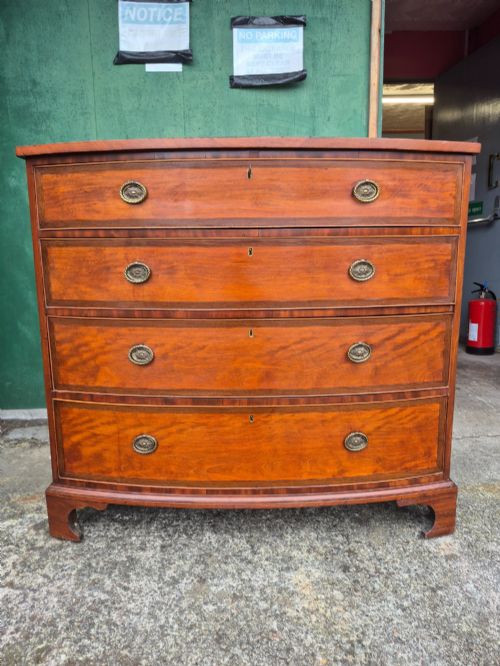
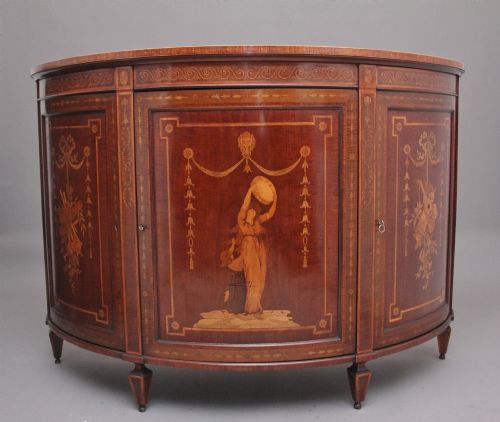
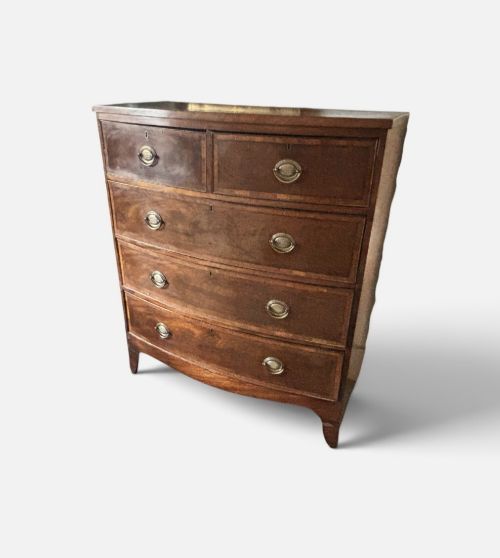


Satinwood Bowfront Commode
A satinwood bowfront commode brings warmth and elegant curve to a room through fine timber and restrained eighteenth or nineteenth-century design.
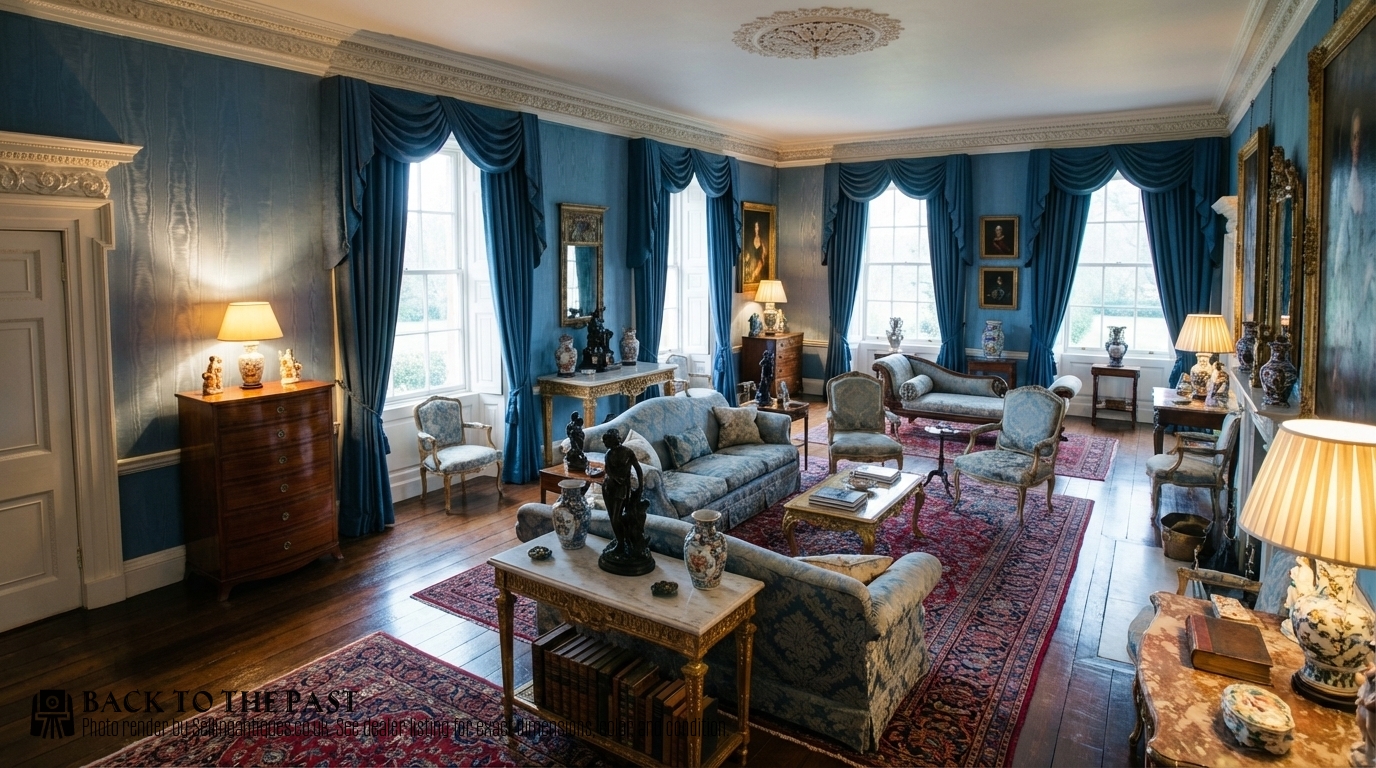
Satinwood Bowfront Commode
A satinwood bowfront commode is a refined chest of drawers or side cabinet defined by a gently curving front and pale, lustrous timber. When searching this phrase, buyers encounter primarily nineteenth-century interpretations alongside eighteenth-century originals, spanning George III, Regency, and Sheraton Revival styles.
The pieces on offer range from compact mahogany-carcassed chests banded in satinwood to fully veneered satinwood cabinets embellished with marquetry and hand-painted enamel detail. Most frequently, one meets chests of drawers and bowed side cabinets dating from the Georgian era through to the Edwardian period.
How they were made
Cabinet makers built these pieces using solid timber carcasses overlaid with wood veneer, notably satinwood, mahogany, and occasional rosewood. Artisans utilised boxwood stringing and contrasting crossbanding to frame the drawer fronts and accentuate the sweeping bow shape.
Surface ornament relied on precision inlay, marquetry, and hand-painted enamel panels, particularly on later Sheraton Revival pieces. Drawer pulls and mounts typically consisted of cast brass, fixed to finely dovetailed carcase structures.
Satinwood Bowfront Commode Retail Price Guide 2026
Typical asking prices for satinwood bowfront commode among the pieces listed under this phrase on Sellingantiques today, from the lower quarter to the upper quarter. They describe what is for sale here now, not the wider market.
Listings feature pieces spanning the eighteenth, nineteenth, and early twentieth centuries, constructed from satinwood, mahogany, and rosewood.
What varies in quality
Quality rests upon the choice of timber and the precision of the cabinet work, from plain mahogany carcasses with simple satinwood banding to fully figured, meticulously matched satinwood veneers. The sophistication of the inlay and the crispness of the hand-painted enamel details distinguish standard production from exceptional pieces.
Proportions and secondary timbers dictate the standing of a commode, with earlier George III and Regency examples exhibiting superior structural integrity compared to later revivals. Original brass hardware and untouched patination further elevate the status of an antique.
Edwards and Roberts·Gillows
The Satinwood Bowfront Commode Glossary
- Bowfront
- A convex, outward-curving front elevation typical of many chests and cabinets from the Georgian period onwards. This curved form softens room geometry and showcases figured veneers.
- Satinwood
- A pale, dense tropical hardwood valued for its golden sheen and reflective qualities. It serves both as a primary veneer and as banding on darker woods like mahogany.
- Crossbanding
- A border technique where veneer strips are laid perpendicular to the grain of the surrounding surface. This frames drawer fronts and panel edges with decorative contrast.
- Marquetry
- The art of creating decorative patterns on furniture by fitting together thin pieces of wood veneer. It frequently incorporates floral or classical motifs on Edwardian and revival cabinets.
- Caddy top
- A raised or moulded tabletop style with shaped edges reminiscent of tea caddy lids. It provides a distinct profile to early nineteenth-century chests of drawers.
Satinwood Bowfront Commode: Frequently Asked Questions
How do I spot a George III commode?
George III pieces display authentic period construction methods, including hand-cut dovetails and native secondary timbers behind the satinwood veneer. Their proportions remain restrained and classical.
Examine the patination and the quality of the timber figure, which develops a soft amber depth over centuries of exposure.
What is Sheraton Revival furniture?
Sheraton Revival pieces date predominantly from the late nineteenth and early twentieth centuries, copying the lighter neoclassical styles of the eighteenth century. They frequently feature delicate painted enamel and elaborate marquetry.
These later interpretations offer the visual elegance of the Georgian era with the sturdiness of Victorian workshop construction.
Where should I place a bowfront commode?
The curved footprint makes these commodes ideal for hallways, reception rooms, or bedrooms where sharp corners would obstruct movement. Their finished backs and refined sides often allow freestanding placement.
Keep them away from direct sunlight and excessive radiator heat to protect the sensitive satinwood veneer from drying and splitting.
How do I care for satinwood veneer?
Satinwood requires gentle dusting with a dry, soft cloth and occasional feeding with quality beeswax to maintain its natural lustre. Avoid chemical sprays and silicon polishes that degrade the aged finish.
Maintain stable room humidity to prevent the delicate veneer from lifting off the mahogany or pine carcase underneath.