
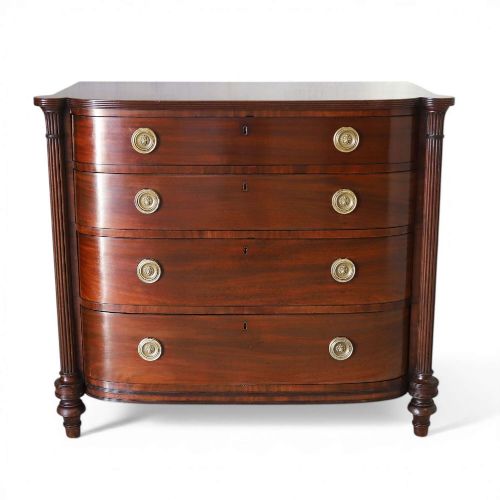
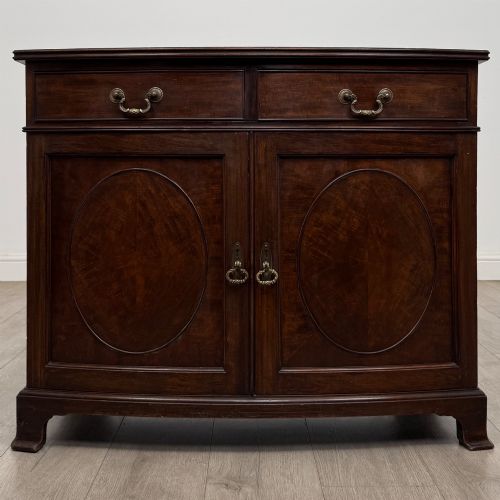
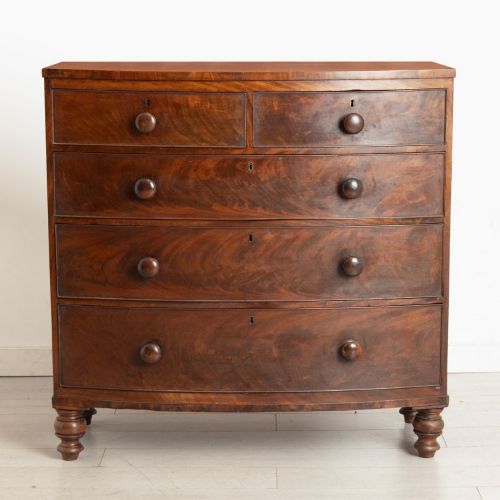


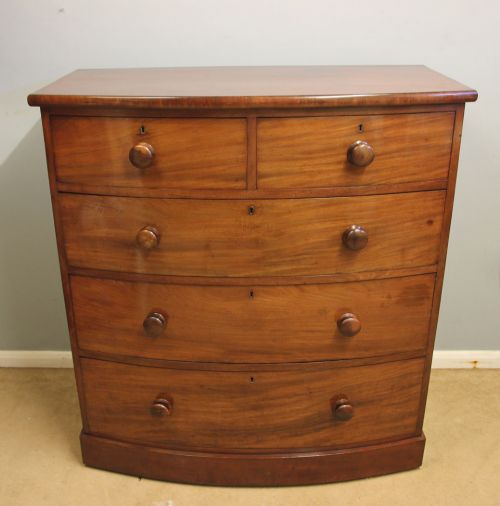
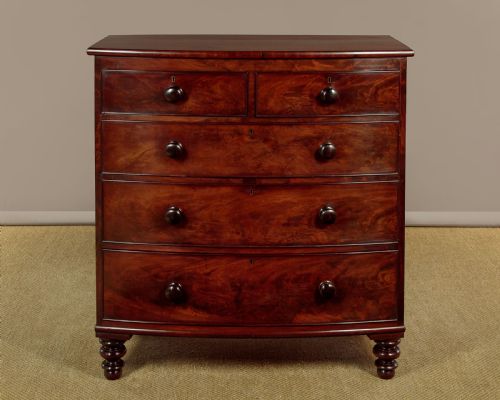


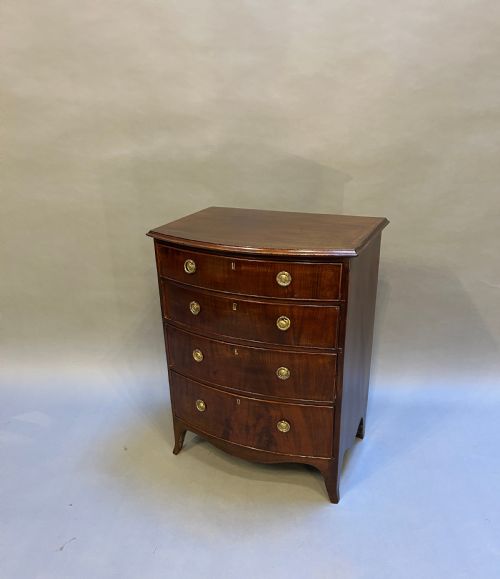
Edwardian Bow Front Chest
An edwardian bow front chest brings a curved profile and practical storage to a room, offering both elegance and utility.
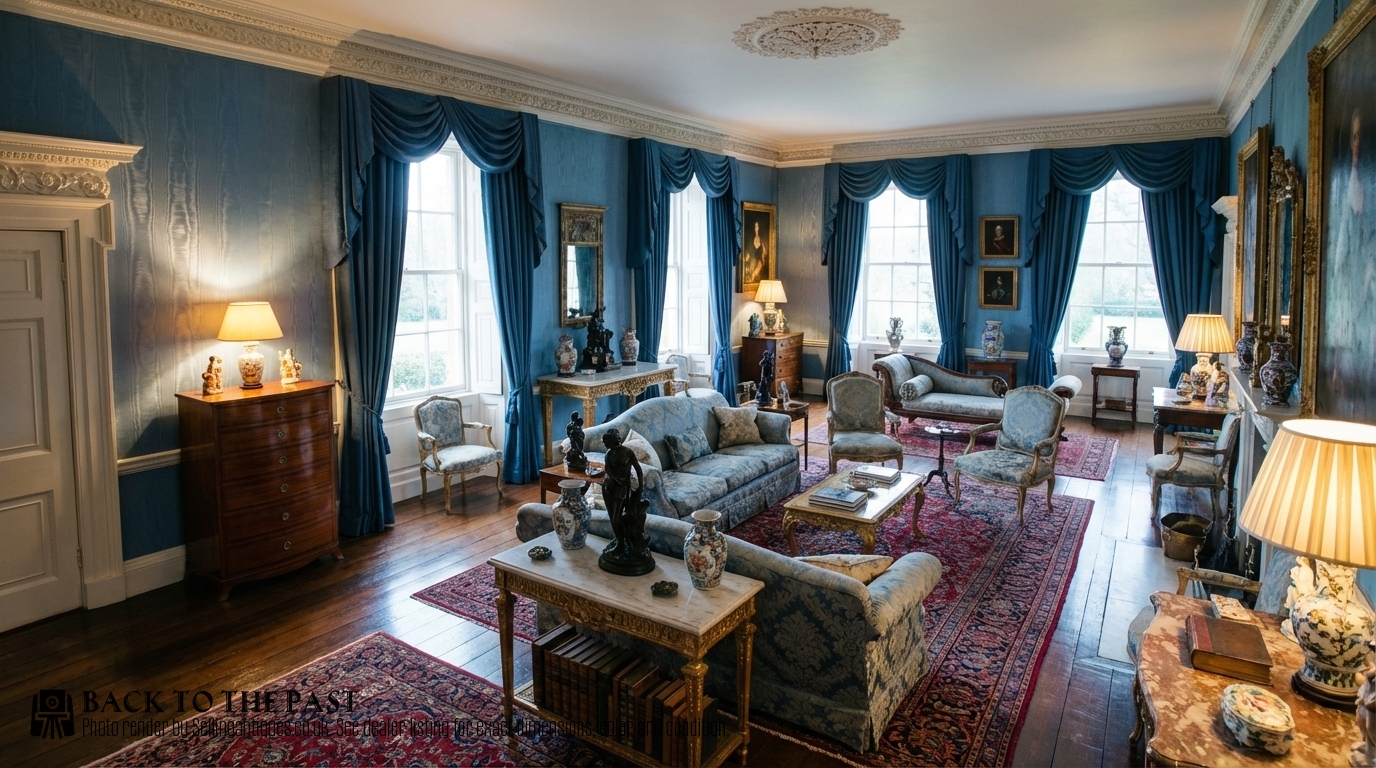
Edwardian Bow Front Chest
An edwardian bow front chest provides graduated drawer space behind a gently curved facade, a form popular for both small rooms and grand hallways. These pieces combine domestic utility with refined cabinetmaking, often arriving in compact proportions suited to modern interiors.
The materials span traditional hardwoods and veneered surfaces, reflecting the preferences of the period. Alongside the primary Edwardian examples, related pieces emerge from Georgian, Victorian, and Regency periods, showing how cabinetmakers revisited the curved front across multiple generations.
Materials and construction
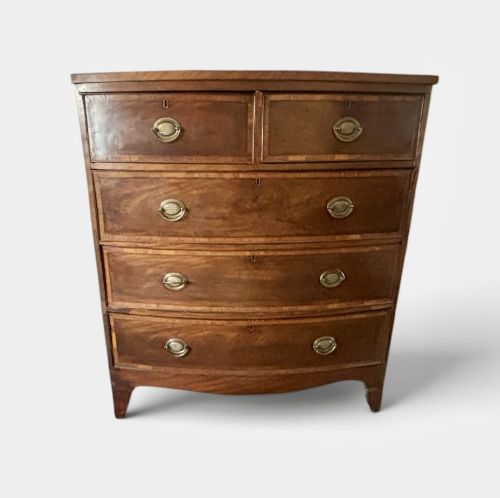
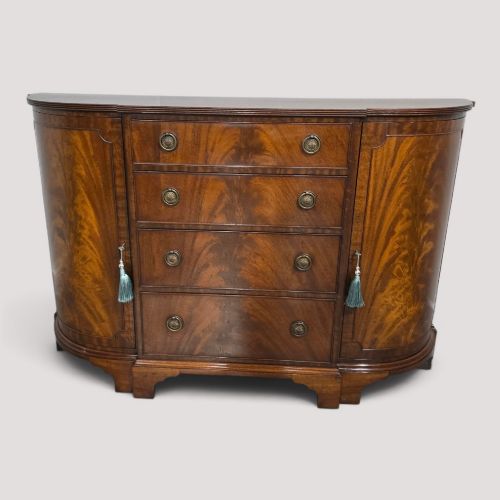
Makers relied heavily on mahogany, often selecting figured varieties or flame mahogany veneers to accentuate the outward curve of the drawers. Secondary timbers like oak appeared in drawer linings, while brass hardware secured handles and escutcheons.
Inlays of satinwood and ebony added linear contrast along the edges and top surfaces. The curved carcase required precise joinery to maintain structural integrity and smooth drawer operation over decades of use.
Assessing quality and finish
Quality rests in the selection of wood veneers and the consistency of the grain matching across the curved drawer fronts. Finer examples display meticulous attention to inlay work and the harmonious integration of brass handles.
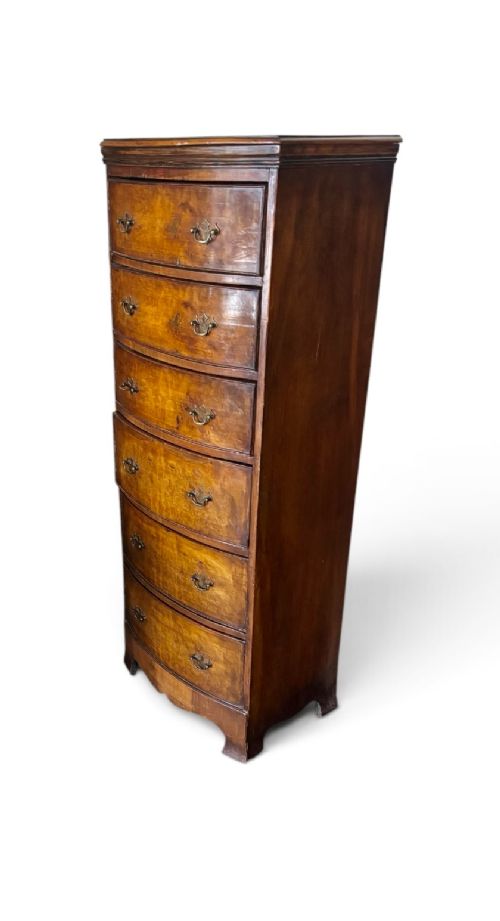
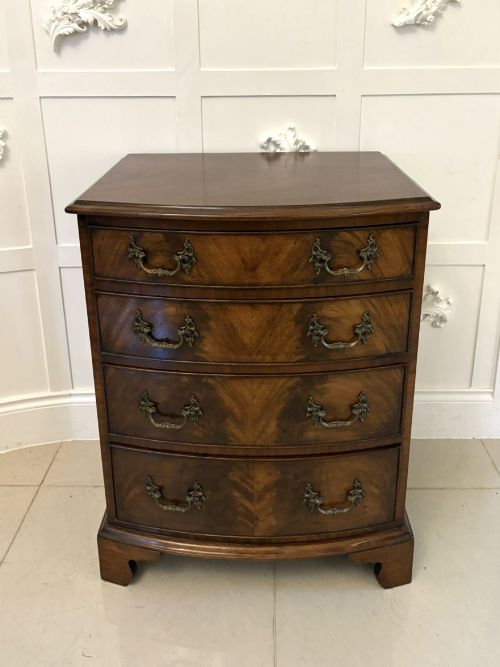
Proportion and scale distinguish finer workshops from standard production, with smaller dwarf chests and tallboys requiring specialist skill to execute the curved profile successfully. The crispness of the drawer dividers and the neatness of the dovetail joints further indicate the maker's hand.
The Edwardian Bow Front Chest Glossary
- Bow front
- A convex curved front facade that projects outward in the centre. This shape softens the corners of case furniture and catches the light across polished wood.
- Flame mahogany
- A veneer cut from the fork of the mahogany tree where the branch meets the trunk. It creates a distinctive, flickering flame pattern across the drawer fronts.
- Bushing slide
- A pull-out shelf positioned above the top drawer. It served as a writing surface or a temporary resting place for garments.
- Graduated drawers
- A set of drawers that decreases in depth from bottom to top. This arrangement creates a balanced visual weight on case pieces.
Edwardian Bow Front Chest: Frequently Asked Questions
Where should I place an edwardian bow front chest?
These chests suit bedrooms, hallways, or living rooms where floor space is limited yet storage remains necessary. Their curved fronts prevent sharp corners from protruding into narrow pathways.
Position them against flat walls where the curved facade can catch natural light and display the grain of the wood effectively.
How do I maintain the wood finish?
Dust the surface regularly with a soft, dry cloth to prevent particulate buildup on the polished timber. Avoid placing the chest near direct heat sources or strong sunlight to protect the veneer.
Apply traditional wax polish sparingly when the wood appears dry, buffing gently to maintain a natural sheen.
What is the difference between a tallboy and a dwarf chest?
A tallboy offers greater vertical storage capacity with a higher stack of drawers, making it ideal for maximising floor space. A dwarf chest sits lower to the ground, often featuring fewer drawers.
Both retain the signature curved front profile but serve different spatial requirements within a room.
How can I identify the period of a bow front chest?
Examine the secondary timbers inside the drawers and the style of the brass hardware for clues about the era. Edwardian pieces often display lighter satinwood banding and refined inlay work.
Compare the construction methods, such as hand-cut dovetails, against known period characteristics to confirm the date of manufacture.