

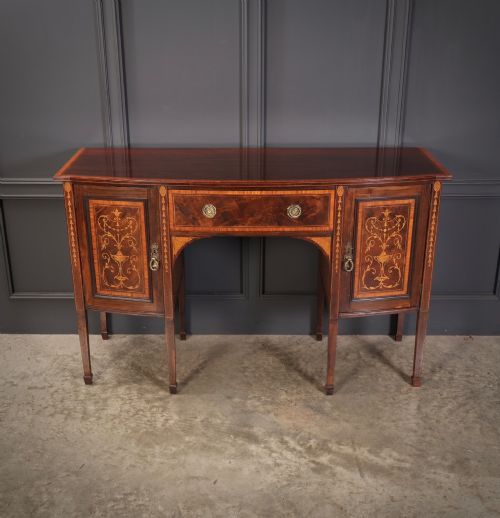
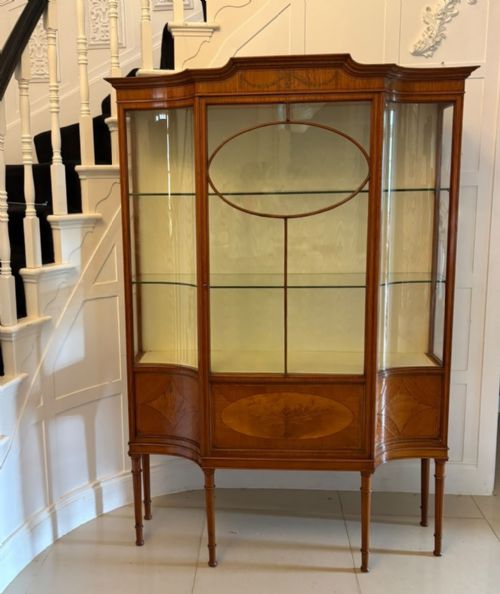
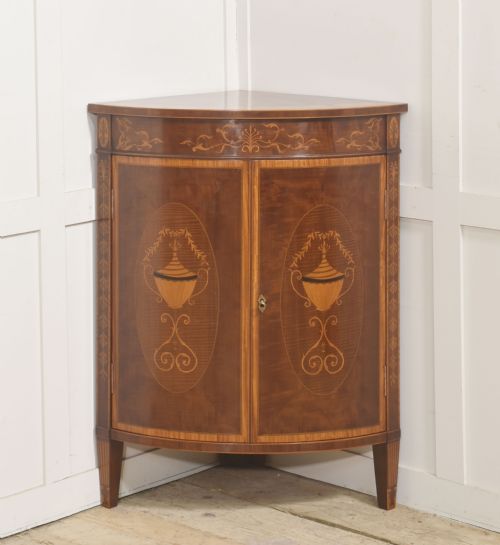
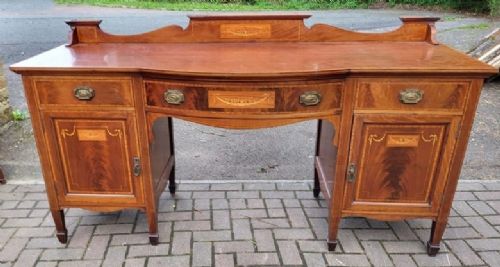


Satinwood Bowfront Cabinet
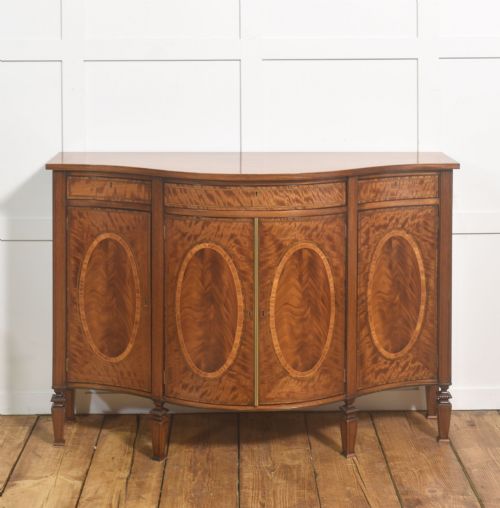
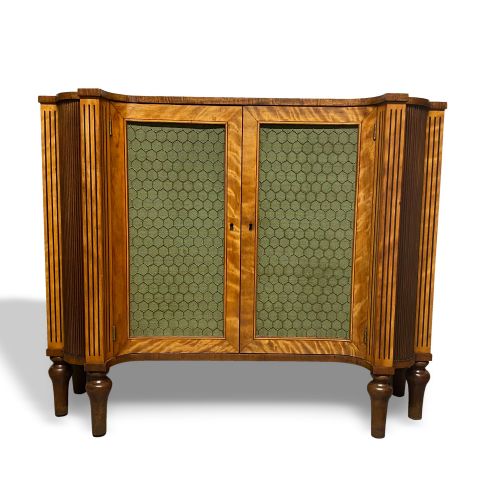
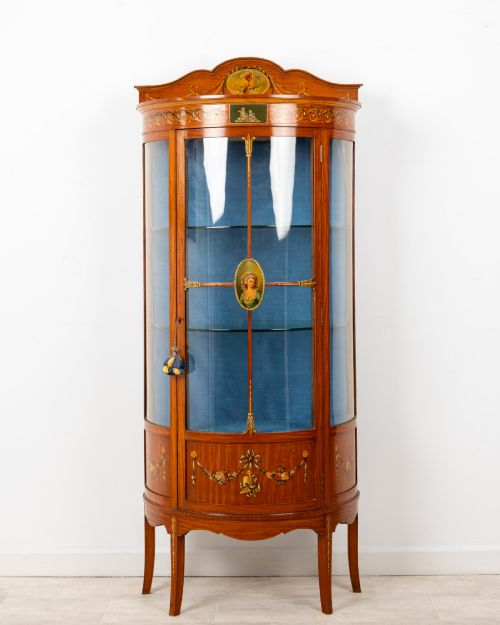
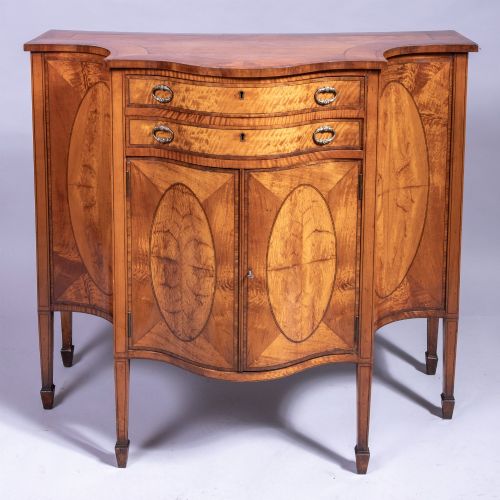
These satinwood bowfront cabinet examples offer curved fronts and pale timber surfaces that catch the light in smaller rooms.
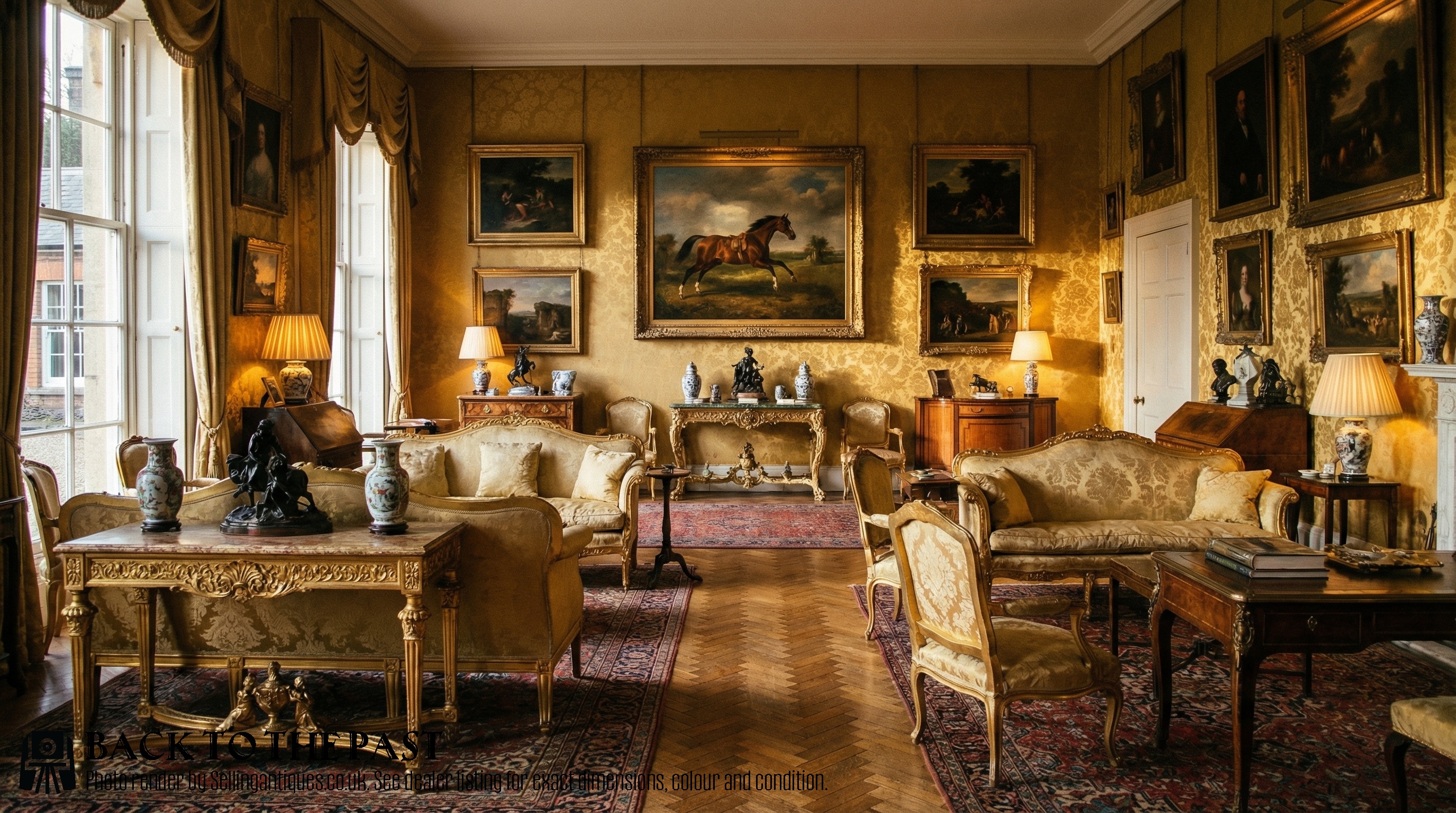
Satinwood Bowfront Cabinet
A satinwood bowfront cabinet brings a curved profile and pale timbers into living spaces, with side cabinets, display pieces and bedside versions appearing most frequently.
The selections span the eighteenth century through the Edwardian period, with particular emphasis on Victorian and Sheraton Revival interpretations.
Makers utilised these curved forms to soften room corners while providing enclosed storage or display space.
How They Were Made
Cabinet makers built these pieces using mahogany or pine carcases covered in satinwood veneers, often adding crossbanding in rosewood or boxwood along the edges.
Surface decoration frequently involved marquetry inlay and hand-painted floral motifs executed directly onto the timber.
Some Edwardian bedside cabinets secretly doubled as nightstands while masquerading as polite miniature sideboards.
What Varies in Quality
The precision of the veneer matching along the curved bow front distinguishes finer workshops from standard production.
Hand-painted floral details and crispness in the boxwood and satinwood inlay demonstrate the level of craftsmanship invested in the piece.
Ince and Mayhew·Heal's·Edwards and Roberts
The Satinwood Bowfront Cabinet Glossary
- Bowfront
- A convex curved front that projects outward from the cabinet frame. This shape softens room angles and demands precise woodworking.
- Satinwood
- A pale, lustrous timber native to India and Ceylon. It provides a reflective surface that takes fine inlay exceptionally well.
- Marquetry
- The art of applying pieces of veneer to a structure to form decorative patterns. Craftsmen use contrasting woods to create pictorial designs.
- Crossbanding
- A narrow strip of veneer laid around the border of a panel with the grain running perpendicular to the centre. This technique frames the primary wood.
- Sheraton Revival
- A late nineteenth and early twentieth century style emulating the neoclassical designs of Thomas Sheraton. Pieces often incorporate painted details and satinwood.
Satinwood Bowfront Cabinet: Frequently Asked Questions
How do I care for satinwood?
Keep these cabinets away from direct sunlight to prevent the pale timber from darkening or fading unevenly over time.
Dust regularly with a dry cloth and avoid silicone-based polishes that can damage the antique finish.
Where should I place a bowfront cabinet?
The curved profile makes these pieces suitable for placement in corners or along walls where a sharp corner might obstruct movement.
Smaller bedside versions fit well in guest bedrooms while side cabinets anchor dining spaces.
How do I date a Sheraton Revival piece?
Sheraton Revival items typically date from the late nineteenth or early twentieth century, mimicking eighteenth-century Georgian proportions.
Examine the secondary woods inside the drawers and the style of the hinges to confirm the manufacturing period.