

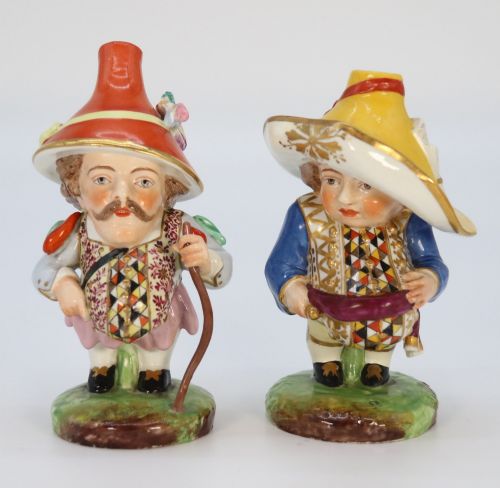
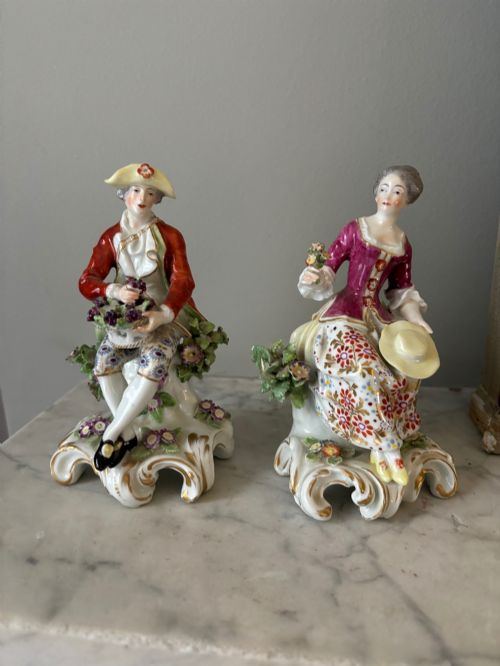


Samson Porcelain Figures Pair
Samson porcelain figures pair groupings offer delightful 19th-century interpretations of earlier masterworks, combining playful forms with decorative charm.
Samson Porcelain Figures Pair
The pieces you encounter on this page predominantly date from the nineteenth century, with specific examples attributed to the decades around 1850 and 1880. They utilise historical stylistic vocabularies, notably Rococo Revival and Chinoiserie, to create visually striking mantel ornaments and decorative figures for the home.
Collectors seek these paired items for their vibrant character and their homage to 18th-century porcelain traditions. Whether depicting musicians, shepherdesses, or singing boys, each pair provides a snapshot of Parisian ceramic artistry in the Victorian era.
Materials and methods
Makers utilised hard-paste porcelain as the primary body for these decorative figurines, shaping them through detailed moulding techniques. This dense ceramic material provided a crisp surface suitable for fine sculptural definition.
Workers applied polychrome enamel colours by hand, often incorporating gold leaf and extensive gilding to highlight garments and decorative borders. These enamel pigments were fired to achieve a glossy finish that echoed the appearance of earlier factory wares.
Samson Porcelain Figures Pair Retail Price Guide 2026
Typical asking prices for samson porcelain figures pair among the pieces listed under this phrase on Sellingantiques today, from the lower quarter to the upper quarter. They describe what is for sale here now, not the wider market.
The listings on this site feature hard-paste porcelain and enamel materials styled in Rococo Revival and Chinoiserie traditions.
Assessing quality in 19th-century figures
Quality rests upon the crispness of the modelling and the precision of the hand-painted enamels. Superior examples retain sharp facial expressions and delicate details in foliage or clothing, whereas lesser pieces exhibit softer contours and hurried brushwork.
The application of gilding and gold leaf also distinguishes the range. Rich, burnished gold highlights elevate the visual impact of a pair compared to flat or rubbed metallic applications.
Edmé Samson
The Samson Porcelain Figures Pair Glossary
- Hard-paste porcelain
- A durable ceramic composition fired at high temperatures, composed of kaolin and petuntse. This material forms the sturdy base of Parisian reproductions and figures.
- Bocage
- An ornamental background of applied foliage and leaves surrounding a ceramic figure. This technique was popular in 18th-century factories and copied by later Parisian workshops.
- Polychrome enamel
- Multi-coloured glass-based paints applied to the porcelain surface before secondary firing. They provide the bright palette seen on garments and decorative motifs.
- Gilding
- The application of gold or gold-coloured material to ceramic surfaces. It enhances decorative details on bases and clothing.
- Rococo Revival
- A 19th-century design style reviving the asymmetrical scrolls and ornamental flourishes of the mid-18th century. It heavily influences the bases and framing of these figures.
Samson Porcelain Figures Pair: Frequently Asked Questions
What are samson porcelain figures pair items?
These pieces are 19th-century Parisian decorative ceramics produced by the Samson workshop, designed to imitate historical figures from factories like Chelsea, Derby, and Meissen.
They serve as ornamental pairings for display, often depicting allegorical subjects, musicians, or seasonal characters.
How were these figures used originally?
Owners placed them on mantelpieces, side tables, and decorative consoles as conversation pieces and symbols of refined taste.
Some specialised forms, such as figural inkwells, served a functional purpose on a writing desk alongside their decorative appeal.
How do I live with antique porcelain pairs?
Display them away from direct sunlight and heavy foot traffic to protect their delicate enamel colours and gold leaf highlights.
Dust them gently with a soft, dry brush to maintain the hard-paste porcelain surfaces without causing abrasion.
How can I tell different periods apart?
Look closely at the modelling style, mark usage, and enamel brightness to distinguish mid-19th-century production from later decades.
Reference marks such as simulated gold anchor symbols help connect specific pairs to their historical inspirations and workshop origins.