
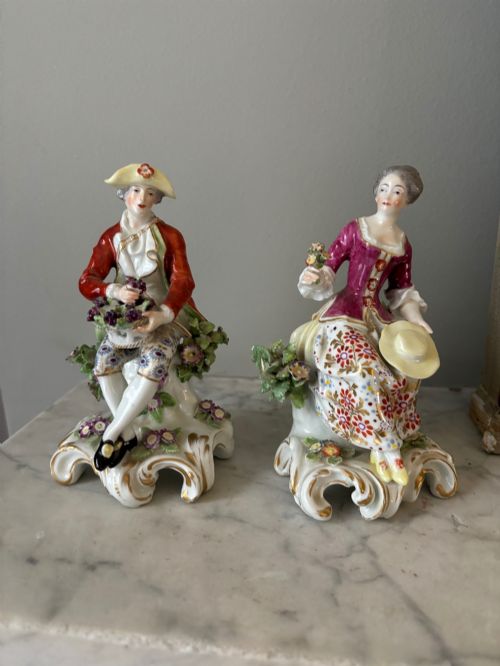

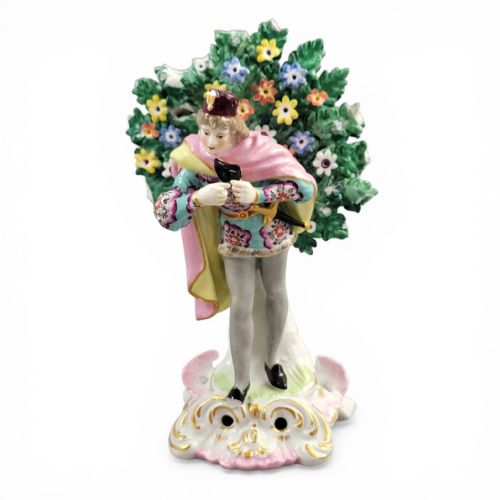


Samson Paris Porcelain Figure
These pieces of samson paris porcelain figure capture the spirited mimicry of nineteenth-century French ceramic tradition, offering collectors skilled interpretations of earlier English and European models.
Samson Paris Porcelain Figure
A samson paris porcelain figure represents the output of a Parisian ceramic workshop known for producing decorative pieces in the manner of earlier European factories. Buyers searching for a samson paris porcelain figure encounter nineteenth-century interpretations modelled after historical prototypes from Chelsea, Derby, and Meissen.
The objects span various forms, including single decorative figures, pairs, allegorical representations of the seasons, street vendors, and small bonbonnières. Most examples date from the Victorian era, particularly between eighteen fifty and eighteen ninety, reflecting nineteenth-century French revivalist tastes.
The physical evidence includes rococo revival and neoclassical styles, showing actors, shepherds, putti, and animals. Buyers will frequently find pieces decorated in imitation of earlier English porcelain bodies.
Assessing Quality
Model complexity also influences the tier of an object, with elaborate multi-figure groups or pieces featuring detailed bocage foliage requiring greater technical skill. The confidence of the gilding and the clean application of secondary decorative elements separate standard production from superior output.
Among the menagerie of sheep, goats, and leopards, nineteenth-century artisans even cast porcelain Mansion House dwarves.
Edme Samson·Samson of Paris
The Samson Paris Porcelain Figure Glossary
- Hard-Paste Porcelain
- A dense, vitrified ceramic composition fired at high temperatures, composed of kaolin and petuntse. This material provides the durable body typical of nineteenth-century French production.
- Bocage
- An ornamental background of applied ceramic foliage and leaves surrounding a figure. This technique derives from eighteenth-century English porcelain traditions replicated by French workshops.
- Polychrome Enamel
- Vitreous coloured pigments painted onto the glazed ceramic surface and refired to fuse with the glaze. These enamels create the detailed palette seen on garments and naturalistic bases.
- Bonbonniere
- A small ornamental box designed for holding sweets or trinkets, often fitted with metal mounts. These decorative objects combine functional lids with figural sculpture.
- Rococo Revival
- A nineteenth-century design style drawing inspiration from eighteenth-century asymmetrical scrollwork and natural motifs. This aesthetic informs the curves and bases of many decorative figures.
Samson Paris Porcelain Figure: Frequently Asked Questions
How do I identify a Samson figure?
Examination of the marks, paste, and stylistic references helps determine origin. Samson often utilised marks that referenced earlier factories such as Chelsea or Derby while maintaining nineteenth-century French manufacturing characteristics.
Studying the application of polychrome enamel and the crispness of the modelling provides further confirmation of the Paris workshop's output during the Victorian period.
Are these figures genuine eighteenth-century pieces?
The evidence shows these objects belong to the nineteenth century. They were produced as decorative homages or interpretations rather than direct contemporary counterfeits of earlier English works.
Understanding this distinction places the pieces within the context of nineteenth-century French revivalism rather than earlier ceramic periods.
What styles are common in these figures?
Rococo revival and neoclassical styles dominate the physical evidence. Makers drew inspiration from French designs as well as English factories like Chelsea and Derby.
Subjects range from allegorical representations of the seasons to theatrical actors and pastoral street vendors.
How should I care for porcelain figures?
Displaying figures away from direct sunlight preserves the vibrancy of the polychrome enamels and gold leaf. Gentle dusting with a soft brush prevents the accumulation of dirt without risking the delicate bocage work.
Avoiding abrasive cleaners ensures the hard-paste porcelain glaze and metallic details remain undamaged over time.